Facing an ACL tear is frightening enough on its own. Add a five-figure surgical bill or a twelve-month waiting list at home, and the anxiety can feel overwhelming. If you are researching whether India is a realistic option for your ACL reconstruction, you are asking exactly the right question.
ACL Surgery Recovery Time in India: The Phase-by-Phase Timeline
ACL surgery recovery time in India follows the same evidence-based protocol used in the US, UK, and Australia: full return to sport takes 9 to 12 months. What changes when you choose India is not the recovery clock — it is the financial pressure on your rehabilitation, which shrinks dramatically.
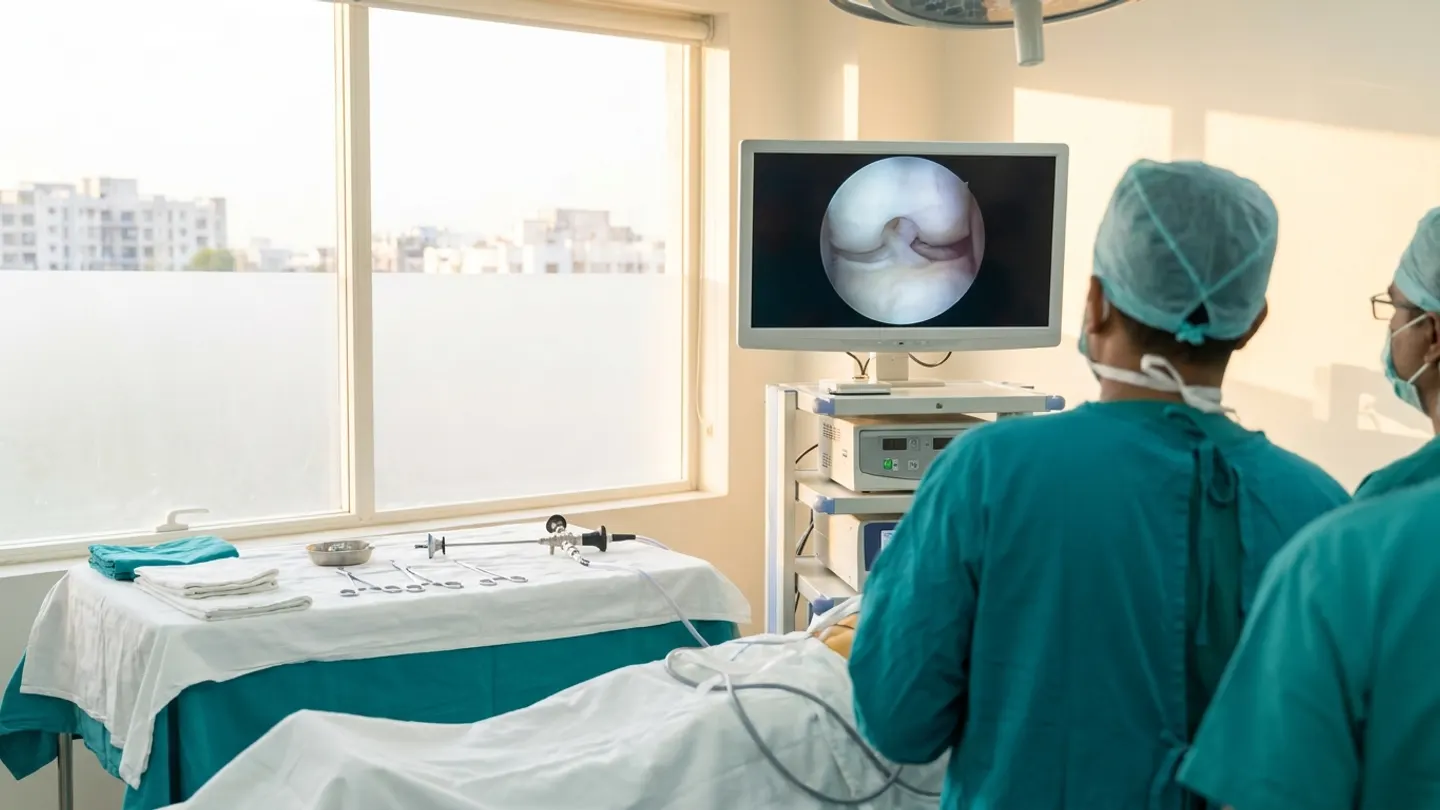
The procedure itself, arthroscopic ACL reconstruction using a patellar tendon, hamstring, or quadriceps graft, takes roughly 60 to 90 minutes under general or spinal anaesthesia. Most patients are discharged after one to two nights in hospital. From that point, recovery unfolds in four well-defined phases.
Phase 1: Weeks 1-2 — Protecting the Repair
The first two weeks are about controlling swelling, managing pain, and protecting the new graft while early tissue healing begins.
- Ice, compression, and elevation repeated several times a day
- Partial weight-bearing with crutches (most modern protocols allow full weight-bearing by day 7)
- Gentle range-of-motion exercises started within 24 to 48 hours of surgery
- Daily physiotherapy sessions beginning in the first week, which is straightforward for patients staying near their hospital
Most international patients choose to remain close to the treating facility during this window. India makes that practical because accommodation options near major medical centres are affordable and plentiful.
Phase 2: Weeks 3-8 — Early Rehabilitation
By week three, swelling should be reducing meaningfully and mobility improving. This phase focuses on regaining full knee extension and achieving around 90 degrees of flexion.
- Physiotherapy five days a week, progressing from passive assisted movements to active exercises
- Stationary cycling introduced from approximately week four
- Straight-leg raises, quad sets, and closed-chain exercises form the core programme
- Crutches typically discontinued between weeks 4 and 6
International patients planning to travel home during this window should confirm their flight plan with the surgeon before booking. Most doctors are comfortable with long-haul travel at the four-to-six-week mark, provided the leg can be elevated during the flight and blood-clot prophylaxis is prescribed.
Phase 3: Months 3-6 — Building Strength and Confidence
This is the phase many athletes describe as the hardest psychologically. The knee looks nearly normal and feels almost right, but the graft is still undergoing biological remodelling. Patience is the most important tool you have.
- Progressive resistance training: leg press, step-ups, single-leg balance and proprioception work
- Swimming and aqua therapy generally permitted from month three
- Light jogging in a straight line usually cleared between months four and five
- Isokinetic strength testing used to track quad-to-hamstring symmetry before progressing
If you have returned home by this stage, your IndoMedTour coordinator will arrange a handover report from your Indian surgical and physiotherapy team to share with your local provider.
Phase 4: Months 6-12 — Return to Sport
Return-to-sport clearance follows objective criteria that are the same worldwide: at least 90 percent strength symmetry between limbs, no pain or swelling with activity, and successful completion of sport-specific agility drills.
- Cutting and pivoting movements introduced from month six, depending on progress
- Sport-specific training running from months 6 to 9
- Full return to competitive sport: typically 9 to 12 months, sometimes up to 18 months for high-impact collision sports
“The graft takes time to ligamentise — that biological remodelling cannot be rushed regardless of where surgery is performed. What India offers is world-class physiotherapy support throughout that process, at a cost most international patients can actually sustain.”
How Much Does ACL Surgery Cost in India vs Other Countries?
One of the most important reasons patients travel to India for ACL reconstruction is cost. This matters beyond the upfront saving, because adequate physiotherapy is the single biggest determinant of a strong long-term outcome. When physiotherapy is expensive, patients cut sessions. In India, that compromise rarely needs to be made.
| Country | Approx. All-In ACL Reconstruction Cost |
|---|---|
| India | USD 2,500 — 5,000 |
| United States | USD 20,000 — 40,000 |
| United Kingdom | GBP 10,000 — 15,000 |
| Australia | AUD 15,000 — 25,000 |
| UAE | USD 8,000 — 14,000 |
Figures are indicative 2026 ranges covering hospital stay, surgeon fees, anaesthesia, implants, and a basic physiotherapy package. International airfare and local accommodation are additional.
The Indian cost typically includes 15 to 30 physiotherapy sessions, which in the US or Australia would alone cost several thousand dollars. For a full breakdown, visit our treatments and costs page.
Is ACL Surgery in India Safe for International Patients?
This is the most important question, and the honest answer is: yes, at the right institutions.
Top-tier hospitals in Delhi, Mumbai, Bengaluru, Chennai, and Hyderabad hold JCI (Joint Commission International) and NABH accreditation, the same international quality benchmarks required of hospitals in the United States and Europe. At these facilities, patients benefit from:
- Arthroscopic surgical techniques identical to those used in Western operating theatres
- FDA-approved or CE-marked graft fixation implants and fixation hardware
- Electronic medical records with full imaging documentation shared digitally with the patient on discharge
- Formal infection-rate and complication tracking that is audited and published
Browse our accredited hospital partners to understand the standards your treatment would be held to before you make any commitment.
What Factors Affect ACL Surgery Recovery Time in India?
Every patient is different. Several variables influence whether a return to full activity arrives closer to nine months or closer to twelve.
- Graft choice: Patellar tendon grafts often feel more stable early; hamstring grafts typically cause less donor-site discomfort. Your surgeon will recommend based on your anatomy, activity level, and sport.
- Pre-surgery fitness (“prehab”): Patients who spend four to six weeks strengthening the quadriceps, hamstrings, and hip abductors before surgery consistently recover faster post-operatively.
- Physiotherapy adherence: Skipping sessions is the single most reliable predictor of a slow or incomplete recovery, regardless of where surgery takes place.
- Age: Younger patients generally achieve strength symmetry faster, though graft integration rates are reliable across age groups at accredited centres.
- Concurrent injuries: A meniscus repair performed at the same time may require a more conservative weight-bearing timeline in the early weeks.
Planning Your ACL Reconstruction Trip to India: A Checklist
If India is a serious option for you, use this checklist to stay organised before you commit to anything:
- Obtain your MRI report and orthopaedic diagnosis from your home doctor or sports physician
- Share the MRI (DICOM files or high-resolution JPEG) with IndoMedTour for a complimentary second opinion from an Indian specialist
- Receive a written, itemised cost quote from the hospital covering surgery, anaesthesia, hospital stay, implants, and physiotherapy
- Plan to arrive two to three days before surgery for pre-operative blood tests, ECG, and your surgeon consultation
- Budget a minimum stay of two to three weeks after surgery; three to four weeks gives you a stronger physiotherapy foundation before the journey home
- Identify a physiotherapist at home before you leave India so your continuity of care is arranged in advance
- Confirm your medical visa requirements — IndoMedTour prepares the hospital invitation letter you need to apply
- Check your travel insurance policy terms regarding planned surgical procedures and pre-existing knee conditions
See how the full process works, from first enquiry to safe return home.
Frequently Asked Questions from ACL Patients Considering India
How soon can I fly home after ACL surgery in India?
Most surgeons clear international patients for long-haul flights between weeks four and six, provided swelling is well-controlled, compression stockings are worn throughout the journey, and low-molecular-weight heparin is prescribed for clot prevention. Do not book non-refundable flights before getting that clearance confirmed in writing by your surgeon.
Will physiotherapy in India match the standard I would get at home?
At JCI/NABH-accredited hospitals, physiotherapy departments use international outcome measures, modern equipment including aqua-therapy pools and isokinetic dynamometers, and physiotherapists who have frequently trained internationally. Many patients report their Indian physiotherapy programme was more intensive and better resourced than anything accessible at home, at a fraction of the cost.
Can I read about other patients’ experiences before I decide?
Yes. Read real success stories from patients who have undergone orthopaedic procedures in India through IndoMedTour. Accounts cover a range of procedures, budgets, and home countries, giving you an honest picture of what the journey looks like in practice.
For more on what the surgical pathway involves, visit our dedicated orthopaedics and joint replacement treatment page.
How IndoMedTour Helps
When you reach out to us, a real person responds — not a chatbot, not a call centre script. Our free counselling call connects you with a medical concierge who will review your MRI, match you with an accredited orthopaedic surgeon suited to your case, and send you a written, itemised quote covering surgery, hospital stay, physiotherapy, and local transport before you spend a single dollar on travel. We handle your medical visa invitation letter, arrange airport pickup, coordinate accommodation near your hospital, and assign a dedicated coordinator who stays with you through every step — from pre-operative tests on day one to the morning you fly home. Whether you are two weeks away from deciding or six months out from being ready, we are here to talk.
You bring the worry. We bring the plan.