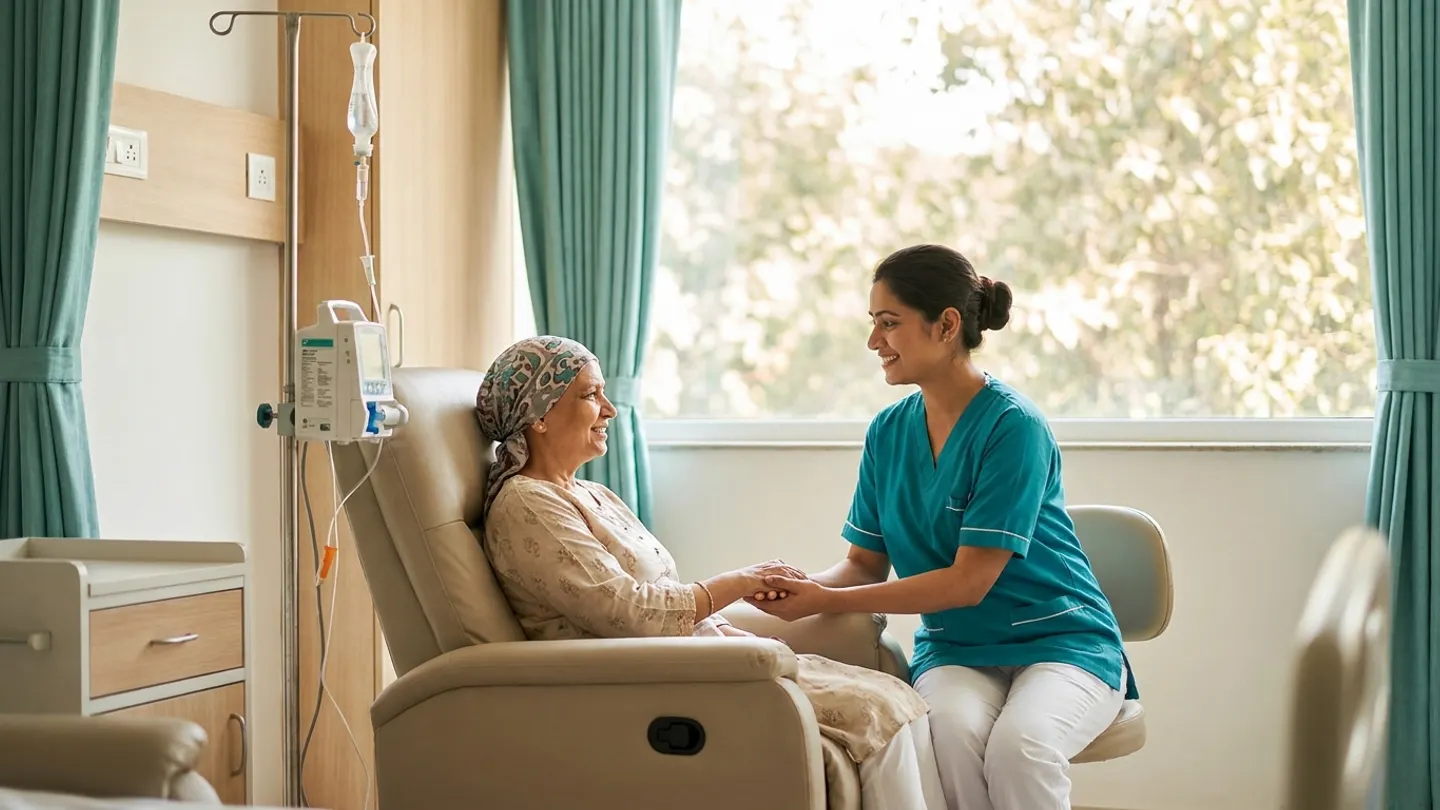
If you have just received a cancer diagnosis, the fear can feel suffocating — and the bill that follows can make it worse. Whether you are facing a six-figure treatment quote back home or a waiting list that stretches months ahead, you deserve a clear, honest look at what is genuinely available to you.
Best Cancer Hospitals in Delhi: What International Patients Need to Know
The best cancer hospitals in Delhi offer internationally accredited oncology care — robotic surgery, precision diagnostics, immunotherapy, and targeted therapy protocols that match what you would find at leading centres in the US or UK — at costs that are typically 60 to 80 percent lower. Delhi and its surrounding National Capital Region have become one of Asia’s most significant hubs for cancer treatment, drawing patients from across Africa, the Middle East, South-East Asia, Central Asia, and beyond every year.
Why Do International Patients Choose Delhi for Oncology?
Delhi holds the highest concentration of super-specialty cancer hospitals in South Asia. Several factors make it a serious option worth examining:
- Internationally trained oncologists: Many senior oncologists at Delhi’s top hospitals completed fellowships at leading centres in the US, UK, or Europe and publish in peer-reviewed international journals.
- Advanced technology: Linear accelerators (LINAC), CyberKnife radiosurgery, robotic-assisted surgery, PET-CT scanners, and next-generation sequencing (NGS) for tumour profiling are all available at leading Delhi hospitals.
- Accreditation: Multiple hospitals in Delhi hold JCI (Joint Commission International) accreditation or NABH accreditation — the two internationally recognised quality benchmarks that require regular independent audits.
- Multidisciplinary tumour boards: Oncologists, radiologists, pathologists, and surgeons review complex cases together in weekly tumour board meetings, exactly as they do at top Western cancer centres.
- International patient departments: Dedicated teams handle medical record translation, visa invitation letters, accommodation sourcing, and airport transfers so you are never navigating the system alone.
Cancer Treatment Cost in Delhi vs Other Countries
Cost is usually the first question, and it deserves a direct answer. The table below shows realistic 2026 indicative ranges. Actual costs depend on your cancer type, stage, specific protocol, and which hospital tier you choose.
| Treatment | India (Delhi) | United States | United Kingdom | Australia | UAE (Dubai) |
|---|---|---|---|---|---|
| Chemotherapy (per cycle) | $300 – $800 | $3,000 – $12,000 | $2,000 – $8,000 | $1,500 – $6,000 | $1,000 – $4,000 |
| Radiation therapy (full course) | $4,000 – $10,000 | $35,000 – $85,000 | $20,000 – $50,000 | $15,000 – $45,000 | $12,000 – $35,000 |
| Breast cancer surgery | $3,500 – $7,000 | $25,000 – $60,000 | $15,000 – $40,000 | $12,000 – $35,000 | $10,000 – $25,000 |
| Bone marrow transplant | $20,000 – $35,000 | $150,000 – $300,000 | $100,000 – $200,000 | $80,000 – $180,000 | $60,000 – $120,000 |
| Robotic cancer surgery | $5,000 – $12,000 | $40,000 – $90,000 | $25,000 – $60,000 | $20,000 – $55,000 | $15,000 – $40,000 |
All figures are approximate indicative ranges in USD and do not include flights, accommodation, or post-discharge medication. Request a personalised written quote through our free counselling call.
“I was quoted over $180,000 for my bone marrow transplant in the United States. After speaking with a coordinator at IndoMedTour, I received the same procedure at a JCI-accredited hospital in Delhi for under $28,000 — with someone beside me every step of the way.” — Representative experience from a patient family in the United States.
What Types of Cancer Are Treated at Delhi Hospitals?
Delhi’s leading hospitals handle the full spectrum of oncology. You do not need to worry that your diagnosis is too complex or too rare for the teams here.
- Haematological cancers: leukaemia, lymphoma, multiple myeloma, bone marrow and stem cell transplants
- Gastrointestinal cancers: colorectal, liver, pancreatic, gastric, and oesophageal cancers
- Breast cancer: from early-stage lumpectomy through post-mastectomy reconstruction
- Head and neck cancers: laryngeal, thyroid, oral, nasopharyngeal, and salivary gland tumours
- Lung and thoracic cancers: VATS (video-assisted thoracoscopic surgery), targeted therapy, and immunotherapy
- Neurological tumours: brain and spinal cord tumours, often managed in partnership with neurosurgery teams (see neurosurgery and spine care)
- Gynaecological cancers: cervical, ovarian, and uterine cancers, including fertility-sparing surgery where appropriate
- Prostate and urological cancers: robotic prostatectomy, radical cystectomy, kidney cancer surgery
- Paediatric oncology: dedicated children’s cancer units with specialised paediatric haematologists and psychosocial support
For a full overview of oncology services, protocols, and indicative costs, visit our cancer and oncology treatment page.
How to Choose the Right Cancer Hospital in Delhi
Not every hospital is the right fit for every patient or every diagnosis. Use this checklist when evaluating your options:
- Confirm the hospital holds JCI or NABH accreditation
- Verify there is a dedicated international patient services department with a named point of contact
- Ask about the oncologist’s sub-speciality — a hepatobiliary surgeon differs from a general surgical oncologist
- Request a formal tumour board review before committing to a treatment plan
- Confirm that your pathology slides and imaging from home can be reviewed remotely before you travel
- Ask for itemised written cost estimates in advance — reputable hospitals provide these without pressure
- Check turnaround time for diagnostics (PET-CT, biopsy, NGS) so you can plan your stay realistically
- Ensure interpreter services are available for your language if English is not your first language
Our hospitals page outlines the partner facilities we work with and why each one was selected.
What to Bring When You Travel for Cancer Treatment
Documents to prepare
Gather these before you leave home and keep both physical and digital copies:
- All previous medical reports, biopsy pathology slides (actual glass slides are preferable to copies), and radiology images on CD or as digital DICOM files
- A referral letter or clinical summary from your treating oncologist at home
- A passport valid for at least six months beyond your planned return date
- Travel insurance documentation — some policies cover planned medical travel; check the exclusions carefully
- A complete medication list using generic drug names and dosages
Practical considerations for arriving in Delhi
Delhi’s Indira Gandhi International Airport is one of Asia’s best-connected hubs, with direct flights from most major cities across Africa, the Middle East, Europe, and South-East Asia. Most leading hospitals in the NCR are within 30 to 60 minutes of the airport. International patient departments routinely arrange airport pickup, on-site or nearby accommodation, and serviced apartments for family members accompanying you.
Is It Safe to Travel to Delhi for Cancer Treatment?
Safety is a legitimate concern and it deserves a straight answer. Delhi’s leading cancer hospitals have treated hundreds of thousands of international patients over the past two decades. Infection control standards, sterile theatre environments, and post-operative monitoring in JCI-accredited and NABH-accredited hospitals are subject to independent international audits and are comparable to leading facilities in the West.
The larger risk for most international patients is not the quality of care in a reputable hospital — it is choosing the wrong facility or travelling without proper coordination and follow-up planning. That is precisely where working with an experienced medical tourism facilitator protects you. Read how the process works and browse success stories from patients who have chosen Delhi for complex cancer care.
Questions to Ask Your Oncologist Before You Leave Home
Have a frank conversation with your current oncologist before making any decisions:
- Is my diagnosis and staging confirmed beyond reasonable doubt, or is further investigation needed first?
- Will my records — pathology slides, imaging, reports — transfer cleanly to a new team?
- Is there any medical reason treatment cannot safely begin or continue abroad?
- What follow-up care will I need when I return home, and can my local team provide it?
Most patients find that their oncologist at home is understanding, and sometimes encouraging, when they understand the quality and cost difference that is genuinely available in Delhi. For treatment-specific information on related conditions, including fertility preservation during cancer treatment or managing orthopaedic complications from cancer or its treatment, our team can connect you with the right specialist.
You can also review a broader breakdown of treatments and costs to understand what your total journey might look like financially before you commit to anything.
How IndoMedTour Helps
A cancer diagnosis is already overwhelming without having to navigate a foreign healthcare system on your own. IndoMedTour begins with a free counselling call where we listen carefully to your diagnosis, your concerns, your timeline, and your budget. We then match you with two or three vetted hospitals from our partner network, obtain written itemised cost estimates on your behalf, and help coordinate your visa, flights, and accommodation. A dedicated patient coordinator remains beside you from admission through surgery and into your recovery period, and stays in contact after you return home to ensure your follow-up care is in place. You bring the worry. We bring the plan.