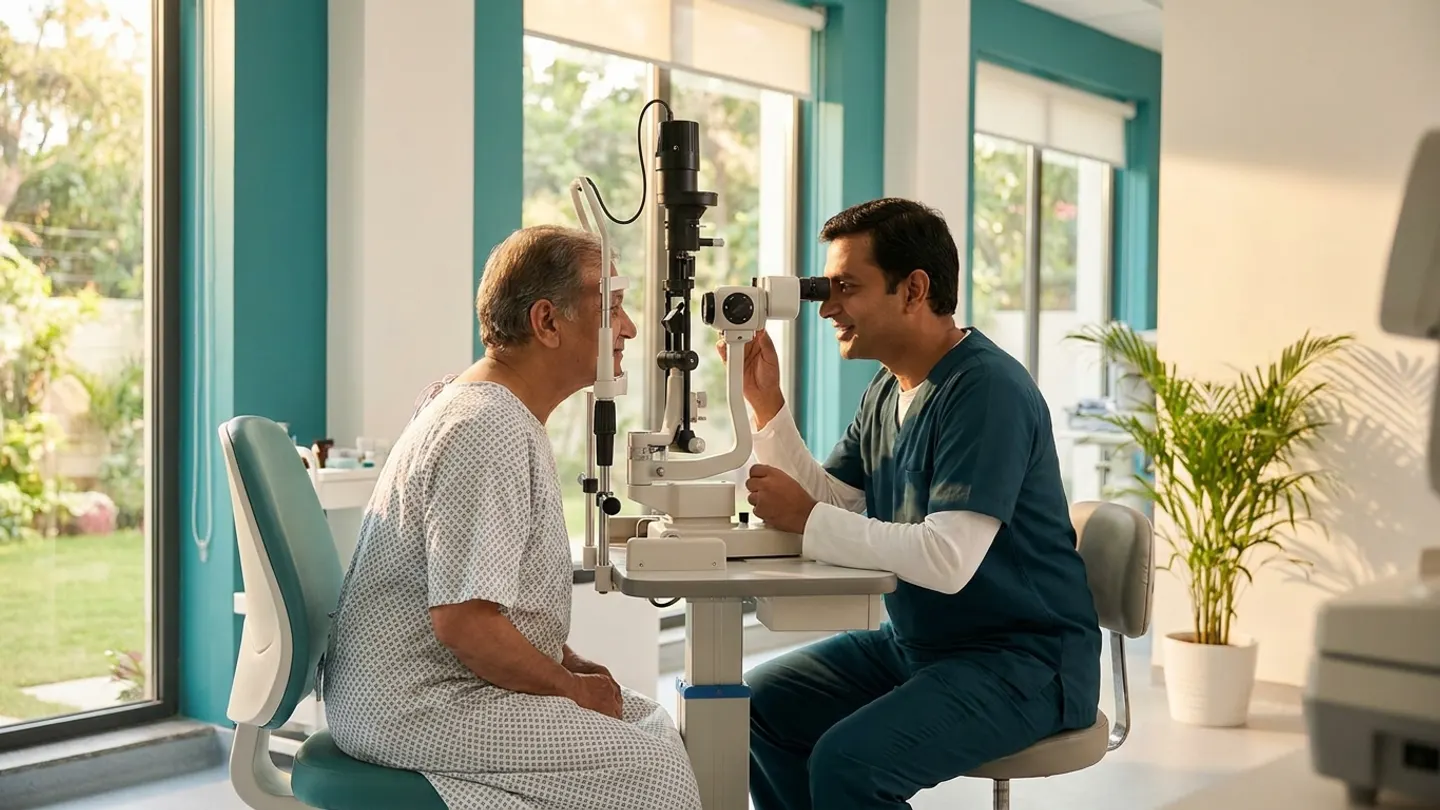
Losing clear vision is frightening. Whether you are facing a cataract that is quietly stealing your independence, a retinal condition that arrived without warning, or simply a lifelong dependence on glasses you are ready to leave behind, the cost of eye care in many countries can feel impossibly high — and the waiting lists can feel even longer. You deserve to know that there is a very good alternative.
Best Eye Hospitals in India for International Patients: The Short Answer
The best eye hospitals in India for international patients combine JCI and NABH-accredited facilities, globally trained surgeons, and procedure costs that are typically 60 to 80 percent lower than equivalent care in the United States, United Kingdom, or Australia. India performs millions of eye procedures every year, making it one of the world’s highest-volume and most experienced ophthalmology destinations — and that volume translates directly into surgical precision and outcome consistency.
Whether you need LASIK, cataract removal with a premium lens implant, vitreoretinal surgery, a cornea transplant, or treatment for glaucoma, India’s leading centres offer the full spectrum of ophthalmic care under one roof, with dedicated international patient departments that take care of everything from airport pickup to post-operative follow-up calls.
Why India Has Become a Global Destination for Eye Care
India has a long and distinguished tradition of ophthalmology, driven partly by the sheer scale of the country’s need and partly by decades of investment in surgical training and medical technology.
Several factors make it particularly attractive for international patients:
- High surgical volume: India’s top eye hospitals perform hundreds of procedures per week. Surgical proficiency is directly tied to repetition, and the volumes here are extraordinary.
- Latest technology: Leading centres use platforms such as the WaveLight EX500 excimer laser for LASIK, femtosecond cataract platforms, and 25-gauge microincision vitreoretinal systems — the same equipment used at premium clinics in the US and Europe.
- English-speaking care teams: India’s medical profession communicates primarily in English, eliminating a common stress point for international patients.
- Specialist depth: Many hospitals house subspecialists in cornea, retina, glaucoma, paediatric ophthalmology, and oculoplastics under a single campus, so complex diagnoses can be assessed by multiple experts in one visit.
- Accreditation: JCI and NABH accreditation set rigorous standards for infection control, surgical protocols, patient rights, and outcome tracking. These are the benchmarks you should look for when comparing facilities. You can explore our hospitals for accreditation details on every partner centre.
Eye Treatment Costs: India vs the World (2026)
The table below gives indicative price ranges for the most commonly requested ophthalmic procedures. All figures are in USD and represent the total package for international patients — hospital fee, surgeon fee, equipment, medications, and standard follow-up visits during your stay.
| Procedure | India | United States | United Kingdom (Private) | Australia | UAE (Dubai) |
|---|---|---|---|---|---|
| LASIK (both eyes) | $400 – $900 | $4,000 – $6,000 | $3,000 – $5,000 | $3,500 – $5,500 | $2,000 – $3,500 |
| Cataract (per eye, monofocal IOL) | $500 – $900 | $3,500 – $6,000 | $2,500 – $4,500 | $2,500 – $5,000 | $1,800 – $3,200 |
| Cataract (per eye, premium trifocal IOL) | $1,000 – $1,800 | $5,000 – $8,000 | $4,000 – $7,000 | $4,000 – $6,500 | $2,500 – $4,500 |
| Retinal detachment surgery | $1,500 – $3,500 | $15,000 – $30,000 | $10,000 – $20,000 | $8,000 – $18,000 | $6,000 – $14,000 |
| Cornea transplant (PKP/DSAEK) | $2,000 – $4,500 | $15,000 – $25,000 | $12,000 – $22,000 | $10,000 – $18,000 | $7,000 – $15,000 |
| Vitrectomy (diabetic retinopathy) | $1,800 – $4,000 | $12,000 – $25,000 | $9,000 – $18,000 | $8,000 – $16,000 | $5,000 – $12,000 |
| Glaucoma surgery (trabeculectomy) | $1,200 – $2,500 | $8,000 – $15,000 | $6,000 – $12,000 | $5,000 – $11,000 | $4,000 – $9,000 |
All figures are indicative 2026 ranges for international self-paying patients. Your personalised quote depends on your diagnosis, the specific procedure, IOL brand chosen, and hospital tier. Request a written estimate through our free counselling call.
What Treatments Are Available?
India’s best eye hospitals cover the full scope of modern ophthalmology:
Refractive Surgery (LASIK and Beyond)
LASIK remains the most requested procedure among international patients, but India’s leading centres also offer SMILE (Small Incision Lenticule Extraction), PRK, and ICL (Implantable Collamer Lens) implantation for patients outside the LASIK candidacy range. Pre-operative mapping and post-operative enhancement follow-up are included in package pricing.
Cataract Surgery
Standard phacoemulsification (the small-incision technique used globally) is available with a wide range of intraocular lens options — from basic monofocal lenses to premium trifocal and extended-depth-of-focus lenses that reduce or eliminate the need for reading glasses after surgery. International patients often choose India specifically to access premium IOL technology at prices 60 to 70 percent below what their home country’s private sector charges.
Retina and Vitreoretinal Surgery
Diabetic retinopathy, macular degeneration, retinal detachment, macular holes, and epiretinal membrane are all managed by dedicated vitreoretinal surgical teams. Centres use 25- and 27-gauge micro-incision systems that speed recovery and reduce post-operative inflammation.
Cornea Services
Cornea transplantation (full-thickness PKP, endothelial DSAEK and DMEK), keratoconus management including corneal cross-linking (CXL), and corneal rings are performed at specialist cornea units. India’s eye banks are well-established and sourcing is professionally managed.
Glaucoma Management
Both medical and surgical glaucoma management is available, including trabeculectomy, tube shunt procedures, and minimally invasive glaucoma surgery (MIGS) using the latest micro-stent platforms.
Paediatric and Oculoplastic Services
Strabismus (squint) correction, congenital cataract, retinopathy of prematurity, and ptosis repair are handled by dedicated paediatric ophthalmology units at larger centres — a resource families from countries with long paediatric wait lists often seek out.
What to Look for When Choosing an Eye Hospital in India
“The single most important question is not ‘which hospital is famous’ — it is ‘which hospital has the right subspecialist for my exact diagnosis, with the technology to match.’” This is precisely why working with a medical-tourism coordinator who knows each centre’s actual clinical strengths is so valuable.
When comparing hospitals, check for:
- JCI or NABH accreditation — the internationally recognised quality benchmark
- Dedicated international patient department with a coordinator who speaks your language
- Pre-travel telemedicine consultation — a reputable hospital will review your records and provide a written treatment plan before you book a flight
- Transparent package pricing — ask for a written quote covering surgery, medications, follow-up visits, and accommodation assistance
- Technology specifics — ask which laser platform or IOL system they use for your procedure
- Post-departure follow-up protocol — how will they support you once you return home?
Visit our treatments and costs page and how it works guide for more detail on what a typical journey looks like from first enquiry to discharge.
Planning Your Trip: A Practical Checklist
Before you travel to India for eye surgery, make sure you have:
- A confirmed pre-travel telemedicine consultation with your treating surgeon
- All prior eye records, refraction history, and any imaging scans sent in advance
- A written surgical plan and package quote in your currency
- Confirmed accommodation close to the hospital (many hospitals offer partner guesthouses)
- A companion or escort for the 24 hours immediately after surgery (your vision will be temporarily blurred)
- Clarity on your follow-up protocol once you return home — who checks your eye locally?
For complex procedures such as retinal detachment or cornea transplant, your IndoMedTour coordinator will also help you arrange medical visa documentation, which is straightforward for genuine patients. See our hospitals and success stories for first-hand accounts of how other international patients navigated the journey. For treatments beyond eye care, you may also find useful information on our [/treatments/eye-ophthalmology] page.
How IndoMedTour Helps
When you reach out to IndoMedTour, you start with a free counselling call where a care advisor listens to your diagnosis, reviews whatever records you have, and matches you to the right specialist and hospital for your specific condition — not just the most popular name. We send you written quotes from our partner hospitals within 48 hours, help you plan your visa and travel, and assign you a dedicated patient coordinator who stays with you from the moment you land in India through your discharge and safe journey home. You bring the worry. We bring the plan.