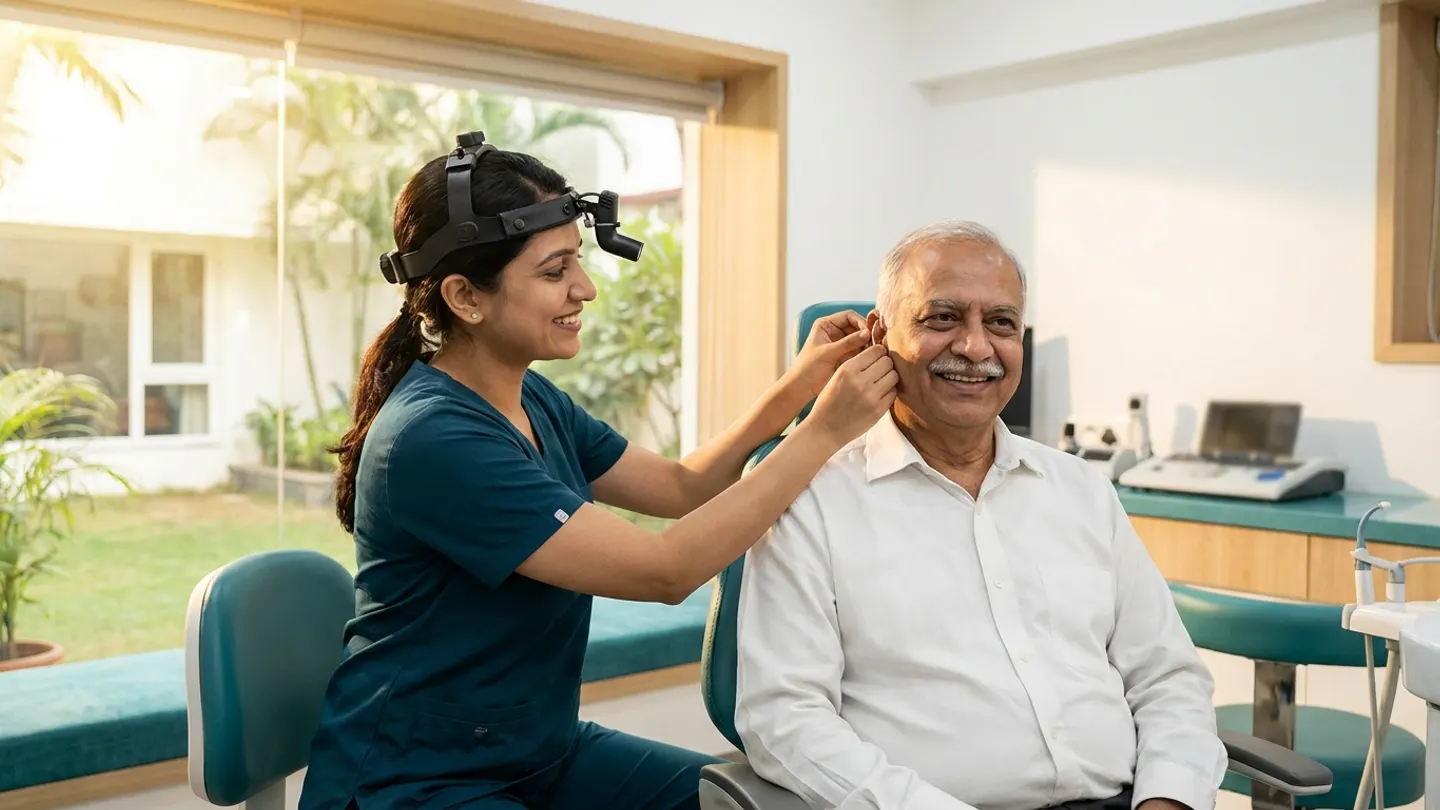
Facing a major procedure far from home is daunting enough. Adding the thought of navigating an unfamiliar country alone — through surgery, recovery, and all the small moments in between — can make the decision feel overwhelming. You should not have to do this alone, and the good news is: you do not have to.
Bringing a companion to India for treatment is not only possible, it is actively encouraged by the country’s top hospitals. Here is everything you need to know to plan that journey together.
Can You Bring a Companion to India for Medical Treatment?
Yes — India’s visa system explicitly accounts for medical companions, and every major JCI- or NABH-accredited hospital we work with has policies designed to include them. A companion can be your spouse, adult child, sibling, close friend, or any trusted adult. They do not need a medical background. Their role is simply to be present: to hold your hand before surgery, to ask questions you forget to ask, to handle paperwork when you are tired, and to celebrate the first steps of your recovery.
The logistics are more straightforward than most patients expect. India’s Medical Visa (MED-X) includes a companion category, and standard Tourist Visas work just as well for most nationalities. We will walk through both below.
Visas for Patients and Companions
The Medical Visa (MED-X)
India’s MED-X visa is issued to patients travelling specifically for treatment. It allows a stay of up to one year (extendable) and is typically valid for multiple entries. Crucially, up to two companions can apply simultaneously on a Medical Attendant Visa (MED-X Attendant), which is tied to your patient visa application.
Key documents your companion will need:
- Valid passport (minimum 6 months remaining validity)
- Your MED-X visa approval letter or reference number
- A letter from the treating hospital in India confirming the patient relationship
- Proof of financial means for the stay (bank statement or sponsor letter)
- Recent passport-size photographs
- Completed online visa application (indianvisaonline.gov.in)
Processing typically takes 3-7 business days through the Indian e-Visa portal, or 5-14 business days at an Indian embassy or consulate. Your IndoMedTour coordinator will prepare the hospital invitation letter that both your and your companion’s applications require.
Tourist Visa as an Alternative
If your companion is travelling from a country eligible for the Indian e-Tourist Visa (most of the world), a standard tourist visa is perfectly valid for accompanying a medical patient. It is simpler to apply for and in many cases approved within 72 hours. The only limitation: if your treatment and recovery extend beyond the standard 90-day tourist stay, your companion may need to apply for an extension or switch to the attendant visa category.
What It Actually Costs to Bring Someone Along
One of the most relieving realities of medical tourism in India is how affordable the companion experience is compared to staying in a Western country.
| Companion Expense | India (approx.) | US / UK / Australia (approx.) |
|---|---|---|
| Companion hotel near hospital (per night) | USD 30-80 | USD 150-350 |
| In-room attendant bed (hospital, per night) | USD 10-30 | Often not available |
| Meals for companion (per day) | USD 10-25 | USD 50-100 |
| Local transport (taxis, rideshares) | USD 5-15/day | USD 30-80/day |
| Visa / entry fee (one-time) | USD 25-80 | N/A (domestic) |
| Estimated total for 2-week stay | USD 800-1,500 | USD 3,000-7,000+ |
Prices are indicative and will vary by city, hospital, and season. Costs in Mumbai and Delhi tend to be slightly higher than in Chennai or Hyderabad.
“We budgeted for one of us to travel. When we learned my husband could come for less than the cost of our monthly health-insurance premium, there was no debate. He was there when I woke up from surgery — that meant everything.” — Representative patient experience, composite for illustration purposes.
Where Will Your Companion Stay?
You have two main options, and the right one depends on your procedure length and personal preference.
Staying in Your Hospital Room
Most accredited hospitals in India — particularly those serving international patients — provide an attendant bed, pull-out sofa, or dedicated recliner in private patient rooms. Your companion can stay overnight at little or no additional cost. This is ideal for the first few days post-surgery when you need the most support and reassurance.
A Service Apartment or Guest House Nearby
For longer stays (two weeks or more), many companions prefer to base themselves in a furnished service apartment within walking distance of the hospital. These typically cost USD 30-70 per night and include a small kitchen, Wi-Fi, and laundry facilities. They allow your companion to sleep properly, maintain a routine, and step away to explore the city — which matters for their wellbeing during what can be a stressful time for them too.
Your IndoMedTour coordinator will recommend vetted options close to your specific hospital so your companion is never more than a 10-minute journey away.
How to Prepare Your Companion for the Trip
Bringing someone along is wonderful, but it also means briefing them properly so they can genuinely help rather than feel lost.
Pre-departure checklist for your companion:
- Obtain travel insurance that covers their stay (even without a medical procedure, travel insurance is essential)
- Download a translation app (Google Translate works well in Indian hospitals, and most staff speak English)
- Save the hospital’s international patient desk number and your coordinator’s WhatsApp number
- Understand the approximate post-operative care routine: what you will and will not be able to do for yourself
- Pack comfortable, versatile clothing for the local climate — India can be hot; layering for air-conditioned hospital wards is wise
- Bring any personal medications in their original packaging with a prescription letter
- Know your blood type and any allergies in case the medical team asks them
It is also worth having an honest conversation before you travel about what the companion role involves. Post-surgery, patients often need help with basic tasks — dressing, moving slowly, managing medication schedules. If your companion understands this in advance, they can step into it with confidence rather than shock.
What Your Companion Can Do While You Rest
Recovery is not all bed rest, and your companion will have stretches of time when you are sleeping or undergoing tests. India is a remarkable country to explore gently, and many companions find the experience surprisingly enriching.
Most of India’s major medical-tourism hubs — Chennai, Mumbai, Delhi, Hyderabad, Bengaluru — have world-class museums, heritage sites, markets, and food scenes within a short taxi ride. Your coordinator can suggest safe, easy day trips calibrated to however long you can spare them.
This balance matters. A companion who feels useful and engaged will be a far better support than one who is anxious and cooped up. Encourage them to take the occasional afternoon for themselves.
Communication, Language, and Everyday Life
India’s leading private hospitals serving international patients employ staff who speak excellent English. Menus, forms, prescriptions, and discharge notes will be provided in English. Signage in most private hospitals is bilingual. Your companion will not need a phrase book to navigate the ward.
For everyday life outside the hospital — restaurants, shops, taxis — a translation app handles the gap easily, and apps like Uber and Ola work exactly as they do at home. Payments via card or international apps (Google Pay, Apple Pay) are accepted widely in cities.
Working with Your IndoMedTour Coordinator
From the moment you reach out, your IndoMedTour coordinator treats your companion as part of the team, not an afterthought. They will:
- Help you and your companion obtain the correct visa category
- Pre-arrange airport pickup for both of you
- Confirm the companion bed or service apartment before you land
- Brief your companion on the hospital layout, visiting hours, and what to expect on surgery day
- Remain available by WhatsApp throughout, so your companion always has someone to call if you cannot speak for yourself
Patients frequently tell us that having that single, consistent point of contact was what made the difference between a nerve-wracking trip and a managed one.
For a detailed picture of how the entire process works, or to compare treatment costs for your specific procedure, our resources are a good starting point before your call.
We also cover popular treatment areas including orthopaedic and joint replacement, cardiac surgery, cancer care, and fertility treatment — each with companion-friendly hospital options.
How IndoMedTour Helps
When you book a free counselling call, our patient advisors discuss not just your diagnosis and treatment options but your full support picture — including your companion’s needs, budget, and comfort. We match you with the right JCI- or NABH-accredited hospital, arrange written cost quotes covering both of you, and handle visa guidance, accommodation, airport transfers, and in-hospital coordination. Your dedicated coordinator is beside you — and beside your companion — from the first message to the day you fly home recovered. You bring the worry. We bring the plan.