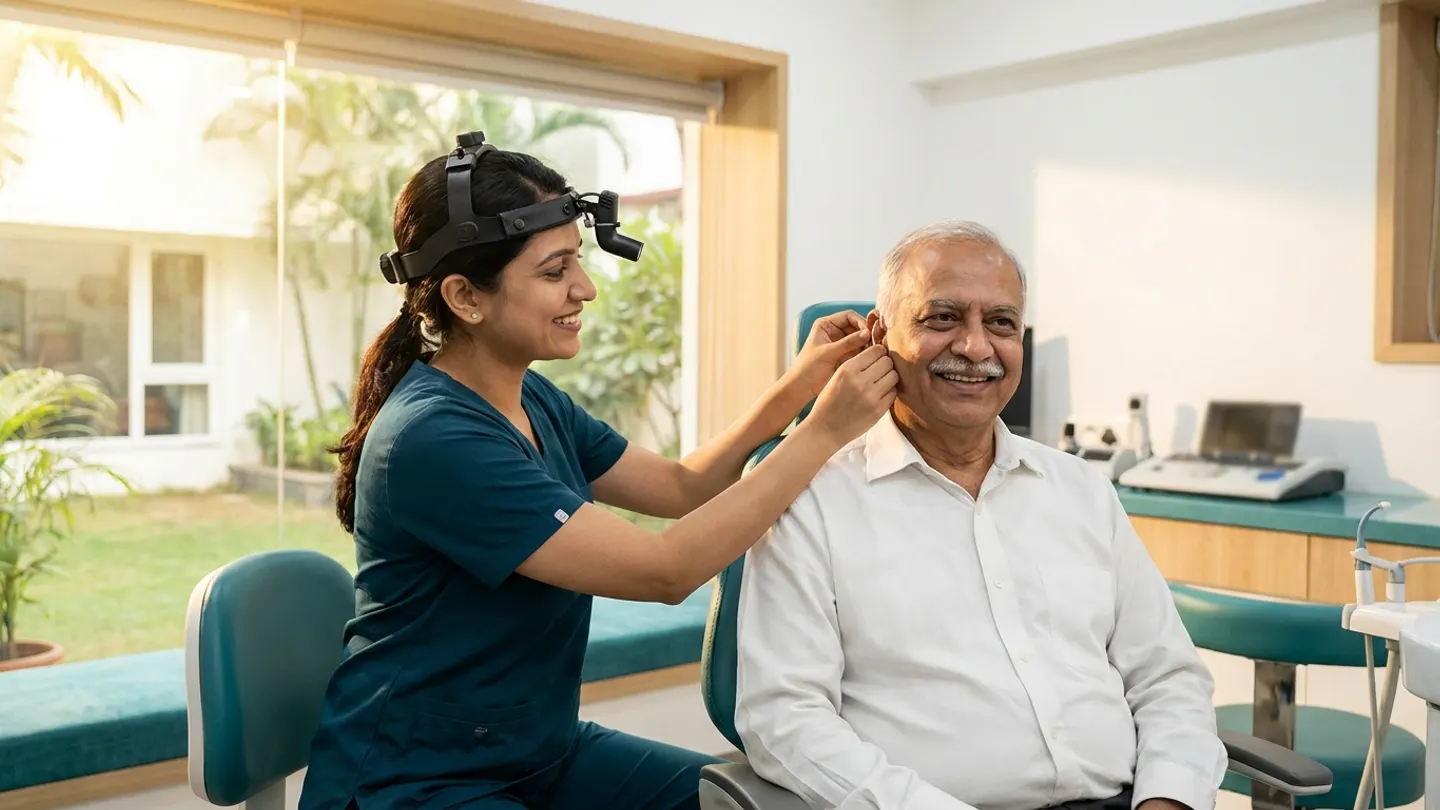
Hearing loss can feel isolating enough on its own. Add a quote for $50,000 from your local specialist, or the news that the public waiting list runs to eighteen months, and the emotional weight becomes almost unbearable. If you are researching cochlear implants and wondering whether India could offer a realistic, safe alternative, this guide is written for you.
Cochlear Implant Cost in India: The Numbers That Matter in 2026
Cochlear implant cost in India typically ranges from approximately $8,000 to $16,000 (around INR 6.5 to 13 lakh) for a unilateral procedure, covering the implant device, surgery, anaesthesia, a short hospital stay, and the first round of audiologist programming. That is between 65 and 75 percent less than equivalent treatment in the United States or the United Kingdom, a saving that can easily run to $35,000 or more on a single ear.
Here is what that total typically includes:
| Component | Approximate Cost in India (2026) |
|---|---|
| Cochlear implant device (one ear) | $5,500 – $9,000 |
| Surgeon and anaesthesia fees | $1,000 – $2,500 |
| Hospital stay (3–5 nights) | $800 – $1,500 |
| Post-operative mapping and tuning sessions | $300 – $700 |
| Total (unilateral) | $8,000 – $16,000 |
For bilateral implants (both ears), costs are typically $14,000 to $28,000. That still sits well below what bilateral implants cost in most Western healthcare markets.
How India Compares to Other Countries
| Country | Unilateral Cochlear Implant (Approx. 2026 Range) |
|---|---|
| USA | $40,000 – $60,000 |
| UK (private) | $35,000 – $50,000 |
| Australia | $28,000 – $45,000 |
| UAE | $22,000 – $35,000 |
| India | $8,000 – $16,000 |
All figures are indicative, vary by hospital tier, device brand, and individual medical complexity, and exclude travel and accommodation. Always request an itemised written quote before making any decision.
For a broader comparison across procedures, see our treatments and costs page.
Why Is Cochlear Implant Surgery So Much More Affordable in India?
The lower cost does not reflect lower care. India’s price advantage comes from structural economics: operating costs, salaries, and hospital overheads are a fraction of those in the USA or UK. India’s top ENT centres operate at high surgical volume, which drives institutional efficiency and deep surgical experience without compromising individual patient attention. The implant devices themselves are the same globally recognised brands available anywhere in the world. The surgical techniques and audiological protocols follow international standards. What changes is the bill at the end.
Is the Quality Safe? JCI and NABH Accreditation Explained
This is the question that matters most, and it deserves a direct answer.
India’s leading cochlear implant hospitals hold JCI (Joint Commission International) accreditation, the gold standard for international patient safety, and NABH (National Accreditation Board for Hospitals) accreditation, India’s own rigorous quality framework. Both cover surgical protocols, infection control, patient identification systems, and staff qualifications. A JCI-accredited hospital in Chennai or Hyderabad meets the same baseline safety benchmarks as a JCI-accredited hospital in Dubai or Singapore.
Cochlear implant surgeons at top Indian centres are typically fellowship-trained in the UK, USA, Germany, or Australia. Many centres perform several hundred implant procedures each year, meaning the surgical team carries a depth of hands-on experience that smaller Western programmes cannot always match in volume.
“I had been quoted $52,000 in the United States and told I would need to wait several months. In India I was operated on within six weeks at a fraction of the cost, with a dedicated coordinator who met me at the airport and stayed with me throughout. The quality of care was exceptional.” This is a representative account reflecting common patient experiences; individual details have been changed for privacy.
Read more first-hand accounts on our success stories page.
Cochlear Implants for Children: Does the Cost Differ?
Paediatric cochlear implant surgery in India falls within the same cost range as adult procedures. Many families travel specifically because public waiting lists at home can stretch across critical developmental windows. Early implantation before age two or three for congenitally deaf children significantly improves speech and language outcomes, making timeline as important as cost. India’s high-volume paediatric ENT units are experienced with very young patients and provide structured post-operative auditory verbal therapy guidance to help families support their child’s hearing journey at home.
Which Implant Brands Are Available in India?
All three major global manufacturers are available at India’s leading ENT centres: Cochlear (Australia), MED-EL (Austria), and Advanced Bionics (USA). Your surgeon will recommend a platform based on your anatomy, lifestyle, and medical profile. The device itself is the largest single cost component, so ensure that any quote you receive specifies the exact device model, so you can compare like for like.
Visit our hospitals page for details on accredited centres and the implant systems they offer.
Planning Your Cochlear Implant Trip: A Practical Checklist
Most international patients structure their India visit in two stages: the surgical trip (typically ten to fourteen days) and a return visit three to four weeks later for device activation and initial mapping. Some hospitals now offer remote mapping sessions for patients who cannot travel back easily.
Work through this checklist with your care coordinator before you book:
- Obtain a recent audiology report, including a pure-tone audiogram and speech discrimination scores
- Gather CT or MRI scans of both inner ears, even if only one ear is being implanted
- Confirm candidacy criteria with your local audiologist (profound-to-severe sensorineural hearing loss with limited hearing-aid benefit)
- Decide between unilateral and bilateral implantation after consulting your Indian surgeon
- Choose your device brand with input from your surgeon, based on anatomy and lifestyle needs
- Plan your first India visit for a 3 to 5 day hospital stay plus several days of recovery before flying
- Arrange auditory verbal therapy at home in advance, to begin as soon as possible after activation
- Ask your coordinator about remote mapping availability if you cannot return for follow-up sessions
For a full walkthrough of the end-to-end process, visit how it works.
Total Budget: Beyond the Surgery Itself
When estimating your overall spend, build in these additional items:
- Return flights: varies considerably by origin country and season
- Accommodation: serviced apartments and hospital guest houses in India typically cost from approximately $30 to $80 per night
- Second visit for device activation: budget a five to seven day stay
- Speech and language therapy at home: the most significant ongoing cost post-implant, and essential for good outcomes
Even accounting for two trips and accommodation, most international patients find their total out-of-pocket cost remains substantially below the uninsured price at home.
Book a free counselling call and our team will help you build a realistic personalised budget based on your specific situation.
How IndoMedTour Helps
Researching cochlear implant cost in India from thousands of miles away, while managing the emotional reality of hearing loss, is genuinely hard work. IndoMedTour begins with a free call where we listen to your full situation, then matches you with a JCI or NABH-accredited cochlear implant centre that suits your medical profile, device preference, and budget. We provide written, itemised quotes before you commit to anything, handle your medical visa paperwork and travel logistics, and assign a dedicated coordinator who stays beside you from the pre-surgical consultation through surgery, device activation, and safe discharge. You never have to navigate an unfamiliar healthcare system alone.
You bring the worry. We bring the plan.