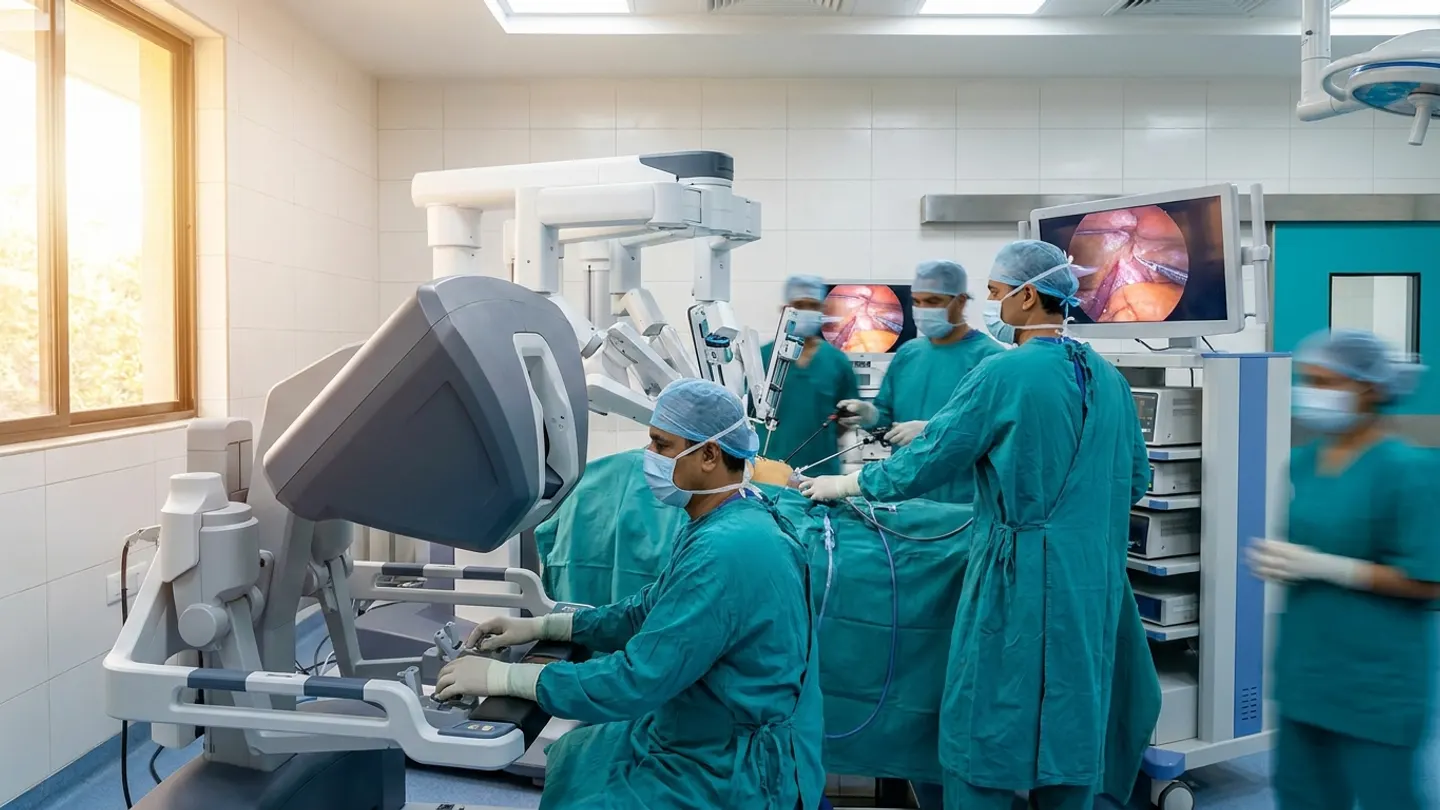
If your surgeon has recommended hernia repair and you have just looked up the cost at home — whether in the US, the UK, or Australia — that number may have stopped you in your tracks. Add a waiting list of several months, and it is easy to feel stuck. The good news is that the same procedure, performed by equally trained surgeons using the same mesh and equipment, costs a fraction of that price at accredited hospitals in India.
Hernia Surgery Cost in India: The Direct Answer for 2026
Hernia surgery cost in India typically ranges from approximately $1,200 to $4,500 USD, depending on the technique, the type of hernia, and the hospital tier you choose. To put that in perspective, a laparoscopic inguinal hernia repair that costs $10,000 to $20,000 in the United States is available at JCI- and NABH-accredited Indian hospitals for $1,800 to $3,500 — often in a private room with a dedicated nurse coordinator and a patient-liaison who speaks your language.
That saving is not a fluke. It reflects structural differences in healthcare economics, not a reduction in surgical standards. The surgeons, the mesh brands, the laparoscopes, and the robot arms are frequently the same as those used in North America or Europe. What differs is the cost of running the facility, the cost of trained labour, and the absence of the enormous administrative overhead that inflates hospital bills in countries like the US.
Open, Laparoscopic, and Robotic Hernia Surgery: What Each Costs in India
Open Hernia Repair
Open repair is the traditional technique, performed through a single incision over the hernia site. It remains effective, particularly for very large or recurrent hernias, and is the most affordable option. In India, open hernia repair costs approximately $1,200 to $2,000 USD.
Laparoscopic (Keyhole) Hernia Repair
Laparoscopic repair uses three small incisions, a camera, and a surgical mesh inserted through narrow instruments. Patients experience less post-operative pain, a shorter hospital stay, and a faster return to normal activity compared with open surgery. This is the most commonly requested technique among international patients. Cost in India: approximately $1,800 to $3,500 USD.
Robotic-Assisted Hernia Repair
Robotic surgery — most often performed with the da Vinci system — gives the surgeon enhanced three-dimensional visualisation and precision movement. It is especially suited to complex, bilateral, or recurrent hernias. Cost in India: approximately $3,000 to $4,500 USD. Even at the top of that range, the saving compared with a US robotic hernia procedure (which can reach $30,000) is dramatic.
India vs the World: Hernia Surgery Cost Comparison 2026
| Country | Open Repair | Laparoscopic | Robotic-Assisted |
|---|---|---|---|
| India | $1,200 – $2,000 | $1,800 – $3,500 | $3,000 – $4,500 |
| United States | $7,000 – $14,000 | $10,000 – $20,000 | $15,000 – $30,000 |
| United Kingdom | $5,000 – $10,000 | $7,000 – $14,000 | $12,000 – $22,000 |
| Australia | $6,000 – $12,000 | $8,000 – $16,000 | $14,000 – $25,000 |
| UAE | $4,000 – $8,000 | $5,000 – $10,000 | $8,000 – $15,000 |
All figures are indicative 2026 ranges. Actual costs vary by hospital tier, city, and individual clinical complexity. Always request a written itemised quote before committing.
“I flew to India for a laparoscopic inguinal hernia repair expecting at least two weeks away. I was walking comfortably by day three and the total bill — including my recovery hotel — came to less than my insurance deductible back home.” Representative of feedback gathered from international patients treated at IndoMedTour partner hospitals.
What Is Typically Included in a Hospital Package?
Most hospitals that work with international patients offer bundled packages. Here is what is usually covered:
- Pre-operative consultations with the general surgeon and anaesthesiologist
- Standard blood work, ECG, and imaging (ultrasound or CT scan where clinically required)
- Surgeon’s fee, anaesthesia, and operation theatre charges
- Approved surgical mesh (polypropylene or bio-absorbable, depending on the case)
- Private or semi-private hospital room for the duration of the inpatient stay (usually 1 to 2 nights)
- Nursing care, post-operative medications, and dressings during the hospital stay
- One or two follow-up consultations before departure
- Discharge summary and complete medical records formatted for your home doctor
Items that are not always included: international flights, accommodation outside the hospital, airport transfers, and travel insurance. Ask for a written itemised breakdown before you commit to any package.
Browse indicative package ranges on our treatments and costs page.
What Factors Affect the Final Price?
Several variables move the number within the ranges above:
- Type of hernia — inguinal repairs are the most straightforward; hiatal or incisional hernias involving prior scar tissue can require more operating time and a longer stay
- Surgical technique — robotic adds a facility surcharge over laparoscopic
- Hospital tier and city — a quaternary private hospital in Mumbai or Delhi charges more than an equally accredited hospital in Hyderabad or Coimbatore
- Mesh grade — lightweight or bio-absorbable mesh costs more than standard polypropylene
- Length of stay — a second night or an ICU precaution adds to the room charge
- Pre-operative complexity — patients with cardiac or metabolic conditions may need specialist clearance, adding to pre-op costs
Types of Hernia Treated in India
Indian surgical teams manage the full clinical spectrum:
- Inguinal hernia (groin) — the most common type, occurring in both men and women
- Umbilical hernia — at or near the navel, including post-pregnancy cases
- Hiatal hernia — where part of the stomach pushes through the diaphragm; often treated laparoscopically
- Incisional hernia — through a scar from previous abdominal surgery
- Femoral hernia — in the upper inner thigh, more prevalent in women
- Epigastric hernia — between the navel and the lower chest
If you have a recurrent hernia that has been declined or de-prioritised at home, it is worth asking us whether a suitable specialist is available through our hospitals.
Is Hernia Surgery in India Safe?
Yes — with appropriate hospital selection. Laparoscopic and robotic hernia repair are among the most standardised procedures in modern general surgery, and complication rates are low globally. India’s leading facilities routinely report infection rates, recurrence rates, and conversion-to-open rates that align with published international benchmarks.
The quality bar to look for is JCI (Joint Commission International) or NABH (National Accreditation Board for Hospitals) accreditation. These are not honorary titles. Both require ongoing, unannounced audits covering surgical protocols, instrument sterilisation, anaesthesia safety, and patient-outcome tracking. Hospitals without these certifications are not recommended by IndoMedTour, regardless of price.
The risks that exist — mesh reaction, recurrence, wound infection, nerve discomfort — are the same risks as anywhere in the world. The way to minimise them is careful hospital vetting, thorough pre-operative review of your records, and a surgeon with documented experience in your specific hernia type. That vetting is what IndoMedTour does before you book a single flight. Read how it works for the step-by-step process.
Practical Timeline for International Patients
Most hernia repairs are one-night or day-surgery procedures, but we recommend building in adequate recovery time before a long-haul flight.
| Day | What Happens |
|---|---|
| Day 1 | Arrival, hotel check-in, pre-operative consultation with surgeon |
| Day 2 | Blood work, ECG, and imaging; anaesthesiologist clearance |
| Day 3 | Surgery; hospital admission |
| Day 4–5 | Hospital discharge; rest at nearby accommodation |
| Day 6–8 | Walking recovery; follow-up consultation; wound check |
| Day 9–10 | Fly home (short-haul) or rest an additional 2–3 days for long-haul |
You leave with a full discharge summary, imaging reports, operative notes, and a surgeon’s letter confirming fitness for air travel — everything your home GP will need for continuity of care.
How IndoMedTour Helps
When you book a free counselling call with us, a medical coordinator reviews your scan reports and clinical history, shortlists hospitals and surgeons matched to your case, and sends you written quotes within 48 hours. We arrange the medical visa support letter, coordinate accommodation near the hospital, and assign you a dedicated coordinator who stays in contact from the day you land through your flight home. If you would like to hear from people who have already made this journey, our success stories page is a good place to start.
You bring the worry. We bring the plan.