Planning treatment abroad while managing the unknown is genuinely stressful. Whether you are watching a bank account empty at home or sitting on a waiting list that stretches into next year, the question of how long you will actually need to be away from family and work matters enormously.
How Long to Stay in India After Surgery: A Practical Overview
For most international patients, the total in-country stay — from admission day through the final pre-departure check-up — runs between 10 and 28 days. Simpler, lower-risk procedures can be completed in under two weeks; complex multi-stage operations or transplants require four to eight weeks. The safest rule: do not book your return flight until your surgical team has reviewed your recovery and issued a fitness-to-fly clearance.
This is not bureaucracy. Flying home too early raises the risk of deep vein thrombosis (DVT), wound dehiscence, infection, and — in cardiac or neurosurgical cases — life-threatening complications that are far harder to manage at 35,000 feet or in a foreign emergency room. India’s JCI- and NABH-accredited hospitals are meticulous about these discharge criteria precisely because their international reputation depends on it.
Recovery Timelines by Procedure
Every body is different, and your surgeon’s specific instructions always take priority over any general guide. The ranges below are typical for otherwise healthy adults receiving the procedure for the first time, without major complications.
Orthopedic Surgery (Hip & Knee Replacement)
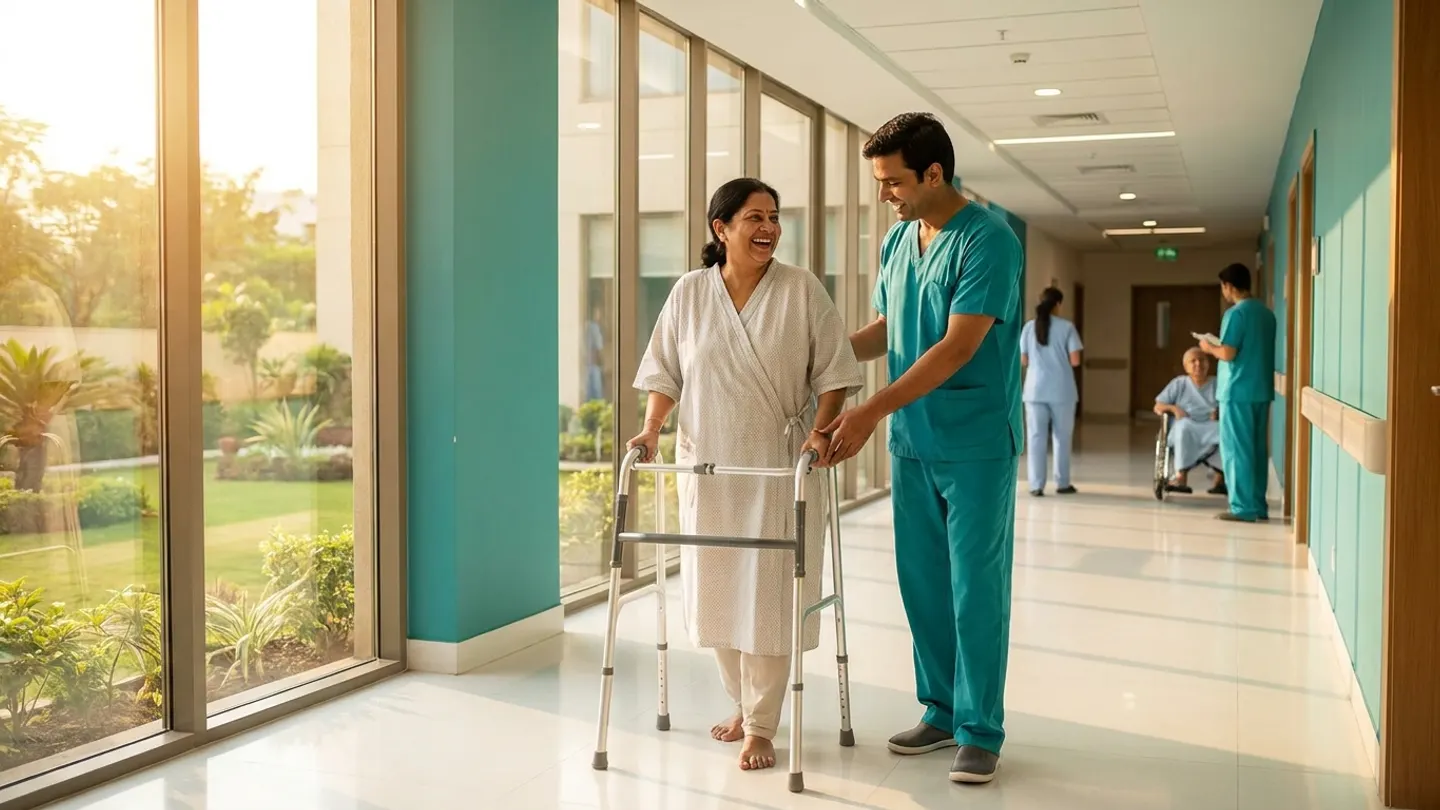
Most patients undergoing joint replacement surgery in India stay 14 to 21 days in country. The first 3-5 days are in hospital. Physiotherapy begins almost immediately — Indian hospitals specialising in orthopedics have on-site rehab gyms and expect you walking with assistance within 48 hours of surgery. The remaining days are spent in a serviced apartment or recovery lodge near the hospital, attending daily physio sessions until the surgical team confirms the joint is moving safely and the wound is closed.
Cardiac Surgery (Bypass, Valve Repair/Replacement)
Cardiac surgery patients typically need 21 to 28 days in India. The ICU stay alone is usually 3-5 days, followed by a week or more on a monitored ward. Post-discharge, the heart team wants to see you for at least two follow-up reviews before clearing you for a long-haul flight. Cardiopulmonary changes at altitude are a real concern, and most surgeons will not sign the fitness certificate before day 18 at the earliest.
Cancer Treatment (Chemotherapy, Radiation, Surgery)
Oncology treatment duration varies enormously. A surgical resection alone (e.g., for early-stage cancer) may require 14-21 days. If you are combining surgery with chemotherapy cycles or radiation, a stay of 6-12 weeks — or multiple trips — is more realistic. Many patients plan their cycles strategically, returning home between rounds and coming back to India for the next.
Fertility Treatment (IVF)
An IVF cycle in India typically requires two visits or a single stay of 14-21 days. The monitoring phase before egg retrieval takes about 10-12 days; retrieval and embryo transfer follow shortly after. If you opt for a frozen embryo transfer in a subsequent cycle, the second visit can be as short as 5-7 days. Pregnancy confirmation can be done with a blood test at your home clinic 10-14 days after transfer.
Organ Transplant (Kidney, Liver)
Organ transplants are the longest commitment. Kidney transplant patients are advised to stay 4 to 6 weeks; liver transplant recipients often need 6 to 8 weeks in country. The immediate post-transplant immunosuppression protocol requires very close medical supervision, and the surgical team will not risk early discharge. Plan conservatively and arrange for an accompanying caregiver.
Cosmetic and Plastic Surgery
For procedures like rhinoplasty, facelifts, or body contouring (cosmetic surgery), a 10 to 14 day stay is usually sufficient. Swelling and bruising are natural and will continue to resolve after you return home, but the surgeon needs enough time to confirm there is no infection, no wound opening, and no unexpected fluid collection before you travel.
Dental Treatment
Complex dental work — full-mouth rehabilitation, multiple implants, or bone grafting — typically requires 7 to 14 days depending on the treatment plan. Some patients split treatment across two trips when osseointegration (bone fusing with the implant) must be confirmed before crowns are fitted.
Hair Transplant
Hair transplant patients can usually return home after just 7 to 10 days. The procedure itself is done in a single day; the follow-up checks the graft sites for signs of healthy healing, and most surgeons give the all-clear within a week.
Indicative Procedure Costs: India vs. Other Countries
One of the most common reasons patients choose India is the dramatic cost difference — savings that fund the entire trip and still leave money in the bank.
| Procedure | India (approx.) | USA (approx.) | UK (approx.) | Australia (approx.) | UAE (approx.) |
|---|---|---|---|---|---|
| Knee replacement (single) | $4,000 – $6,500 | $30,000 – $50,000 | £15,000 – £25,000 | A$20,000 – A$35,000 | $12,000 – $20,000 |
| Cardiac bypass (CABG) | $5,500 – $9,000 | $70,000 – $150,000 | £25,000 – £45,000 | A$40,000 – A$80,000 | $20,000 – $40,000 |
| IVF (single cycle) | $2,500 – $4,500 | $15,000 – $25,000 | £5,000 – £10,000 | A$8,000 – A$15,000 | $5,000 – $10,000 |
| Kidney transplant | $13,000 – $20,000 | $150,000 – $300,000 | £80,000 – £120,000 | A$100,000 – A$200,000 | $50,000 – $90,000 |
| Dental implant (per tooth) | $500 – $900 | $3,000 – $6,000 | £2,000 – £4,000 | A$3,000 – A$6,000 | $1,500 – $3,000 |
| Hair transplant (2,500 grafts) | $1,200 – $2,500 | $8,000 – $15,000 | £5,000 – £10,000 | A$7,000 – A$14,000 | $4,000 – $8,000 |
All figures are indicative 2026 ranges and will vary by hospital, surgeon seniority, and individual case complexity. See our treatments & costs page for personalised estimates.
Planning Your Stay: What to Arrange Before You Land
“The patients who feel most at ease in India are the ones who sorted their logistics before they left home — not the ones who improvised on arrival.”
Use this checklist to prepare:
- Medical visa (MED): Apply at least 4-6 weeks before travel. Bring your hospital’s invitation letter and a copy of your treatment plan.
- Accommodation near the hospital: Many hospitals have attached guest houses or partner serviced apartments for recovering patients and companions. Book early.
- Companion: For any major surgery, bring at least one trusted person. Hospitals will discharge you into a caregiver’s care, not alone.
- Travel insurance: Ensure your policy covers medical repatriation and inpatient care in India. Declare your planned procedure at the time of purchase.
- Return flight flexibility: Book a refundable or changeable ticket. Your discharge date can shift by a few days based on how recovery goes.
- Bank cards and cash: Notify your bank of international travel. Keep some Indian rupees for small purchases; major hospitals accept international cards.
- Follow-up plan at home: Arrange a GP or specialist appointment for 1-2 weeks after your return, so continuity of care is guaranteed.
What Happens If Recovery Takes Longer Than Expected?
Complications are uncommon in accredited facilities, but they do happen in medicine everywhere. India’s Medical Visa (MED) is specifically designed for this reality: it grants up to one year of stay with multiple entries. If your surgeon recommends additional time, your visa can be extended through the Foreigners Regional Registration Office (FRRO). Your IndoMedTour coordinator handles the paperwork so your focus stays on getting well, not navigating bureaucracy.
Your hospital in India will also maintain your medical records and share them with your home physician digitally, ensuring your care team at home is fully briefed when you return. JCI- and NABH-accredited hospitals routinely produce English-language discharge summaries, imaging reports, and pathology results formatted for international use.
A Note on Long-Haul Flights After Surgery
Flying long distances places the body under pressure: cabin air is dry, humidity is low, and immobility raises clot risk. Surgeons typically advise:
- A minimum of 10-14 days before flying after any general anaesthesia
- 21+ days before flying after cardiac, thoracic, or abdominal surgery
- Compression stockings and in-flight movement protocols for all post-surgical travellers
- Avoidance of alcohol during the flight home
Your fitness-to-fly certificate from the Indian hospital is your documentary proof for the airline and your travel insurer. Do not leave without it.
How IndoMedTour Helps
From your first free counselling call through the day you board your flight home, IndoMedTour handles the details that make a medical trip feel manageable. We match you with the right JCI- or NABH-accredited hospital for your specific procedure, arrange written cost quotes before you commit to anything, and co-ordinate your Medical Visa invitation letter, accommodation, and airport transfers. A dedicated patient coordinator stays with you — available by phone and in person — from your pre-surgery consultations through your post-operative check-ups. You are never navigating a foreign hospital corridor alone. You bring the worry. We bring the plan.
Ready to know exactly what your treatment will cost and how long your stay will be? Book your free call today and get a personalised plan within 24 hours.