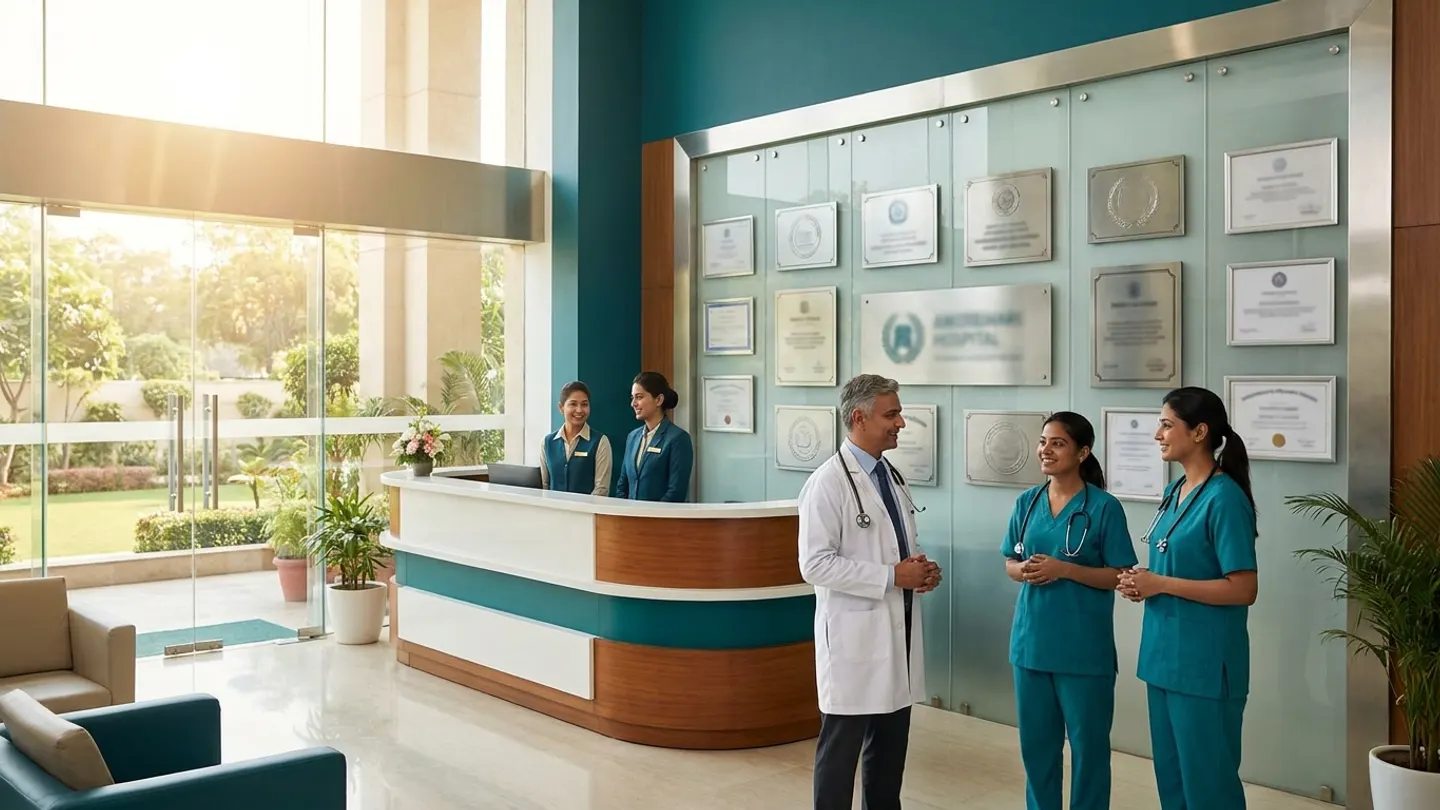
We understand the knot in your stomach. You have a diagnosis, a quote that made your jaw drop, and now someone is suggesting you travel halfway around the world for surgery. It is completely natural to ask: is this actually safe?
Is It Safe to Get Surgery in India? The Honest Answer
Yes — surgery in India is safe, provided you choose the right accredited hospital and go in with a clear plan. India has more Joint Commission International (JCI)-accredited hospitals than almost any other nation, and its top surgeons have trained at institutions in the United States, United Kingdom, and Europe before returning to practise at home. That is not marketing language — it is the structural reason why hundreds of thousands of international patients travel to India every year and return home healthy.
That said, “India” is not a monolith. A sprawling private hospital in Mumbai with a dedicated international wing is a fundamentally different environment from a small unlisted clinic. This guide helps you understand exactly what separates safe from risky, and how to make sure you land on the right side of that line.
Why India Has Earned Its Reputation for Medical Excellence
Surgeon Training and Credentials
Many of the cardiac surgeons, orthopaedic specialists, and oncologists at India’s leading private hospitals completed their residency or fellowship training in the UK, US, Canada, or Australia. They then returned to India where they can practise at scale — performing three to five times as many procedures per year as their Western counterparts. Volume matters enormously in surgery: repetition builds precision.
“A cardiac surgeon in a top Indian hospital may perform 400-600 open-heart procedures a year. A comparable surgeon in the US might perform 100-200. That difference in volume is clinically meaningful.”
Accreditation: The Quality Standard That Matters
When evaluating whether a hospital is safe, ignore the brochures and focus on two certifications:
- JCI (Joint Commission International) — the global gold standard, audited by the same body that accredits US hospitals. Patient safety protocols, infection control, medication management, and surgical checklists are all assessed.
- NABH (National Accreditation Board for Hospitals) — India’s national equivalent, equally rigorous. Most leading private hospitals hold both.
IndoMedTour only refers patients to JCI or NABH-accredited hospitals. If a facility cannot show you its current accreditation certificate, that is your signal to walk away.
Technology and Infrastructure
India’s top private hospital groups invest heavily in equipment. Robotic-assisted surgery (da Vinci system), 3D laparoscopy, PET-CT imaging, proton therapy for certain cancers, and catheterisation labs that rival anything in Europe are all widely available at leading centres. The gap in technology between a top Indian hospital and a top Western hospital has narrowed dramatically over the past decade.
What the Numbers Look Like: India vs Your Home Country
Cost is often the reason patients start researching India — and the savings are genuinely significant. Below are approximate 2026 ranges for common procedures. These are indicative figures; your exact quote depends on your diagnosis, surgeon, hospital tier, and length of stay.
| Procedure | India (approx.) | USA (approx.) | UK (approx.) | Australia (approx.) | UAE (approx.) |
|---|---|---|---|---|---|
| Knee replacement (single) | $4,500 – $7,000 | $30,000 – $50,000 | $15,000 – $25,000 | $20,000 – $35,000 | $12,000 – $20,000 |
| Cardiac bypass (CABG) | $6,000 – $10,000 | $70,000 – $130,000 | $25,000 – $45,000 | $35,000 – $60,000 | $20,000 – $40,000 |
| Spinal fusion (1-2 levels) | $5,000 – $9,000 | $50,000 – $90,000 | $20,000 – $35,000 | $25,000 – $45,000 | $15,000 – $25,000 |
| IVF (single cycle) | $2,500 – $4,500 | $12,000 – $20,000 | $6,000 – $10,000 | $8,000 – $14,000 | $5,000 – $9,000 |
| Dental implants (per tooth) | $500 – $900 | $3,000 – $5,000 | $2,000 – $3,500 | $2,500 – $4,000 | $1,500 – $2,500 |
Savings typically range from 60 to 80 percent, even after factoring in flights and accommodation. For many patients — particularly those facing long waiting lists for joint replacement or cardiac surgery — the combination of cost, speed, and quality makes India the most sensible choice available.
Genuine Risks and How to Manage Them
Honesty matters here. Medical tourism does carry risks if approached carelessly. Here is what to watch for and how to mitigate each:
Choosing an Unaccredited Facility
Risk: Lower-tier or unlisted clinics may cut corners on sterilisation, anaesthesia monitoring, or post-op care. Mitigation: Only use JCI or NABH-accredited hospitals. Ask your facilitator for the accreditation certificate — not just a claim.
Post-Surgery Travel and Blood Clots
Risk: Long-haul flights shortly after major surgery increase the risk of deep vein thrombosis (DVT). Mitigation: Plan a recovery period in India of at least 7-14 days after major procedures before flying. Your surgeon will advise on compression stockings, anticoagulants, and in-flight movement.
Continuity of Care at Home
Risk: Your GP at home may not have your full surgical records, creating gaps in follow-up care. Mitigation: Ensure you receive a complete discharge summary, imaging files, and a medication list in English. Share these with your home physician before you travel back.
Communication Gaps
Risk: Misunderstandings about the procedure, consent, or post-op instructions. Mitigation: Ask for a pre-surgery consultation in English. Reputable hospitals provide interpreters in multiple languages for patients who are not English-speaking.
A Practical Pre-Travel Safety Checklist
Before you confirm any booking, work through this list:
- Confirm the hospital holds current JCI and/or NABH accreditation
- Verify your surgeon’s qualifications, fellowship training, and approximate annual caseload for your procedure
- Obtain a written, itemised quote covering surgery, anaesthesia, hospital stay, standard consumables, and one post-op follow-up
- Check whether the quote includes a complication clause (what happens if revision surgery is needed during the same stay)
- Arrange travel insurance that explicitly covers planned medical procedures abroad — standard travel policies usually exclude this
- Plan your return flight for no earlier than the date your surgeon clears you to fly
- Share all your medical records with the Indian hospital at least two weeks before arrival so the team can plan appropriately
What International Patients Actually Experience
Patients who have used reputable facilitators and accredited hospitals consistently report three things that surprise them: the warmth of the nursing staff, the speed of access (no six-month waiting list), and the quality of food and accommodation in the international patient wings, which often resemble a business-class hotel more than a clinical ward.
Explore how it works and treatments and costs to get a clearer picture of the full patient journey. If you are still at the early research stage, the all treatments page is a good place to map out your options across specialties such as cancer care, fertility treatment, and organ transplant.
Common Myths About Surgery Safety in India
Myth: “Indian hospitals are overcrowded and understaffed.” The private hospitals that serve international patients are purpose-built with lower nurse-to-patient ratios and international patient coordinators dedicated to your floor. They are structurally separate from the public healthcare system.
Myth: “If something goes wrong, I will have no recourse.” Accredited private hospitals in India have established complaints processes, and India’s Consumer Protection Act extends to medical services. More practically, reputable facilitators build in escalation protocols so problems are resolved before they become serious.
Myth: “The savings mean they are using inferior implants or materials.” Cost savings in India come primarily from lower labour costs, lower administrative overhead, and the absence of the litigation-driven pricing that inflates Western hospital bills. Top hospitals use the same FDA-approved or CE-marked implants, sutures, and anaesthetic agents as hospitals in the US or UK.
How IndoMedTour Helps
When you book a free counselling call with IndoMedTour, we listen first — to your diagnosis, your timeline, your budget, and your fears. We then match you with two or three accredited hospitals suited to your specific case and obtain written, itemised quotes so you can compare honestly. Our team handles your medical visa paperwork, airport transfers, and accommodation, and your dedicated coordinator is physically present with you through admission, surgery, and discharge. We stay in contact with you and your home physician after you return, too. You bring the worry. We bring the plan.