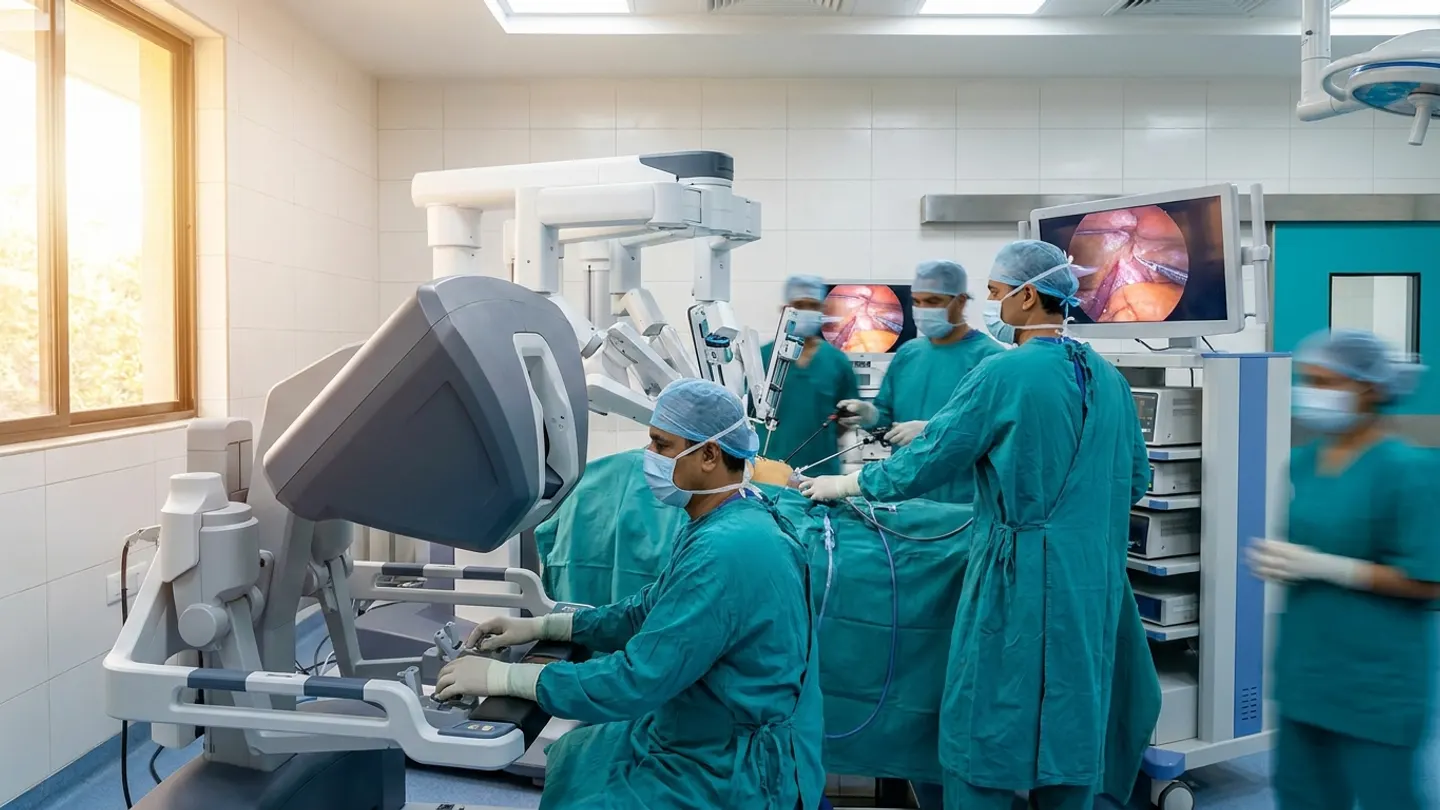
Getting a bill estimate for kidney stone surgery in the USA can make the condition feel twice as painful. Whether you are uninsured, underinsured, or staring at a deductible that equals months of rent, the numbers are real and the worry is completely valid.
Kidney Stone Surgery Cost in India vs USA: The Honest Numbers
Kidney stone surgery cost in India vs USA is the most searched medical-travel question from American patients, and the savings are genuine: the same procedure that costs $15,000 to $40,000 in the USA typically runs $1,000 to $4,500 in India at a fully accredited hospital. That is a saving of 70 to 80 percent, even after factoring in international flights and accommodation near the hospital.
The procedures themselves are not different. Urologists at leading Indian hospitals use the same Holmium laser technology, the same fluoroscopy and ultrasound guidance, and the same post-operative protocols you would expect at a US academic medical center. What changes is the cost structure — not the quality of care.
Why Is Kidney Stone Surgery So Expensive in the USA?
The price gap is not about effort or expertise on the American side. It reflects structural pricing: US hospitals carry enormous administrative overhead, malpractice insurance costs, and facility fees that inflate every line item on the bill. A single night in a US surgical facility can cost more than an entire PCNL package in India, including the surgeon, anaesthesiologist, operating theatre, nephrostomy tube, hospital stay, and follow-up scans.
Uninsured patients frequently receive an initial “chargemaster” rate that can reach $60,000 or more for complex stone cases. Even with insurance, out-of-pocket costs commonly run $5,000 to $15,000 after deductibles and co-insurance kick in. Many patients simply delay surgery — and allow stones to grow or cause kidney damage — because the bill feels impossible.
Procedure-by-Procedure Cost Comparison: India vs USA
The cost you will pay in India depends on which procedure your stone size and position requires. Here is a realistic 2026 comparison across the four main options:
| Procedure | USA (approximate) | India (approximate) | Typical Saving |
|---|---|---|---|
| ESWL (shock wave lithotripsy) | $7,000 – $15,000 | $600 – $1,200 | ~80% |
| URS / URSL (ureteroscopy + laser) | $10,000 – $22,000 | $1,000 – $2,500 | ~80% |
| PCNL (percutaneous nephrolithotomy) | $18,000 – $45,000 | $2,500 – $5,000 | ~85% |
| Open / laparoscopic surgery (rare) | $25,000 – $60,000 | $3,000 – $6,500 | ~85% |
Prices are indicative 2026 ranges and include the surgical procedure, hospital stay, and basic post-operative care. They exclude international flights, accommodation, and any pre-existing diagnostic costs. Individual quotes vary based on stone burden, complexity, and hospital tier chosen.
ESWL: Non-Invasive, Same-Day Procedure
Extracorporeal shock wave lithotripsy uses focused sound waves to fragment stones smaller than approximately 2 cm without any incision. Most patients go home the same day or after one overnight observation. In India, ESWL typically costs from $600, compared to $7,000 or more in the USA for the same outpatient session.
Ureteroscopy (URS / URSL): The Current Gold Standard
For mid-sized stones in the ureter or kidney, laser ureteroscopy is the preferred approach at most international centres. A slim endoscope is passed through the natural urinary tract, a Holmium laser fragments the stone, and a temporary stent is placed for one to two weeks. Complete URSL packages in India — including anaesthesia, theatre time, stent removal consultation, and a follow-up ultrasound — typically start from around $1,000. The same episode of care in the USA routinely generates a bill of $15,000 to $22,000.
PCNL: For Larger and Complex Stones
Percutaneous nephrolithotomy is the preferred approach for staghorn calculi and stones larger than 2 cm. A small puncture in the back gives the urologist direct access to the kidney. It requires a 2 to 4 night hospital stay and a slightly longer recovery period before flying. In India, PCNL packages at reputable hospitals are typically priced from $2,500 — a fraction of the $20,000 to $45,000 US range.
What Is Typically Included in an India Treatment Package?
Most Indian hospitals that routinely treat international patients offer transparent, bundled pricing. A typical URSL or PCNL package includes:
- Pre-operative blood work, urine culture, and imaging (CT-KUB or ultrasound)
- Surgeon and anaesthesiologist fees
- Operating theatre and equipment charges, including the Holmium laser and endoscope
- Hospital room for the required duration (private international-standard room)
- Nursing care and medications during the admission
- One post-operative follow-up consultation and imaging review
- Stent removal appointment (for URSL cases), either in India or arranged for your home urologist
Visit our treatments and costs page to see typical package ranges across our partner hospitals.
Is Kidney Stone Surgery in India Safe?
This is the question every patient’s family asks first, and it deserves a direct, honest answer. Kidney stone surgery in India at an accredited hospital is safe by rigorous international standards. India has more JCI-accredited hospitals than any country outside the USA, and the NABH (National Accreditation Board for Hospitals) applies a comparably demanding framework to hundreds of additional facilities across the country.
Urologists at leading Indian institutions are frequently trained at postgraduate or fellowship level in the USA, UK, Germany, or Australia. Many routinely publish in peer-reviewed journals and use the latest generation of Holmium:YAG and MOSES laser platforms — the same technology deployed at US tertiary centres.
“I delayed surgery for eight months because I could not face the US bill. My IndoMedTour coordinator reviewed my CT scan report the same evening I sent it, arranged everything including my airport transfer, and was in the recovery room when I woke up. I paid less for the whole trip than my US insurance deductible alone.” — Representative patient experience; not a specific identifiable individual. Outcomes and savings vary.
That said, quality is not uniform across every Indian hospital. Choosing a JCI or NABH accredited centre and working with a reputable facilitator to vet the specific surgical team and equipment is essential. Browse our hospitals to see the centres we have personally evaluated and partnered with.
Why American Patients Are Choosing India for Kidney Stone Treatment
Beyond the cost saving, a few practical factors tip the decision for many US patients:
- No waiting list. Surgery can typically be scheduled within 2 to 4 weeks of your first inquiry, compared to 6 to 12 weeks in many US hospital systems for a non-emergency procedure.
- Dedicated attention. International patient departments at major Indian hospitals provide a single English-speaking point of contact from arrival to discharge.
- Transparent, fixed pricing. Unlike the US, where the final bill is often a months-later surprise, Indian hospitals quote a bundled fixed price upfront.
- English-speaking surgical teams. Doctors, coordinators, and most nursing staff in major Indian cities communicate fluently in English.
- Opportunity to recover well. Many patients combine a short recovery with a few restful days in a comfortable serviced apartment before flying home.
For an honest picture of what the journey looks like from inquiry to discharge, read how it works or browse success stories.
Practical Planning: What to Know Before You Book
How Long Will I Need to Stay in India?
- ESWL: 3 to 5 days (day procedure plus observation and a follow-up scan)
- URSL: 5 to 7 days (1 to 2 nights in hospital, then stent removal a few days later or arranged with your home urologist)
- PCNL: 8 to 12 days (3 to 4 nights in hospital, then recovery and imaging review before flying)
Medical Visa for the USA
India offers a dedicated Medical Visa (MED) for international patients, valid for one year with multiple entries and extendable to three years. You will need a letter from the Indian hospital confirming your appointment. Your IndoMedTour coordinator prepares the documentation checklist and walks you through the application so nothing is missed.
Choosing the Right City
Delhi, Mumbai, Bangalore, Chennai, and Hyderabad all have excellent urology facilities with strong international patient programmes. The best choice depends on direct flight connections from your US city, your budget tier, and any personal preferences. We can compare options across cities once we understand your specific stone case. Learn more about kidney and renal care available across our network on our organ and renal care page.
How IndoMedTour Helps
When you reach out via our free counselling call, a medical coordinator — not a salesperson — reviews your CT scan or ultrasound report, explains which procedure is likely most appropriate, and answers your family’s questions without pressure. We then match you with two or three JCI or NABH accredited hospitals from our vetted network, request written fixed-price quotes from each, and build a complete itinerary covering your Medical Visa paperwork, flights, accommodation within easy reach of the hospital, and all ground transfers.
Your dedicated coordinator stays with you from the moment you land until you are safely on the plane home — and remains reachable by phone during your recovery back in the USA. We also send your US physician a full operative report and imaging records so your care continues seamlessly at home.
You bring the worry. We bring the plan.