You just received a diagnosis that changed everything, or a surgeon has handed you a treatment plan with a price tag that feels impossible. You are looking for a way to be certain — certain the diagnosis is right, certain the treatment is truly necessary, and certain you are not about to spend everything you have on something that could be done better, faster, or cheaper somewhere else.
A medical second opinion from India gives you exactly that certainty, and in most cases it costs nothing.
What a Medical Second Opinion From India Actually Means
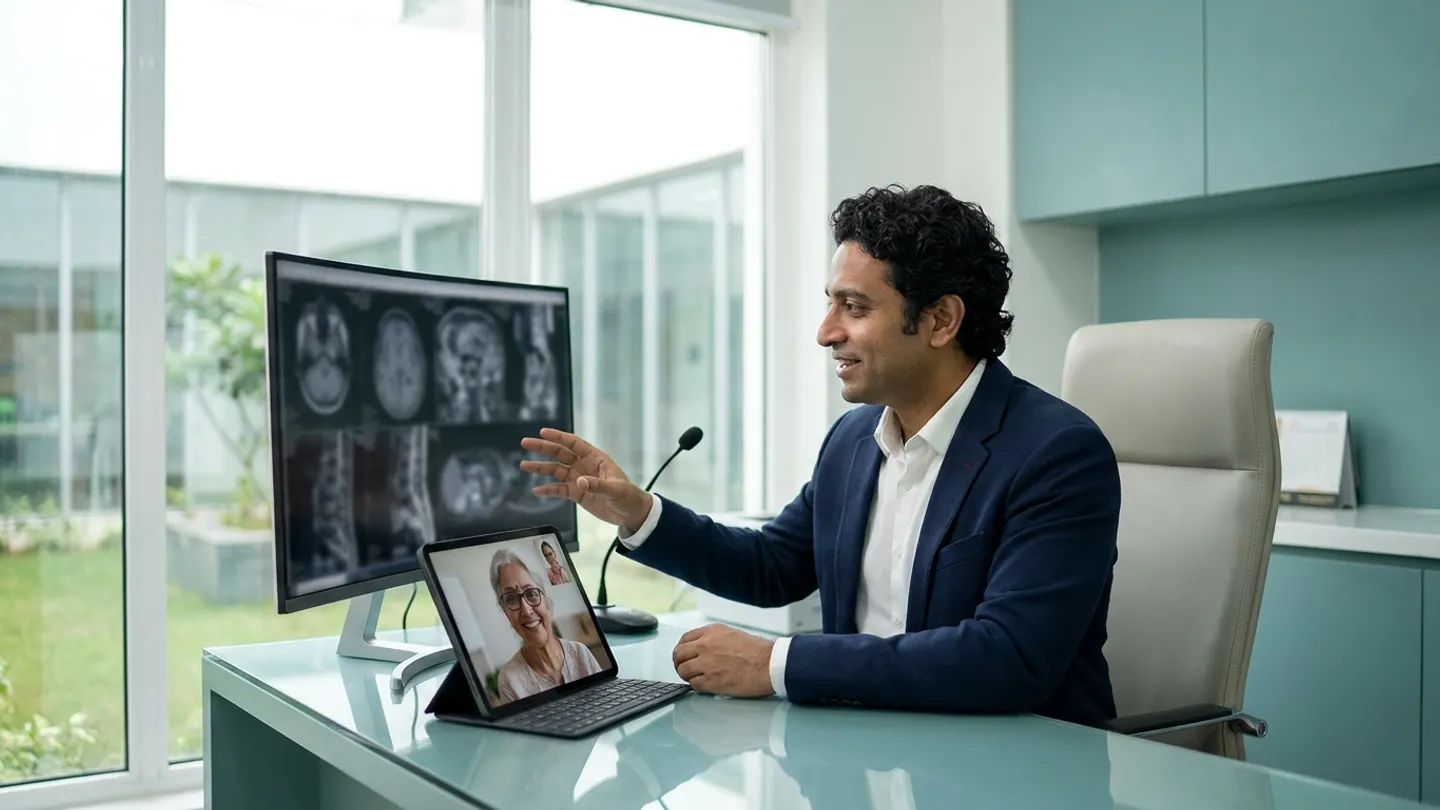
Getting a medical second opinion from India means sending your existing medical records — scans, biopsy slides, blood work, surgical notes — to a senior specialist at an Indian hospital, and receiving a detailed written review of your case, often followed by a video consultation. No flights. No waiting rooms. No visa required at this stage.
India’s top-tier hospitals are accredited by the Joint Commission International (JCI) and the National Accreditation Board for Hospitals (NABH), the same quality benchmarks used to evaluate hospitals in the United States and Europe. The specialists who staff these centres have typically trained abroad and published in international peer-reviewed journals. When one of them reviews your case, they are applying the same evidence base your doctor at home is using — sometimes more of it.
“A second opinion is not a vote of no-confidence in your doctor. It is the standard of care. Every major oncology and cardiac surgery guideline recommends it before any major procedure.”
Who Should Seek a Second Opinion From India
You do not need to be considering treatment in India to benefit from this service. A second opinion is valuable in its own right, regardless of where you ultimately receive care.
Consider requesting one if:
- You have received a diagnosis for a complex or serious condition such as cancer, heart disease, a neurological disorder, or a rare autoimmune condition.
- Your local doctor has recommended major surgery and you want to confirm it is the right approach.
- You are on a public waiting list of three months or more and want to know whether there is a comparable or better option available faster.
- The quoted cost of treatment in your home country is financially devastating and you want to understand your alternatives.
- You have received conflicting opinions from two doctors at home and need a tiebreaker.
How to Get a Medical Second Opinion From India: Step by Step
Step 1 — Gather Your Medical Records
The quality of the second opinion depends entirely on the quality of the records you provide. Aim to collect:
- All imaging (MRI, CT, PET, X-ray) in DICOM format on a CD or via a digital download link
- Pathology reports and, if applicable, biopsy slides (physical slides can be couriered)
- Blood work and lab results from the past twelve months
- Current medications list
- Your treating doctor’s notes and any existing treatment plan
- A one-page personal summary of your symptoms, how long you have had them, and what treatments you have already tried
Do not worry if your records are incomplete. A specialist can still review what is available and tell you what additional tests, if any, would be needed to give a confident opinion.
Step 2 — Choose the Right Specialty
India has particular depth in certain specialties where demand for second opinions is highest. These include:
- Oncology (cancer diagnosis, chemotherapy protocols, surgical candidacy)
- Cardiac surgery (bypass, valve replacement, structural heart procedures)
- Orthopaedics (joint replacement revision, spine surgery)
- Neurology and neurosurgery
- Fertility and reproductive medicine
- Organ transplantation (kidney, liver)
Matching your case to the right sub-specialty — not just the right hospital — is where a facilitator like IndoMedTour adds the most value. Learn more about treatments & costs across specialties.
Step 3 — Submit Your Case Through a Trusted Channel
You can approach hospitals directly, but navigating international patient portals, finding the right department, and ensuring your records reach the right person can be time-consuming and frustrating. A medical-tourism facilitator coordinates this on your behalf, packages your records correctly, and follows up until you receive a response.
IndoMedTour’s free counselling call is the simplest starting point. In thirty minutes, a case coordinator will review what you have, identify the most appropriate specialist or team, and tell you exactly which records to send and in what format.
Step 4 — Receive the Written Opinion
A proper written second opinion from a senior specialist should include:
- Confirmation or revision of the diagnosis
- A clear explanation of the recommended treatment pathway
- Alternative treatment options, with their respective risks and benefits
- An indicative timeline for treatment
- Whether the specialist believes you need any additional diagnostic tests before proceeding
Many hospitals also offer a follow-up video consultation so you can ask questions directly. This is standard practice for international patients.
Step 5 — Decide What to Do Next
The second opinion may confirm your original diagnosis and treatment plan exactly. In that case, you now have enormous peace of mind and can proceed at home with confidence. Or it may suggest a different approach, a less invasive procedure, or a treatment that is available in India at a fraction of the cost you were quoted at home.
If you decide to travel to India for treatment, the groundwork is already done. Your records are in the system, a specialist has reviewed your case, and the transition from opinion to treatment plan is seamless.
What Does a Second Opinion Cost?
Many facilitators, including IndoMedTour, offer the opinion coordination itself at no charge to the patient. The hospital may charge a nominal specialist review fee for highly complex cases. This is always disclosed upfront.
For comparison, here is what a formal written second opinion typically costs in different markets, versus pursuing treatment in India directly:
| Country | Formal Second Opinion Fee | Major Surgery (e.g. cardiac bypass) | Cancer Treatment (typical course) |
|---|---|---|---|
| United States | $500 – $2,500 | $80,000 – $200,000+ | $150,000 – $400,000+ |
| United Kingdom (private) | £300 – £1,500 | £40,000 – £100,000 | £80,000 – £250,000 |
| Australia | A$400 – A$2,000 | A$60,000 – A$130,000 | A$100,000 – A$300,000 |
| UAE | AED 1,500 – AED 8,000 | AED 120,000 – AED 350,000 | AED 200,000 – AED 600,000 |
| India (JCI/NABH hospital) | Often free via facilitator | $7,000 – $18,000 | $6,000 – $40,000 |
All figures are indicative 2026 ranges in local or USD currency as noted. Actual costs depend on the specific procedure, hospital, and individual case complexity.
The savings are not theoretical. They represent the difference between a treatment that is financially accessible and one that requires selling a home or going into long-term debt. Explore all treatments for specialty-specific cost comparisons.
Sending Physical Biopsy Slides to India
For cancer cases, the most critical element of a meaningful second opinion is often a review of the original biopsy slides by an Indian pathologist. This requires couriering the glass slides or unstained tissue blocks to the hospital.
This sounds daunting, but it is a routine process. Most hospitals have a formal process for receiving international pathology specimens. Your facilitator can provide the correct shipping address, customs documentation, and a prepaid return envelope for slides you want sent back. Slides are typically reviewed within five to seven business days of arrival.
Quality Assurance: What to Look For in an Indian Hospital
Not every hospital offering international second opinions operates to the same standard. Before submitting your records, confirm:
- The hospital holds JCI or NABH accreditation (look for the certificate on the hospital website or ask your facilitator to verify)
- The specialist reviewing your case holds a senior consultant position, not a junior resident role
- You will receive a written report, not just a verbal summary
- There is a clear process for follow-up questions
IndoMedTour works exclusively with accredited hospitals and pre-vetted specialists. We do not route patients to facilities that do not meet international quality benchmarks. See how it works for a full explanation of our vetting process.
Common Concerns — Answered Honestly
“What if the Indian doctor just tells me what I want to hear to get my business?”
This is a fair concern. It is also why the written opinion matters more than a verbal one, and why a facilitator who is not paid on commission for the treatment outcome provides a safer route than approaching a hospital directly. IndoMedTour’s coordinators are compensated for coordination, not for steering you toward any specific treatment.
“Will my doctor at home accept an opinion from an Indian specialist?”
Some will, some will not. But the opinion is ultimately for you. It gives you the information to ask better questions, push back if you disagree, or make an informed decision to seek treatment elsewhere. You own your medical journey.
“Is my data safe when I send records internationally?”
Reputable hospitals use encrypted file transfer portals for international patient records. Your facilitator should be able to confirm the exact platform used and its data-handling policy before you upload anything.
How IndoMedTour Helps
IndoMedTour offers a free counselling call where a case coordinator listens to your situation, identifies the right specialist, and manages the entire second-opinion process on your behalf. If you decide to travel for treatment, we provide written quotes from multiple JCI and NABH-accredited hospitals, handle visa and travel planning, and assign a dedicated patient coordinator who stays beside you from the airport to the day you fly home. We also coordinate fertility and IVF, cardiac surgery, orthopaedic care, and cancer treatment, among many other specialties.
You bring the worry. We bring the plan.
IndoMedTour connects international patients with accredited hospitals in India. All costs shown are indicative ranges only. Medical outcomes cannot be guaranteed. Always consult a qualified physician before making treatment decisions.