When a specialist hands you a quote for surgery in South Africa and you feel the ground shift beneath you, that reaction is completely understandable. Healthcare costs in South Africa have risen sharply, private medical aid shortfalls are common, and the gap between what you need and what you can afford can feel impossible. What many South Africans are discovering is that a third path exists: travelling to India for world-class treatment, at a cost that often makes the entire trip, including flights and hotel stays, less expensive than the procedure alone at home.
Medical Tourism from South Africa to India: The Core Case
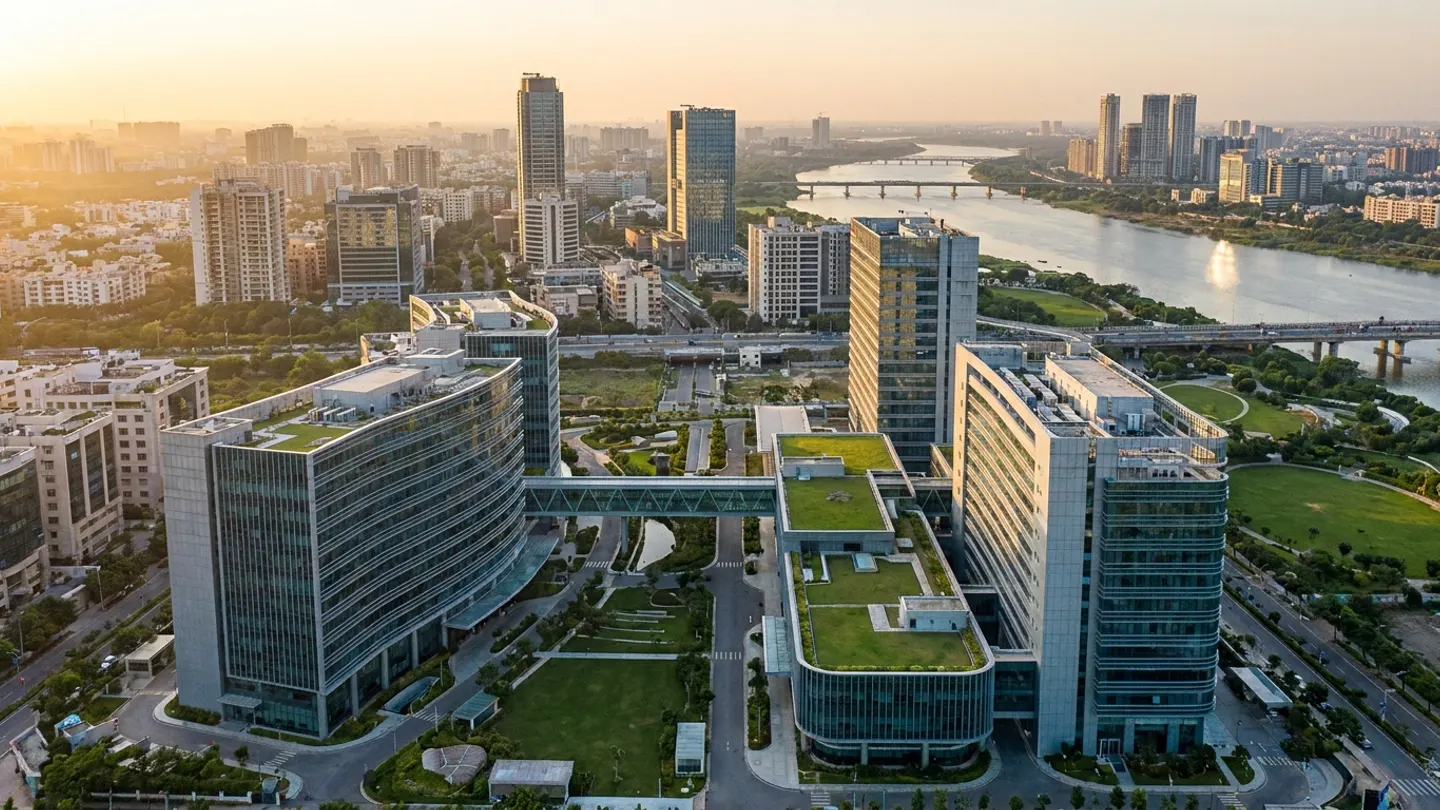
Medical tourism from South Africa to India is one of the fastest-growing patient corridors in the Indian healthcare system, and the reason is straightforward: India’s top hospitals deliver internationally benchmarked care at roughly 20–40% of the price South Africans pay privately at home. These are not budget clinics. The leading institutions in cities such as Delhi, Mumbai, Chennai, Hyderabad, and Bengaluru hold JCI accreditation and NABH accreditation, employ surgeons trained at top international centres, and operate dedicated international patient departments staffed by English-speaking coordinators, case managers, and counsellors.
The flight from Johannesburg or Cape Town to a major Indian city is long (roughly 10–13 hours via a connection), but for a patient facing a procedure that costs ZAR 300,000 at home and ZAR 80,000 in India, the arithmetic is unavoidable.
“I budgeted for the worst. Then I got a written quote from an Indian hospital and realised I could have the surgery, stay for three weeks recovery, and fly business class home — and still spend less than the South African price.” — paraphrased from patient consultations handled by IndoMedTour.
Cost Comparison: South Africa vs India for Common Procedures
All prices below are indicative 2026 ranges in USD. Actual costs depend on diagnosis, hospital tier, surgeon seniority, and individual case complexity. Use these figures to size your budget, not as guarantees.
| Procedure | South Africa (approx.) | India (approx.) | Typical Saving |
|---|---|---|---|
| Coronary artery bypass (CABG) | USD 18,000–28,000 | USD 5,000–9,000 | 60–70% |
| Single knee replacement | USD 10,000–15,000 | USD 3,000–5,500 | 60–70% |
| Hip replacement | USD 11,000–17,000 | USD 3,500–6,000 | 60–65% |
| Spinal fusion (1–2 levels) | USD 14,000–22,000 | USD 4,500–8,000 | 60–70% |
| IVF (one complete cycle) | USD 3,500–5,500 | USD 1,000–2,000 | 60–70% |
| Cancer chemotherapy (per cycle) | USD 1,500–3,500 | USD 500–1,200 | 55–65% |
| Bariatric (sleeve gastrectomy) | USD 12,000–20,000 | USD 4,000–7,000 | 60–70% |
| Hair transplant (2,000 grafts) | USD 2,500–5,000 | USD 600–1,400 | 65–75% |
| Dental implant (single) | USD 1,200–2,500 | USD 300–700 | 65–75% |
For a full breakdown by procedure, see our treatments and costs page, or explore specific sections such as cardiac surgery, joint replacement, and cancer care.
Which Treatments Do South African Patients Most Commonly Seek?
The most common reasons South Africans travel to India for medical care include:
- Cardiac procedures — bypass surgery, valve replacement, and angioplasty, where Indian surgeons have decades of high-volume experience
- Orthopaedic surgery — knee and hip replacements, often with robotic-assisted techniques, at a fraction of the South African private rate
- Oncology — chemotherapy, radiation, targeted therapy, and surgical oncology at centres that see very high patient volumes annually
- Fertility treatment — IVF and related procedures, where India has competitive success rates and lower per-cycle costs
- Neurosurgery and spine — complex spinal fusions, tumour removals, and brain surgery at hospitals with advanced intraoperative imaging
- Bariatric surgery — weight-loss procedures with comprehensive pre- and post-operative programmes
- Dental treatment — full-mouth rehabilitation, implants, and veneers that are dramatically more affordable than private dentistry at home
You can explore each of these further through our hospitals directory or the how it works page.
Hospital Quality: What Accreditation Actually Means
South African patients rightly want assurance that the standard of care they receive in India matches what they would expect at home, or exceeds it. The benchmarks to look for are:
JCI Accreditation (Joint Commission International) is the same body that accredits top hospitals in the United States, Europe, and the Middle East. JCI certification involves rigorous on-site inspection of clinical protocols, infection control, patient safety systems, and staff training. Several dozen Indian hospitals hold JCI status.
NABH Accreditation (National Accreditation Board for Hospitals) is the Indian national standard, broadly equivalent to the South African Council for Healthcare Service Accreditation (COHSASA). It is mandatory for hospitals that want to be recognised by Indian government health schemes and international insurers.
When IndoMedTour recommends a hospital, we verify both their accreditation status and their track record with international patients specifically. We do not send patients to facilities we have not vetted.
The Visa and Travel Process for South African Patients
South African passport holders can apply for an Indian Medical Visa (category: MED) through the official Indian e-Visa portal. The process is fully online and typically takes 3–5 business days.
Documents you will need
- Valid South African passport (at least six months validity beyond your intended stay)
- Completed online visa application form
- Referral or invitation letter from a recognised Indian hospital confirming your treatment and approximate dates
- Recent passport-size photograph
- Proof of financial means (bank statement)
- Travel insurance (strongly recommended)
A Medical Attendant Visa (MED-X) can be obtained simultaneously for one accompanying family member or caregiver. Visa fees are modest, and extensions are available if treatment extends beyond the original duration.
The most convenient routing from South Africa is Johannesburg (OR Tambo) or Cape Town to Delhi, Mumbai, Chennai, or Hyderabad, usually via Dubai, Doha, or Addis Ababa. Flight times total approximately 12–15 hours including connection. Most patients find business or premium economy worth the cost given the recovery period ahead.
Before you travel — a pre-departure checklist
- Receive written cost estimate from the Indian hospital before booking anything
- Confirm MED visa approval and print the e-Visa certificate
- Share all medical records with the treating team in India at least two weeks before departure
- Arrange travel insurance that covers the procedure and any complications
- Confirm airport transfer, accommodation, and hospital admission date in writing
- Carry enough ZAR or USD for incidentals (hospitals often accept international cards, but cash is useful for pharmacies and taxis)
- Download a translation or medical phrase app as a backup, even though English is widely used in hospital settings
What to Expect When You Arrive
India’s major medical hubs are well-accustomed to international patients. Hospitals in Delhi’s Medicity corridor, Mumbai’s Bandra-Kurla precinct, and the cluster of hospitals around Chennai’s Nungambakkam area all have dedicated international patient lounges, multilingual staff, and accommodation tie-ups with nearby serviced apartments and hotels.
Your stay will typically follow a pattern: one to two days of pre-operative investigations and specialist consultations, the procedure itself, an inpatient recovery period (length depending on surgery), and then a short outpatient observation phase before you are cleared to fly. For major surgery, expect to be in India for two to four weeks in total.
Food, transport, and accommodation in the areas near these hospitals range from very affordable guesthouses to four-star hotels, giving families the flexibility to manage their overall budget.
For patient perspectives, our success stories section includes accounts from international patients across a range of procedures. A free counselling call is the fastest way to get personalised guidance before you commit to anything.
How IndoMedTour Helps
IndoMedTour exists specifically to take the uncertainty out of medical tourism from South Africa to India. We start with a free counselling call to understand your diagnosis, your timeline, and your budget — with no pressure and no fee. We then match you with two or three accredited hospitals best suited to your case, arrange written all-inclusive quotes in a format you can compare directly, and handle the hospital coordination, Medical Visa documentation, airport transfer, and accommodation. A dedicated patient coordinator stays in contact from the moment you land until you are safely home and recovering. You bring the worry. We bring the plan.