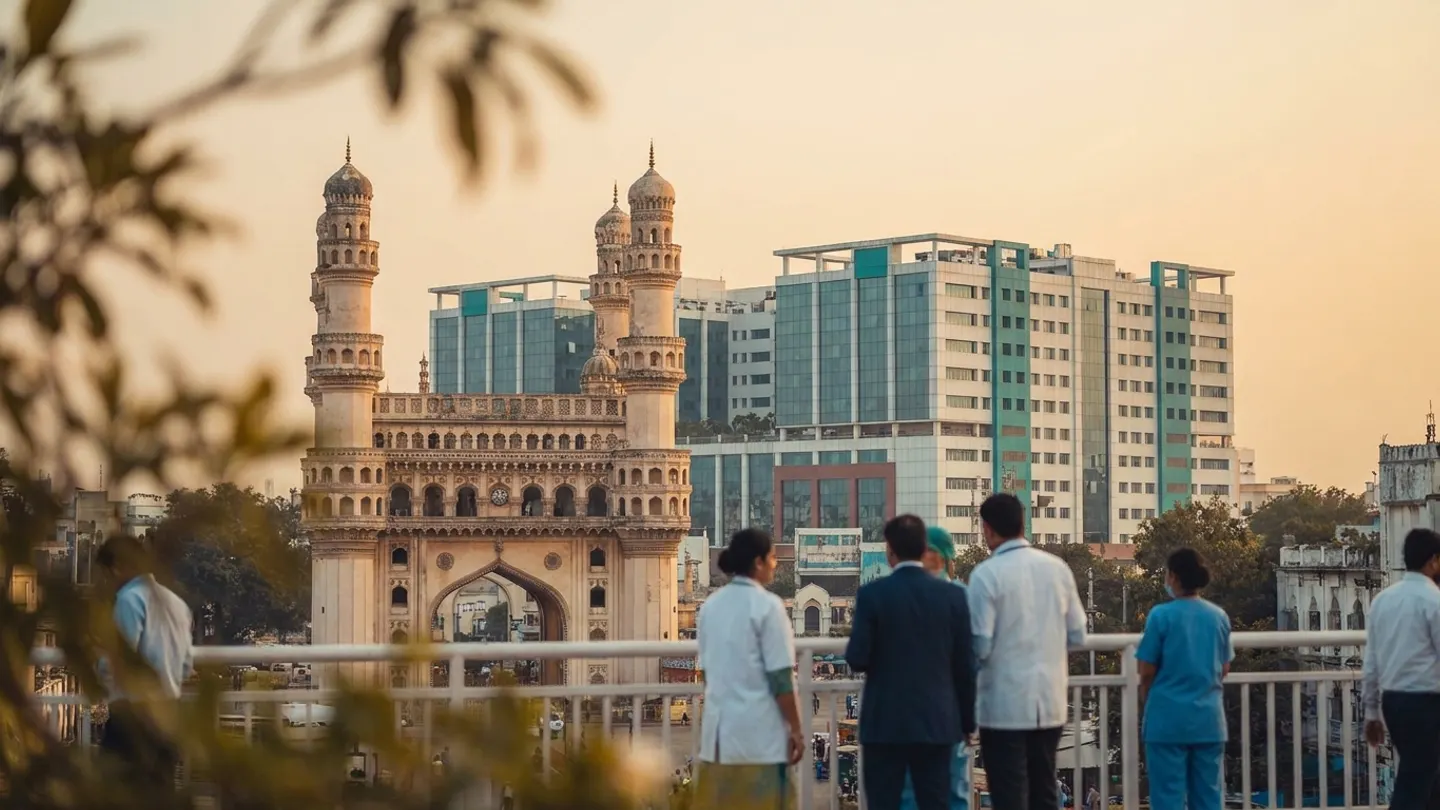
Receiving a treatment estimate that runs into tens of thousands — or even hundreds of thousands — of dollars is a shock that no one is truly prepared for. Add a waiting list that stretches six months to a year, and the fear can feel overwhelming. If you are exploring alternatives, you are not alone, and you have come to the right place.
Why Hyderabad Is a Premier Destination for Medical Tourism
Medical tourism in Hyderabad has grown into one of Asia’s most trusted healthcare corridors, combining cutting-edge technology with costs that are genuinely within reach. The city is home to dozens of multi-specialty hospitals that hold JCI (Joint Commission International) or NABH (National Accreditation Board for Hospitals) accreditation — the international gold standard for safety and quality — and its surgeons routinely publish in peer-reviewed journals and train at leading institutions in North America and Europe.
Hyderabad is not a second-best option. It is a deliberate choice made by well-informed international patients every year.
The City That Built a Medical Hub
Hyderabad’s emergence as a healthcare destination was no accident. The same infrastructure investments that made the city India’s pharmaceutical and biotech capital in the 1990s and 2000s also drew world-class clinicians, imported robotic surgical platforms, and established a culture of process-driven, evidence-based medicine. Today, the city’s hospitals operate cutting-edge da Vinci robotic surgical systems, advanced proton therapy and radiation oncology suites, and multi-organ transplant programmes with outcomes comparable to major Western centres.
The city also has a remarkably patient-friendly practical profile: a large international airport with direct connections to the Gulf, Southeast Asia, and many European hubs; a significant English-speaking population; and a relatively affordable cost of living that makes the recovery period far less financially draining than staying in Singapore or Bangkok.
What Treatments Draw International Patients to Hyderabad?
Robotic and Minimally Invasive Surgery
Robotic-assisted procedures are one of Hyderabad’s calling cards. Surgeries for prostate cancer, gynaecological conditions, colorectal disease, and complex urological cases are performed here on robotic platforms identical to those used in US academic medical centres, but at a fraction of the price. Smaller incisions mean less blood loss, shorter hospital stays, and faster return to normal life.
Organ Transplants
Hyderabad’s hospitals run some of India’s most active kidney and liver transplant programmes. Multidisciplinary teams — nephrologists, hepatologists, transplant surgeons, immunologists, and specialist nurses — work within structured protocols that cover donor evaluation, compatibility testing, surgical care, and post-operative immunosuppression management. For patients facing years on a dialysis waitlist at home, this is often life-changing.
Explore organ transplant options and costs in detail.
Cardiac Surgery
Coronary artery bypass grafting (CABG), valve repair and replacement, and complex congenital heart repairs are performed at high volume in Hyderabad, which translates into experienced surgical teams and well-rehearsed care pathways. High volume is a reliable proxy for better outcomes in cardiac surgery — and Hyderabad’s numbers are strong.
Learn more on our cardiac surgery page.
Cancer Care and Oncology
From targeted radiation to immunotherapy protocols, oncology departments in Hyderabad hospitals access treatments equivalent to those at leading Western cancer centres. Tumour boards involving oncologists, radiologists, pathologists, and surgeons review cases collectively — the same multidisciplinary model used in the US and UK.
See the full picture on our cancer and oncology page.
Orthopaedics and Joint Replacement
Total knee replacements, hip replacements, and spine surgeries are performed using internationally certified implants and navigation-assisted techniques. Recovery physiotherapy is available in-hospital, making Hyderabad a practical end-to-end destination for orthopaedic care.
Read our guide to orthopaedics and joint replacement.
How Much Does Treatment in Hyderabad Cost?
The table below shows typical indicative price ranges for common procedures. All figures are approximate and will vary depending on the specific hospital, surgical complexity, implant choice, and your individual clinical picture. Always request a written, itemised quote.
| Procedure | India (Hyderabad) | United States | United Kingdom | Australia | UAE |
|---|---|---|---|---|---|
| Robotic prostatectomy | $4,000 – $7,000 | $25,000 – $50,000 | £18,000 – £30,000 | AUD 30,000 – 55,000 | $20,000 – $38,000 |
| Kidney transplant | $13,000 – $20,000 | $150,000 – $300,000 | £80,000 – £150,000 | AUD 200,000+ | $60,000 – $100,000 |
| Liver transplant | $25,000 – $40,000 | $300,000 – $500,000 | £120,000 – £200,000 | AUD 300,000+ | $100,000 – $180,000 |
| Cardiac bypass (CABG) | $5,500 – $9,000 | $70,000 – $140,000 | £25,000 – £50,000 | AUD 60,000 – 110,000 | $25,000 – $45,000 |
| Total knee replacement | $4,000 – $7,500 | $35,000 – $70,000 | £15,000 – £25,000 | AUD 30,000 – 50,000 | $15,000 – $28,000 |
| Cancer radiation therapy (course) | $4,000 – $10,000 | $30,000 – $80,000 | £20,000 – £50,000 | AUD 25,000 – 70,000 | $20,000 – $50,000 |
All prices are indicative 2026 ranges and include hospital stay unless noted. Obtain a written quote for your specific case.
See a broader overview on our treatments and costs page.
What Should You Check Before Choosing a Hospital?
Not every hospital in Hyderabad operates at the same standard, and it pays to be methodical. Use this checklist when evaluating your options:
- Accreditation: Confirm JCI or NABH certification is current and applies to the specific department handling your case.
- Surgeon credentials: Ask for the surgeon’s fellowship training, subspecialty board certifications, and published case volumes for your specific procedure.
- Technology: Verify the robotic or imaging platforms being used — not just “we have robotic surgery” but the specific system and its version.
- International patient services: A dedicated coordinator who speaks your language, assists with visas, arranges airport transfers, and manages communication between you and the medical team.
- Post-operative plan: Confirm what follow-up is included in the quoted price and what the protocol is if a complication arises before you fly home.
- Written itemised quote: Insist on a breakdown that includes surgeon fees, anaesthesia, hospital room (specify type), consumables, and discharge medications.
- Travel medical insurance: Check whether your insurer covers treatment abroad and what documentation the hospital will provide for claims.
“I spent three months reading forums and feeling paralysed by the numbers. When I finally booked a call with IndoMedTour and received an itemised quote within 48 hours, the fear started to lift. I knew exactly what I was walking into.” — Representative patient experience; details are illustrative.
Practical Travel and Logistics for International Patients
Hyderabad is served by Rajiv Gandhi International Airport (HYD), with direct flights from Dubai, Doha, Kuala Lumpur, Singapore, London, and other major hubs. Travel time from the UK is typically 9-11 hours; from the US east coast, around 16-18 hours with one connection.
Visa: International patients can apply for India’s e-Medical Visa, which permits stays of up to 60 days (extendable) and allows entry at all major international airports. The process is online and typically takes 3-5 business days. A companion travelling with you qualifies for an e-Medical Attendant Visa.
Accommodation during recovery: Many hospitals maintain attached patient guesthouses or have partnerships with nearby serviced apartments. These allow family caregivers to stay close while avoiding full hotel costs. Your coordinator can arrange this as part of the overall package.
Communication and connectivity: English is widely used in Hyderabad’s medical and hospitality sectors. Most hospitals provide SIM card assistance and have international calling facilities.
Currency: India uses the Indian Rupee (INR). Most hospitals in Hyderabad accept international bank transfers, and some accept major credit cards. Confirm the payment method and any applicable international transaction fees before you travel.
Quality, Safety, and What Accreditation Really Means
There is a reasonable anxiety that “affordable” must mean “lower quality.” In the context of Hyderabad’s accredited hospitals, that assumption does not hold.
JCI accreditation, managed by the US-based Joint Commission, evaluates hospitals against more than 1,000 measurable standards covering infection control, medication safety, surgical protocols, patient rights, and staff credentialling. A hospital that has passed JCI assessment has been examined by external auditors against criteria that many Western hospitals themselves struggle to meet.
NABH accreditation — the Indian national standard — is similarly rigorous and is increasingly recognised by international insurers when processing claims for treatment abroad.
What does create variation in outcomes anywhere in the world is volume and specialisation. Seek hospitals and surgeons who perform your specific procedure frequently. In Hyderabad, several institutions run transplant and robotic surgery programmes at volumes that rival or exceed many Western academic centres.
For a complete overview of how to evaluate your options, visit our how it works page or browse all treatments.
How IndoMedTour Helps
IndoMedTour begins with a free counselling call — no commitment, no sales pressure, just a chance to tell us your situation. From there, our team matches you with hospitals that specialise in your procedure, requests written itemised quotes on your behalf, and helps you understand what each option actually includes. We assist with medical visa guidance, airport transfers, accommodation near your hospital, and pre-travel paperwork. A dedicated patient coordinator remains by your side from the moment you land through surgery, recovery, and discharge — and stays reachable after you return home. You bring the worry. We bring the plan.