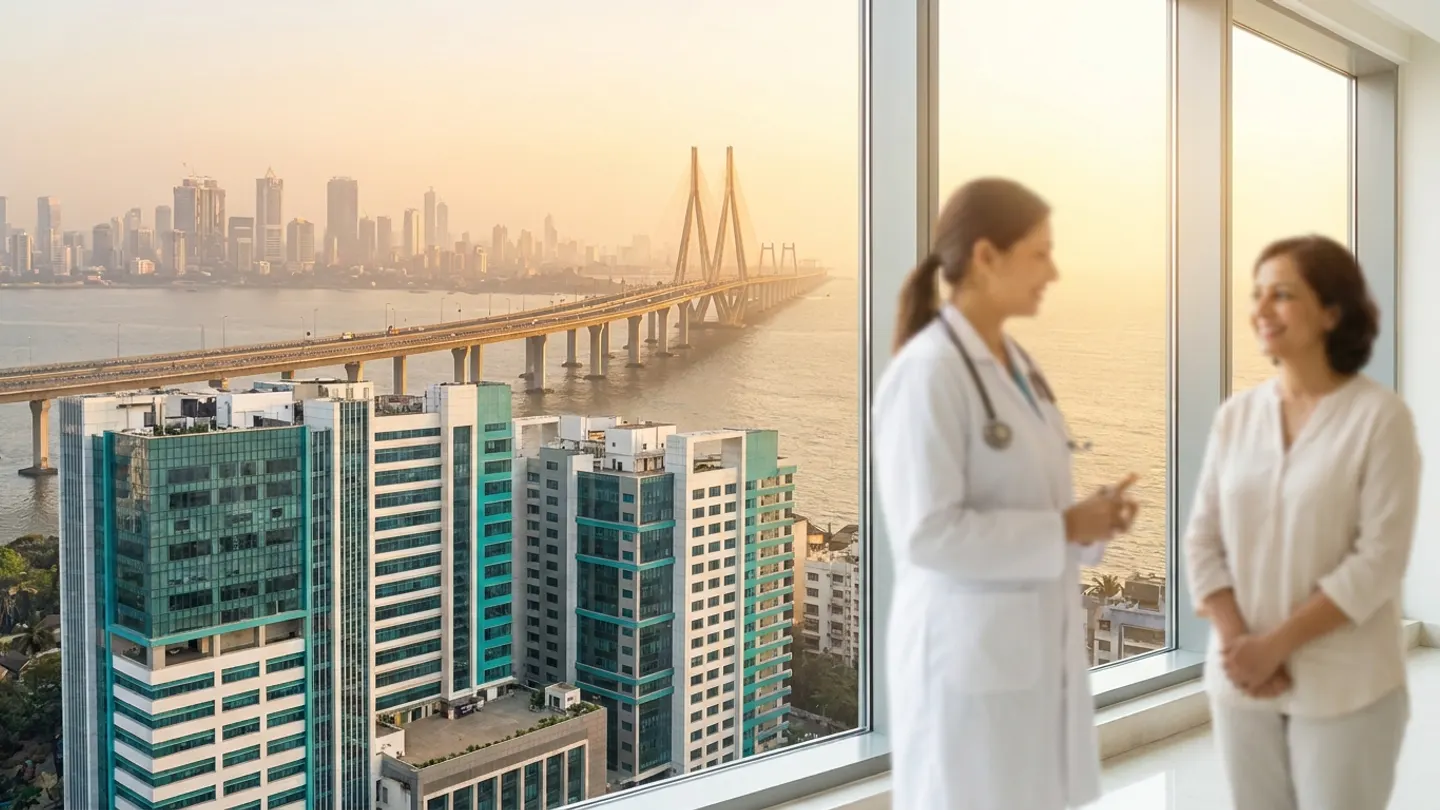
If you have just opened a treatment quote from your local hospital and felt your stomach drop, you are not alone. Thousands of patients every year look at that number and quietly start searching for another way. Mumbai is one of the answers they find — and for good reason.
What Makes Mumbai a Leading Medical Tourism Destination?
Medical tourism in Mumbai offers international patients access to globally accredited hospitals, highly trained specialists, and treatment costs that are typically 60-80% lower than equivalent care in the United States, United Kingdom, or Australia. The city is India’s commercial and medical capital, home to a dense cluster of private tertiary-care hospitals that have been treating international patients for more than two decades.
Mumbai combines clinical depth with practical convenience. It has two international airports with direct or one-stop connections from most major cities, a well-developed private hospital ecosystem, and an established infrastructure of serviced apartments and hotel hospitals designed around the needs of travelling patients.
“I came to Mumbai expecting to compromise. What I found was a modern hospital, a surgeon who had trained abroad, and a recovery suite that was quieter than my local NHS ward. The cost was a fifth of what I was quoted at home.” — representative patient experience, shared with consent.
JCI and NABH Accreditation: The Quality Benchmark
When evaluating any hospital abroad, accreditation is the first thing to check. Mumbai’s top-tier hospitals carry either Joint Commission International (JCI) accreditation — the gold standard for international patient care — or National Accreditation Board for Hospitals (NABH) accreditation, which is India’s own rigorous national quality framework. Both require hospitals to meet strict protocols on patient safety, infection control, surgical outcomes, and documentation.
Accreditation does not guarantee a perfect outcome — nothing does — but it means the hospital has been independently audited against standards that would be recognisable in any developed healthcare system.
Top Medical Specialties in Mumbai
Mumbai’s hospitals cover virtually every specialty, but the city has earned a particular international reputation in the following areas.
Cardiac Surgery and Interventional Cardiology
Mumbai’s cardiac centres perform high volumes of open-heart surgeries, coronary artery bypass grafting (CABG), valve replacements, and complex catheter-based interventions every year. High volume matters in cardiac care: outcomes data consistently shows that surgical teams who perform procedures frequently achieve better results. Waiting times for elective cardiac surgery in Mumbai are typically measured in days, not months.
Explore cardiac surgery costs and options.
Orthopaedics and Joint Replacement
Knee and hip replacements are among the most common procedures sought by medical tourists in Mumbai. Implant quality is comparable to what you would receive in the US or UK — many hospitals offer the same branded implant systems — but the total cost including surgery, anaesthesia, physiotherapy, and a week of accommodation is dramatically lower. Revision joint replacements and complex spine surgeries are also well-established here.
Learn more about orthopaedics and joint replacement.
Oncology and Cancer Treatment
Mumbai has several dedicated cancer hospitals as well as oncology departments within larger multi-specialty institutions. International patients access surgical oncology, medical oncology, radiation therapy (including modern linear accelerator systems), and robotic-assisted tumour resection. Multidisciplinary tumour boards — where surgeons, oncologists, radiologists, and pathologists review each case together — are standard practice in accredited centres.
See our cancer and oncology treatment guide.
Fertility and IVF
India’s IVF success rates at accredited clinics are competitive with global benchmarks, and Mumbai is home to some of the country’s most experienced fertility teams. For patients facing long waiting lists for NHS-funded cycles in the UK, or the prohibitive cost of private IVF in the US or Australia, Mumbai offers a meaningful alternative. Packages typically include consultations, cycle monitoring, egg retrieval, fertilisation, and embryo transfer.
Read about fertility and IVF treatment costs.
Organ Transplant
Liver and kidney transplants are performed in Mumbai under India’s legal transplant framework. Hospitals work closely with patients to navigate the documentation and legal requirements, which are strictly regulated. Living-donor transplants — typically involving a related donor — are most commonly undertaken by international patients.
Explore organ transplant in India.
Additional Specialties
Mumbai also draws international patients for:
- Dental treatment: complex implant cases, full-mouth reconstructions, and smile makeovers at a fraction of Western prices
- Hair transplant: FUE and FUT procedures with experienced teams and lower procedure costs
- Cosmetic and plastic surgery: rhinoplasty, liposuction, facelifts, and reconstructive procedures
Cost Comparison: Mumbai vs Other Countries
The table below shows indicative 2026 price ranges. Actual costs vary by hospital tier, procedure complexity, implant choice, and length of stay. All figures are approximate and should not be taken as quotes.
| Procedure | Mumbai (India) | United States | United Kingdom | Australia | UAE |
|---|---|---|---|---|---|
| Knee replacement (single) | $4,500 – $7,000 | $35,000 – $55,000 | £15,000 – £25,000 | A$25,000 – A$40,000 | $12,000 – $18,000 |
| Cardiac bypass (CABG) | $5,500 – $9,000 | $70,000 – $120,000 | £25,000 – £45,000 | A$50,000 – A$80,000 | $20,000 – $35,000 |
| IVF cycle (single) | $2,500 – $4,500 | $15,000 – $25,000 | £5,000 – £8,000 | A$8,000 – A$14,000 | $6,000 – $10,000 |
| Liver transplant | $25,000 – $40,000 | $300,000 – $500,000 | NHS waitlist | A$150,000+ | $80,000 – $130,000 |
| Dental implant (per tooth) | $500 – $900 | $3,500 – $6,000 | £2,500 – £4,500 | A$3,500 – A$6,000 | $1,500 – $3,000 |
Prices are indicative ranges for 2026. They include surgery and hospital stay but may exclude pre-operative investigations, post-operative medications, and accommodation outside the hospital. Always request a written itemised quote before committing.
What to Expect as an International Patient in Mumbai
Before You Travel
A good facilitator will arrange a telemedicine consultation with your chosen specialist before you book any flights. You share your medical records, imaging, and blood work; the specialist reviews your case and provides a preliminary treatment plan with an itemised cost estimate. This step is important — it removes the risk of arriving and discovering the treatment plan needs to change.
Your checklist before departure:
- Obtain a medical visa (e-Medical Visa is available for most nationalities online)
- Carry all prior medical records, imaging scans, and biopsy reports in digital and physical form
- Arrange travel insurance that covers medical procedures abroad
- Confirm your hospital’s international patient department has received your documents
- Share your flight details so airport assistance can be arranged
On Arrival
Accredited hospitals in Mumbai typically send a representative to meet you at the airport. You are taken directly to the hospital or to arranged accommodation. Admission processes are streamlined for international patients, with a single point-of-contact coordinator assigned to your case. Interpreters are available for patients whose primary language is not English.
During Treatment and Recovery
Mumbai’s private hospitals range from functional and efficient to genuinely impressive in terms of infrastructure and patient amenity. Rooms designed for international patients usually include private bathrooms, television, Wi-Fi, and provisions for a family companion to stay alongside. Nursing ratios in accredited centres are adequate for the level of care provided.
Recovery time in-country depends on the procedure. A joint replacement patient may need two to three weeks before flying. A cardiac surgery patient should plan for three to four weeks. Your medical team will advise on fitness to fly.
After You Return Home
Your hospital should provide a detailed discharge summary, operative notes, pathology reports, and follow-up instructions in English. Telemedicine follow-up appointments allow your Mumbai specialist to remain involved in your recovery from a distance. Share all documentation with your GP or specialist at home.
Practical Information for Mumbai Visitors
- Climate: Mumbai is tropical. If you have flexibility, October to February is the most comfortable period for recovery (cooler, drier).
- Accommodation: Serviced apartments near hospital clusters in areas such as Andheri, Bandra, and Juhu offer comfortable options for recovery with caregiver facilities.
- Getting around: Hospitals arrange private transfers; this is strongly recommended over taxis or app-based rides during recovery.
- Currency: Payments in INR are standard; most hospitals accept international credit cards and bank transfers. Confirm payment arrangements in advance.
- Communication: English is widely spoken in private hospitals and in most hotels.
How IndoMedTour Helps
At IndoMedTour, we start with a free counselling call where we listen to your medical situation, your budget, and your concerns about travelling abroad for care. We then match you with the hospitals and specialists best suited to your specific procedure, and we obtain written, itemised quotes so you can compare options without any pressure. Our team handles your medical visa paperwork, airport transfers, accommodation arrangements, and any logistics that arise between your arrival and your safe return home. Through every consultation, every procedure, and every day of recovery, a dedicated coordinator stays beside you — someone you can call at midnight if you need to. See how our process works, explore all treatments we support, or review indicative costs to begin your planning.
You bring the worry. We bring the plan.