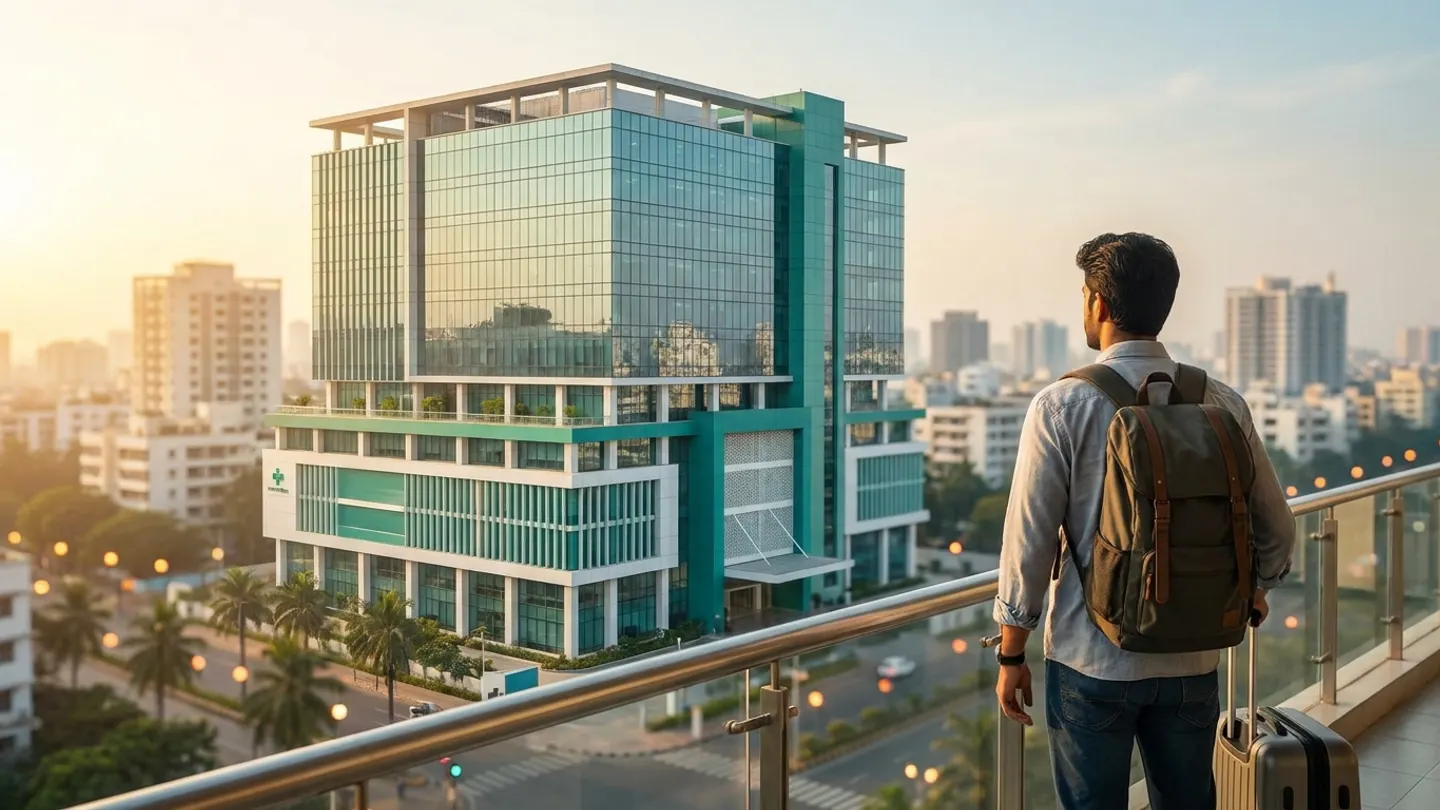
Facing a medical bill in the tens of thousands — or being told to wait eighteen months for surgery — changes everything you thought you knew about your options. Pune, India offers a third path: world-class hospitals, experienced specialists, and costs that make quality care genuinely reachable again.
Medical Tourism in Pune India: What You Need to Know First
Medical tourism in Pune India gives international patients access to high-quality, internationally recognised hospital care at 60-80% lower cost than the US, UK, or Australia, without sacrificing technology, surgical expertise, or post-operative support. Pune has grown into one of India’s most respected medical destinations, drawing patients from East Africa, the Middle East, South Asia, and increasingly from the UK and Australia who need planned, elective, or complex procedures but cannot afford — or cannot wait for — care at home.
Pune sits roughly 150 kilometres southeast of Mumbai, connected by a well-maintained expressway and its own international airport (IATA: PNQ). The city is relatively compact, clean, and home to a large English-speaking professional population, which makes navigating as a foreign patient significantly easier than in many other destinations in South Asia.
Why International Patients Choose Pune Over Other Indian Cities
Patients who research medical tourism in Pune India are often drawn by a specific combination of factors that few cities match:
- Experienced specialists: Many of Pune’s leading surgeons completed postgraduate training at institutions in the UK, US, Ireland, or Australia before returning to practise in India.
- Modern technology: Robotic surgery suites, 3T MRI, PET-CT scanners, and high-dependency intensive care units are standard in the city’s top-tier hospitals.
- English as a working language: Patient coordinators, nurses, and most senior doctors communicate in English with ease.
- Lower cost of living outside the hospital: Accommodation, food, and transport in Pune cost a fraction of Mumbai or Delhi, which helps families travelling alongside the patient stretch their budget considerably.
- Moderate climate: Pune’s elevation gives it a comfortable year-round climate that many recovering patients find easier than India’s hotter cities.
Hospital Quality for Medical Tourism in Pune: Accreditation and Safety Standards
Quality is the first question any medical traveller should ask, and it deserves a direct answer. Pune’s leading hospitals pursue and maintain NABH (National Accreditation Board for Hospitals) certification — India’s national quality standard that independently verifies clinical processes, infection control, patient rights, and surgical safety protocols. Several of the city’s flagship hospitals also hold or are actively seeking JCI (Joint Commission International) accreditation, the same body that certifies top hospitals in the United States, Europe, and the Gulf.
“We chose Pune because an independent second opinion confirmed the hospital’s tumour board followed exactly the same treatment protocol as our specialist at home — and the total cost was a fifth of what we had been quoted locally.” — representative feedback shared by a patient supported through IndoMedTour
Accreditation is not a marketing badge. It means an independent body has reviewed the hospital’s systems and found them up to defined standards. It is the single most reliable proxy for patient safety that an international traveller can verify before committing to a destination.
For a broader view of how India’s hospital network is vetted, visit our our hospitals page to see how IndoMedTour assesses every facility before recommending it.
Treatment Costs for Medical Tourism in Pune India vs Western Countries
The figures below are indicative 2026 ranges. Your actual cost depends on your specific diagnosis, surgical complexity, length of hospital stay, the tier of hospital you choose, and the room type selected. Always request a written, itemised quote before travelling.
| Procedure | Pune, India (approx.) | USA (approx.) | UK (approx.) | UAE (approx.) |
|---|---|---|---|---|
| Knee replacement (single) | $5,000 – $8,500 | $30,000 – $55,000 | £15,000 – £25,000 | $18,000 – $30,000 |
| Hip replacement | $5,500 – $9,000 | $32,000 – $55,000 | £14,000 – £24,000 | $19,000 – $32,000 |
| Cardiac bypass surgery (CABG) | $6,000 – $10,000 | $70,000 – $130,000 | £25,000 – £50,000 | $25,000 – $45,000 |
| Spinal fusion (1-2 levels) | $5,500 – $10,000 | $50,000 – $90,000 | £20,000 – £40,000 | $20,000 – $35,000 |
| IVF (single cycle, all-inclusive) | $2,500 – $4,500 | $15,000 – $30,000 | £5,000 – £10,000 | $6,000 – $12,000 |
| Bariatric surgery (sleeve) | $4,000 – $7,000 | $20,000 – $35,000 | £8,000 – £15,000 | $10,000 – $18,000 |
| Cancer surgery (major) | $5,000 – $14,000 | $40,000 – $120,000 | £18,000 – £60,000 | $20,000 – $50,000 |
Prices are indicative starting ranges for 2026. Surgeon fees, anaesthesia, room category, and post-operative medications all affect the final figure. Request a personalised written quote through IndoMedTour.
For a full cost comparison across procedures and Indian cities, our treatments and costs page gives you a side-by-side breakdown.
Most Popular Treatments for Medical Tourists in Pune
Pune’s hospitals cover virtually the full spectrum of tertiary care. These are the specialties most commonly sought by international travellers:
Orthopaedics and Joint Replacement
Knee and hip replacements are the most requested procedures by patients from the UK, Australia, and New Zealand, where NHS or public health system waiting lists can stretch to 18 months or longer. Pune’s orthopaedic units perform hundreds of joint replacements monthly, and surgeons have significant experience with robotic-assisted and minimally invasive approaches. See our full guide to [/treatments/orthopedics-joint-replacement] for what to expect step by step.
Cardiac Surgery and Interventional Cardiology
From coronary artery bypass grafting to complex valve repair and replacement, Pune’s cardiac departments serve a high volume of both domestic and international patients. High surgical case volumes are consistently associated with better outcomes, and Pune’s leading cardiac teams regularly handle complex, multi-vessel disease. See [/treatments/cardiac-surgery] for more detail.
Fertility and IVF
Pune is home to several highly regarded fertility clinics offering IVF, ICSI, and donor egg programmes. Couples from Southeast Asia, East Africa, and the Middle East regularly travel here for fertility treatment that combines clinical expertise with costs that are a fraction of what private clinics charge at home. Explore [/treatments/fertility-ivf] for a detailed breakdown of what each cycle typically includes.
Oncology and Cancer Treatment
Pune’s oncology centres provide radiation therapy, chemotherapy, robotic surgical oncology, and multidisciplinary tumour board reviews. International patients often begin with a second opinion and a written treatment plan, allowing them to either proceed in Pune or return home fully informed. Read more at [/treatments/cancer-oncology].
Neurosurgery and Spine
Complex spinal surgeries, brain tumour operations, and minimally invasive neurosurgical procedures are performed by specialist teams in Pune. Patients from the Gulf and East Africa have particularly benefited from access to neurosurgeons with formal fellowship training at leading Western academic centres.
Practical Travel Tips for Your Medical Trip to Pune
Logistics matter as much as the medical plan. Here is a checklist for first-time medical travellers to Pune:
- Medical Visa (MV visa): Apply for this category rather than a tourist visa. It allows an accompanying companion, multiple entries, and a longer permitted stay. Your hospital’s international patient department issues the invitation letter needed for the application.
- Flights: Pune Airport (PNQ) has direct or single-stop connections from Dubai, Abu Dhabi, Doha, Singapore, and Kuala Lumpur. If your preferred flight lands in Mumbai, a private car transfer on the Pune Expressway takes approximately 2.5 to 3 hours.
- Best travel window: October through March offers the most comfortable weather for both travel and recovery.
- Accommodation: A wide range of service apartments and hotels sits within 5-15 minutes of Pune’s main hospital clusters. Many hospitals maintain tie-ups with nearby guesthouses to assist families travelling with patients.
- Currency and payments: Major hospitals accept international credit and debit cards. Cost estimates are routinely provided in USD or GBP on request for international patients.
- Communication: Local SIM cards with generous data allowances are available at the airport for a small fee. English is widely used in hospital areas and across the commercial zones of the city.
- Local transport: App-based taxis (Ola and Uber) operate reliably across Pune at low cost. Many hospitals also offer shuttle services between partner hotels and the facility.
- Telemedicine before you travel: Most of Pune’s leading hospitals now offer pre-arrival video consultations so your surgeon can review your scans and confirm the surgical plan before you book flights.
For a step-by-step walkthrough of the full process — from sending your medical reports to returning home after recovery — visit our how it works page.
How IndoMedTour Helps
Organising surgery in a foreign city, even a welcoming one like Pune, raises real questions: which hospital is genuinely best for my condition, what will it actually cost all-in, and what happens if something goes wrong? IndoMedTour starts with a free counselling call where we review your medical reports, answer every question honestly, and match you with the two or three hospitals in Pune best suited to your diagnosis and budget. We send written, itemised quotes so you can compare before committing to anything. Once you decide to travel, we handle visa invitation letters, airport transfers, accommodation recommendations, and appointment scheduling, and assign you a dedicated coordinator who stays in contact through your surgery and your early recovery. You bring the worry. We bring the plan.