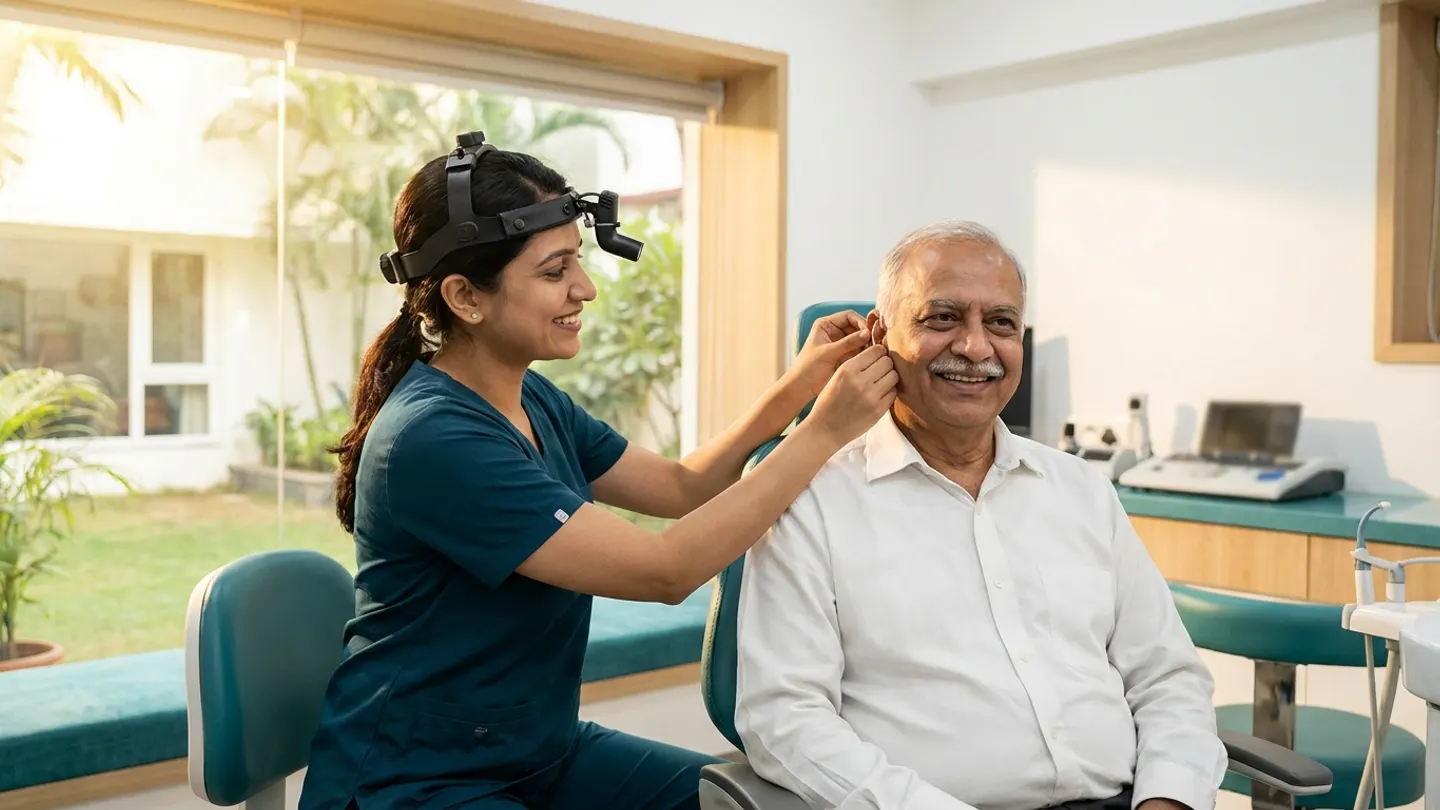
You have done the research, compared the costs, and perhaps even spoken to someone who had their treatment in India. But one question keeps pulling at you: “How do I actually know the hospital is safe?” That is the right question to ask, and NABH accreditation is the clearest answer the Indian healthcare system gives you.
What Is NABH Accreditation? The Answer International Patients Need
NABH accreditation India explained simply: it is an independent quality certification granted by the National Accreditation Board for Hospitals and Healthcare Providers, confirming that a hospital has met a rigorous set of patient-safety and clinical-quality standards. A facility that carries NABH accreditation has been assessed — and approved — by external auditors, not by its own management. Think of it as the Indian equivalent of what the Joint Commission does for hospitals in the United States, or what the Care Quality Commission does in the United Kingdom.
For you as an international patient, an NABH-accredited hospital is not simply a building with good marketing. It is a facility that has opened its operating theatres, wards, pharmacies, nursing stations, and administrative records to outside scrutiny and passed.
Who Runs NABH and Why It Carries International Weight
NABH operates under the Quality Council of India, a government-backed body. Crucially, the NABH standard itself is peer-reviewed and recognised by the International Society for Quality in Health Care (ISQua) — the global umbrella organisation that validates national accreditation programmes worldwide. That ISQua recognition means NABH is not a local pass mark invented by the industry for itself. It sits alongside other ISQua-recognised programmes from Australia, the UK, Canada, and the US.
When a hospital displays NABH accreditation, it has satisfied an internationally benchmarked framework. That matters because it removes the guesswork of trying to assess a foreign hospital on your own from the other side of the world.
What the NABH Audit Actually Checks
The NABH assessment covers more than 600 standards across all aspects of hospital care. Before a certificate is issued, auditors examine:
- Patient identification and safety protocols at every touchpoint, from admission to discharge
- Infection prevention and control in operating theatres, ICUs, procedure rooms, and general wards
- Medication management — correct drug, correct dose, correct patient, every time
- Surgical safety checklists and mandatory team time-outs before operations begin
- Nursing care standards, including staff-to-patient ratios and competency verification
- Emergency preparedness, including resuscitation equipment availability and staff training
- Patient and family rights, covering informed consent, privacy, and grievance mechanisms
- Quality monitoring and continuous improvement programmes that must be demonstrably active
The audit is not a one-time box-ticking exercise. NABH accreditation has a fixed validity period and must be renewed through reassessment. A hospital that slips on its standards can lose accreditation between renewal cycles if surveillance audits flag concerns.
NABH vs JCI: How the Two Accreditations Compare
Many international patients encounter both acronyms and wonder which one to prioritise. The honest answer is that either accreditation, from a hospital that actively maintains it, signals genuine commitment to quality.
| Standard | Full name | Governing body | International recognition | Commonly held by |
|---|---|---|---|---|
| NABH | National Accreditation Board for Hospitals | Quality Council of India | ISQua-recognised | Indian hospitals across all tiers |
| JCI | Joint Commission International | Joint Commission (US-based) | Globally recognised | Major tertiary hospitals, medical tourism hubs |
The key practical difference is reach: JCI tends to be concentrated in India’s largest tertiary hospitals that handle high volumes of international patients, while NABH accreditation is more widely distributed across the country, including strong regional hospitals. A JCI-accredited hospital is also NABH-accredited by definition in most cases, since maintaining both reflects overlapping commitments to quality. For most procedures, NABH accreditation at a well-regarded hospital is a fully sufficient quality signal.
“I spent weeks trying to understand whether hospitals in India were actually regulated the way they are back home in the UK. When my IndoMedTour coordinator explained NABH and sent me the official registry link so I could check the hospital myself, that was the moment I genuinely relaxed. The fact that an independent body had audited the place — and that I could verify it online — made all the difference.” This is a representative patient experience and does not identify a specific individual.
What NABH Accreditation Tells You — and What It Does Not
Accreditation is a structural quality signal, not a guarantee of any specific outcome. What NABH tells you is that the hospital has the right systems, protocols, trained staff, and facilities in place to deliver safe care. It does not tell you that your procedure will be complication-free, because no honest system can make that promise. Medical outcomes depend on your individual clinical picture, the complexity of your case, and the natural variation that exists in every surgical speciality.
What accreditation does do is dramatically reduce the risk of preventable harm: medication errors, hospital-acquired infections, communication breakdowns in theatre, and poor post-operative monitoring. Those are the categories of harm that kill or harm patients in unaccredited facilities, and those are precisely the categories that NABH audits are designed to catch.
Treatment Costs at NABH-Accredited Hospitals in India
One of the most striking facts about Indian medical tourism is that NABH and JCI accreditation come alongside, not instead of, major cost savings. The prices below are indicative 2026 ranges at accredited hospitals; your personal quote will depend on your diagnosis, case complexity, and chosen facility.
| Procedure | India — accredited hospital (approx.) | USA (approx.) | UK Private (approx.) | Australia (approx.) | UAE (approx.) |
|---|---|---|---|---|---|
| Cardiac Bypass Surgery | $6,000 – $10,000 | $100,000 – $150,000 | $40,000 – $60,000 | $50,000 – $80,000 | $30,000 – $50,000 |
| Hip or Knee Replacement | $4,500 – $8,000 | $40,000 – $65,000 | $20,000 – $35,000 | $25,000 – $40,000 | $18,000 – $28,000 |
| Spinal Fusion Surgery | $5,000 – $9,000 | $50,000 – $90,000 | $25,000 – $45,000 | $30,000 – $55,000 | $20,000 – $35,000 |
| Liver Transplant | $25,000 – $40,000 | $300,000 – $500,000 | $120,000 – $200,000 | $150,000 – $250,000 | $80,000 – $140,000 |
| IVF (single cycle) | $2,000 – $4,000 | $15,000 – $25,000 | $8,000 – $14,000 | $9,000 – $16,000 | $7,000 – $12,000 |
All figures are indicative ranges for 2026. Actual costs vary by hospital tier, implant brand, surgeon seniority, and individual case complexity. Always request a written itemised quote before committing.
You can explore detailed procedure pricing on our treatments and costs page, or review specific specialities such as cardiac surgery, orthopaedics and joint replacement, neurosurgery and spine, or organ transplant.
How to Verify NABH Accreditation Before You Travel
Do not take any facilitator’s word for it — including ours. Here is a practical checklist for confirming a hospital’s status independently:
- Visit nabh.co and use the hospital search to confirm the facility’s current accreditation and expiry date
- Check whether the hospital also holds JCI accreditation at jointcommissioninternational.org
- Ask the hospital or facilitator to provide the accreditation certificate reference number in writing
- Confirm the accreditation is current and not lapsed or under review
- Ask specifically whether the accreditation covers the department relevant to your treatment (some large hospitals hold departmental accreditations)
- Request that your written treatment plan and cost quote reference the specific accredited facility, not a group or brand name
These steps take under thirty minutes and give you verifiable, independent confidence in your choice. If a hospital or agent is reluctant to share this information, treat that as a warning sign.
To understand the broader landscape of hospital quality in India, our guide on how medical tourism works in India explains the process from first enquiry through to flying home. You can also read about the hospitals we work with and browse patient success stories.
How IndoMedTour Helps
Every hospital IndoMedTour recommends is verified against the live NABH and JCI accreditation registers before we match you with them. On your free counselling call, a real coordinator takes time to understand your diagnosis, your questions, and your concerns — and then provides written quotes from accredited facilities with no obligation. We arrange your medical visa, airport transfers, accommodation near the hospital, and a treatment itinerary you can share with your family before you leave. A dedicated coordinator stays beside you from arrival through surgery and your recovery period, and remains reachable after you return home. You bring the worry. We bring the plan.