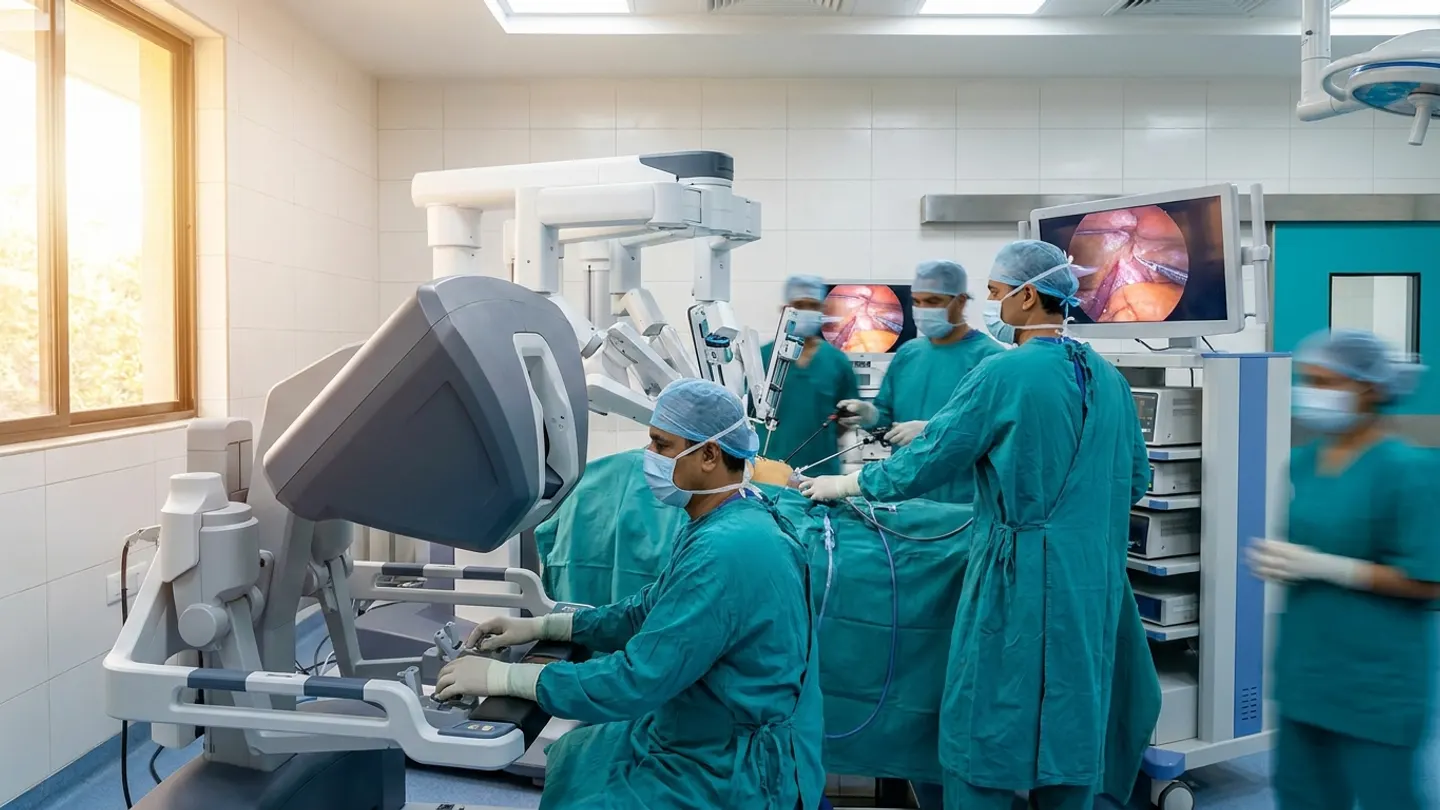
A kidney stone stuck inside your kidney is painful enough. Finding out you need a procedure called PCNL — and then seeing the estimated cost in your home country — can feel like a second blow. Here is the clear, honest breakdown you need before making any decision.
What PCNL Surgery Costs in India in 2026
PCNL surgery cost in India typically ranges from approximately $1,500 to $3,500 USD for international patients, depending on hospital tier, city, and stone complexity. This represents a saving of 60 to 80 percent compared with the same procedure in the United States, United Kingdom, or Australia, where PCNL routinely costs between $15,000 and $35,000.
The comparison below uses indicative 2026 ranges drawn from available hospital data and international patient reports. Your exact written quote will depend on your individual CT scan findings.
| Country | Indicative PCNL Cost (USD) | Typical Wait Time |
|---|---|---|
| India | $1,500 – $3,500 | 3 – 7 days |
| United States | $15,000 – $35,000 | 2 – 6 weeks |
| United Kingdom (NHS) | Subsidised but queued | 6 – 18 months |
| Australia | $8,000 – $20,000 | 4 – 12 weeks |
| UAE | $6,000 – $12,000 | 1 – 3 weeks |
All figures are indicative and will vary by facility, case complexity, and individual circumstances. Always obtain a written quote before travelling.
For a full picture of what treatment in India costs across specialties, visit our treatments and costs page.
What Is Included in the PCNL Package Price in India?
Reputable accredited hospitals quote PCNL as an all-inclusive package. Before you sign anything, confirm in writing that the price covers:
- Pre-operative blood work, urine culture, and CT KUB imaging
- Surgeon fees, anaesthesiologist fees, and operating theatre charges
- Hospital stay of 3 to 5 nights in a private room with attendant bed
- Nephrostomy tube, ureteric stent, and consumables used during surgery
- Post-operative medications and dressings during the inpatient stay
- One or two follow-up consultations and a discharge X-ray before you leave
What is often billed separately includes additional imaging if complications arise, extended stays beyond the package duration, and international travel insurance. Our coordinators at IndoMedTour obtain itemised written quotes from multiple hospitals so you can compare fairly. Learn more about the process on our how it works page.
Factors That Affect PCNL Surgery Cost in India
Hospital Tier and City
India’s hospital landscape spans community hospitals to globally accredited tertiary care centres. A JCI or NABH-accredited facility in a major city such as Chennai, Hyderabad, or Delhi typically sits at the upper end of the price range, partly because of the international-patient infrastructure they maintain, including interpreters, dedicated patient lounges, and insurance co-ordination desks. Smaller cities like Coimbatore, Nagpur, or Kochi often offer equally experienced urologists at 20 to 30 percent lower cost, and the travel and accommodation savings can be significant.
Stone Size, Number, and Position
PCNL is used for large stones — generally above 2 cm in diameter — staghorn calculi, or stones that have not responded to less invasive options. A single stone in a straightforward calyceal position is faster to remove and less expensive than bilateral stones, multiple access tracts, or anatomically complex kidneys. Your surgeon will review your CT scan before providing a final quote.
Standard PCNL vs. Mini-PCNL
Mini-PCNL uses a narrower access tract (around 14 Fr, compared with 24 to 30 Fr for standard PCNL), which typically means less blood loss, a shorter hospital stay, and sometimes a single overnight admission. The disposable equipment for mini-PCNL costs slightly more, but the reduced stay can lower the total package cost and shorten your time in India. Discuss with your consulting urologist which variant suits your stone burden.
Pre-Operative Tests on Arrival
If you do not bring recent imaging from home, you will need a CT KUB scan on arrival, which typically costs $80 to $150 at accredited centres. A full pre-operative blood panel, urine culture, and renal function tests add approximately $40 to $80. Building these into your budget avoids surprises.
Is PCNL Surgery Safe at Indian Hospitals?
India has more than 50 JCI-accredited hospitals and several hundred NABH-accredited facilities, many with dedicated urology departments equipped with C-arm fluoroscopy and intraoperative ultrasound. Urologists performing PCNL at leading Indian centres are frequently trained in the UK, the US, or at premier Indian institutions, and many manage high annual case volumes, which research consistently links to better surgical outcomes.
“In PCNL, surgeon experience and case volume are among the strongest predictors of stone-free rates and low complication risk. Choosing an accredited centre, not simply the cheapest option, is the decision that protects you.”
Standard safety measures you should expect include a pre-operative nephrologist review if kidney function is borderline, intraoperative imaging guidance throughout the procedure, and a plain X-ray or ultrasound before discharge to confirm stone clearance and tube position. Browse our partner hospitals to see the facilities we work with and the accreditations they hold.
When Is PCNL the Right Treatment?
Percutaneous Nephrolithotomy is not used for every kidney stone. Your urologist may recommend it when:
- The stone is larger than 2 cm and unlikely to pass or fragment with shock-wave lithotripsy
- Shock-wave lithotripsy (ESWL) has already failed or is not anatomically feasible
- You have a staghorn calculus filling part or all of the renal pelvis
- The stone sits in a lower pole calyx with poor drainage angles
- You have a structural kidney abnormality, such as a horseshoe kidney, where other approaches carry higher failure rates
If you are unsure whether you need PCNL, a ureteroscopy (URS), or a less invasive approach, an opinion from an Indian urologist based on your existing CT images can be arranged remotely before you commit to travel.
Planning Your PCNL Trip: A Checklist
Preparing for kidney stone surgery abroad does not have to be overwhelming. Work through this list before you fly:
- Gather all recent imaging in digital format — CT KUB on a USB drive or shareable cloud link
- Collect blood results from the past three months, including renal function and coagulation
- List every current medication, supplement, and blood thinner
- Apply for an Indian e-Medical Visa, available online for most nationalities within 3 to 5 working days
- Arrange travel insurance that explicitly covers inpatient surgery and emergency repatriation
- Obtain a written, itemised quote from your chosen hospital before purchasing flights
- Plan for a travel companion — having someone with you during the first 48 hours after PCNL is strongly advisable
IndoMedTour coordinators walk through every item on this list with you during an initial free counselling call. Nothing is left to chance.
Recovery and Flying Home
Most PCNL patients in India are ready for discharge within 3 to 5 days. A ureteric stent is commonly left in place for 2 to 4 weeks after surgery to allow the kidney to drain and heal. In many cases, the stent can be removed by your own urologist at home, avoiding a second trip to India. Plan to stay in India for at least 7 to 10 days before flying, to allow for the post-operative review and confirm that early recovery is uncomplicated.
Full return to desk work typically takes 1 to 2 weeks; physically demanding jobs may require 3 to 4 weeks off. Many international patients choose to use the recovery window to rest in India rather than rushing onto a long-haul flight, which also reduces deep-vein thrombosis risk. Read about experiences from previous patients on our success stories page.
How IndoMedTour Helps
We start with a free counselling call where a medical coordinator reviews your scan reports, explains your options without pressure, and answers every question you have. We then match you with two or three JCI or NABH-accredited hospitals that fit your case and budget, and obtain written, itemised quotes so you can compare honestly. Our team guides you through the medical visa process, arranges airport transfers and accommodation close to the hospital, and assigns you a dedicated coordinator who stays beside you from the moment you land through surgery and into recovery, until you are safely on your flight home.
You bring the worry. We bring the plan.