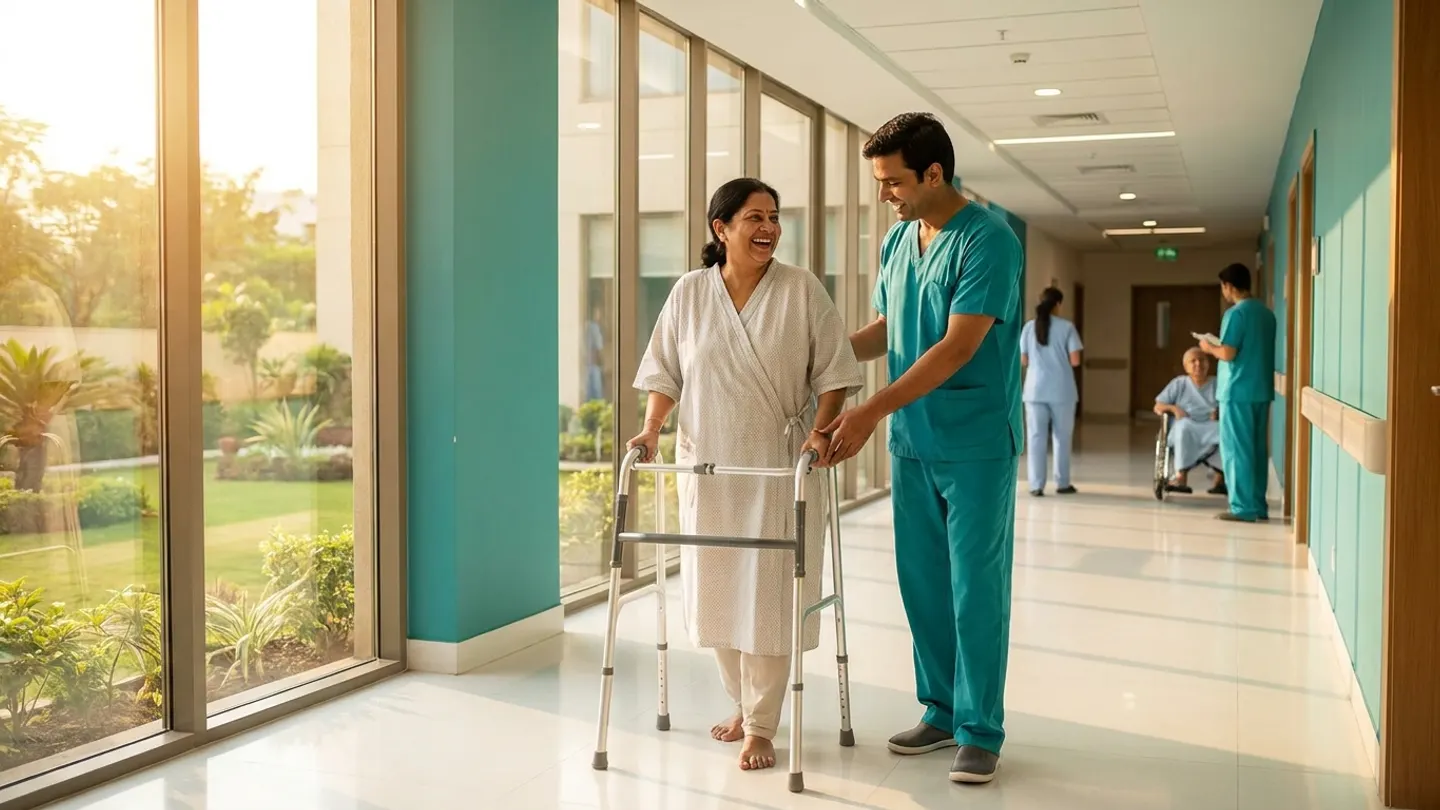
Surgery abroad can feel like a leap of faith. You are already navigating an unfamiliar medical system, and now you are wondering what the days and weeks after the operation will actually look like — far from your own home, your own doctor, and your own support network. The good news is that recovering from surgery in India is far more supported, comfortable, and structured than most international patients expect.
What Recovery After Surgery in India Actually Looks Like
Recovering from surgery in India at a top-tier accredited hospital means round-the-clock nursing, structured physiotherapy programmes, and a dedicated coordinator who speaks your language. India’s major medical hubs — including cities like Delhi, Mumbai, Chennai, Bengaluru, and Hyderabad — have spent two decades building infrastructure specifically for international patients, and the post-operative experience reflects that investment.
The typical recovery journey moves through three phases: the immediate post-operative period in hospital, a supervised intermediate recovery at a serviced apartment or recovery facility near the hospital, and finally clearance to fly home. How long each phase lasts depends heavily on what procedure you have had.
Phase 1: In-Hospital Recovery
The number of nights you spend in hospital after surgery varies widely by procedure type. The table below gives indicative ranges based on typical clinical practice at JCI- and NABH-accredited facilities in India:
| Procedure | Typical Hospital Stay | Typical Total In-Country Time |
|---|---|---|
| Hip or knee replacement | 3-5 nights | 3-4 weeks |
| Cardiac bypass surgery | 7-10 nights | 5-6 weeks |
| Spinal surgery (discectomy / fusion) | 3-7 nights | 3-5 weeks |
| Liver transplant | 14-21 nights | 8-12 weeks |
| IVF cycle | 0-1 nights | 3-4 weeks |
| Cosmetic / reconstructive surgery | 1-3 nights | 2-3 weeks |
| Dental implants (full arch) | 0 nights | 1-2 weeks |
These are indicative ranges only. Your surgeon will give you a personalised timeline based on your health profile and the complexity of your procedure.
During your hospital stay you will typically receive:
- Daily consultant ward rounds and nursing observations
- Pain management reviewed and adjusted in real time
- Physiotherapy starting — often — the day after major joint or cardiac surgery
- Dietary support tailored to your cultural and religious preferences
- A dedicated international patient desk contact reachable by phone or WhatsApp
Most private hospitals serving international patients have rooms that feel closer to a hotel than a clinical ward: private bathrooms, television with international channels, Wi-Fi, and a comfortable attendant bed so a travelling companion can stay with you.
Phase 2: Supervised Recovery Outside the Hospital
Once your surgical team discharges you from the ward, you will not be ready to board a long-haul flight. This is the phase that surprises many first-time medical tourists the most — and it is genuinely important.
“I expected to check out of hospital and head to the airport. Instead I spent another two weeks in a lovely serviced apartment walking a little more each day, attending physio sessions, and video-calling my surgeon for check-ins. By the time I flew home I felt stronger than I had in years.” — Representative patient experience, not a specific identifiable individual.
During this intermediate recovery period you will typically:
- Attend outpatient follow-up appointments at the hospital every few days
- Continue formal physiotherapy sessions (especially after orthopaedic or spinal surgery)
- Have stitches or surgical drains removed
- Receive your post-operative imaging results (X-rays, scans, blood tests)
- Discuss medication you will need to continue at home
- Be assessed for fitness to fly
IndoMedTour pre-arranges serviced apartments and recovery guesthouses within easy distance of partner hospitals. These are clean, quiet, catering-capable environments where a companion can cook familiar food, and where medical staff can reach you quickly if needed. See our how it works page for a full breakdown of how we coordinate this phase.
Phase 3: Getting Your Fitness-to-Fly Certificate
No reputable surgeon will wave you off to a fourteen-hour flight without confirming you are medically safe to travel. Before you leave India you should receive:
- A formal discharge summary in English detailing your diagnosis, procedure, and outcomes
- A fitness-to-fly certificate signed by your operating surgeon
- A complete medication list with generic drug names (important for customs and for your home doctor)
- All imaging — X-rays, CT scans, MRI files — either on disc or via a secure digital link
- Contact details for the hospital’s international telemedicine service for follow-up questions at home
Most airlines require a fitness-to-fly certificate for passengers who have had surgery within the previous few weeks. The certificate also helps your home physician pick up your care seamlessly.
Practical Recovery Tips International Patients Often Overlook
Compression garments and DVT prevention on the flight home
Long-haul flying after surgery significantly raises the risk of deep-vein thrombosis, particularly after orthopaedic procedures. Your surgical team will typically prescribe compression stockings and may recommend a blood-thinning injection before the flight. Follow this guidance closely and book an aisle seat so you can stand and walk the cabin periodically.
Keeping your home doctor in the loop
Share your discharge summary with your GP or specialist at home before you fly. In many countries — the UK, Canada, Australia — your home doctor can authorise continuation prescriptions for post-operative medications once they have reviewed your Indian hospital records. This avoids gaps in your medication on arrival.
Climate and diet during recovery
India’s climate can be intense, particularly if you are recovering in summer months. Stay well-hydrated and stay out of direct sun during the first week post-surgery. Most hospital coordinators and IndoMedTour staff can advise on foods that are gentle on a recovering system and easy to find locally.
Mental health and emotional support
Being away from family and familiar surroundings during recovery is harder than people admit in advance. Build video-call time with people at home into your daily routine from day one. Many patients find that recovery in India is actually calmer than it would have been at home — fewer workplace pressures and distractions — but the emotional adjustment is real and deserves acknowledgement.
Costs: What Recovery-Related Expenses Look Like
Medical tourism cost comparisons usually focus on the surgery itself, but it is worth planning for the full recovery period. The table below gives indicative recovery-period costs in India compared with some common source markets.
| Recovery Cost Item | India (approx.) | USA (approx.) | UK (approx.) | Australia (approx.) |
|---|---|---|---|---|
| Post-discharge physio (per session) | $10-$25 | $100-$250 | £60-£120 | A$80-$180 |
| Serviced apartment per night (near major hospital) | $30-$80 | $120-$250 | £90-£200 | A$100-$220 |
| Follow-up outpatient consultation | $15-$50 | $150-$400 | £80-£200 | A$80-$200 |
| Fitness-to-fly assessment | Typically included | $150-$300 | £100-£150 | A$100-$200 |
All figures are indicative 2026 estimates. Your actual costs will depend on city, hospital tier, and the specific recovery pathway your surgeon recommends. Always get written quotes before committing.
For a broader view of what your entire treatment trip might cost, visit our treatments & costs page or browse specific treatment areas such as orthopaedics and joint replacement, cardiac surgery, or organ transplant.
What to Pack Specifically for Your Recovery Period
A recovery-focused packing checklist — separate from your surgical preparation list:
- Loose, comfortable clothing that does not press on your incision site
- Slip-on footwear (crucial if you are recovering from lower-limb surgery)
- A tablet or laptop loaded with entertainment and video-calling apps
- Any dietary supplements your home doctor has approved
- A small notebook to record your daily pain scores, medications, and questions for ward rounds
- Copies of your travel insurance policy and pre-authorisation letters
- Emergency contact numbers for your IndoMedTour coordinator (available 24 hours)
Quality Assurance: Why Accreditation Matters During Recovery
When you are comparing hospitals for your procedure, look for JCI (Joint Commission International) accreditation or NABH (National Accreditation Board for Hospitals) certification. These are not marketing badges. They represent rigorous third-party audits of infection-control protocols, nursing standards, medication safety, and patient-rights processes — the exact systems that protect you during the vulnerable post-operative window.
India has more JCI-accredited hospitals than any country outside the United States, and NABH-certified facilities number in the thousands. When IndoMedTour matches you with a partner hospital, accreditation is a non-negotiable baseline, not an optional upgrade. You can learn more about our vetting process on the all treatments page.
How IndoMedTour Helps
From the moment you book your free counselling call, our coordinators begin mapping your recovery pathway alongside your surgery plan. We match you with an accredited hospital suited to your clinical needs, provide written cost quotes covering both the procedure and the recovery period, and handle visa support and travel logistics for you and your companion. A named coordinator stays beside you through every step — from the pre-op consultation to the moment your surgeon signs your fitness-to-fly certificate — so you always have someone to call, whatever the hour.
You bring the worry. We bring the plan.