When your cardiologist says you need heart surgery, the second question - right after “will I be okay?” - is almost always “how will I pay for this?” If you have been looking at quotes from the United States, the United Kingdom, or Australia, those numbers can feel as frightening as the diagnosis itself.
What Does Robotic Heart Surgery Cost in India?
Robotic heart surgery cost in India typically ranges from approximately $8,000 to $18,000 USD for most procedures, compared with $40,000 to $120,000 in the United States or $30,000 to $80,000 in the UK. The exact figure depends on the type of cardiac procedure, the city and hospital tier you choose, and the complexity of your specific anatomy - but the savings are consistently in the range of 60 to 80 percent.
Here is a side-by-side comparison across the markets where most IndoMedTour patients come from:
| Procedure | India (approx.) | USA (approx.) | UK (approx.) | Australia (approx.) | UAE (approx.) |
|---|---|---|---|---|---|
| Robotic CABG (bypass) | $10,000 – $18,000 | $60,000 – $120,000 | $35,000 – $70,000 | $40,000 – $80,000 | $25,000 – $45,000 |
| Robotic mitral valve repair | $9,000 – $16,000 | $55,000 – $100,000 | $30,000 – $65,000 | $35,000 – $75,000 | $22,000 – $40,000 |
| Robotic mitral valve replacement | $10,000 – $17,000 | $60,000 – $110,000 | $32,000 – $68,000 | $38,000 – $78,000 | $24,000 – $42,000 |
| Robotic ASD closure | $8,000 – $12,000 | $40,000 – $75,000 | $25,000 – $50,000 | $28,000 – $60,000 | $18,000 – $30,000 |
All figures are indicative 2026 estimates. Your written quote will reflect your individual diagnosis and chosen hospital.
What Is Robotic Heart Surgery?
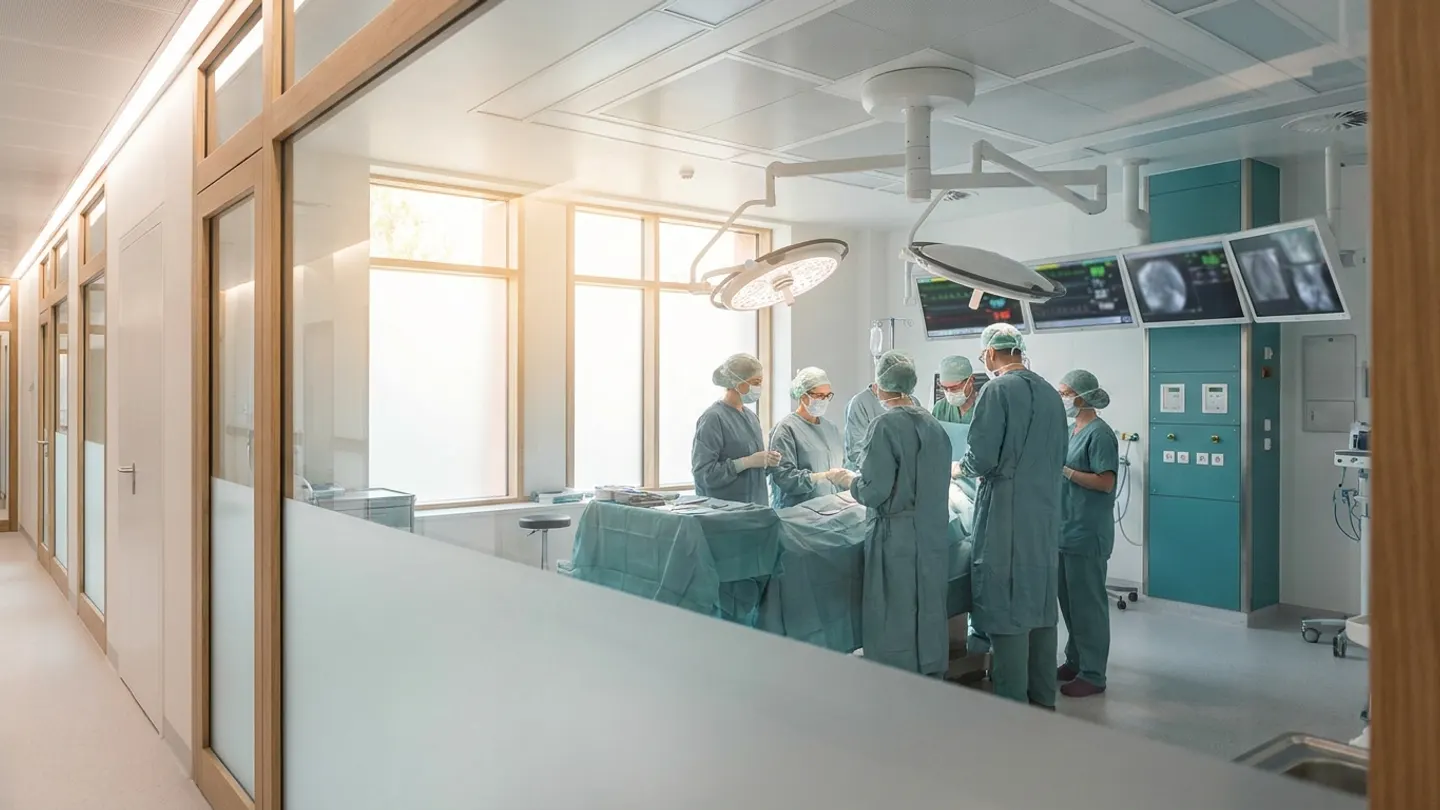
Robotic cardiac surgery uses a surgeon-controlled robotic platform - most commonly the da Vinci Surgical System - to perform intricate heart procedures through tiny incisions rather than cutting open the full chest wall. The surgeon sits at a console a few feet from the operating table, guiding miniaturised instruments with a degree of precision that exceeds what the unassisted human hand can achieve.
How Does It Differ from Conventional Open-Heart Surgery?
Traditional open-heart surgery requires a large sternotomy: the breastbone is divided and spread to expose the heart directly. That wound typically takes six to twelve weeks to heal and limits the patient’s ability to breathe deeply, drive, or work during recovery.
Robotic surgery, by contrast, typically uses three to four small access ports, each about the size of a fingertip. Benefits consistently reported in peer-reviewed cardiology literature include:
- Significantly less blood loss and a lower likelihood of requiring transfusion
- Reduced post-operative pain
- Shorter hospital stay, often three to five days versus seven to ten
- Faster return to normal activity, sometimes within two to four weeks
- Smaller, less visible scars
- Lower risk of wound infection due to minimal incision size
Not every heart condition is suitable for the robotic approach. Procedures commonly performed robotically at India’s top cardiac hospitals include coronary artery bypass grafting (CABG), mitral valve repair or replacement, atrial septal defect (ASD) closure, and removal of benign cardiac tumours. A specialist will review your imaging and anatomy before confirming whether robotic surgery is appropriate for your case. Learn more on our cardiac surgery treatments page.
Why India Has Become a Serious Destination for Robotic Cardiac Care
India’s leading cardiac hospitals have invested heavily in surgical robotics over the past decade. Many of these centres now complete several hundred robotic cardiac cases each year, giving their surgical teams annual volumes that rival those at comparable hospitals in North America and Western Europe.
“The cost difference between India and the West is not a sign of lower quality. It reflects structurally lower operating costs, staff salaries, and infrastructure expenses. The same robotic platform, the same clinical protocols, and often the same postgraduate training from Western institutions - at a fraction of the price.” This observation comes up repeatedly among patients who have done rigorous comparisons before choosing India.
Quality benchmarks to look for when shortlisting a hospital:
- JCI (Joint Commission International) accreditation - the globally recognised gold standard for hospital safety and patient care quality
- NABH accreditation - India’s National Accreditation Board for Hospitals, with standards aligned to international best practice
- A dedicated cardiac robotic surgery programme with a high and verifiable annual case volume
- A 24-hour cardiac intensive care unit staffed by intensivists
- A formal international patient services department that handles medical records, visas, and accommodation coordination
Browse our curated list of accredited hospitals across India to filter by specialty and city.
What the Price Typically Includes - and What to Clarify
When you receive a written quote through IndoMedTour, the package for robotic heart surgery typically covers:
- Pre-operative cardiology consultation and baseline diagnostics (ECG, echocardiogram, angiogram if required)
- Surgeon, anaesthetist, and robotic theatre fees
- Hospital admission and the procedure itself
- Cardiac ICU care for the immediate post-operative period
- Standard ward stay for the remainder of the recovery phase
- Discharge medications for the first seven days
- One follow-up consultation before you fly home
Items that may be billed separately include specialised valve implants (mechanical versus biological options vary considerably in cost), additional blood products if required, unexpectedly extended ICU stays, and international travel or accommodation. Always ask for a fully itemised quote before you commit. Any reputable accredited hospital will provide one without hesitation.
For a full breakdown of what cardiac packages typically cover, visit our treatments and costs page.
Practical Steps Before You Travel
Once you decide to explore treatment in India, the process is more straightforward than most patients expect.
- Share your medical records. Send recent echocardiogram reports, angiograms, and cardiologist notes so hospitals can give you an accurate quote rather than a rough guess.
- Compare two or three written quotes. IndoMedTour obtains these for you at no charge, from hospitals matched to your diagnosis and budget.
- Confirm accreditation independently. JCI and NABH status can be verified on each organisation’s public website.
- Arrange a medical visa. India’s Medical Visa (MV category) is typically issued within a few working days with the right documentation. Your coordinator guides this step.
- Plan your recovery window. Most cardiac surgeons recommend staying in India for two to four weeks after robotic heart surgery before a long-haul flight home.
- Bring a companion. Having a trusted person with you during the hospital stay and early recovery is strongly advisable for both practical and emotional support.
Read the full patient journey on our how it works page.
Questions Patients Ask Before Booking
What if something goes wrong during surgery?
All JCI and NABH accredited cardiac hospitals maintain full emergency response capability, including perfusion teams, cardiac anaesthesia, catheter laboratories, and crash teams. Complication management protocols are equivalent to those at leading Western teaching hospitals.
Can I trust the surgeon’s qualifications?
Many senior cardiac surgeons at India’s top hospitals hold postgraduate fellowships from institutions in the USA, UK, or Germany. Fellowship certificates and annual case-volume data are available on request, and any credible hospital will provide them without hesitation.
How do I manage follow-up care at home?
Your Indian hospital will prepare a complete discharge summary, operative report, and medication plan in English, sent directly to your cardiologist at home. Most follow-up monitoring such as ECG, blood tests, and echocardiogram is straightforward for a local GP or cardiologist to manage. You can also read real patient success stories from people who have been through exactly this process.
How IndoMedTour Helps
Start with a free counselling call - no obligation, no sales pressure, just an honest conversation about your diagnosis, your budget, and which hospitals make clinical sense for your case. We obtain written quotes from two or three JCI or NABH accredited cardiac centres, handle your medical visa paperwork, and coordinate airport transfers and accommodation close to your chosen hospital. A dedicated patient coordinator is assigned before you leave home and stays reachable - in person or by phone - through pre-operative preparation, surgery, recovery, and your journey back. You bring the worry. We bring the plan.