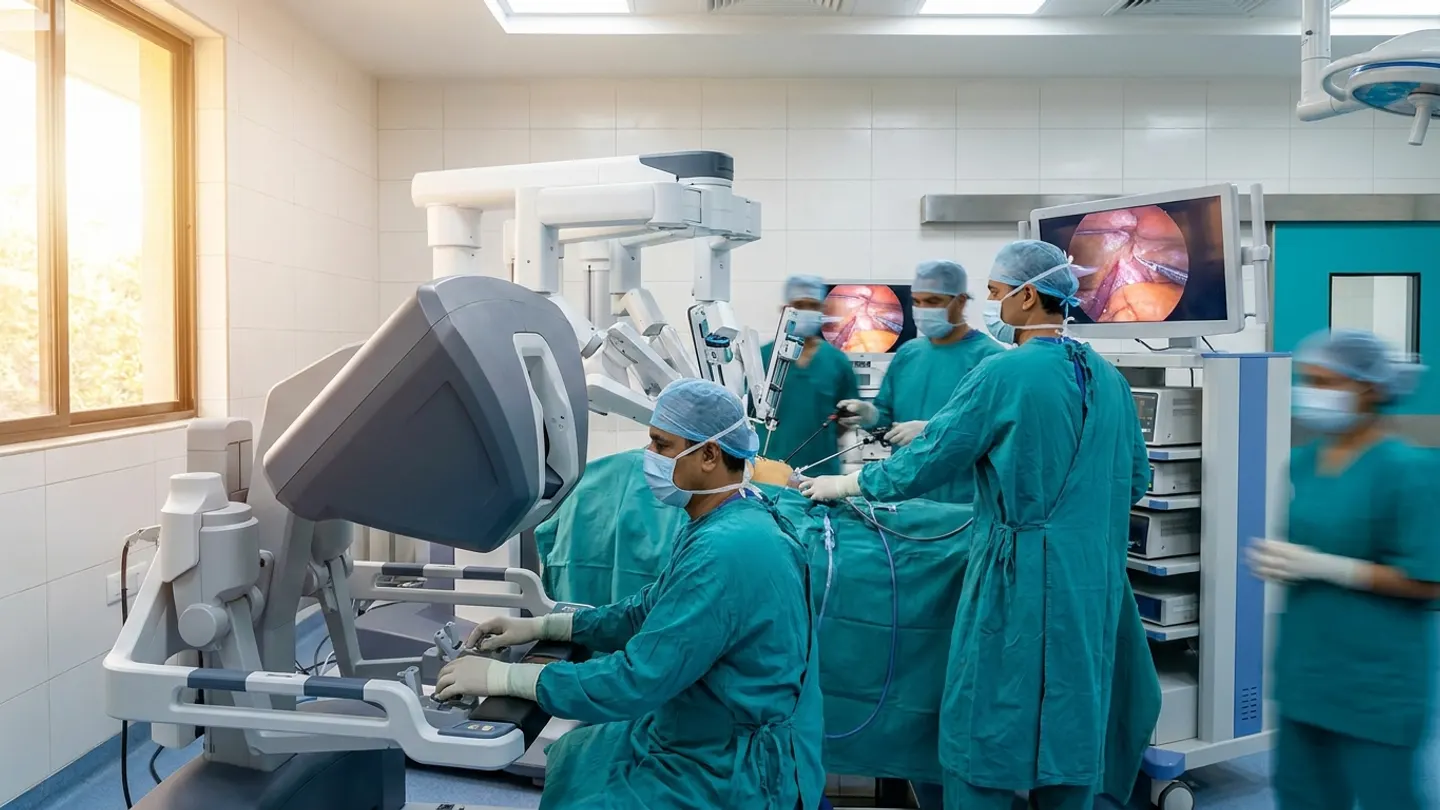
Facing a surgery recommendation is frightening enough on its own. Discovering the price tag in your home country — or being told the waiting list runs to eighteen months — can feel like a second blow. If robotic surgery is your best clinical option but the cost or the delay feels impossible, you are not alone, and there are real answers.
What Does Robotic Surgery Cost in India? A Direct Comparison
Robotic surgery in India typically costs between $3,000 and $10,000 (approximately ₹2.5 to ₹8.5 lakh), depending on the procedure and the hospital tier. That is roughly 60 to 80 percent less than comparable procedures in the United States, United Kingdom, or Australia, using the same FDA-approved robotic platforms and surgeons who trained at international centres.
The table below shows indicative 2026 price ranges across common procedures and markets. All figures are approximate; the exact cost for your case depends on procedure complexity, anaesthesia requirements, hospital grade, and length of stay.
| Procedure | India (approx.) | USA (approx.) | UK (approx.) | Australia (approx.) |
|---|---|---|---|---|
| Robotic prostatectomy | $4,500 – $7,500 | $25,000 – $45,000 | $18,000 – $30,000 | $20,000 – $35,000 |
| Robotic knee replacement | $5,000 – $9,000 | $30,000 – $50,000 | $20,000 – $35,000 | $22,000 – $38,000 |
| Robotic hysterectomy | $3,000 – $5,500 | $15,000 – $30,000 | $12,000 – $22,000 | $14,000 – $25,000 |
| Robotic colorectal surgery | $4,000 – $8,000 | $20,000 – $40,000 | $15,000 – $28,000 | $18,000 – $32,000 |
| Robotic cardiac surgery | $8,000 – $14,000 | $40,000 – $80,000 | $30,000 – $60,000 | $35,000 – $70,000 |
| Robotic spinal fusion | $5,500 – $10,000 | $30,000 – $60,000 | $22,000 – $40,000 | $25,000 – $45,000 |
Prices are indicative 2026 ranges only. A personalised, itemised written quote is always provided before you commit to travel.
“I was quoted $38,000 for my robotic prostatectomy in California. My total cost in India, including flights and hotel, came to just under $8,000. The surgeon had performed over 400 robotic procedures and the hospital held JCI accreditation.” — representative patient experience
Is Robotic Surgery in India Safe? Understanding the Quality Standards
This is the question that matters most, and it deserves a plain answer. Yes, robotic surgery in India at accredited hospitals is safe and internationally recognised.
India’s leading multi-specialty hospitals hold JCI (Joint Commission International) accreditation — the same gold standard pursued by top hospitals in the US and Europe. Many also carry NABH (National Accreditation Board for Hospitals) certification, India’s own rigorous quality framework. These are not rubber stamps. They require independent audits of surgical outcomes, infection control, patient rights, and equipment maintenance.
The robotic systems used in India are predominantly the da Vinci Surgical System, the same FDA-approved platform used in the United States, United Kingdom, and Australia. Surgeons operating these systems typically complete hundreds of proctored cases before independent practice, and many hold subspecialty fellowships from institutions in the US, UK, Germany, or Singapore.
Why does robotic surgery offer advantages over conventional open surgery?
Robotic-assisted surgery is minimally invasive. The surgeon controls robotic arms from a console, with 3D high-definition vision and instruments that flex and rotate far beyond a human wrist. For most patients, the result is:
- Smaller incisions and significantly reduced blood loss
- Lower risk of post-operative infection compared with open surgery
- Shorter hospital stays, often 1 to 3 days versus 5 to 7 days for open procedures
- Faster return to normal activity and daily life
- Less post-operative pain and reduced visible scarring
These benefits are not exclusive to India. But in India, you receive them at a fraction of the cost and typically without a long waiting list.
Which Procedures Are Available with Robotic Surgery in India?
India’s robotic surgery programmes have expanded significantly since 2020. Hospitals in cities including Mumbai, Delhi NCR, Chennai, Hyderabad, and Bengaluru now offer robotic assistance across a wide range of specialties.
Urology Robotic radical prostatectomy (the most commonly performed robotic procedure worldwide), robotic nephrectomy, and robotic pyeloplasty for ureteropelvic junction obstruction.
Orthopaedics Robotic-arm-assisted knee replacement and hip replacement, where the system helps the surgeon achieve precise implant positioning and alignment. Our orthopaedics and joint replacement page covers this in full detail.
Gynaecology Robotic hysterectomy, myomectomy for fibroids, and complex surgery for endometriosis.
Colorectal and General Surgery Robotic colectomy, rectal resection for colorectal cancer, hernia repair, and cholecystectomy. If a cancer diagnosis is involved, see our cancer and oncology page for a broader overview.
Cardiac Surgery Robotic mitral valve repair, coronary artery bypass grafting, and atrial septal defect closure. More detail is available on our cardiac surgery page.
Spine and Neurosurgery Robotic-guided spinal fusion, disc replacement, and tumour resection support. Our neurosurgery and spine page explains which spinal conditions benefit most.
If you are unsure whether your specific procedure is available robotically in India, a free counselling call is the fastest way to find out. Our coordinators can check surgeon availability across our hospital network within 24 hours.
What to Look for When Choosing a Hospital for Robotic Surgery in India
Not every hospital that owns a robotic system has the same depth of experience. When comparing options, prioritise these criteria:
- JCI or NABH accreditation: the non-negotiable baseline for international patients seeking quality assurance
- Surgeon case volume: ask how many robotic procedures of your specific type the surgeon performs per year; more than 100 annually is a reassuring benchmark
- Dedicated international patient services: a proper international patient department handles insurance authorisation letters, translated records, visa invitation letters, and airport coordination
- Transparent outcome data: reputable hospitals will share complication rates and average length-of-stay data for robotic procedures on request
- ICU and post-operative support: confirm the hospital has 24/7 intensivist-led critical care if your procedure warrants it
- All-inclusive pricing: a good hospital quotes surgeon fees, anaesthesia, implants (if any), post-op imaging, and physiotherapy in a single written estimate
IndoMedTour works exclusively with hospitals that meet these criteria. Browse our hospital network to see accreditation status and robotic surgery specialties.
Your Step-by-Step Journey: What to Expect Before, During, and After
Planning robotic surgery in India from abroad follows a predictable and manageable path when you have the right support.
- Share your records — upload your diagnosis reports, imaging, blood work, and surgeon’s notes via our secure portal. Our clinical team reviews them within 48 hours.
- Receive matched options — we identify two or three hospitals best suited to your procedure, the surgeon’s experience level, and your budget, and send written cost estimates for each.
- Video consultation with your surgeon — a remote pre-operative call before you book any flights. Bring every question you have; good surgeons welcome them.
- Travel and logistics — we assist with your Indian medical visa application, arrange airport pickup, accommodation near the hospital, and a local SIM card.
- Surgery and hospital stay — your dedicated coordinator is present from admission through discharge. Family members are welcome and guided throughout.
- Discharge and pre-flight clearance — most robotic surgery patients are discharged within 2 to 4 days. We arrange follow-up imaging and a clinical clearance assessment before you fly home.
- Post-travel follow-up — your surgeon provides comprehensive discharge summaries formatted for your home country’s medical system. We remain in contact during your home recovery.
For a fuller picture of the process, read how it works, or browse success stories from patients who have taken this journey.
Practical Things to Know Before You Go
A few honest considerations that deserve mention before you plan your trip:
Robotic surgery in India delivers excellent clinical results, but no surgery anywhere in the world carries zero risk. Discuss your individual risk profile directly and candidly with the surgeon during your remote consultation; the best surgeons will not minimise this conversation.
Travel duration: plan for a minimum of 10 to 14 days in India after major robotic procedures before flying home. Cardiac and spinal procedures may require 3 to 4 weeks before your care team considers long-haul air travel safe.
Travel insurance: medical travel insurance covering in-patient hospitalisation abroad is strongly recommended. Ask us for guidance on policy types that international patients have used successfully.
All costs in writing: insist on an itemised quote covering hospital fees, surgeon fees, anaesthesia, implants, post-operative imaging, and physiotherapy before committing to travel. Reputable hospitals provide all-inclusive packages for international patients without hidden additions.
Currency and payments: most international patient departments accept wire transfers, major credit cards, or travel-friendly payment platforms. Confirm accepted methods in advance.
Visit our treatments and costs page for up-to-date benchmarks across all robotic procedures and comparative data by market.
How IndoMedTour Helps
Navigating a serious surgery in a foreign country sounds daunting, but it does not have to be. IndoMedTour offers a free counselling call to understand your situation, then matches you with JCI or NABH-accredited hospitals that specialise in robotic surgery india best hospitals cost comparisons for your specific procedure. We provide written, itemised quotes before you book any travel and handle your medical visa paperwork, airport transfers, and accommodation near the hospital. A dedicated patient coordinator — a real person, not a call-centre queue — stays beside you from your first remote consultation through surgery, discharge, and the follow-up call once you are safely home.
You bring the worry. We bring the plan.