Waiting months on the NHS for a referral while your legs ache, swell, and become harder to ignore each morning is not the kind of waiting that feels productive. And if you have already checked private clinic prices in the UK, you may have found that the quotes are almost as painful as the veins themselves.
The good news is straightforward: varicose vein treatment in India delivers the same modern techniques - laser ablation, radiofrequency closure, foam sclerotherapy - at a cost that is typically 60 to 80 percent lower than UK private rates, performed by vascular specialists in internationally accredited hospitals with no waiting list.
Varicose Vein Treatment Cost: India vs UK in 2026
Varicose vein treatment in India costs approximately £500 to £2,000, compared to £2,500 to £7,000 for private treatment in the UK per leg. That saving is large enough that the majority of UK patients cover their return flights, five to seven nights in comfortable accommodation, and all hospital fees - and still return home significantly better off financially. The same techniques your UK vascular consultant would recommend are available daily in hospitals across Chennai, Mumbai, Hyderabad, and Bengaluru. See full treatments and costs
Why the Price Difference Is So Large
India’s cost advantage in healthcare is structural, not a sign of corners being cut. Surgeon salaries, hospital overheads, nursing wages, and consumable costs all sit at a fraction of UK levels. A highly skilled vascular surgeon in Chennai earns a competitive salary within the Indian economy; the same expertise in London commands fees shaped by London’s cost of living. This is the same economic reality that makes Indian engineers and software professionals globally competitive: excellence without the postcode premium.
Hospitals that attract international patients invest heavily in the latest equipment precisely because they are competing on quality. The economics work for both sides - the hospital fills beds with motivated private patients, and you receive the same procedure at a fraction of what you would pay in the UK.
Procedure-by-Procedure Cost Comparison
The table below uses indicative 2026 ranges. Your final quote will depend on the number of veins, which legs are treated, the city, and the hospital tier you choose.
| Procedure | UK Private (approx.) | India (approx.) | Estimated Saving |
|---|---|---|---|
| Endovenous Laser Treatment (EVLT) | £2,500 - £5,000 | £600 - £1,500 | 60 - 75% |
| Radiofrequency Ablation (RFA) | £2,800 - £5,500 | £700 - £1,700 | 65 - 75% |
| Ultrasound-Guided Foam Sclerotherapy | £1,000 - £2,500 | £300 - £800 | 60 - 70% |
| Ambulatory Phlebectomy | £2,000 - £4,500 | £500 - £1,400 | 65 - 75% |
| Combined Bilateral Treatment (both legs) | £5,000 - £10,000 | £1,200 - £3,000 | 65 - 80% |
All figures are indicative. Request a personalised written quote before booking any travel.
What Procedures Are Available in India?
Leading Indian vascular units offer the complete range of minimally invasive treatments recommended by UK and European vascular surgery guidelines:
- Endovenous Laser Treatment (EVLT) - a laser fibre inserted under ultrasound guidance seals the faulty vein from inside, with minimal bruising and a rapid return to walking
- Radiofrequency Ablation (RFA) - uses controlled heat energy to collapse the vein wall; clinical outcomes are equivalent to EVLT with slightly less post-procedure discomfort in many patients
- Ultrasound-guided foam sclerotherapy - the preferred treatment for smaller varicosities, thread veins, and recurrent disease after previous procedures
- Ambulatory phlebectomy - removal of bulging surface branch veins through tiny incisions under local anaesthetic, often combined with EVLT or RFA in the same session
- Bilateral combined procedures - treating both legs in a single session is common in India and maximises the value of your trip; this is often declined on the NHS due to resource constraints
Pre-operative duplex ultrasound mapping of the venous system is available in-house at all major vascular centres, exactly as you would expect at a UK vascular unit.
Quality and Safety: What UK Patients Need to Know
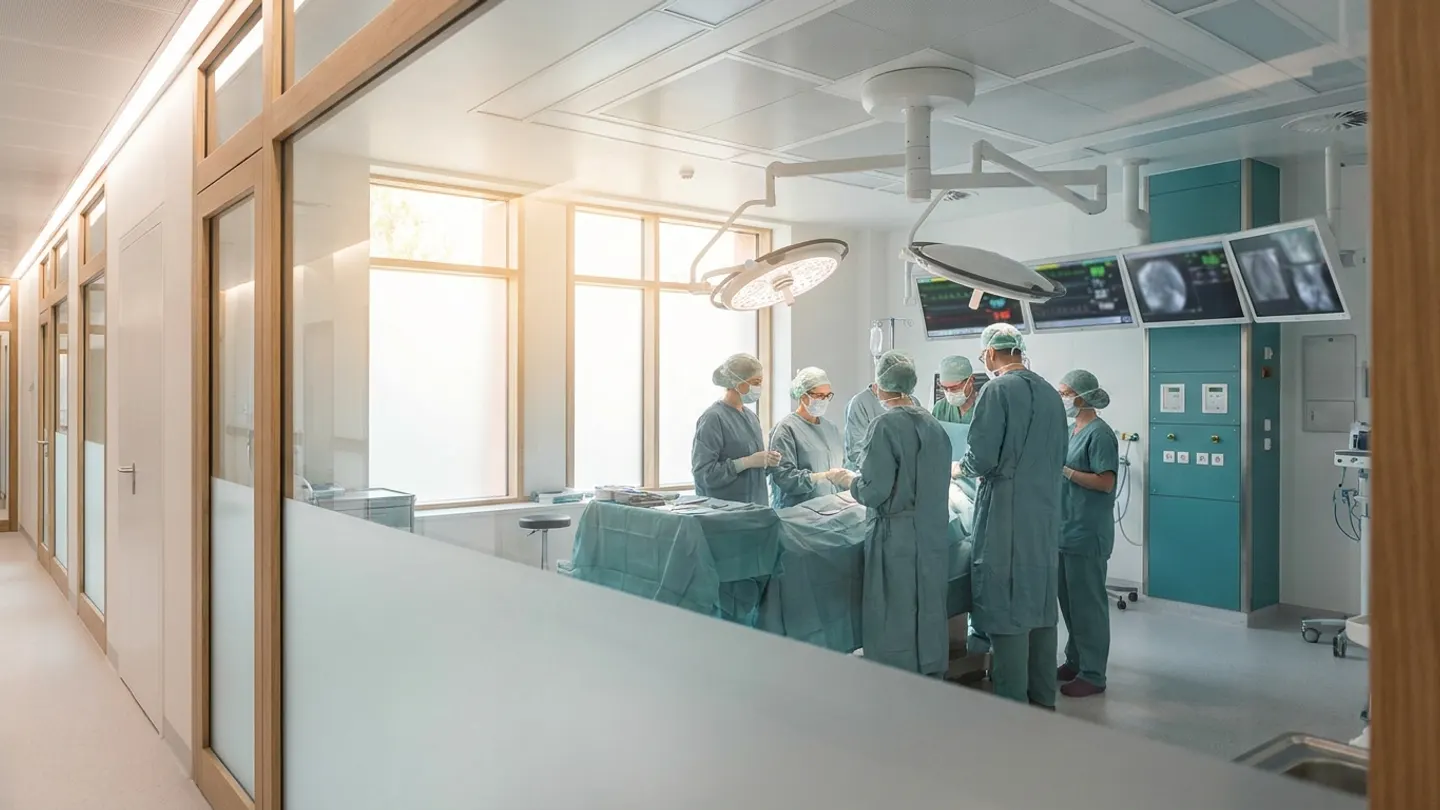
Safety is the right question to ask first, and it deserves a direct answer. Hospitals that treat international vascular patients in India operate under JCI (Joint Commission International) or NABH (National Accreditation Board for Hospitals) accreditation - the same independent quality frameworks that audit clinical standards, infection control, surgical safety checklists, patient-to-nurse ratios, and outcome reporting across the world’s leading hospitals.
The vascular surgeons you will meet have trained in India’s competitive public medical colleges, completed post-graduate fellowships in vascular and endovascular surgery, and many have undertaken additional training or observerships in the UK or USA. English is the standard clinical language in these hospitals; your consent forms, operative reports, discharge letters, and six-week follow-up summaries will all be provided in English for your UK GP.
“I was genuinely nervous about having a procedure abroad, but the pre-operative video call with the surgeon, the hospital accreditation certificates, and the coordinator’s attention to every detail made me feel every bit as safe as I would have at home - and I saved nearly £4,200.” — Representative feedback from IndoMedTour patients.
The NHS Wait vs Choosing India: An Honest Comparison
Varicose veins are classified as low clinical priority across most NHS trusts, which means that even when a GP referral is approved, the journey from first appointment to treatment frequently stretches to 12 to 18 months. If your veins are causing significant daily pain, skin changes, or early signs of venous ulceration, that wait is not neutral - the condition can worsen while you queue.
Private treatment in the UK solves the waiting problem but creates a financial one. Choosing an accredited hospital in India solves both: treatment can typically be scheduled within two to four weeks of your initial enquiry, with no waiting list whatsoever and no gatekeeping by referral pathways.
What a Typical India Treatment Trip Looks Like
Most varicose vein procedures are performed as day cases under local anaesthetic. A practical UK patient trip generally runs as follows:
- Day 1: Arrive, settle into your hotel, rest and recover from the flight
- Day 2: Pre-operative duplex ultrasound scan and consultation with your vascular surgeon
- Day 3: Procedure performed; rest in hospital for a few hours before returning to hotel
- Days 4 and 5: Short walks encouraged, compression stockings worn; optional gentle sightseeing
- Day 6 or 7: Fly home wearing compression stockings
If bilateral treatment (both legs) is planned in a single session - which is one of the most popular choices for UK patients - the trip length stays the same, doubling the value of the journey. See how it works
Is Flying Home After Treatment Safe?
This is a fair and important concern, given that both varicose vein disease and long-haul air travel carry some association with deep vein thrombosis (DVT). The reassuring fact is that modern minimally invasive techniques - particularly EVLT and RFA - carry a significantly lower DVT risk than the older surgical stripping procedure. Standard post-procedure advice includes regular cabin walks, good hydration, and wearing your prescribed compression stockings throughout the flight. Your surgeon in India will provide written aftercare instructions specifically addressing your flight duration.
Most patients travelling back to the UK - typically an 8 to 9 hour flight - find they can do so comfortably from day three or four after treatment. This is the kind of question our coordinators discuss in detail on your free counselling call, because every patient’s situation is a little different.
Considering the Full Picture
When UK patients compare India to private clinics at home, they sometimes overlook the full cost of staying in the UK: private consultation fees, ultrasound mapping appointments, the procedure itself, compression stockings, and follow-up appointments quickly add up. The India package, when arranged through an experienced facilitator, typically bundles consultation, scans, the procedure, compression stockings, and coordination into a single transparent quote.
Read success stories from patients who made the journey
How IndoMedTour Helps
IndoMedTour offers a free initial call with a medical coordinator who listens to your history, answers your questions honestly, and - only when it makes clinical and logistical sense - matches you with JCI or NABH-accredited vascular units that have treated UK patients with your specific venous condition. We gather written cost quotes from multiple hospitals so you can compare before you commit to anything. Once you decide to travel, we handle airport transfers, hospital appointments, accommodation, and visa paperwork, and your dedicated coordinator remains reachable throughout your time in India and during your recovery at home.
You bring the worry. We bring the plan.