When your doctor says “bone marrow transplant,” the fear arrives quickly — the diagnosis, the numbers, the uncertainty of being seriously ill far from home. If you have been quoted six figures at home, told you face a months-long wait, or simply cannot afford the treatment your haematologist recommends, you are not alone, and you have real options.
Best Hospitals for Bone Marrow Transplant in India: The Direct Answer
The best hospitals for bone marrow transplant in India are JCI- and NABH-accredited tertiary centres with dedicated BMT units, high annual transplant volumes, and experienced haematology teams. India has built a mature bone marrow transplant ecosystem over two decades, treating thousands of international patients each year at 85-92% lower cost than comparable centres in the United States, United Kingdom, or Australia — without compromising on technology, conditioning protocols, or isolation standards.
The cities with the strongest programmes are Delhi NCR, Mumbai, Chennai, Bangalore, and Hyderabad. Each has multiple centres that handle both autologous and allogeneic transplants, including complex haploidentical and mismatched-donor cases.
What Is a Bone Marrow Transplant?
A bone marrow transplant (also called a haematopoietic stem cell transplant, or HSCT) replaces damaged or diseased bone marrow with healthy stem cells. It is used to treat:
- Blood cancers such as leukaemia, lymphoma, and multiple myeloma
- Aplastic anaemia and other bone marrow failure syndromes
- Sickle cell disease and thalassaemia major
- Certain inherited immune-deficiency conditions
- Some solid tumours requiring high-dose chemotherapy with stem-cell rescue
Transplants are classified as autologous (using the patient’s own previously harvested stem cells) or allogeneic (using a matched donor — sibling, unrelated registry donor, or haploidentical family member).
What Makes a Hospital the Best for BMT in India?
Not every cancer hospital is equipped for bone marrow transplants, and the gap between a well-resourced BMT unit and a general oncology ward matters enormously. When evaluating the best hospitals for bone marrow transplant in India, look for these markers:
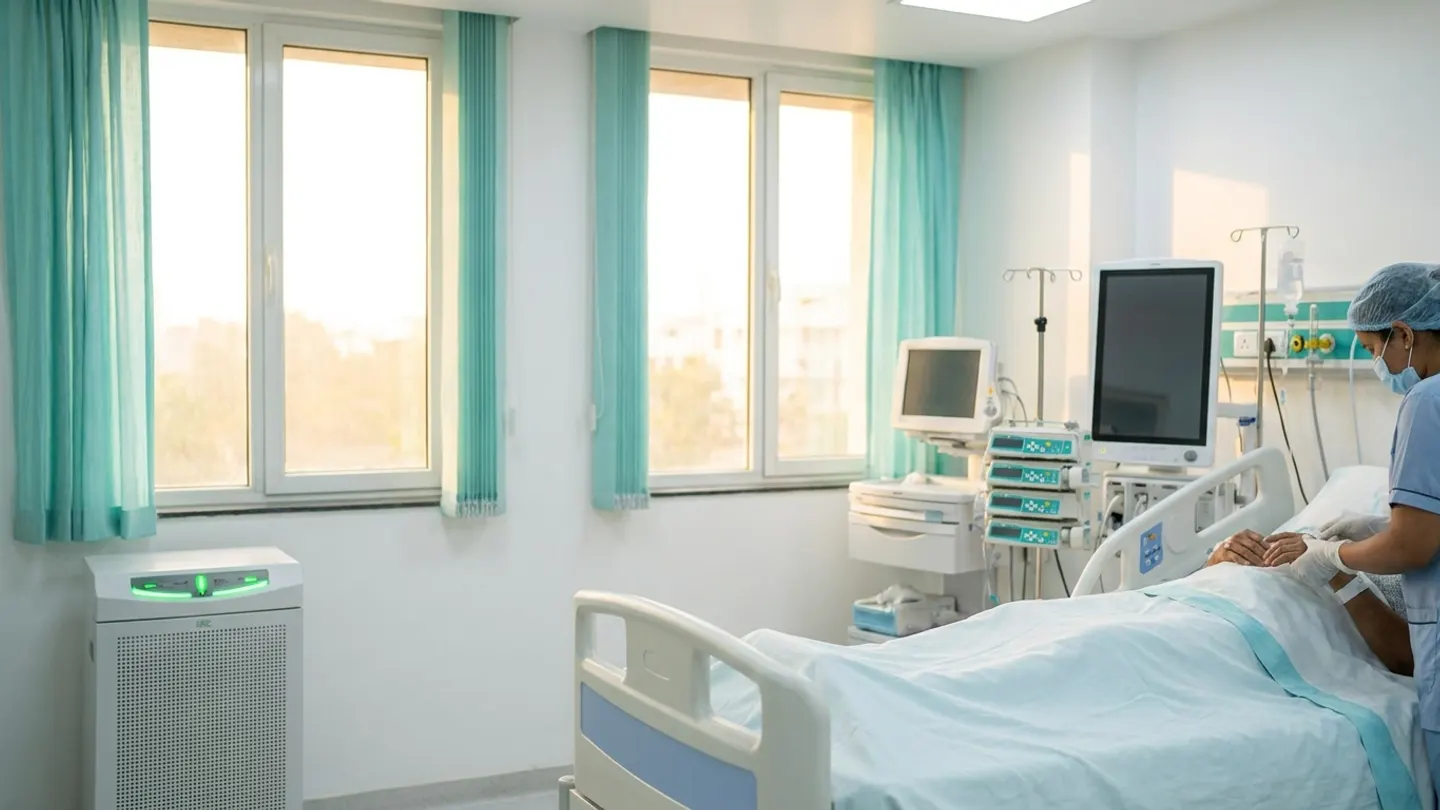
- Dedicated BMT unit with HEPA-filtered, positive-pressure isolation rooms that meet international infection-control standards
- In-house HLA typing laboratory for precise donor matching, with links to international unrelated-donor registries
- 24/7 haematology ICU and robust protocols for managing neutropenic sepsis and other transplant emergencies
- JCI or NABH accreditation, the clearest signal of internationally benchmarked safety and quality
- High annual BMT volume — centres performing 100 or more transplants per year have significantly deeper experience managing complications
- Multidisciplinary team covering haematology, oncology, infectious disease, transplant nursing, and psychosocial support
- International patient services with coordinators for visa invitation letters, airport transfer, accommodation, and remote follow-up handoff
“A bone marrow transplant is one of the most complex procedures in modern medicine. Choosing a hospital is not just about the price — it is about finding a team that has done this hundreds of times, has the infrastructure to manage what can go wrong, and will stay with you from day one through recovery. India has several centres that meet that bar.” — IndoMedTour Medical Advisory Team
Cost of Bone Marrow Transplant in India vs Other Countries
Cost is usually the first — and most urgent — question. The table below shows indicative 2026 ranges for allogeneic BMT with a matched sibling donor. Autologous BMT is typically 30-40% less expensive in each country.
| Country | Approx. Cost (Allogeneic BMT) | Key Notes |
|---|---|---|
| India | $15,000 – $35,000 | Includes hospital stay, conditioning, donor harvest, isolation period, and basic follow-up |
| United States | $200,000 – $400,000+ | Highly variable; insurance gaps common; out-of-pocket costs can exceed the above |
| United Kingdom | £90,000 – £180,000 | NHS wait lists exist; private adds significant cost and is not always available |
| Australia | AUD 180,000 – 300,000 | Private sector; public system may involve extended waiting periods |
| UAE | $50,000 – $90,000 | Growing BMT capacity but fewer high-volume specialist centres |
All figures are indicative estimates. Actual costs depend on transplant type, donor match category, conditioning protocol, length of stay, and complications. IndoMedTour provides written, itemised quotes after a free clinical review.
Even after accounting for return flights, caregiver accommodation, and a 90-120 day stay, international patients consistently spend a fraction of what they would pay at home. See treatments and costs for a fuller breakdown by diagnosis and transplant type.
Cities With the Strongest BMT Programmes in India
India’s bone marrow transplant expertise is concentrated in a handful of major cities, each with distinctive strengths.
Delhi NCR is home to some of India’s highest-volume transplant centres, with strong infrastructure for international patients — international airports, established medical visa processing, and a large community of haematology specialists trained at top institutions worldwide.
Mumbai has a long tradition in haematological oncology with several centres experienced in complex haploidentical and mismatched-donor transplants, making it a strong choice for patients without a fully matched sibling.
Chennai is particularly strong in paediatric BMT and thalassaemia transplants, with several centres that attract patients from Southeast Asia and East Africa specifically for these indications.
Bangalore has newer facilities with internationally trained haematologists returning from the US and UK, and growing transplant volumes supported by well-organised international patient departments.
Hyderabad is emerging as a preferred destination for patients from the Middle East and Africa, with direct flight connections and competitive cost structures.
Our hospitals page lists accredited BMT centres across all five cities, vetted by IndoMedTour’s clinical team.
The BMT Journey: A Realistic Timeline
Understanding what the weeks ahead look like helps reduce fear of the unknown. Here is a realistic outline for an allogeneic transplant:
- Weeks 1-2 (pre-arrival, remote): Medical record review and second-opinion consultation; HLA typing of patient and potential donors; written cost estimate delivered within 48 hours
- Week 3 (arrival in India): Pre-transplant workup — full blood panel, organ function assessment, cardiac and pulmonary evaluation, infection screening
- Weeks 4-5: Conditioning chemotherapy (myeloablative or reduced-intensity, depending on your diagnosis and age) to clear the existing marrow
- Day 0 (transplant day): Stem cell infusion — typically a straightforward intravenous procedure after the gruelling conditioning phase
- Weeks 1-4 post-transplant: Isolation in the BMT unit; monitoring for engraftment, infection, and early graft-versus-host disease (GvHD)
- Weeks 5-12 (recovery phase): Outpatient follow-up at the transplant centre, GvHD management, immune reconstitution; most patients remain in India during this entire window
- Return home: Clear written handoff to your local haematologist; ongoing remote follow-up with the Indian transplant team as needed
Plan for a total stay of 90 to 120 days. Patients must not travel home before engraftment is confirmed and the transplant team approves.
Key Questions to Ask Before Choosing a BMT Hospital
Use this checklist when evaluating any centre — or ask IndoMedTour to gather the answers on your behalf before you commit to travelling.
- How many bone marrow transplants does this centre perform each year (total, and broken down by type)?
- What are the published overall survival rates at one year and three years for my specific diagnosis and transplant category?
- Does the centre have an in-house HLA typing lab, and what unrelated donor registries does it access?
- What GvHD prophylaxis protocol is standard, and is the team experienced with haploidentical transplants?
- What are the isolation room standards — HEPA filtration, positive air pressure, anteroom protocols?
- Is there a dedicated international patient coordinator for visa letters, accommodation, and communication with family at home?
- What is the cost structure if complications extend the stay beyond the initial estimate?
Getting clear, written answers to every one of these questions is part of what IndoMedTour does during the free intake process. See how it works for a step-by-step overview.
Are India’s BMT Hospitals Safe for International Patients?
Yes — when you choose a JCI- or NABH-accredited centre with a proven, high-volume programme. NABH is India’s national hospital accreditation authority; JCI is the international standard recognised by insurance providers and health systems worldwide. Both require rigorous third-party audits covering infection control, blood product safety, staff credentialing, medication management, and patient outcome monitoring.
India’s leading BMT centres are accredited to one or both standards and a growing number publish outcomes data in peer-reviewed international journals. The quality gap that existed between Indian and Western centres twenty years ago has closed substantially at the top tier of institutions.
The key safeguard is deliberate hospital selection — not simply choosing the cheapest option. Every centre IndoMedTour works with on our organ transplant programme has been reviewed by our clinical advisory team.
How IndoMedTour Helps
Navigating the search for the best bone marrow transplant hospital in India while managing a serious diagnosis is more than most patients and families can handle alone. IndoMedTour offers a free counselling call where our clinical team reviews your medical records, confirms the appropriate transplant type, and matches you to accredited centres that fit your diagnosis, donor situation, and budget — with written, itemised quotes delivered within 48 hours. We handle your medical visa invitation letter, airport pickup, and accommodation arrangements near your chosen hospital, and assign a dedicated coordinator who remains available to you and your caregiver every day from first consultation through the full recovery period. Book your free call today.
You bring the worry. We bring the plan.