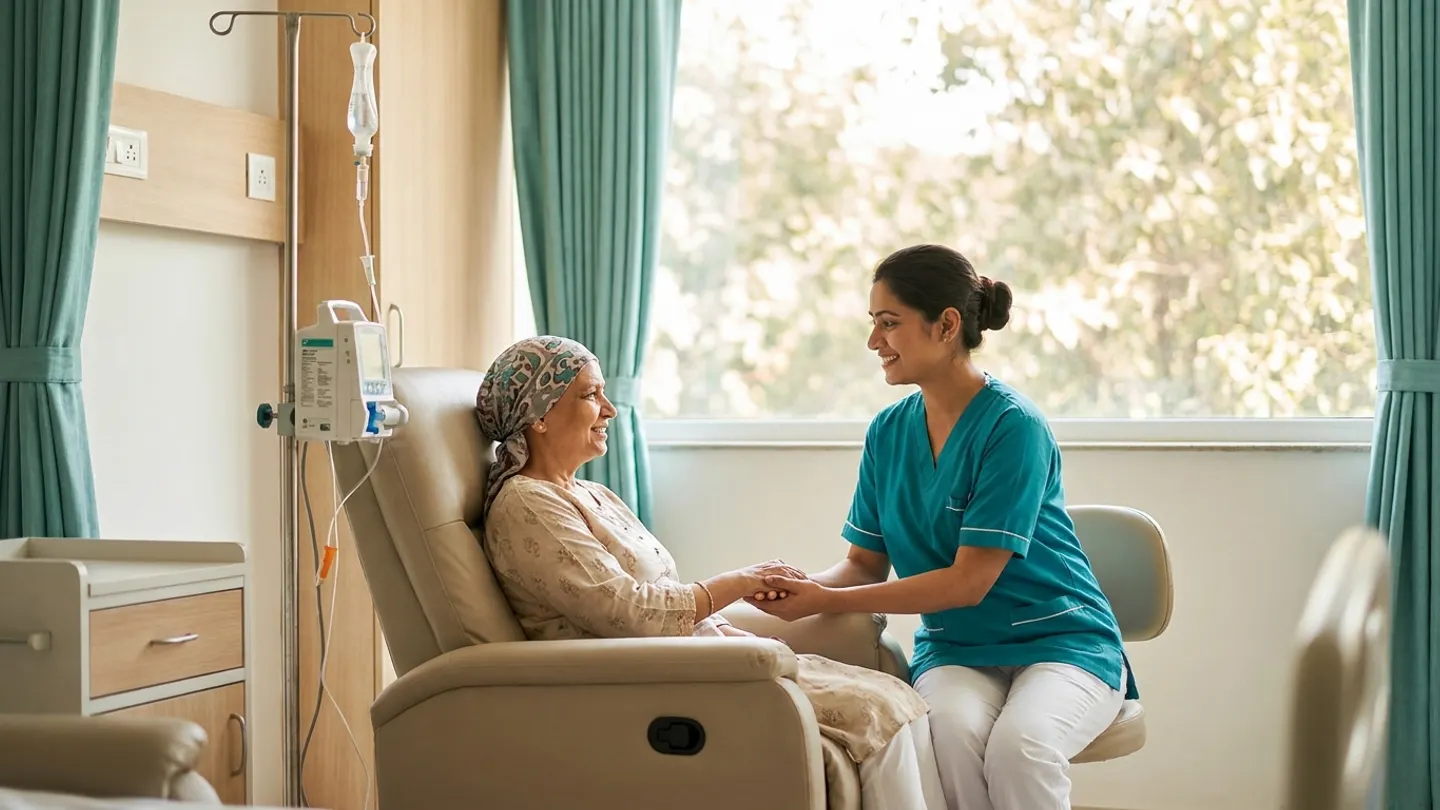
A blood cancer diagnosis is one of the most disorienting moments a person can face. The medical words feel enormous, the treatment path looks long, and in many countries the financial reality lands almost as hard as the diagnosis itself. If you or someone you love is looking at a bill that feels impossible — or a waiting list that feels dangerous — you are not alone, and there are options.
India has quietly become one of the world’s most capable and cost-effective destinations for leukemia, lymphoma, and myeloma treatment. Below is an honest, detailed guide to what blood cancer treatment cost in India looks like in 2026, what is included, and how the quality compares.
Blood Cancer Treatment Cost in India: The Direct Answer
Blood cancer treatment cost in India ranges from approximately $6,000 to $35,000 for most chemotherapy-based protocols, and from $25,000 to $55,000 for a bone marrow or stem cell transplant (BMT/SCT) at an internationally accredited hospital. These figures represent savings of 70 to 85 percent compared to the same treatment pathways in the United States, United Kingdom, or Australia. The difference is not in the drugs used, the protocols followed, or the monitoring equipment — it is almost entirely in structural healthcare economics.
Why the Price Gap Is So Large
Indian cancer centres use the same NCCN and WHO chemotherapy protocols as hospitals in New York or London. The drugs — rituximab, cytarabine, imatinib, bortezomib — are identical, because most are off-patent and manufactured at scale in India, the world’s largest producer of generic pharmaceuticals. What changes dramatically is the cost of hospital infrastructure, nursing staff, and administrative overhead — not the clinical steps or safety standards.
“The oncologist here showed me the same NCCN protocol my haematologist at home was going to use. The drugs were the same. The monitoring was every bit as thorough. I just did not understand why the bill could be so different until I saw how the whole healthcare system is structured.” — Representative of feedback from international patients treated in India.
This quote is illustrative of common patient experiences and does not represent a specific identifiable individual.
Blood Cancer Types and What Treatment Typically Costs in India
Different blood cancers require very different treatment pathways, and costs vary accordingly. The table below gives realistic 2026 indicative ranges at well-accredited Indian private hospitals. All figures are in USD and cover core medical costs; international flights, accommodation, and personal expenses are separate.
| Blood Cancer Type & Treatment | India (USD) | United States (USD) | United Kingdom (USD, private) | Australia (USD, private) |
|---|---|---|---|---|
| Acute Leukemia (AML/ALL) — induction chemo | $6,000 – $14,000 | $80,000 – $180,000 | $40,000 – $90,000 | $35,000 – $75,000 |
| Chronic Leukemia (CML) — targeted therapy (per year) | $3,000 – $8,000 | $60,000 – $120,000 | $30,000 – $70,000 | $25,000 – $55,000 |
| Hodgkin Lymphoma — ABVD chemotherapy (6 cycles) | $7,000 – $16,000 | $70,000 – $150,000 | $35,000 – $80,000 | $30,000 – $65,000 |
| Non-Hodgkin Lymphoma — R-CHOP chemotherapy (6–8 cycles) | $9,000 – $20,000 | $90,000 – $200,000 | $45,000 – $100,000 | $40,000 – $85,000 |
| Multiple Myeloma — VRd or similar regimen | $10,000 – $25,000 | $100,000 – $250,000 | $50,000 – $120,000 | $45,000 – $100,000 |
| Allogeneic Bone Marrow Transplant (BMT) | $35,000 – $55,000 | $300,000 – $500,000 | $150,000 – $280,000 | $130,000 – $250,000 |
| Autologous Stem Cell Transplant (ASCT) | $25,000 – $40,000 | $150,000 – $300,000 | $80,000 – $160,000 | $70,000 – $140,000 |
Ranges are indicative for 2026. Actual costs depend on the specific protocol, number of cycles, complications, and individual hospital pricing. Always request a written itemised quote.
What Is Included in the Indian Hospital Quote
When you receive a written quote from an Indian cancer centre through IndoMedTour, it will typically cover:
- Haematology and oncology consultations throughout the treatment period
- All chemotherapy drug costs and IV consumables
- Day-care infusion ward or inpatient bed charges
- Laboratory investigations: complete blood counts, bone marrow biopsy, flow cytometry, molecular markers
- Imaging: PET-CT, CT, MRI as clinically needed
- Bone marrow transplant unit stay, HEPA-filtered isolation room, and nursing care (for BMT cases)
- Blood product support: packed red cells, platelets, fresh frozen plasma
- Infection prophylaxis medications during immunosuppressed periods
- Discharge summary and full medical records translated into English
What is generally not included: long-haul flights, local accommodation between hospital visits, personal food and living expenses, and travel insurance. For a full breakdown of what to budget, our cost guide walks through these hidden extras.
Quality and Accreditation: How to Know You Are in Safe Hands
The first question most families ask is not about cost — it is whether India is truly safe for something this serious. The honest answer is: it depends entirely on which hospital you choose.
India’s top-tier haematology and oncology centres hold JCI (Joint Commission International) accreditation, which is the same global standard used to evaluate hospitals in the US, Europe, and the Middle East. Many also carry NABH (National Accreditation Board for Hospitals) certification, India’s own rigorous national standard.
These hospitals run dedicated bone marrow transplant units with:
- High-efficiency particulate air (HEPA) filtration to protect severely immunocompromised patients
- 24-hour haematologist and intensivist cover
- Laminar airflow isolation rooms
- On-site blood bank with irradiated and leucodepleted blood products
- In-house molecular biology labs for MRD (minimal residual disease) monitoring
You can browse the hospitals in our vetted hospital network to see accreditation details for each centre we work with.
Targeted Therapy and CAR-T: India’s Growing Edge
Beyond conventional chemotherapy, India’s leading centres now offer several advanced options:
Targeted and Immunotherapy Drugs
For CML and Philadelphia chromosome-positive ALL, tyrosine kinase inhibitors (imatinib, dasatinib, ponatinib) are prescribed at Indian centres following exactly the same response-monitoring protocols as Western guidelines. Because many of these molecules are off-patent and produced domestically, the annual drug cost can be as low as $3,000 to $8,000 — compared to $60,000 to $120,000 per year in the United States.
Rituximab-based regimens for B-cell lymphomas similarly benefit from India’s biosimilar production capacity. Oncologists here use the same clinical decision checkpoints (interim PET-CT after cycle 2 or 4) that are standard globally.
CAR-T Cell Therapy
CAR-T therapy is available at a small number of specialist centres in India. Costs are significantly lower than the $450,000 to $600,000 charged in the United States, though availability for specific constructs should be confirmed case by case. Ask us to check current availability during your free counselling call.
The Bone Marrow Transplant Journey: A Realistic Timeline
A bone marrow transplant is the most intensive form of blood cancer treatment, and it requires the most careful planning for international patients. Here is a general timeline for an allogeneic BMT:
- Weeks 1-2: Arrival, pre-transplant work-up, donor confirmation (sibling or matched unrelated), and conditioning-regimen planning
- Weeks 3-4: High-dose conditioning chemotherapy (and sometimes radiation)
- Day 0: Stem cell infusion — the transplant itself
- Days 1-30: Engraftment monitoring in isolation; management of mucositis, infection risk, early graft-versus-host disease (GvHD)
- Days 30-60: Step-down ward, daily outpatient review, escalating independence
- Days 60-90: Discharge planning, final investigations, travel clearance
Families typically need to arrange accommodation nearby (hospitals or IndoMedTour can recommend serviced apartments). We factor all of this into the planning we do with you before you book a flight. See how it works for the step-by-step process.
Practical Checklist Before You Travel for Blood Cancer Treatment
Before confirming your travel, make sure you have:
- A confirmed written diagnosis with bone marrow biopsy and flow cytometry / molecular report
- Your most recent imaging (PET-CT or CT scan, ideally within 6 weeks)
- Copies of all previous chemotherapy records (drugs, doses, cycles, response notes)
- A list of current medications and any known drug allergies
- Donor HLA typing results (if a BMT is anticipated)
- A written itemised quote from the Indian hospital
- Medical visa for India (Type ‘MV’; multiple-entry for longer treatment courses)
- Travel insurance that covers pre-existing oncology conditions and in-hospital stays
- A realistic financial buffer for extended stays (treatment complications can lengthen admissions)
For a personalised list and help obtaining a medical visa, reach out via our free counselling call.
Is a Bone Marrow Transplant in India Right for You?
A BMT is not the right choice for every patient, and not every patient is a transplant candidate. India makes sense when:
- You face very long waiting lists for a matched unrelated donor search in your home country
- Your local quote for a transplant is financially impossible and no insurance cover exists
- You have already achieved remission and need a consolidation transplant within a defined window
- Your haematologist supports the plan and is willing to share records
IndoMedTour works only with centres where haematologists will speak directly with your home physician before you commit to anything. Read success stories from patients who made this journey, or see our treatments and costs page for more detail on oncology pathways we support.
How IndoMedTour Helps
We start with a free counselling call to understand your diagnosis and concerns before recommending any hospital. We then gather written, itemised quotes from two or three accredited centres matched to your clinical profile and budget. Our team handles your medical visa, airport transfers, hospital admission paperwork, and local accommodation. A dedicated patient coordinator stays beside you through every chemotherapy session and every anxious result, and remains reachable by your family at home around the clock. You bring the worry. We bring the plan.