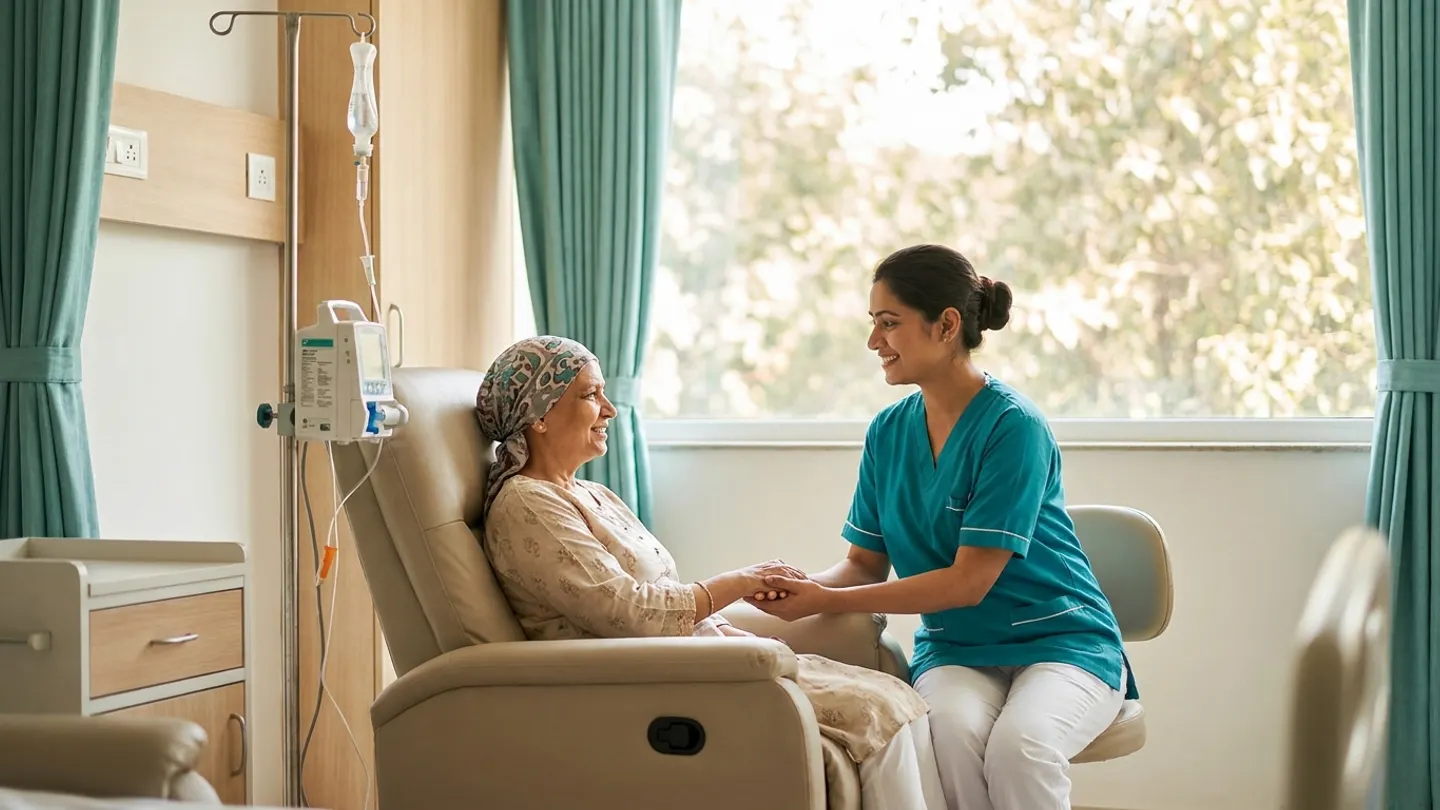
A leukemia diagnosis turns your world upside down in an instant. Then comes the second shock: the quote for a bone marrow transplant, often $300,000 or more in the United States, or a waiting list that stretches months in the UK or Canada. If you are searching for another way, you are in the right place.
What does bone marrow transplant leukemia cost in India?
Bone marrow transplant leukemia cost in India typically ranges from $18,000 to $35,000 USD — roughly 80 to 90 percent less than in the United States or United Kingdom, without any compromise on clinical standards at accredited centres. The exact figure depends on the type of transplant (autologous versus allogeneic), the donor source (related, unrelated, or half-matched haploidentical), and the length of the hospital stay.
The table below gives indicative 2026 ranges for each transplant type across major markets. These are estimates; your written quote from a matched hospital will be specific to your diagnosis and conditioning protocol.
| Transplant Type | India | United States | United Kingdom | UAE |
|---|---|---|---|---|
| Autologous BMT | $18,000 – $22,000 | $150,000 – $200,000 | $80,000 – $120,000 | $60,000 – $90,000 |
| Allogeneic (related donor) | $25,000 – $32,000 | $250,000 – $350,000 | $120,000 – $180,000 | $90,000 – $130,000 |
| Allogeneic (unrelated / MUD) | $30,000 – $38,000 | $300,000 – $450,000 | $150,000 – $220,000 | $100,000 – $150,000 |
| Haploidentical (half-match) | $28,000 – $35,000 | $280,000 – $400,000 | $130,000 – $200,000 | $95,000 – $140,000 |
All prices are indicative. Actual costs vary by hospital, patient complexity, and duration of post-transplant care.
Most India packages include the conditioning chemotherapy or radiation, the stem-cell infusion, a 30 to 45-day monitored hospital stay, daily consultations, standard post-transplant medications, and basic isolation-ward facilities. Always ask for a written itemised quote so you know exactly what is and is not covered. See our treatments and costs page for a broader comparison across specialties.
Types of bone marrow transplant available in India for leukemia
Indian transplant centres perform all four major categories of BMT, which matters because the right choice for you depends on your leukemia subtype, your remission status, and whether a compatible donor exists.
Autologous transplant
Your own stem cells are collected before high-dose chemotherapy, then returned to you afterwards. This approach is used in certain lymphomas and multiple myeloma, and occasionally in ALL or AML when a donor is not available. It carries a lower risk of graft-versus-host disease (GvHD) but also loses the graft-versus-leukemia effect.
Allogeneic transplant (related donor)
A sibling or close relative donates stem cells. A matched sibling is still the gold standard for most leukemia cases. If you have a compatible brother or sister willing to donate, this is typically the recommended route for AML, ALL, CML, and MDS.
Allogeneic transplant (matched unrelated donor / MUD)
If no family match is available, Indian centres access international stem-cell registries. MUD transplants take more preparation time and cost slightly more, but they are now a well-established option with outcomes approaching those of sibling matches in experienced hands.
Haploidentical (half-match) transplant
A parent, child, or half-matched sibling can donate. Advances in post-transplant cyclophosphamide (PTCy) protocols have made haploidentical transplants increasingly successful, opening a pathway for patients who have no full-matched donor. India’s major transplant units have adopted these protocols and report outcomes consistent with published international data.
Survival rates after bone marrow transplant for leukemia in India
Survival rates after a BMT depend far more on your leukemia subtype, disease stage at transplant, and your age than on the country where you receive treatment.
Published outcomes from India’s accredited transplant programmes show five-year overall survival rates broadly in line with registry data from the US, Europe, and Asia-Pacific, reflecting that trained haematologists, modern conditioning regimens, and isolation-care nursing standards are consistent across leading centres worldwide.
For acute myeloid leukemia (AML) transplanted in first complete remission, five-year survival rates at experienced centres globally run from approximately 50 to 70 percent. For chronic myeloid leukemia (CML) and chronic lymphocytic leukemia (CLL), outcomes vary widely by prior treatment history and risk stratification. Your haematologist will share disease-specific projections based on your cytogenetics and molecular markers before any decision is made. You can read more on our organ transplant treatment page.
Why JCI and NABH accreditation matters for your safety
When you are receiving treatment thousands of kilometres from home, accreditation is not a marketing badge. It is an independently verified signal that a hospital meets rigorous standards for infection control, medication safety, nursing ratios, and patient-rights protocols.
JCI (Joint Commission International) is the global benchmark, held by a small number of Indian hospitals that have passed on-site audits against the same criteria used to evaluate hospitals in the US. NABH (National Accreditation Board for Hospitals) is India’s national standard and is mandated for all hospitals that treat government-insured patients, giving it real regulatory teeth.
For a bone marrow transplant, where your immune system is intentionally suppressed to near zero, the quality of isolation facilities, air filtration, nursing surveillance, and infection-response protocols can be the difference between a smooth engraftment and a life-threatening complication. Insist on JCI or NABH-accredited centres. IndoMedTour works only with hospitals that hold at least one of these credentials. See our hospitals to explore accredited partner centres.
What a bone marrow transplant package in India typically includes
Before you commit to a centre, ask for a written breakdown. A comprehensive package from a reputable hospital should cover:
- Initial haematology consultation and bone marrow biopsy review
- HLA typing for you and your potential donor
- Pre-transplant organ function workup (cardiac, pulmonary, renal)
- Conditioning chemotherapy or total-body irradiation (TBI)
- Stem-cell harvesting or donor coordination fees
- Isolation room (HEPA-filtered positive-pressure or negative-pressure ward)
- The transplant infusion itself
- 30 to 45 days of inpatient monitoring, including daily blood tests and transfusions as needed
- Standard anti-fungal, anti-viral, and immunosuppressive medications
- Discharge summary and a structured follow-up plan you can share with your home oncologist
Items that are commonly billed separately include international donor registry search fees, extended-stay costs if engraftment is delayed, treatment of major GvHD episodes, and air ambulance or medical repatriation insurance. Ask about all of these before you sign.
Practical questions about travelling for a bone marrow transplant in India
How long will I need to stay? Plan for a minimum of 60 days and ideally 90 days. The transplant itself is a single infusion, but engraftment and early immune reconstitution require weeks of close monitoring. Most programmes expect you to remain within 30 minutes of the hospital for at least 30 days after discharge.
Can my caregiver stay with me? Yes. Most Indian transplant wards allow one dedicated caregiver to room-in or stay in adjacent accommodation. Budget for two people for the full duration.
What about the visa? India issues Medical Visas (MED visa) for patients and up to two attendants, typically valid for the duration of treatment plus a short buffer period. Your IndoMedTour coordinator handles the visa invitation letter from the hospital, which is the key document the consulate needs. See how it works for the full step-by-step process.
Will my home oncologist’s records transfer? Indian haematologists are comfortable reviewing records in English and many work directly with referring physicians abroad to ensure the conditioning protocol reflects your full treatment history. Bring physical copies of all bone-marrow biopsy reports, cytogenetics, and prior treatment summaries.
Is the donor travel covered? If your donor is accompanying you, their travel and basic medical costs are usually included in a related-donor allogeneic package. Confirm this in your quote. For MUD transplants, donor files are managed through the international registry and the associated fees are listed separately.
Explore patient perspectives on our success stories page, and book a no-obligation conversation through our free counselling call to ask questions specific to your diagnosis.
How IndoMedTour helps
When you call or write to us, your first conversation is always free. We review your reports, match you with two or three JCI or NABH-accredited transplant centres that have direct experience with your leukemia subtype, and arrange written cost estimates from each so you can compare on a like-for-like basis. Once you choose a centre, we coordinate your Medical Visa invitation, arrange accommodation near the hospital for you and your caregiver, and assign a dedicated care coordinator who stays with you from your first pre-admission appointment through to your discharge letter. You are never navigating this alone. You bring the worry. We bring the plan.