Watching your child admitted to hospital in crisis again, or managing your own pain with the knowledge that no medication truly fixes the underlying problem — that exhaustion is real, and it is valid. If you have been told that a bone marrow transplant could cure sickle cell disease but the cost at home seems impossible, this page was written for you.
What Bone Marrow Transplant for Sickle Cell Disease in India Actually Delivers
A bone marrow transplant (BMT) for sickle cell disease in India offers cure rates of 90 to 95% in children with a matched sibling donor — making it one of the most successful curative procedures in modern medicine. This is not a lifetime of better symptom management. A successful transplant replaces the stem cells that produce abnormal haemoglobin with healthy donor cells, permanently ending the cycle of crises, transfusions, and organ damage.
Sickle cell disease affects an estimated 300,000 newborns worldwide every year, with the vast majority in sub-Saharan Africa. Hydroxyurea and regular transfusions reduce crisis frequency, but they do not cure the condition. For families who have spent years managing rather than resolving the disease, bone marrow transplant represents a genuine turning point — and India has become one of the most accessible places in the world to pursue it.
Why Families from Africa Are Choosing India for Sickle Cell BMT
The core reason is cost, but cost alone does not explain the full picture. India’s established transplant centres hold JCI (Joint Commission International) and NABH (National Accreditation Board for Hospitals) accreditation, the same quality benchmarks applied to leading hospitals in Europe and North America. The difference is in the price tag: a procedure that costs $300,000 to $500,000 in the United States or upwards of £200,000 in the United Kingdom is available in India for approximately $25,000 to $45,000.
Patients and families from Nigeria, Ghana, Kenya, Uganda, and Tanzania have been travelling to India for haematology care for more than a decade. The transplant teams at top Indian centres have extensive experience with sickle cell disease specifically — not just as a general haematology condition, but as a lived reality for families from high-prevalence regions.
“We had been told a transplant in the US would cost more than $400,000. Within three months of contacting IndoMedTour, our son had his transplant in India. Today he is crisis-free and back in school.” Representative account; identifying details altered to protect privacy.
Sickle Cell BMT Cost in India: 2026 Price Comparison
The table below shows indicative costs for a bone marrow transplant for sickle cell disease. Actual figures depend on donor type, conditioning protocol, hospital tier, and the patient’s clinical complexity. Always request a written, itemised quote before committing to travel.
| Country | Approx. BMT Cost (USD) | Typical Wait Time |
|---|---|---|
| India | $25,000 to $45,000 | 4 to 8 weeks (matched sibling) |
| United States | $300,000 to $500,000 | Several months; insurance battles common |
| United Kingdom | $200,000 to $350,000 | Long NHS waiting lists |
| UAE / Gulf | $80,000 to $130,000 | Moderate |
| South Africa | $60,000 to $100,000 | Variable; limited specialist centres |
Costs shown are approximate all-in estimates covering the transplant, inpatient stay, pharmacy, and routine follow-up consultations during the India stay. International flights, accommodation for an accompanying family member, and costs beyond discharge are additional. See full treatment pricing.
What a Standard India BMT Package Covers
Most accredited transplant centres bundle the following:
- Pre-transplant evaluation including organ function tests and compatibility work-up
- HLA typing for patient and potential sibling donors
- Conditioning chemotherapy, and reduced-intensity protocols where clinically appropriate
- Stem cell collection from the matched donor
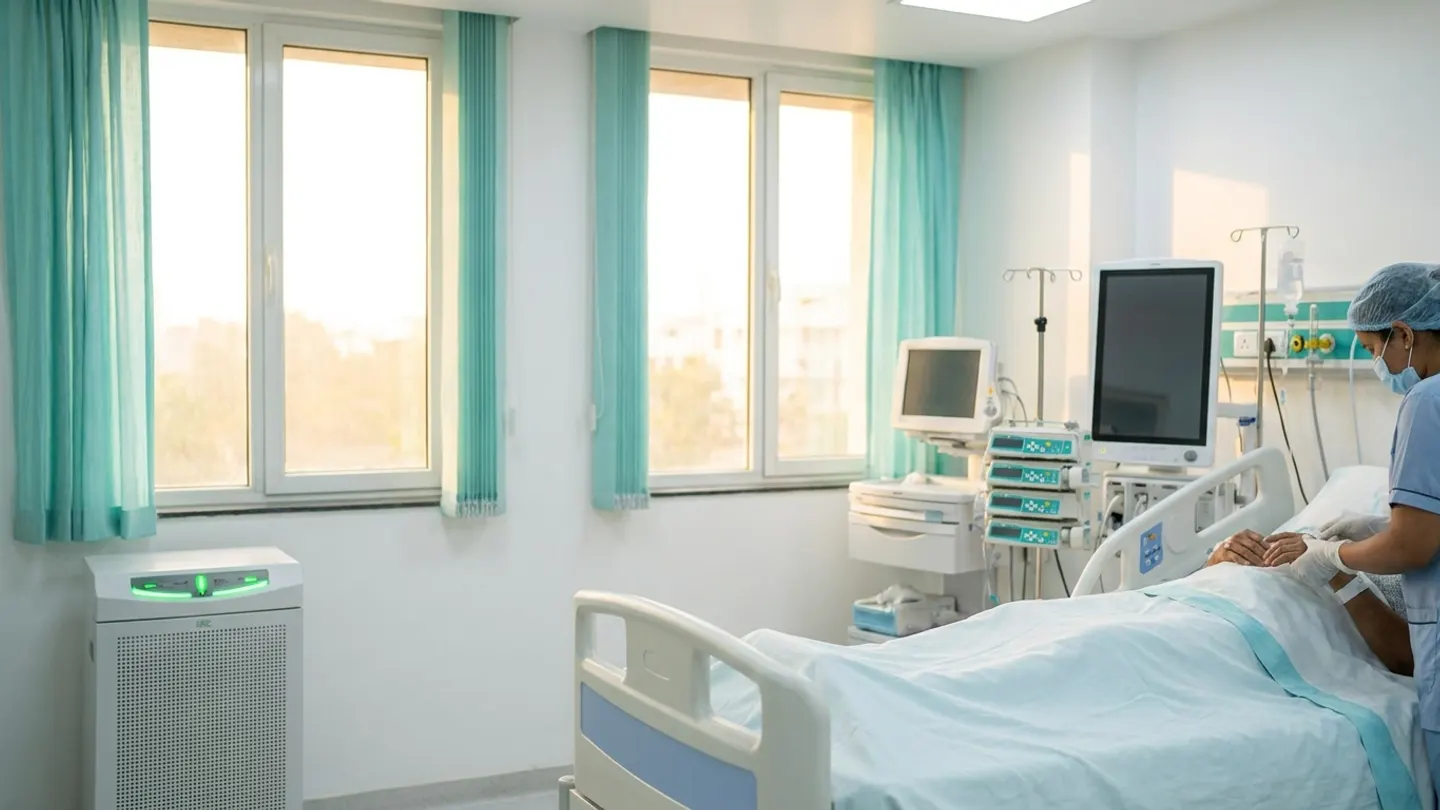
- The transplant infusion and full inpatient nursing in a HEPA-filtered isolation room
- All medications during the inpatient stay, including anti-fungal prophylaxis, immunosuppressants, and growth factors
- Daily reviews from a BMT physician and haematologist
- Post-transplant outpatient reviews before the patient is cleared to fly home
What is typically NOT included: unrelated donor registry search fees, international flights, companion accommodation, and costs incurred after return to the patient’s home country.
Who Is a Candidate for Sickle Cell BMT?
Not every patient with sickle cell disease will be offered a transplant at the first consultation. The strongest candidates are:
- Children under 16 with a matched sibling donor (HLA-identical brother or sister)
- Patients with severe disease: frequent vaso-occlusive crises, acute chest syndrome, stroke history, or early organ damage
- Those whose condition is not adequately controlled by hydroxyurea or transfusion therapy
- Adults with preserved organ function and a matched sibling donor, who may be offered reduced-intensity conditioning to lower treatment-related risk
Patients without a matched sibling can explore haploidentical (half-match) BMT, which uses a parent or partially matched sibling as the donor. Outcomes for haploidentical transplants in sickle cell disease have improved considerably and are now offered at several Indian centres. Explore the organ transplant programme.
How Safe Is BMT in India? Accreditation and Outcomes
Safety is the question every family should ask, and it deserves a direct, honest answer.
Accreditation to Look For
When evaluating any hospital for a bone marrow transplant, confirm:
- JCI accreditation — the international gold standard for hospital safety and patient care processes
- NABH accreditation — India’s own rigorous national scheme, required by government health programmes and insurers
- A dedicated bone marrow transplant unit with HEPA-filtered positive-pressure rooms, 24-hour intensivist cover, and an experienced multidisciplinary team including haematologists, infectious disease specialists, and transplant nurses
What Published Data Shows
India’s leading transplant centres report outcomes that match or closely approximate international benchmarks:
- Overall survival at one year: approximately 90 to 95% for matched sibling BMT in children with sickle cell disease
- Graft failure rates: under 5% at experienced centres
- Transplant-related mortality: 2 to 5% for paediatric matched sibling cases (higher in adults or with unrelated donors)
These figures are consistent with results from European and North American programmes, and are achieved at a fraction of the cost. Browse our accredited hospital network.
The Journey: What to Expect Step by Step
Understanding the timeline reduces anxiety. Here is a realistic picture of what the process looks like for a family travelling from Africa:
- Record review (Weeks 1 to 2): You share medical records with IndoMedTour. The transplant physician reviews them and confirms eligibility.
- HLA typing (Weeks 2 to 3): Patient and potential sibling donors are tested, either through a kit sent to your country or on arrival in India.
- Pre-transplant workup (Days 1 to 7 in India): Cardiac echo, pulmonary function tests, renal and liver panels, infectious disease screening, and dental clearance.
- Conditioning (Days minus-7 to minus-1): Chemotherapy prepares the bone marrow to receive the new cells.
- Day 0 — Transplant: Donor stem cells are infused. The procedure itself resembles a blood transfusion.
- Engraftment (Days plus-10 to plus-21): The new marrow begins producing healthy red cells. This is the most critical phase; the patient remains in isolation.
- Discharge and outpatient monitoring (Weeks 5 to 12 in India): Regular blood counts, immunosuppressant adjustments, and infection monitoring before clearance to fly home.
- Return home: Most patients travel home after 10 to 12 weeks with a detailed clinical summary for their local physician.
Read about how the full process works.
Practical Checklist: What to Prepare Before You Travel
Before booking flights, make sure the following are in order:
- Complete medical records for the patient, including crisis history, transfusion records, and organ function test results
- HLA typing results for the patient and any potential sibling donors (can be arranged after enquiry if not yet done)
- Current medication list with dosages, including hydroxyurea
- Valid passport for at least 12 months beyond the planned travel date
- Indian medical visa (IndoMedTour provides the invitation letter for this application)
- Confirmed funds: the transplant deposit is typically required two to four weeks before admission
- One accompanying support person arranged (strongly recommended; some hospitals require it)
- Travel insurance that covers pre-existing conditions and medical evacuation
Book a free counselling call to walk through this checklist with a coordinator who has helped African families through the same process.
Additional Questions Families Ask
Can adults with sickle cell disease have a BMT in India?
Yes. Adults are increasingly offered transplants, particularly with reduced-intensity conditioning protocols that lower physiological stress. Cure rates for adults with a matched sibling donor are typically 80 to 90% at leading Indian centres, and haploidentical transplants are available for those without a sibling match.
What if there is no matched sibling donor?
A matched unrelated donor (MUD) transplant is possible, though it carries slightly higher risk and additional cost for registry searching. Haploidentical BMT using a parent is another well-established route. The treating physician will guide you based on available donors and the patient’s clinical profile.
Does IndoMedTour work with government health schemes or NGOs?
Yes. We can provide full documentation to support funding applications to government health boards, charitable organisations, and NGOs that part-fund overseas treatment. Reach out to discuss your situation.
Read success stories from patients we have helped.
How IndoMedTour Helps
From the moment you contact us, the process stops feeling overwhelming. We begin with a free counselling call where a medical coordinator reviews your records and answers your questions with no obligation attached. We then match your case to the right transplant centre, obtain written cost estimates from multiple accredited hospitals, and guide you through the Indian medical visa application from start to finish. A dedicated coordinator stays beside you from the day you land to the day you return home, managing everything from airport pickup to translating clinical updates for family members following the progress from abroad.
You bring the worry. We bring the plan.
Start with a free counselling call today or explore our organ transplant programme.
IndoMedTour provides facilitation and coordination services only. All medical decisions are made by qualified physicians at accredited partner hospitals. Cost figures are indicative and subject to individual clinical assessment. Outcomes vary by patient profile and are not guaranteed.