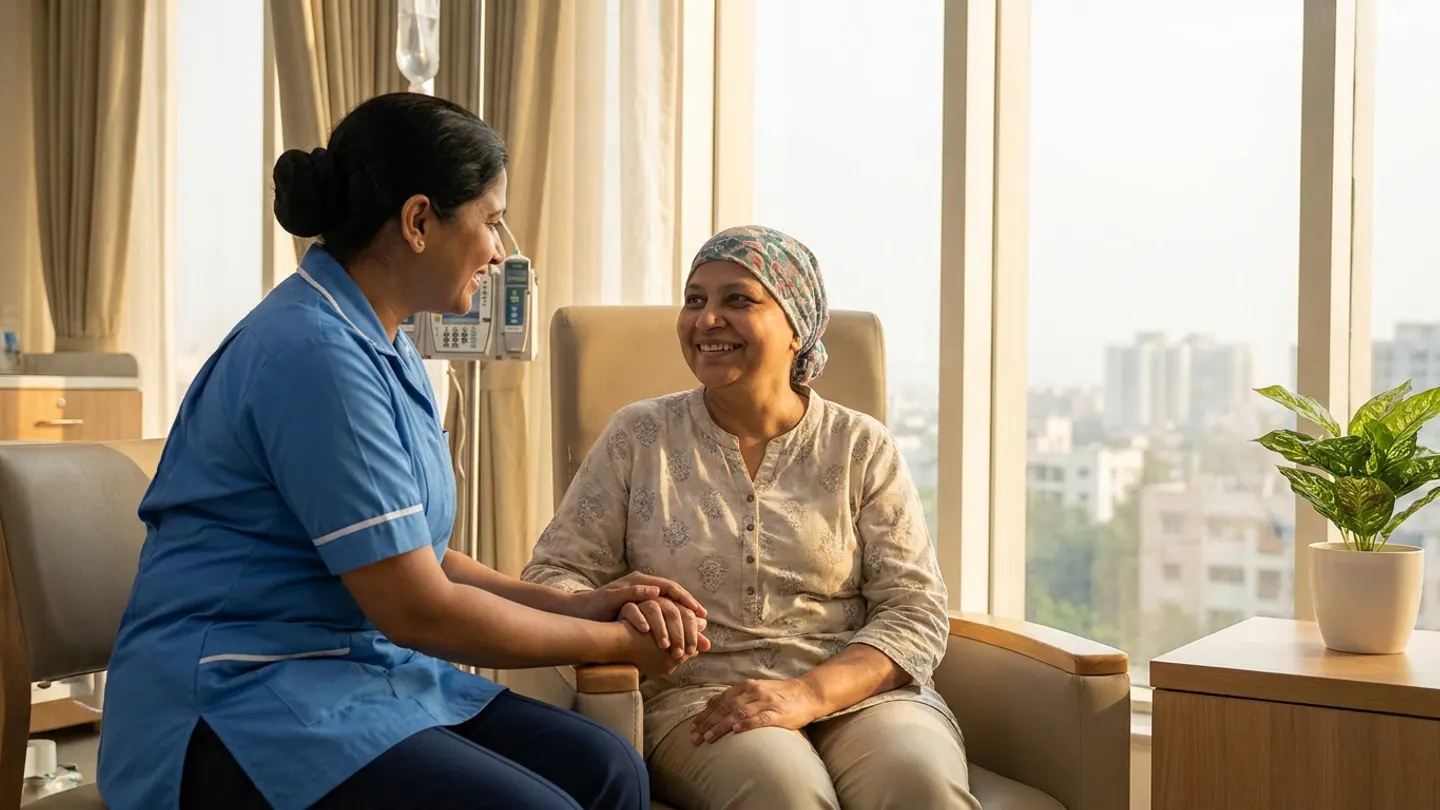
Being told you or someone you love needs radiation therapy is frightening enough. When the hospital estimate arrives alongside that news — sometimes $40,000, sometimes much more — the financial dread can feel as heavy as the diagnosis itself. If you are reading this, you are looking for a real answer about whether India is a safe and affordable option for brachytherapy. You deserve a clear, honest one.
Brachytherapy Cost in India: The Short Answer
Brachytherapy in India costs approximately $3,000 to $9,000 for a complete course of treatment at a high-quality, internationally accredited cancer centre. That is 75 to 85 percent less than the same treatment in the United States, and a significant saving compared to private centres in the UK, Australia, or the UAE. The lower price reflects India’s structural cost advantages — lower operating overheads, lower labour costs, and the absence of insurance-driven billing inflation — not a reduction in technology or expertise.
India vs the World: Brachytherapy Cost Comparison
The table below gives indicative 2026 cost ranges for a full brachytherapy course across major patient-origin markets. Figures cover treatment planning, the radiation source, applicator or implantation costs, dosimetry, fractions, and a standard inpatient stay where required. Flights, hotel, and personal expenses are not included.
| Country | Indicative Brachytherapy Cost (USD, full course) | Typical Wait Time |
|---|---|---|
| India | $3,000 – $9,000 | 3 – 7 days |
| United States | $30,000 – $60,000 | 2 – 4 weeks |
| United Kingdom | $18,000 – $35,000 (private) | 3 – 6 months (NHS) |
| Australia | $14,000 – $28,000 (private) | 4 – 8 weeks (public) |
| UAE | $10,000 – $22,000 | 1 – 3 weeks |
Even after adding return airfare and two weeks of hotel accommodation for a patient and companion, most people from the US or Australia save $20,000 to $45,000 compared to what they would pay at home.
What Is Brachytherapy and Who Needs It?
Brachytherapy is a form of internal radiation therapy in which a radioactive source is placed directly inside or immediately adjacent to a tumour. Because radiation is delivered from within the body, it concentrates a high dose precisely on cancer cells while sparing surrounding healthy tissue to a degree that external beam radiation cannot always match.
It is used as either a primary treatment or a boost alongside external beam therapy for several cancers, including:
- Cervical and uterine cancer (gynaecological brachytherapy)
- Prostate cancer (seed implantation or HDR boost)
- Breast cancer (partial breast irradiation after lumpectomy)
- Head and neck cancers
- Oesophageal and rectal cancer
- Skin cancer
India’s major cancer centres treat high volumes across all of these indications, which translates directly to team experience and refined protocols.
HDR vs LDR Brachytherapy: How the Type Affects Cost
High-Dose Rate (HDR) Brachytherapy
HDR brachytherapy delivers radiation in short, high-intensity pulses over a few minutes per session. A radioactive source (most commonly Iridium-192) is inserted using an applicator, delivers the dose, and is then fully withdrawn. No radioactive material remains in the body between fractions.
- Most common for cervical, uterine, and breast cancer
- Usually 3 to 6 fractions spread across 1 to 2 weeks
- Many fractions are delivered as day procedures, no overnight stay required
- Indicative cost in India: $3,500 to $7,000 for a full gynaecological or breast course
Low-Dose Rate (LDR) Seed Implantation
LDR brachytherapy involves permanently implanting tiny radioactive seeds (typically Iodine-125 or Palladium-103) directly into the tumour. The seeds emit radiation slowly over weeks to months and then become inactive. This technique is most widely used for early-stage prostate cancer.
- One procedure under general or spinal anaesthesia
- Hospital stay of 1 to 2 days
- Indicative cost in India: $4,500 to $9,000 depending on seed count and ultrasound or CT guidance used
“The Iodine-125 seeds implanted for a prostate cancer patient in a Mumbai cancer centre are the same seeds used in Boston or Brisbane. What differs is the cost of the operating room, the hospital infrastructure fees, and the billing system wrapped around it.”
What Is Typically Included in an India Brachytherapy Quote
When you receive a written estimate from an IndoMedTour-matched hospital, you should expect it to cover:
- Oncology consultation and imaging review on arrival
- Treatment simulation and 3D dosimetry planning
- Anaesthesia and operating or procedure room fees
- Radioactive source and applicator or implant costs
- All brachytherapy fractions included in the agreed plan
- Standard inpatient or day-procedure nursing care
- Radiation safety review and discharge planning
- One follow-up consultation before departure
What is typically billed separately: any external beam radiation therapy (EBRT) combined with brachytherapy, concurrent chemotherapy if prescribed, diagnostic scans ordered after arrival, and care for any complications. Always request an itemised written estimate before booking flights or accommodation.
Why India’s Brachytherapy Quality Matches the Best in the World
Accreditation: India’s leading cancer centres hold JCI (Joint Commission International) or NABH accreditation — the same quality benchmarks required by elite hospitals in Singapore, the UAE, and the United States. Accreditation covers everything from infection control to radiation safety protocols.
Technology: Major Indian hospitals use precisely the same equipment that defines global standards, including Nucletron and Varian HDR afterloaders, Elekta brachytherapy platforms, real-time CT- and MRI-guided dosimetry, and 3D image-based intracavitary brachytherapy (3D-ICBT) for gynaecological cases — the current international gold standard recommended by the GEC-ESTRO working group.
Expertise: Many senior radiation oncologists at Indian cancer hospitals completed postgraduate fellowships in the UK, Germany, or the United States. Institutional memberships in ASTRO (American Society for Radiation Oncology) and ESTRO (European Society for Radiotherapy and Oncology) are common at the hospitals we work with.
Volume: High case volume matters for complex procedural skills. Several Indian cancer centres perform hundreds of HDR gynaecological cases and LDR prostate seed procedures each year, which is comparable to many dedicated cancer centres in the West.
You can explore our verified network of cancer hospitals on the our hospitals page and review oncology treatment options in detail.
Before You Travel: A Planning Checklist
- Gather all pathology reports, biopsy results, and staging scans in digital format (DICOM files for CT and MRI scans if possible)
- Arrange a telemedicine second opinion with an Indian radiation oncologist before booking travel
- Request a written, itemised cost estimate that lists all fractions and confirms what is included
- Confirm the specific brachytherapy technique available at your chosen hospital (e.g., 3D image-guided HDR for cervical cancer)
- Check visa requirements: most nationalities can apply for an Indian e-Medical Visa online within 3 to 5 days
- Plan to bring a companion, especially for procedures involving inpatient stays or post-procedure radiation precautions
- Ask your IndoMedTour coordinator about accommodation close to the treatment centre
How Long Will You Need to Stay in India?
| Cancer and Technique | Typical Total India Stay |
|---|---|
| Cervical cancer, HDR course | 2 – 3 weeks |
| Uterine cancer, HDR boost (after EBRT) | 1 – 2 weeks |
| Prostate cancer, LDR seed implant | 5 – 7 days |
| Prostate cancer, HDR boost | 1 – 2 weeks |
| Breast cancer, APBI (HDR) | 1 – 2 weeks |
Your full treatment plan, including the number of fractions, will be confirmed during the pre-travel telemedicine consultation so you can plan your trip accurately. See how it works for a step-by-step overview of the process.
Travelling for Cancer Treatment: Practical Reassurance
Many patients feel anxious about receiving cancer treatment far from home. That is a completely understandable concern, and it deserves a straightforward response.
India’s e-Medical Visa is straightforward to obtain and covers the patient and one accompanying companion. Most major cancer centres have dedicated international patient departments with English-speaking case managers. Your complete treatment records are documented digitally and can be shared with your oncologist at home, ensuring continuity of care after you return. Emergency support is available at the same hospital if any issue arises during or after the procedure.
India is one of the few destinations where a full course of specialist cancer treatment — from initial consultation to discharge clearance — can be completed within two to three weeks for most brachytherapy indications. Our success stories page includes accounts from patients who have made exactly this journey.
For a broader view of cancer treatment costs in India or to compare oncology packages and quality standards, those pages have detailed information.
How IndoMedTour Helps
You should not have to navigate a foreign cancer centre on your own. IndoMedTour begins with a free counselling call where we listen to your diagnosis, review your reports, and match you with the right cancer centre from our network of accredited hospitals. We coordinate written, itemised quotes, verify exactly what is included, and handle your visa, flights, and accommodation planning. A dedicated patient coordinator stays with you throughout your entire journey — from your first message to us through surgery, recovery, and the flight home.
You bring the worry. We bring the plan.