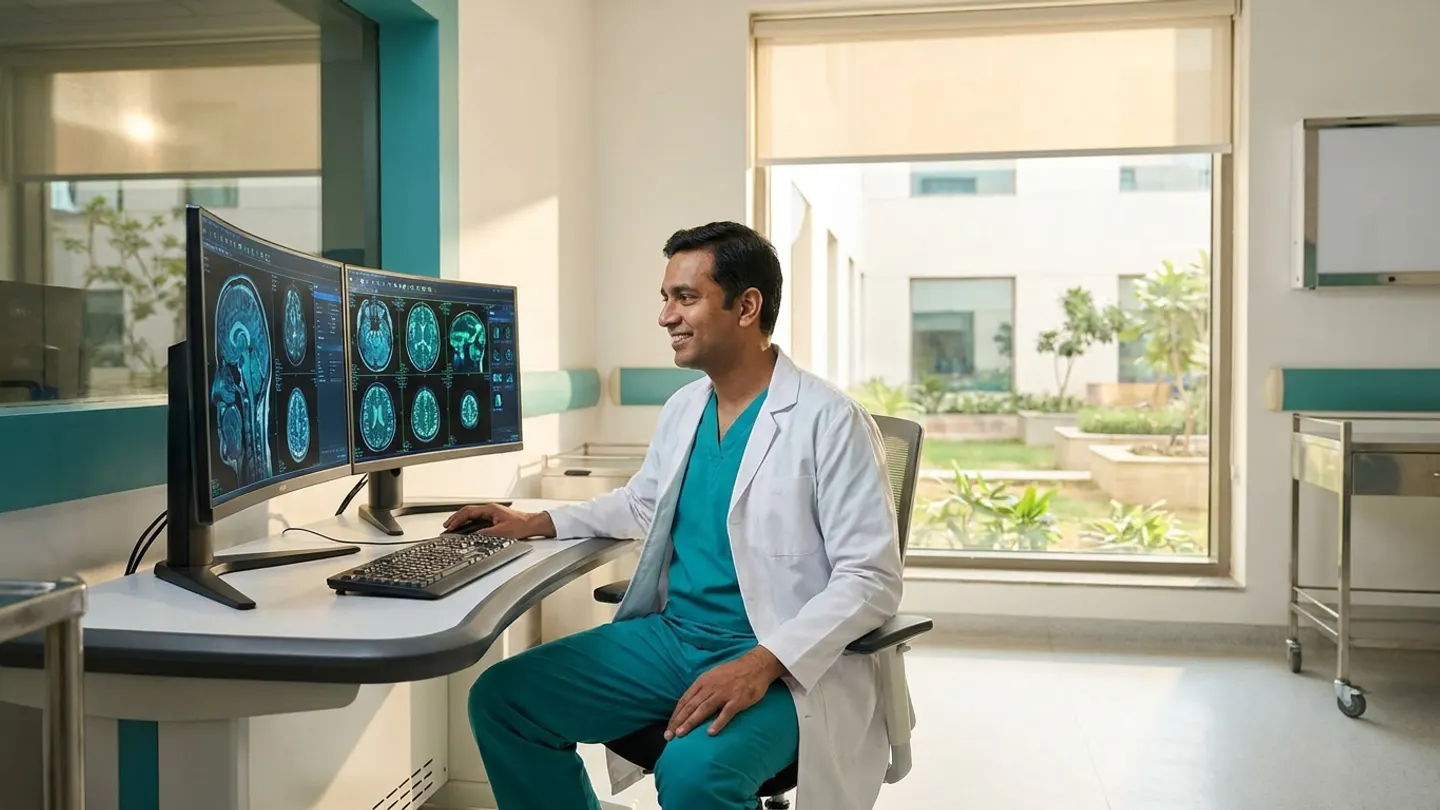
A brain tumor diagnosis turns everything upside down in an instant. Then comes the second wave of shock: the estimated cost of surgery in the United States. If you are reading this page, you are probably staring at a six-figure quote, a long timeline for insurance authorisation, or both — and wondering whether there is a safer, faster, more affordable path forward.
There is. Thousands of international patients, including many from the US, travel to India each year for neurosurgery at world-class hospitals. This guide gives you an honest, detailed look at brain tumor surgery India vs USA cost in 2026, so you can make a clear-eyed decision.
Brain Tumor Surgery India vs USA Cost: The 2026 Numbers
Brain tumor surgery India vs USA cost is the question at the centre of every enquiry we receive from American families, and the headline figure is striking. In India, craniotomy and related neurosurgical procedures typically cost from approximately $6,000 to $25,000 all-inclusive; the same procedures in the USA routinely run from $70,000 to over $200,000, depending on tumor type, surgical approach, and hospital network. That is a saving of 70 to 85 percent, often without any compromise in the quality of the surgical team, the technology used, or the post-operative care received.
| Procedure | India (All-Inclusive, USD) | USA (Approximate, USD) | Potential Saving |
|---|---|---|---|
| Craniotomy for tumor removal | $8,000 – $20,000 | $80,000 – $150,000 | 80–85% |
| Stereotactic radiosurgery (Gamma Knife / CyberKnife) | $5,000 – $12,000 | $30,000 – $60,000 | 75–80% |
| Endoscopic skull-base surgery | $9,000 – $18,000 | $70,000 – $130,000 | 78–83% |
| Awake craniotomy | $10,000 – $22,000 | $90,000 – $180,000 | 80–85% |
| Biopsy + navigation-guided surgery | $6,000 – $14,000 | $40,000 – $80,000 | 75–82% |
| Shunt placement (hydrocephalus) | $4,000 – $8,000 | $25,000 – $60,000 | 78–83% |
All figures are indicative 2026 ranges. Individual costs vary by hospital, tumor complexity, surgeon, length of stay, and patient-specific factors. Prices quoted by IndoMedTour partner hospitals include surgery, anaesthesia, ICU, standard post-op ward care, and standard investigations.
Why Is Brain Tumor Surgery So Much Cheaper in India?
The cost gap is not a reflection of inferior care. It reflects structural differences in healthcare economics:
- Lower operating costs. Hospital construction, nursing wages, and administrative overheads in India are a fraction of US equivalents.
- No complex US billing layers. There is no insurer-hospital price negotiation, no facility fee separate from surgeon fee, and no surprise billing.
- Government pricing policy. India caps the price of implants, certain drugs, and diagnostic tests in accredited hospitals.
- Purchasing power parity. A senior neurosurgeon in India earns a very comfortable professional income at salary levels far below US equivalents — not because they are less skilled, but because the cost of living is different.
The result: you receive the same titanium craniotomy plates, the same neuronavigation system, the same 1.5T or 3T intraoperative MRI, and a surgeon who may well have a fellowship from Johns Hopkins or the Cleveland Clinic — at a price that does not require you to remortgage your home.
What the All-Inclusive India Price Typically Covers
When IndoMedTour coordinates your surgery, the written quote you receive before you book your flight covers everything listed below. There are no surprise invoices at discharge.
A standard all-inclusive package at a JCI or NABH-accredited Indian neurosurgical centre typically includes:
- Pre-operative MRI, CT, PET scans, and blood panel
- Neurosurgeon and anaesthesiologist fees
- Operating theatre and ICU charges
- Intraoperative neuromonitoring (IONM) where required
- Hospital room (private or semi-private) for the full admitted stay
- Standard medications and consumables during admission
- Post-operative physiotherapy and rehabilitation sessions
- Discharge summary, imaging discs, and histopathology reports to take home
What is generally not included: international flights, hotel accommodation for companions, meals outside the hospital, and any additional treatment cycles such as adjuvant chemotherapy or radiation that begin after discharge.
The Technology Gap Is Smaller Than You Think
One of the most common concerns from US patients is whether Indian hospitals have access to the same neurosurgical technology. At leading JCI-accredited centres the answer is yes:
Intraoperative MRI and Neuronavigation
Real-time MRI during surgery allows surgeons to verify tumor margins as they operate, maximising resection while protecting eloquent brain areas. Several Indian neurosurgical centres have installed the same BrainSuite and Siemens iMRI platforms used in top US academic hospitals.
Awake Craniotomy
For tumors near speech, motor, or sensory areas, awake craniotomy with cortical mapping is available at specialist centres. The technique requires a highly experienced team — and Indian hospitals performing this procedure regularly have that experience.
Gamma Knife and CyberKnife Radiosurgery
Stereotactic radiosurgery, which treats certain tumors without open surgery, is available at multiple Indian centres. The Leksell Gamma Knife and Accuray CyberKnife systems used are identical to those deployed in US radiosurgery centres.
Molecular Pathology and Tumour Boards
Leading Indian hospitals run multidisciplinary tumour boards, offer IDH mutation testing, MGMT methylation analysis, and next-generation sequencing for gliomas — the same molecular profiling protocols used to guide treatment decisions in the US.
The Surgeon Question: Training and Experience
Indian neurosurgeons at top-tier hospitals have typically completed MBBS plus a 3-year neurosurgery residency, followed by an MCh (Neurosurgery) — a six-year super-specialty programme. Many then complete additional fellowships in neuro-oncology, skull-base surgery, or paediatric neurosurgery at institutions in the US, UK, Germany, or Australia.
Crucially, India’s population base means high-volume exposure. A senior neuro-oncology surgeon at a major Indian centre may perform 200 to 400 craniotomies per year. Volume matters in neurosurgery: outcomes improve meaningfully with surgeon and centre experience.
Quality Assurance: JCI and NABH Accreditation
The quality benchmark you should look for is JCI (Joint Commission International) accreditation — the same body that accredits US hospitals — or NABH accreditation, India’s national equivalent. Both require rigorous standards in infection control, surgical protocols, nursing ratios, medication safety, and patient rights.
When IndoMedTour matches you with a hospital, we only work with JCI or NABH-accredited facilities. You can view our hospital network and ask for accreditation certificates before you commit to anything.
What US Patients Should Know Before Travelling
Insurance and Out-of-Pocket Planning
Most US health insurance policies do not reimburse treatment abroad. Some self-funded or level-funded employer plans do have international reimbursement riders — worth checking your Summary Plan Description. For most patients, however, the net out-of-pocket cost in India is still far lower than the after-insurance cost in the US.
Travel and Logistics Checklist
- Obtain a medical visa (e-MedVisa) from the Indian consulate or online portal — typically issued within 72 hours
- Carry originals and digital copies of all imaging: MRI, CT, PET, biopsy reports, surgical notes
- Arrange a companion or caregiver for the duration of the trip
- Plan for a minimum 3 to 4 week stay before flying home
- Check your airline’s policy on flying post-craniotomy; most neurosurgeons advise a minimum of 4 weeks before air travel
What to Send Before You Travel
IndoMedTour’s neurosurgery coordinators will ask for your latest MRI report, pathology report (if biopsy has been done), and a summary of any treatment received so far. This lets us get a written surgical opinion and cost quote from a specialist before you book a single flight. See how it works for the full process.
Brain Tumor Types Commonly Treated in India
India’s neurosurgical centres handle the full spectrum of brain tumors, both primary and metastatic:
- Gliomas (GBM, grade II-III astrocytoma, oligodendroglioma)
- Meningiomas (skull-base and convexity)
- Acoustic neuromas / vestibular schwannomas
- Pituitary adenomas (endoscopic transsphenoidal approach)
- Brain metastases (resection or stereotactic radiosurgery)
- Craniopharyngiomas and other sellar tumors
- Paediatric brain tumors (medulloblastoma, ependymoma, DIPG — at specialist paediatric neuro-oncology centres)
Explore the full scope of care on our neurosurgery and spine treatments page.
Real Cost Scenario: What an American Family Typically Saves
Consider a 54-year-old from Ohio diagnosed with a 4 cm meningioma. His US neurosurgeon quotes approximately $140,000 for the craniotomy, with a $28,000 out-of-pocket maximum on his insurance and a 6-week wait for a slot in the surgical schedule.
In India, the all-inclusive surgical package for the same procedure would typically run from $12,000 to $18,000, with surgery available within 2 to 3 weeks of confirmation. Including flights, accommodation for himself and his wife, and all meals, the total trip cost sits around $20,000 to $25,000 — still less than his US insurance deductible alone, and completed months earlier.
You can review treatments and costs for more scenario breakdowns across specialties.
How IndoMedTour Helps
When you reach out to us for a free counselling call, you speak with a medical coordinator — not a sales person — who reviews your records, answers your questions honestly, and connects you with the right specialist for a written surgical opinion before you make any decision. We match patients with JCI or NABH-accredited hospitals based on tumor type, surgical complexity, and budget, then provide a written, itemised cost quote with no hidden charges. Our team handles your medical visa application, arranges airport pickup, hotel, and hospital transfers, and assigns a dedicated on-the-ground coordinator who stays beside you from admission through discharge and recovery. We also help you plan the success stories you will one day be able to share with other families in the same situation. You bring the worry. We bring the plan.