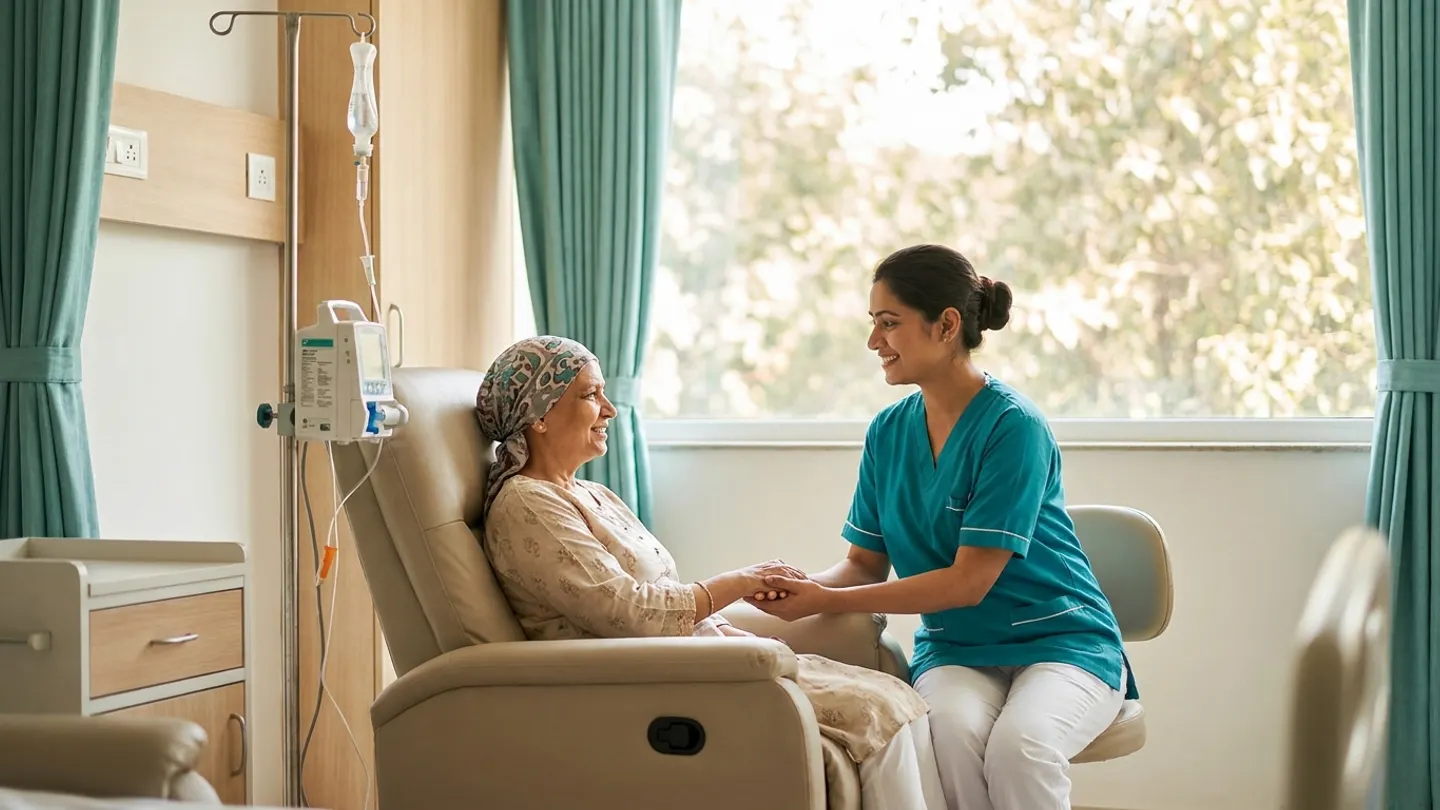
A cancer diagnosis is one of the most frightening things a person can face. When the treatment estimate arrives and the number reads $200,000, $400,000, or more — before insurance negotiations have even begun — the financial fear can feel as overwhelming as the diagnosis itself. If you are a US patient researching options beyond American borders, know that you are making a rational, increasingly common decision that thousands of families make every year.
Cancer Treatment in India for US Patients: What Does It Actually Cost?
Cancer treatment in India for US patients costs, on average, 60–80% less than equivalent care in the United States — using the same international chemotherapy protocols, the same FDA-cleared equipment, and oncologists trained at some of the world’s leading institutions. The savings are not a result of lower standards. They reflect India’s lower labour costs, government-supported hospital infrastructure, and a transparent private healthcare market where you receive a written price estimate before you book a single flight.
| Treatment | Typical US Cost | Typical India Cost | Approximate Saving |
|---|---|---|---|
| Chemotherapy course (6 cycles) | $60,000 – $150,000 | $8,000 – $22,000 | ~80% |
| Radiation therapy (full course) | $30,000 – $80,000 | $4,000 – $12,000 | ~75–85% |
| Bone marrow transplant | $200,000 – $400,000 | $25,000 – $50,000 | ~85% |
| Major cancer surgery | $40,000 – $120,000 | $5,000 – $18,000 | ~75–85% |
| Targeted therapy (per month) | $10,000 – $25,000 | $1,500 – $5,000 | ~75–80% |
| PET-CT scan | $3,000 – $6,000 | $200 – $500 | ~90% |
All figures are indicative 2026 ranges. Actual costs depend on cancer type, stage, treatment protocol, and the hospital chosen. Always request a written itemised quote before making any travel decisions.
Why US Patients Are Choosing India for Oncology Care
The United States has exceptional oncologists and some of the most advanced cancer research in the world. The problem is not the quality — it is the access and the cost. An estimated 100 million Americans are uninsured or underinsured, and even those with employer-sponsored plans routinely face five- or six-figure out-of-pocket bills after deductibles, co-insurance, and out-of-network charges. Treatments for blood cancers, rare solid tumours, or complex malignancies can exhaust a lifetime of savings within months.
India offers a genuine clinical alternative, not a compromise. Explore treatments and costs to compare specific procedures side by side.
JCI and NABH Accreditation: The Quality Benchmark You Can Trust
The hospitals IndoMedTour works with hold JCI (Joint Commission International) or NABH (National Accreditation Board for Hospitals) accreditation — the same internationally recognised quality standards used to evaluate hospitals in the United States, Europe, and the Middle East. These certifications require demonstrable patient-safety protocols, infection-control systems, equipment maintenance records, and clinical governance frameworks that match or exceed what is expected of a leading US facility.
India’s top oncology centres operate dedicated multidisciplinary tumour boards: medical oncologists, surgical oncologists, radiation oncologists, pathologists, and palliative-care specialists who review each patient’s case together before recommending a treatment plan. This is the same collaborative model that major US cancer centres promote as best practice.
No Waiting Lists. No Insurance Pre-Approval Battles.
Getting an appointment at a major US cancer centre can take four to eight weeks. Pre-authorisation from a US insurer can delay the start of treatment by another two to four weeks. For most cancer diagnoses, waiting is not a neutral act.
At India’s leading oncology hospitals, consultations are typically available within 48–72 hours of sharing your medical records, and most treatment plans begin within days of arrival. There are no insurance gatekeepers, no referral chains, and no surprise billing. You receive a written cost estimate in advance, you pay transparently, and you receive care.
“I was told the earliest slot at the US centre was six weeks out. IndoMedTour arranged a video consultation with a specialist in two days, and I started chemotherapy in India on Day 9 of reaching out. I genuinely believe that speed saved my life.”
— Representative experience from a US patient; name and details withheld to protect privacy
What Types of Cancer Are Commonly Treated in India by US Patients?
India’s accredited oncology hospitals handle the full spectrum of cancer diagnoses. The treatments most frequently sought by international patients include:
- Breast cancer — all stages, including triple-negative and HER2-positive
- Lung cancer — NSCLC, SCLC, and targeted therapy-eligible subtypes
- Blood cancers — leukaemia, lymphoma, multiple myeloma, including bone marrow transplant
- Gastrointestinal cancers — colorectal, stomach, liver, and pancreatic
- Head and neck cancers
- Prostate and urological cancers
- Gynaecological cancers — ovarian, cervical, and uterine
- Brain tumours and spinal malignancies
- Rare and complex cancers requiring specialist tumour board review
Visit [/treatments/cancer-oncology] for a full breakdown of oncology services available through our hospital network.
How the Journey Works: From First Contact to First Consultation
You do not navigate Indian healthcare alone. Here is how US patients typically move from an initial enquiry to the start of treatment:
- Share your medical records — scans (digital copies or CDs), pathology and biopsy reports, prior treatment summaries. IndoMedTour’s clinical team reviews them within 24 hours.
- Receive matched hospital recommendations — tailored to your cancer type, stage, budget, and preferred city (Delhi, Mumbai, Chennai, Bengaluru, Hyderabad are the major oncology hubs).
- Get a written cost estimate — a transparent price range covering consultations, planned procedures, medications, and follow-up. No commitment required at this stage.
- Apply for your Medical Visa — US passport holders qualify for India’s Medical Visa or Medical e-Visa. IndoMedTour provides the hospital invitation letter your consulate needs.
- Arrive in India — a coordinator meets you at the airport. Accommodation is pre-arranged, whether a hospital guest house or a nearby serviced apartment for longer stays.
- Begin treatment — your dedicated coordinator attends every appointment alongside you, translating medical language into plain English and liaising with the clinical team on your behalf.
- Return home with full documentation — treatment summaries, discharge notes, medication schedules, and follow-up plans written in English, formatted so your US oncologist can continue your care seamlessly.
Read how it works for a more detailed walkthrough of the full process.
Is It Safe to Travel to India for Cancer Treatment?
This is the question every family asks before deciding, and it deserves a direct answer.
India’s top private oncology hospitals are equipped with Varian and Elekta linear accelerators for radiation therapy, Da Vinci robotic surgery systems, PET-CT and PET-MRI scanners, next-generation sequencing laboratories for tumour profiling, and fully staffed ICU and bone marrow transplant units. Many senior oncologists completed fellowships at institutions in the United States, United Kingdom, or Germany before returning to India to practice. The clinical environment at a JCI-accredited Indian hospital is genuinely comparable to what you would find at a major US academic medical centre — at a fraction of the price.
The practical considerations for US patients are manageable with good planning:
Pre-Travel Checklist for US Cancer Patients
- Gather all imaging in digital format (USB or cloud link), plus biopsy reports and pathology summaries
- Confirm your diagnosis in writing — including stage, grade, and key biomarkers (HER2, EGFR, PD-L1, BRCA, etc.)
- Check passport validity — must be valid for at least six months beyond your planned return date
- Apply for India Medical Visa or Medical e-Visa as early as possible
- Confirm your travel insurance covers international cancer treatment and medical evacuation
- Arrange a companion or caregiver to accompany you — most patients travel with a family member
- Brief your US oncologist and carry a signed copy of your diagnosis summary for continuity of care
Read success stories from patients who have made this journey to understand what the experience is genuinely like.
How IndoMedTour Helps
At IndoMedTour, we start with a free counselling call — no charge, no obligation, no pressure. We listen to your diagnosis, your worries, and your budget, then match you to the best-fit JCI or NABH accredited oncology programme from our verified hospital network. You receive written cost estimates, honest clinical guidance, and a dedicated coordinator who stays with you from your first appointment through surgery and into recovery. We also manage your Medical Visa invitation letter, airport transfers, accommodation, and the complete documentation package your US doctor will need when you return home.
You bring the worry. We bring the plan.