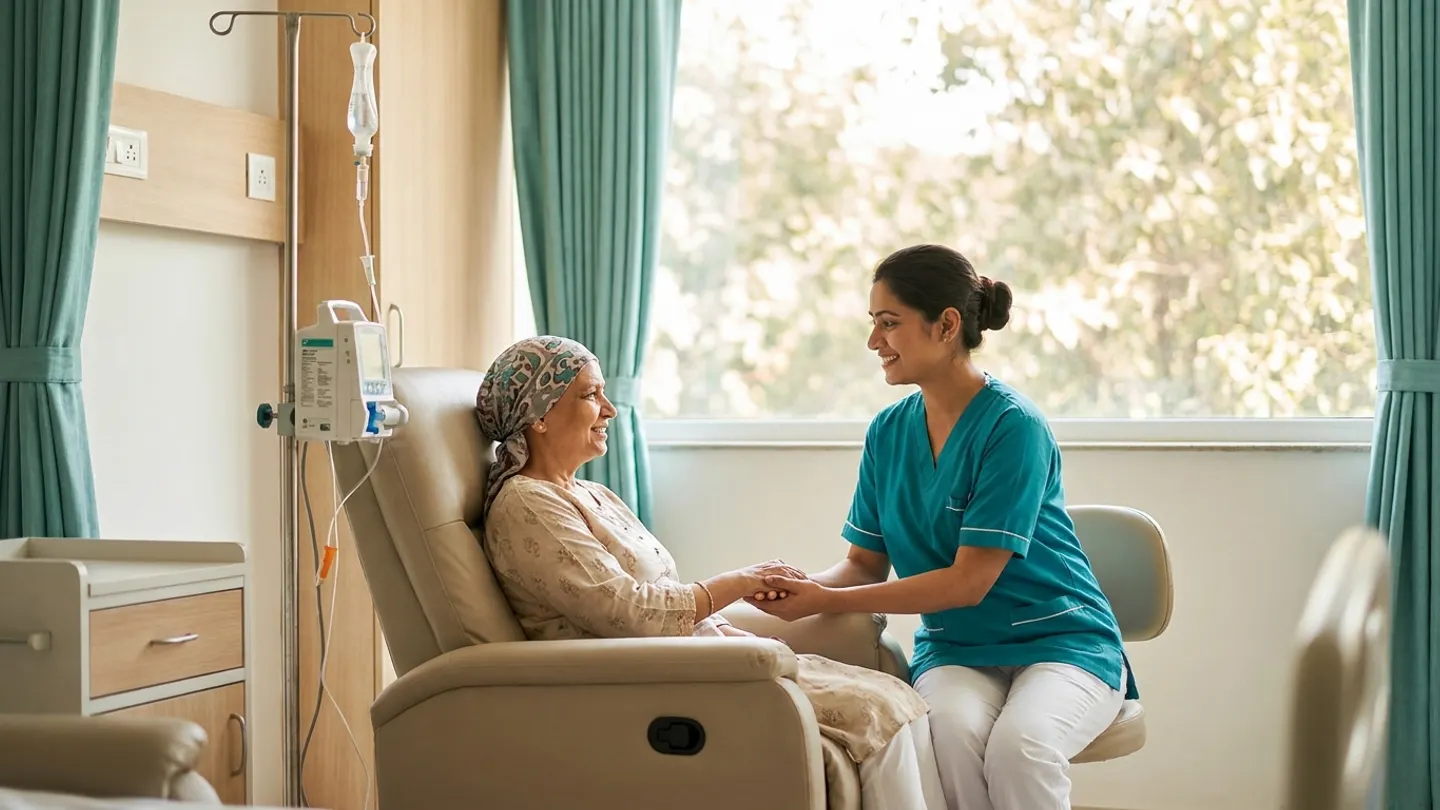
A cancer diagnosis turns every priority upside down. Then the bills arrive — or the insurance pre-authorisation gets denied — and financial terror piles on top of medical fear. If you are in the United States and you have started searching for cancer treatment India vs USA cost, know that you are not alone and that what you are considering is a genuinely viable, medically sound path taken by thousands of patients every year.
Cancer Treatment India vs USA Cost: The 2026 Reality
Cancer treatment in India vs USA cost shows one of the widest price gaps in all of medical tourism. In the United States, even patients with good insurance routinely face five- and six-figure out-of-pocket expenses; the uninsured or underinsured face bills that can exceed $300,000 for a full treatment course. In India, the same evidence-based protocols — the same chemotherapy agents, the same radiation technology, the same targeted and immunotherapy drugs — are delivered at JCI and NABH-accredited hospitals for a fraction of that price.
The savings are not because quality has been cut. India trains more oncologists per year than most countries in the world, its top cancer institutes treat patient volumes that give surgeons and radiologists experience levels few Western hospitals can match, and the regulatory framework now requires accredited centres to follow international treatment guidelines. The savings exist because labour costs, infrastructure overheads, and drug pricing models are structurally different.
Side-by-Side Cost Comparison: India vs USA
The table below uses 2026 indicative ranges drawn from hospital pricing disclosures and facilitator experience. Your actual cost depends on cancer type, stage, chosen protocol, and hospital tier. All figures are in USD and represent the full course of treatment unless otherwise noted.
| Treatment Type | USA (Typical Range) | India (Indicative Range) | Approximate Saving |
|---|---|---|---|
| Chemotherapy (full regimen, 6 cycles) | $80,000 – $150,000 | $8,000 – $20,000 | 85–90% |
| Radiation therapy (IMRT, 30 fractions) | $30,000 – $60,000 | $4,000 – $10,000 | 83–87% |
| Stereotactic radiosurgery (Gamma Knife / CyberKnife) | $40,000 – $80,000 | $5,000 – $12,000 | 85–88% |
| Breast cancer surgery (mastectomy + reconstruction) | $50,000 – $120,000 | $6,000 – $14,000 | 88–90% |
| Prostate cancer (robotic prostatectomy) | $30,000 – $70,000 | $5,000 – $10,000 | 83–86% |
| Bone marrow / stem-cell transplant | $150,000 – $350,000 | $18,000 – $45,000 | 87–90% |
| Immunotherapy (per infusion cycle) | $10,000 – $30,000 | $1,500 – $5,000 | 83–87% |
| CAR-T cell therapy | $400,000 – $600,000 | $80,000 – $130,000 | 78–80% |
Prices are indicative only and do not include airfare or accommodation. Always request a written itemised quote before committing.
Why Is Cancer Treatment So Much Cheaper in India?
The price difference has nothing to do with shortcuts. Three structural factors explain it.
Drug pricing: India manufactures a large share of the world’s generic oncology drugs. Branded chemotherapy agents and biosimilar targeted therapies cost a fraction of their US list prices because India’s patent framework and government price controls work differently.
Surgeon and specialist fees: An oncologist in India earns a fraction of what a US counterpart earns, not because of lesser skill but because of local cost-of-living differences. Many Indian oncologists hold dual fellowships from the US or UK and choose to practise in India.
Hospital infrastructure costs: A cancer hospital in Chennai or Mumbai does not carry the administrative burden of a US health system — no insurance coding armies, no malpractice premium at American levels, no hospital chargemaster inflation. Those savings flow directly to the patient invoice.
“I was looking at $240,000 for my treatment in Ohio without insurance. My entire cost in India — flights, hotel, surgery, chemo, follow-up — came to just under $22,000. I feel like I can breathe again.” — Representative patient experience. This narrative is illustrative of common outcomes; it is not a specific identifiable patient record.
What to Expect: The Treatment Journey from the USA
Travelling for cancer care feels daunting, but a well-organised facilitator makes the logistics far less stressful than they sound.
Before You Travel
- Share your pathology report, imaging scans (CT, MRI, PET), biopsy results, and any prior treatment records.
- A panel of oncologists at your matched hospital reviews your case remotely, usually within 48 to 72 hours.
- You receive a written treatment plan, an itemised cost estimate, and a proposed timeline.
- Your medical visa (MV category for India) is straightforward when applied for with hospital invitation letters — a process IndoMedTour coordinates for you.
In India
- A dedicated coordinator meets you at the airport. You are never navigating alone.
- Pre-treatment workup (blood panels, imaging, tumour marker tests) typically takes 2 to 5 days.
- Surgery, radiation, or the first chemo cycle begins once the multidisciplinary tumour board confirms your plan.
- Hospital stays are shorter than in the US on average; post-discharge recovery is in a nearby serviced apartment or partner hotel.
After You Return Home
- Oncology reports, pathology slides, and discharge summaries are provided in English, formatted for your home oncologist.
- Your coordinator remains reachable for follow-up questions for 90 days after discharge.
- Many patients return to India for subsequent treatment cycles; others transfer ongoing care home with a full handover package.
Quality and Safety: What Accreditation Actually Means
India’s leading oncology hospitals hold accreditation from the Joint Commission International (JCI), the same body that accredits top US hospitals, and from NABH, India’s national quality authority. These are not rubber stamps. JCI accreditation requires:
- Written, audited clinical protocols aligned to international guidelines (NCCN, ESMO)
- Infection control standards matching those of major US academic medical centres
- Credentialing of every surgeon and oncologist, with regular peer review
- Documented patient safety incident reporting
When you choose a JCI or NABH-accredited cancer centre in India, you are choosing a facility that has been independently audited against the same benchmarks that govern the best hospitals in the United States. See our hospitals overview for the institutions IndoMedTour works with.
Which Cancers Are Most Commonly Treated in India by International Patients?
India’s oncology centres have deep experience across the full spectrum of cancer types. The conditions most frequently brought to India by US patients include:
- Breast cancer (all stages, including triple-negative)
- Prostate cancer (localised and advanced)
- Lung cancer (including targeted therapy for EGFR, ALK mutations)
- Colorectal cancer
- Head and neck cancers
- Haematological cancers (leukaemia, lymphoma, myeloma)
- Ovarian and cervical cancers
- Brain tumours (glioma, meningioma)
- Liver, pancreatic, and gastrointestinal cancers
For a full breakdown of what each cancer type costs in India, visit our cancer and oncology treatment page.
Honest Caveats: What to Watch For
No comparison guide would be complete without the caveats that protect you.
Stage matters more than anything else: Costs quoted above assume typical treatment courses. Late-stage cancers requiring prolonged intensive therapy will cost more anywhere in the world; the saving percentage remains similar, but the absolute numbers change. Always get a personalised written quote.
Drug availability: Most FDA-approved targeted therapies are available in India at significantly lower prices. A small number of very new immunotherapy agents may have restricted availability outside the US for patent reasons. Verify your specific drug’s availability before booking.
Travel fitness: Chemotherapy affects immune function. Long-haul travel timing needs to be planned around your cycle schedule with your oncologist’s input. This is manageable with proper planning but cannot be ignored.
Not every hospital is equal: India has thousands of hospitals; a small number account for the majority of international oncology patients. Do not book based on Google search alone. Use a vetted facilitator who can show you accreditation certificates, outcome data, and direct clinician references.
Explore how our matching process works and read what our patients say before making any decision.
How IndoMedTour Helps
When you contact us for a free counselling call, our oncology case managers review your diagnosis, match you to the right hospital and specialist for your specific cancer type and stage, and send you written indicative treatment costs within 48 hours — no obligation, no pressure. We handle the medical visa paperwork, coordinate airport transfers, arrange accommodation near the hospital, and assign you a dedicated coordinator who is physically present with you through every consultation, procedure, and discharge. When you are ready to go home, we prepare a full handover pack for your oncologist back in the US. You bring the worry. We bring the plan.