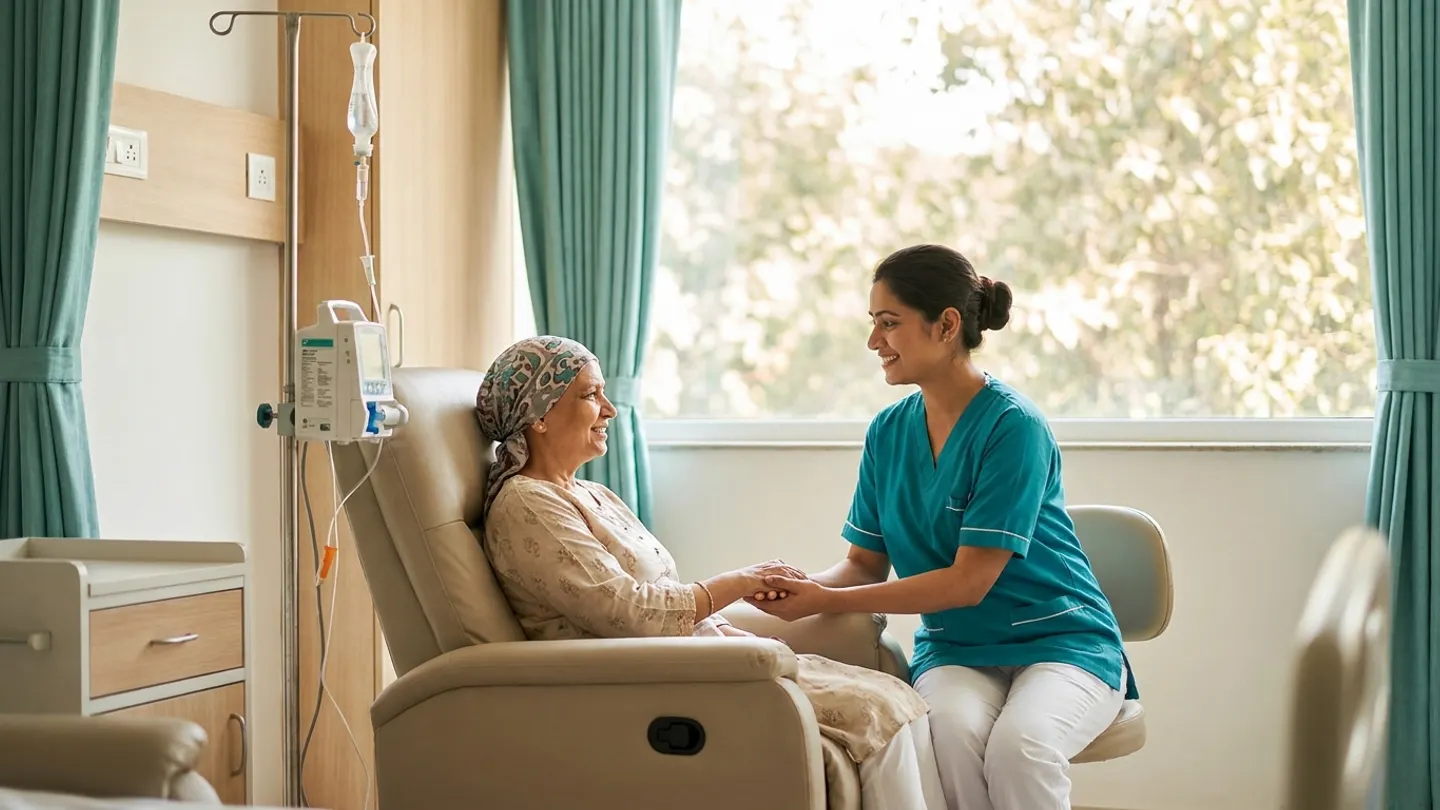
When your oncologist mentions CAR-T cell therapy, two feelings arrive at the same moment: a real flicker of hope, and an immediate dread about what it costs. In the United States, the infusion alone can run to $400,000 before hospital fees even begin. For most families, that number does not just cause stress — it closes doors entirely.
The good news is that those doors are not all closed. India has developed a credible, accredited CAR-T programme that now serves international patients at a fraction of the cost seen in the West, without compromising on the science or the safety standards.
What Is CAR-T Cell Therapy and Who Needs It?
CAR-T cell therapy stands for chimeric antigen receptor T-cell therapy. In straightforward terms: doctors collect your own immune cells (T-cells), send them to a specialised laboratory where they are genetically reprogrammed to recognise your specific cancer cells, then infuse them back into your body. Your own immune system becomes the treatment.
The results in appropriate patients have been remarkable — complete remissions in people who had exhausted every other line of therapy. That is why, despite the complexity and the cost, this treatment is pursued so urgently by families around the world.
It is currently used primarily for certain blood cancers: relapsed or refractory B-cell lymphomas, acute lymphoblastic leukaemia (ALL), and multiple myeloma. For patients at this stage of their journey, knowing there is an affordable path to this therapy is not a small thing.
CAR-T Cell Therapy Cost in India: The Key Number
CAR-T cell therapy cost in India typically ranges from approximately $42,000 to $65,000 (around Rs 35 to 55 lakh) in 2026. This figure covers the cell-manufacturing process, the conditioning chemotherapy given before infusion, the infusion itself, and the mandatory hospital monitoring period that follows. Compare that with the numbers in the table below and the scale of the savings becomes immediately clear.
These are indicative ranges based on 2026 market data. Your final quote will depend on the specific CAR-T product used, the treating centre, and your disease profile.
CAR-T Cell Therapy Cost: India vs USA, UK, Australia and UAE
| Country | Indicative Total Cost (USD) | Key Context |
|---|---|---|
| United States | $400,000 – $550,000 | Facility and physician fees additional; insurance coverage often incomplete |
| United Kingdom | $350,000 – $450,000 | NHS access heavily restricted; private rates apply to most international patients |
| Australia | $300,000 – $400,000 | Long waiting lists for subsidised access; private cost for overseas patients |
| UAE | $180,000 – $280,000 | Growing capability; newer programmes |
| India | $42,000 – $65,000 | JCI/NABH-accredited centres; both domestic and imported products available |
“We had been told the therapy would cost close to half a million dollars in the US. When we received the written quote from India, I cried — not from sadness, but because we suddenly had options again.” This is the feeling IndoMedTour hears from families repeatedly, and it is what motivates every part of what we do.
What Makes CAR-T Cell Therapy More Affordable in India?
This is a legitimate question, and it deserves a straightforward answer. The savings are structural, not cosmetic.
Cell Manufacturing Costs
The most expensive component of CAR-T therapy anywhere in the world is the manufacturing process: collecting your T-cells (leukapheresis), engineering them in a certified laboratory, quality-testing the batch, and returning them ready for infusion. India has invested significantly in domestic CAR-T biotech. Several Indian companies have now received CDSCO (Central Drugs Standard Control Organisation) approval for locally developed CAR-T products. These domestically manufactured therapies eliminate the cost of importing from US or European manufacturers, which drives down the single largest line item in the budget.
Hospital and Medical Professional Fees
India’s healthcare cost structure is genuinely different from the West’s. Haematologists, oncologists, and bone marrow transplant specialists in India are as highly trained as their counterparts abroad — many completed fellowships at international centres — but their fee structures reflect Indian cost-of-living norms, not US billing rates. Facility costs, ICU charges, pharmacy margins, and nursing fees all follow the same pattern.
No Insurance Administration Overhead
A substantial share of US hospital costs covers the administrative burden of navigating insurer networks, prior authorisations, and billing disputes. Indian private hospitals treating international patients work on direct billing, which removes that overhead entirely and keeps the actual cost of care clearly visible from the outset.
Which Cancers Are Treated with CAR-T Therapy in India?
India’s established CAR-T programmes currently focus on:
- Diffuse large B-cell lymphoma (DLBCL) and other relapsed or refractory B-cell non-Hodgkin lymphomas
- Acute lymphoblastic leukaemia (ALL) in both adults and children, including relapsed cases post-transplant
- Multiple myeloma after two or more prior lines of therapy
- Mantle cell lymphoma in eligible patients
A growing number of centres are running clinical trials for solid tumours, including certain lung and gastrointestinal cancers. If your diagnosis is not on this list, it is still worth asking — eligibility criteria are expanding. Our cancer and oncology treatment page has current information, or contact us directly for a case-specific assessment.
Quality and Safety: What Accreditation Actually Means
India’s leading oncology hospitals hold JCI (Joint Commission International) or NABH (National Accreditation Board for Hospitals) accreditation. These are the same international quality benchmarks applied to hospitals in the United States, Europe, and the Gulf. They govern infection control, pharmacovigilance, patient safety protocols, adverse-event reporting, and post-treatment monitoring standards.
CAR-T therapy carries genuine risks that patients and families need to understand honestly. Cytokine release syndrome (CRS) and immune effector cell-associated neurotoxicity syndrome (ICANS) are the two most clinically significant post-infusion complications. The accredited centres in India that offer this therapy have dedicated ICUs staffed by nursing teams trained specifically in CRS recognition and management, with on-call haematology, critical care, and neurology support available around the clock. The risks are real and are taken seriously. The monitoring protocols at India’s top centres are rigorous precisely because these teams understand what is at stake.
You can explore our partner hospitals to review the accreditation status and oncology track records of the centres we work with.
What to Expect: The CAR-T Treatment Journey in India
Here is what the process typically looks like from first contact to returning home:
- Eligibility review: Your records — diagnosis, prior treatment history, recent scans, bone marrow biopsy reports — are reviewed by the oncology team before any travel commitment is made
- Leukapheresis: T-cells are collected from your blood in a procedure similar to dialysis; typically a short hospital stay or outpatient visit
- Manufacturing period: Cells are sent to the laboratory for engineering and quality testing; this takes approximately 3 to 6 weeks depending on the product and centre
- Conditioning chemotherapy: A brief course of low-dose chemotherapy to prepare your immune system in the days before infusion
- CAR-T infusion: A single infusion session, usually completed in under an hour
- Monitoring period: Typically 2 to 4 weeks of in-hospital monitoring for CRS and ICANS
- Recovery and discharge planning: Outpatient follow-up appointments before your travel clearance is confirmed, with a written summary for your home oncologist
Total time in India is typically 6 to 10 weeks from leukapheresis to discharge, though individual circumstances vary. See how it works for a complete overview of how we manage logistics for international patients.
Questions to Ask Before You Commit
Before choosing any centre for CAR-T therapy, it is worth working through these:
- Has your oncologist formally confirmed you are eligible based on your diagnosis, prior therapies, and current performance status?
- Have you received a written, itemised quote that separates manufacturing costs, conditioning chemotherapy, hospital stay, and monitoring fees?
- Do you have a clear plan for follow-up with your home oncologist after you return, including what monitoring schedule is recommended post-infusion?
IndoMedTour helps with all three. Our free counselling call connects you with a coordinator who has specific oncology experience, and we collect itemised written quotes from multiple accredited centres so you can compare options with full transparency. Our treatments and costs guide is a useful starting point if you want to understand the financial picture before you call.
How IndoMedTour Helps
When you reach out, we begin with a free call to understand your diagnosis, your current treatment history, and the questions keeping you up at night. We then match you with JCI or NABH-accredited hospitals that have active, experienced CAR-T programmes suited to your specific cancer type, and we gather written, itemised quotes so every number is clear before you book a flight. Our team supports your visa application and travel arrangements, and a dedicated coordinator stays beside you throughout every stage in India — from leukapheresis through to discharge. You bring the worry. We bring the plan.
All costs shown are indicative 2026 ranges and are subject to change based on the specific CAR-T product, treating centre, disease profile, and length of hospital stay. IndoMedTour does not guarantee specific medical outcomes. Always consult your treating oncologist regarding eligibility and risks.