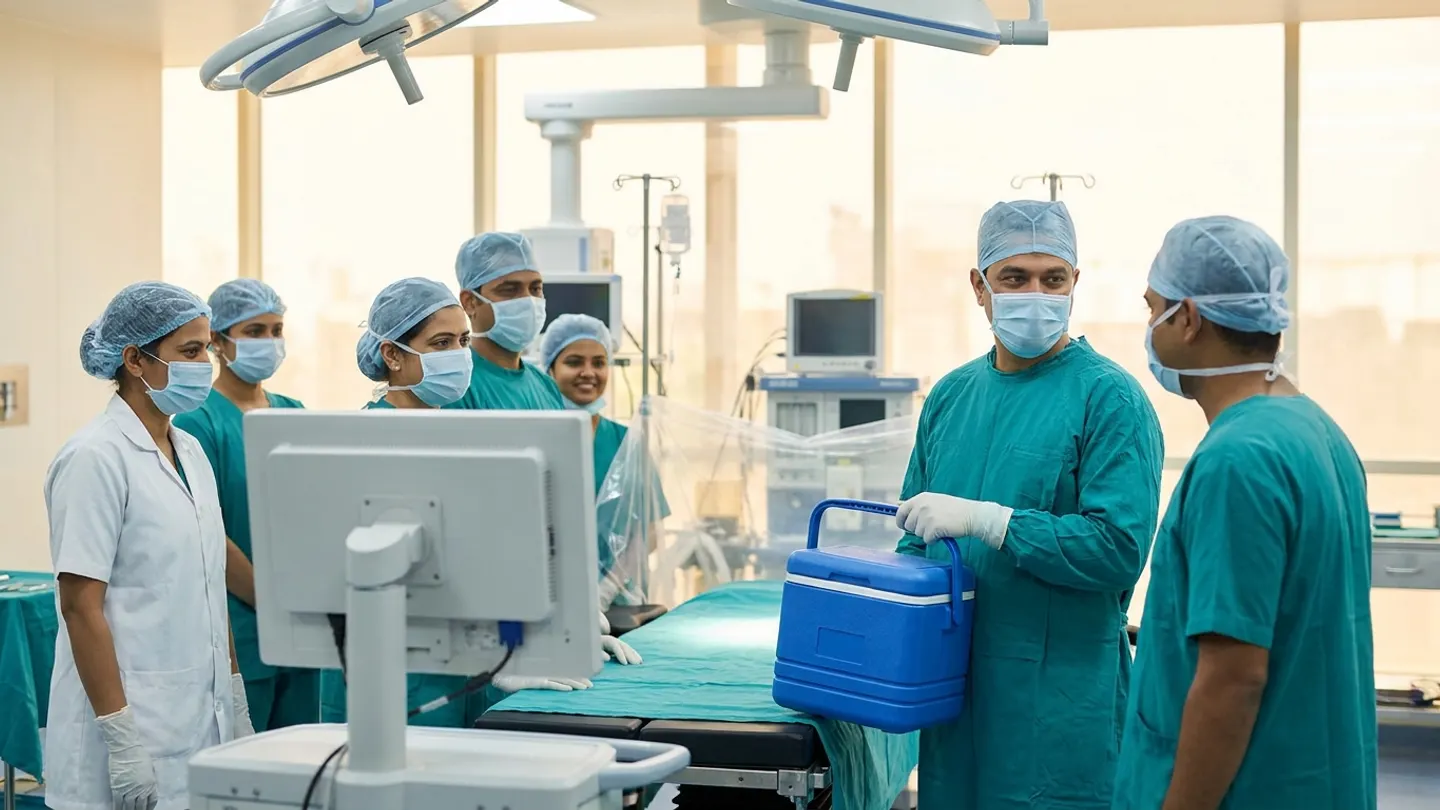
Planning a kidney transplant abroad is one of the most significant decisions you will ever face. Alongside questions about surgeons and quality of care, there is one deeply practical worry that almost every family raises: “How many weeks do I actually need to block out, and what does that mean for my job, my family, and my budget?”
How Long to Stay in India After a Kidney Transplant
How long to stay in India after a kidney transplant is typically 6 to 8 weeks in total. The surgery itself takes approximately 3 to 4 hours, followed by 10 to 14 days in the hospital. After discharge, you remain in India as an outpatient for another 4 to 6 weeks while your transplant team monitors organ acceptance, adjusts immunosuppressant doses, and confirms your blood markers are stable before clearing you to fly home safely.
This window is not a formality. International aviation guidelines advise against flying after major abdominal surgery until creatinine is stable, immunosuppression is calibrated, and there is no evidence of acute rejection. Your nephrologist will not release you until every key marker is within the safe range.
Why the Recovery Timeline Cannot Be Rushed
Kidneys are immunologically complex organs. Your body’s first instinct after transplant is to recognise the new organ as foreign and mount an attack. The first four weeks carry the highest risk of acute rejection episodes. Daily and then bi-weekly blood draws let the transplant team catch any early warning signs and adjust medication within hours rather than days.
Rushing home too soon creates serious risks:
- You lose daily access to the transplant team that knows your exact case history and lab baseline
- There is no fast-track emergency pathway if rejection begins on a long-haul flight or at a foreign airport
- Medication titration — the gradual calibration of drugs like tacrolimus and mycophenolate — takes 4 to 6 weeks and cannot safely be managed remotely from the start
“The kidney does not know it has landed in a new home yet. The first six weeks are the courtship period. We need to be close enough to intervene if the relationship gets complicated.” — Senior transplant nephrologist, India
Week-by-Week Recovery Timeline
Here is a realistic outline of how the stay typically unfolds for an international patient at an accredited Indian transplant centre.
Weeks 1 and 2: Hospital Stay
You will be in a high-dependency transplant ward. The surgical team checks wound healing, urine output (which often begins within hours for live-donor transplants), and runs daily labs. Dialysis may still be needed briefly if the new kidney is slow to function. Visiting hours are limited and hygiene protocols are strict to protect your compromised immune system.
Weeks 3 and 4: Early Outpatient Phase
After discharge, you move to a serviced apartment or patient guest house near the hospital. You return to the outpatient clinic every two to three days. Creatinine should be trending toward a normal range. Medication doses are adjusted based on blood levels. Most patients feel fatigued but are walking short distances and eating normally by the end of week four.
Weeks 5 and 6: Stabilisation and Pre-Flight Clearance
Clinic visits reduce to once or twice a week. Blood pressure and creatinine levels should be holding steady. Your transplant surgeon conducts a final review, writes a detailed medical summary for your home nephrologist, and provides written clearance to fly. Travel insurance covering organ transplant complications is strongly advised for the journey home.
After You Return Home
You will need close follow-up with a nephrologist at home for at least 12 months. Immunosuppressant medications are life-long. Before you leave India, your team will provide a full medication list, a lab-frequency schedule, and a written protocol for what to do if rejection symptoms — fever, pain over the kidney, reduced urine output — appear.
Kidney Transplant Cost in India vs. Other Countries
One of the most compelling reasons patients choose India is cost. The total price, covering surgery, the hospital stay, anaesthesia, medications during admission, and outpatient follow-up through week six, is dramatically lower than in Western countries and the Gulf — without any compromise on outcomes at JCI or NABH accredited centres.
| Country | Approximate Total Cost (USD) | Average Wait for a Cadaver Donor |
|---|---|---|
| India | $13,000 – $22,000 | Live donor: 2-4 weeks pre-op prep; cadaver: variable |
| United States | $150,000 – $300,000 | 3 to 5 years (UNOS waitlist) |
| United Kingdom | $38,000 – $100,000 (private) | 2 to 3 years (NHS waitlist) |
| Australia | $65,000 – $130,000 | 4 or more years |
| UAE | $40,000 – $70,000 | Limited cadaver programme |
All figures are indicative 2026 ranges and vary by hospital, donor type, and individual patient complexity. Always request a written quote for your specific case.
For many patients from the US, UK, or Australia, even after adding return flights, six to eight weeks of accommodation for a patient and companion, and local transport, the total out-of-pocket spend in India remains well below the cost of the transplant procedure alone at home. See our treatments and costs page for a detailed breakdown, and visit our organ transplant treatment page for clinical information on the procedure itself.
Factors That Can Extend Your Stay
Not every transplant follows the 6-to-8-week path, and you should budget emotionally and financially for a longer stay if needed.
You may need to stay 10 to 12 weeks if:
- You experience an acute rejection episode requiring high-dose steroid pulse therapy
- Post-operative infection slows wound healing
- The transplanted kidney takes longer than expected to reach full function, a condition called delayed graft function
- Your immunosuppressant drug levels take additional weeks to stabilise safely
This is not a failure. It is the transplant team protecting your new kidney. Extending your stay by two or three weeks in India is almost always cheaper and safer than flying home prematurely and managing a complication from thousands of kilometres away.
Practical Tips for Planning Your Stay
Choose an Accredited Hospital First
Look specifically for hospitals with JCI or NABH accreditation and a dedicated international patient department. These centres follow standardised transplant protocols, employ English-speaking coordinators, and produce the detailed discharge summaries your home nephrologist will require.
Bring a Companion
The physical and emotional demands of the first weeks after transplant are real. Most patients travel with a spouse, sibling, or adult child. Plan to arrange a serviced apartment near the hospital — your IndoMedTour coordinator handles this — from approximately USD 30 to 60 per night.
Carry Enough Medication to Get Home
Immunosuppressants like tacrolimus, mycophenolate mofetil, and prednisolone must be available in your home country without a gap. Your transplant team in India can prescribe a 90-day supply to carry home, and your coordinator can help communicate your prescription to a pharmacist in advance.
Keep Digital Copies of Everything
Photograph every lab result, medication chart, discharge summary, and medical clearance letter. Upload them to cloud storage immediately. Your home nephrologist and your health insurer will request all of it, sometimes urgently.
Read our how it works guide for a full picture of the end-to-end planning process, and visit our success stories to hear from patients who have made this journey and come home well.
How IndoMedTour Helps
From your very first free counselling call to the day you board your flight home, IndoMedTour manages every logistical layer so that you can focus entirely on healing. We match you with JCI or NABH-accredited transplant centres suited to your case, obtain written cost quotes before you commit to anything, and handle your visa invitation letters, airport transfers, and accommodation near the hospital. You will have a dedicated coordinator present through surgery, through the difficult first days in the transplant ward, and through every outpatient visit until your team clears you to fly. You bring the worry. We bring the plan.