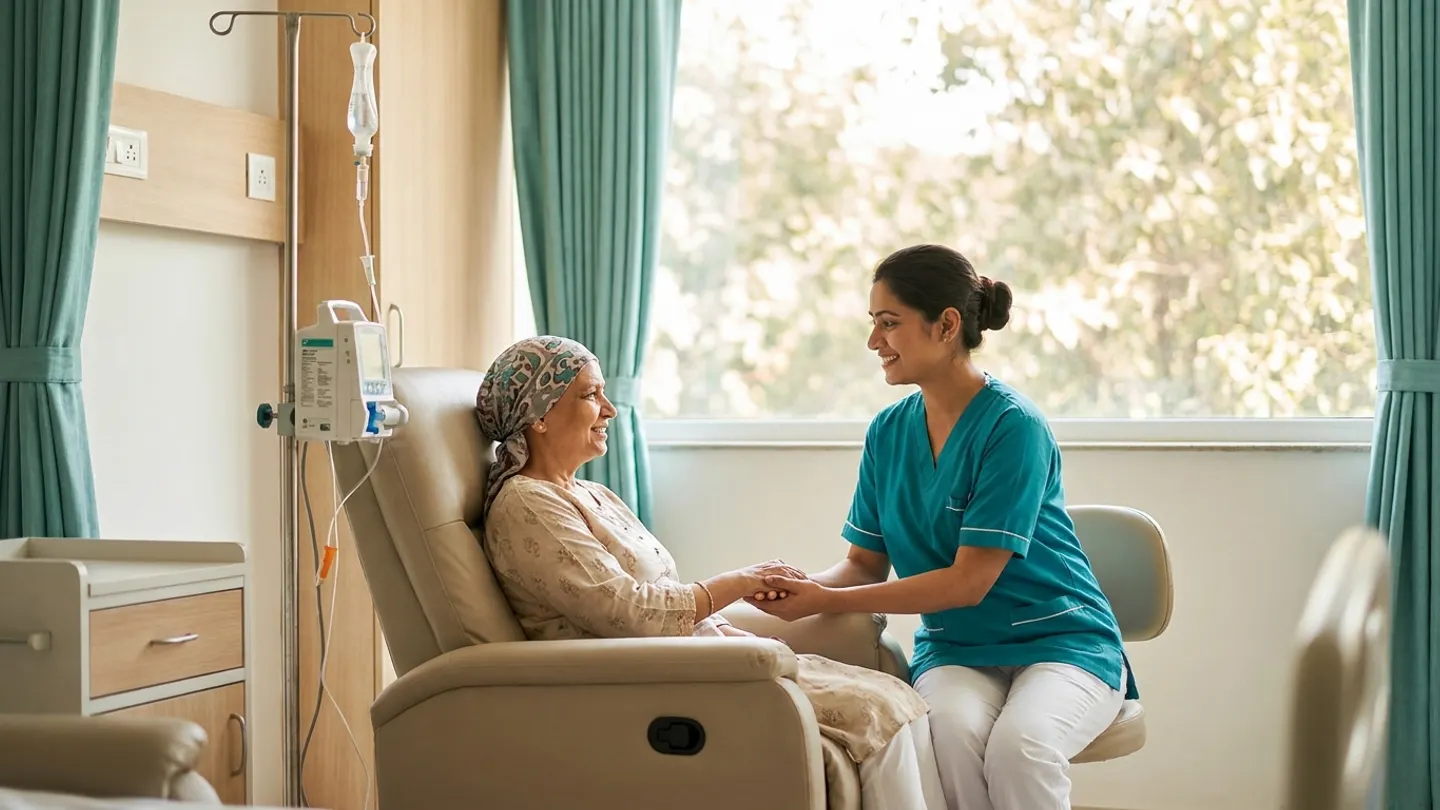
Getting an immunotherapy recommendation can feel like the ground has shifted beneath you. The diagnosis is frightening enough, and then you see the price tag in your home country and wonder whether treatment is even within reach. You are not alone in that fear, and you are not out of options.
What Does Immunotherapy Cost in India? (2026 Estimates)
Immunotherapy cost in India typically ranges from approximately $1,500 to $4,500 per session (roughly ₹1.25 lakh to ₹3.75 lakh), depending on the drug used, the cancer type, and the hospital. A complete treatment course — which can run 6 to 24 sessions spaced two to four weeks apart — usually totals between $15,000 and $60,000, compared with $150,000 to $500,000 or more for similar protocols in the United States or United Kingdom. The savings are not the result of cutting corners; they reflect fundamentally different drug-pricing structures, hospital overheads, and domestic manufacturing costs.
Why Is There Such a Wide Price Range?
The cost of immunotherapy is driven by several key variables:
- The drug itself — Checkpoint inhibitors (PD-1, PD-L1, CTLA-4 blockers), CAR-T cell therapy, and monoclonal antibodies vary enormously in price. CAR-T therapy is the most expensive; checkpoint inhibitors used for lung cancer, melanoma, and kidney cancer are more accessible.
- Number of cycles — Most regimens run every two to six weeks for several months, sometimes longer for maintenance therapy.
- Cancer type and stage — Some cancers respond well after fewer sessions; others require extended treatment.
- Hospital tier — A top-tier JCI-accredited cancer centre in a major metro city charges more than a NABH-accredited regional hospital, though both meet internationally audited quality standards.
- Combination protocols — Immunotherapy is often combined with chemotherapy or targeted therapy, which adds to the overall cost.
India vs. Other Countries: Immunotherapy Cost Comparison
| Country | Per Session (approx.) | Full Course (6–12 sessions) |
|---|---|---|
| India | $1,500 – $4,500 | $15,000 – $55,000 |
| USA | $15,000 – $30,000 | $150,000 – $350,000 |
| UK | $12,000 – $25,000 | $120,000 – $280,000 |
| Australia | $10,000 – $20,000 | $100,000 – $240,000 |
| UAE | $8,000 – $18,000 | $80,000 – $200,000 |
| Thailand | $5,000 – $10,000 | $50,000 – $120,000 |
All figures are indicative 2026 ranges and will vary by drug, protocol, and facility. They are not guaranteed quotes. Contact us for a written estimate tailored to your diagnosis.
You can also explore our full treatments and costs breakdown for a broader view of oncology pricing in India.
What Types of Immunotherapy Are Available in India?
India’s leading cancer centres offer the full spectrum of modern immunotherapy. For a detailed look at our oncology capabilities, visit our cancer treatment page.
Checkpoint Inhibitors (PD-1, PD-L1, and CTLA-4 Blockers)
These are the most widely used immunotherapy drugs globally, approved for lung cancer, melanoma, kidney cancer, bladder cancer, head and neck cancers, and several others. In India, both branded and biosimilar versions are licensed domestically, which significantly reduces cost without compromising clinical efficacy.
Monoclonal Antibodies
HER2-targeted therapy for breast cancer, rituximab for lymphoma, and bevacizumab for colorectal and other cancers are all accessible at accredited Indian hospitals, often with biosimilar alternatives that reduce the per-cycle cost further.
CAR-T Cell Therapy
India now has domestically developed CAR-T therapy approved by the Central Drugs Standard Control Organisation, making it one of the most affordable markets globally for this otherwise extreme-cost treatment. Indicative cost: approximately $30,000 to $60,000 for a single infusion, versus $400,000 to $500,000 or more in the United States. This single difference can be life-changing for families who assumed CAR-T was simply out of reach.
Emerging Cellular Therapies
Select advanced oncology centres are offering tumour-infiltrating lymphocyte (TIL) therapy and other emerging approaches in clinical or early commercial settings. IndoMedTour can identify which hospitals have active programmes relevant to your specific diagnosis.
Is Immunotherapy in India Safe? The Quality Question
“A lower price does not mean a lower standard. India’s top cancer hospitals are accredited by the Joint Commission International (JCI) and the National Accreditation Board for Hospitals (NABH) — the same global benchmarks used to audit hospitals in the US, Singapore, and Germany.”
JCI and NABH accreditation requires hospitals to demonstrate rigorous compliance with protocols covering patient safety, infection control, drug storage, clinical documentation, and adverse-event management. When you choose an accredited centre, you are choosing internationally audited care at Indian prices.
Many oncologists at India’s premier cancer hospitals trained in the UK, USA, or Europe and participate in global clinical trials. Treatment protocols follow NCCN (National Comprehensive Cancer Network) or ESMO (European Society for Medical Oncology) guidelines — the same evidence base used by your oncologist at home. Explore our hospitals to see the accredited partners IndoMedTour works with.
What Is Included in the Cost? A Pre-Quote Checklist
Before you compare figures from different hospitals, make sure each quote covers the same scope. Ask your coordinator to confirm whether the estimate includes:
- Pre-treatment workup: PET-CT scan, biopsy, biomarker and PDL1 testing, complete blood panels
- Cost per immunotherapy infusion (drug cost plus administration and nursing fees)
- Day-care or inpatient admission charges for each cycle
- Oncologist consultation fees at initial assessment and follow-up visits
- Supportive medications to manage side effects (anti-nausea drugs, steroids, growth factors)
- Repeat imaging to assess tumour response, typically every two to three cycles
- Any combination therapies, such as concurrent chemotherapy or targeted agents
IndoMedTour provides written, itemised cost estimates for each of these components before you book travel, so there are no surprises when the bill arrives.
How Many Sessions Will I Need?
This depends entirely on your cancer type, stage, biomarker profile, and how your body responds to treatment. Some broad patterns oncologists observe:
- Lung cancer (PD-L1 positive): typically every three to four weeks, often for 12 to 24 months or until disease progression
- Melanoma (combination PD-1 plus CTLA-4): usually four induction doses followed by maintenance therapy
- Hodgkin’s lymphoma (PD-1 therapy): often 6 to 12 cycles depending on response
- Bladder or kidney cancer: variable; frequently 12 or more cycles for sustained control
Your oncologist will define a protocol after reviewing your pathology slides and imaging. A typical initial commitment is three to six cycles, after which response scans determine whether treatment continues, escalates, or changes direction.
Planning Your Medical Trip: Practical Considerations
Travelling abroad for cancer treatment requires more planning than most elective procedures. Here is what most international patients arrange:
- Initial trip: two to three weeks for comprehensive workup, biomarker testing, tumour board review, and first infusion
- Subsequent cycles: many patients return every three to six weeks; others choose to stay in India for the first two to three months of active treatment
- Accommodation: serviced apartments near major cancer centres in Mumbai, Chennai, Delhi, Hyderabad, and Bengaluru typically cost ₹40,000 to ₹90,000 per month, a fraction of hotel rates
- Visa: India’s e-Medical Visa covers treatment stays, and extensions are routine with a hospital letter
- Companion: one family member can travel on a medical attendant visa
Read more about how it works so you know exactly what to expect before your first appointment.
A Second Opinion Before You Commit
Many patients travelling to India for immunotherapy start with a telemedicine second opinion before booking flights. An Indian oncologist reviews your pathology reports, scan images, and current treatment history and provides a written recommendation within five to seven days. This step often confirms the right drug choice, clarifies whether immunotherapy alone or a combination protocol is appropriate, and gives you the confidence to move forward — or to pursue a different path if the evidence points elsewhere.
How IndoMedTour Helps
Start with a free counselling call — our oncology care advisors listen to your diagnosis, your questions, and your financial situation, with zero pressure to commit. We then match you with two or three JCI or NABH-accredited hospitals whose oncology departments specialise in your cancer type, obtain written itemised cost breakdowns, and connect you with a dedicated patient coordinator who stays beside you from your first consultation through your final cycle and follow-up scans. Visa invitation letters, airport transfers, accommodation near your hospital, and real-time communication with your care team at home — we handle it all, so you can focus entirely on getting well.
You bring the worry. We bring the plan.