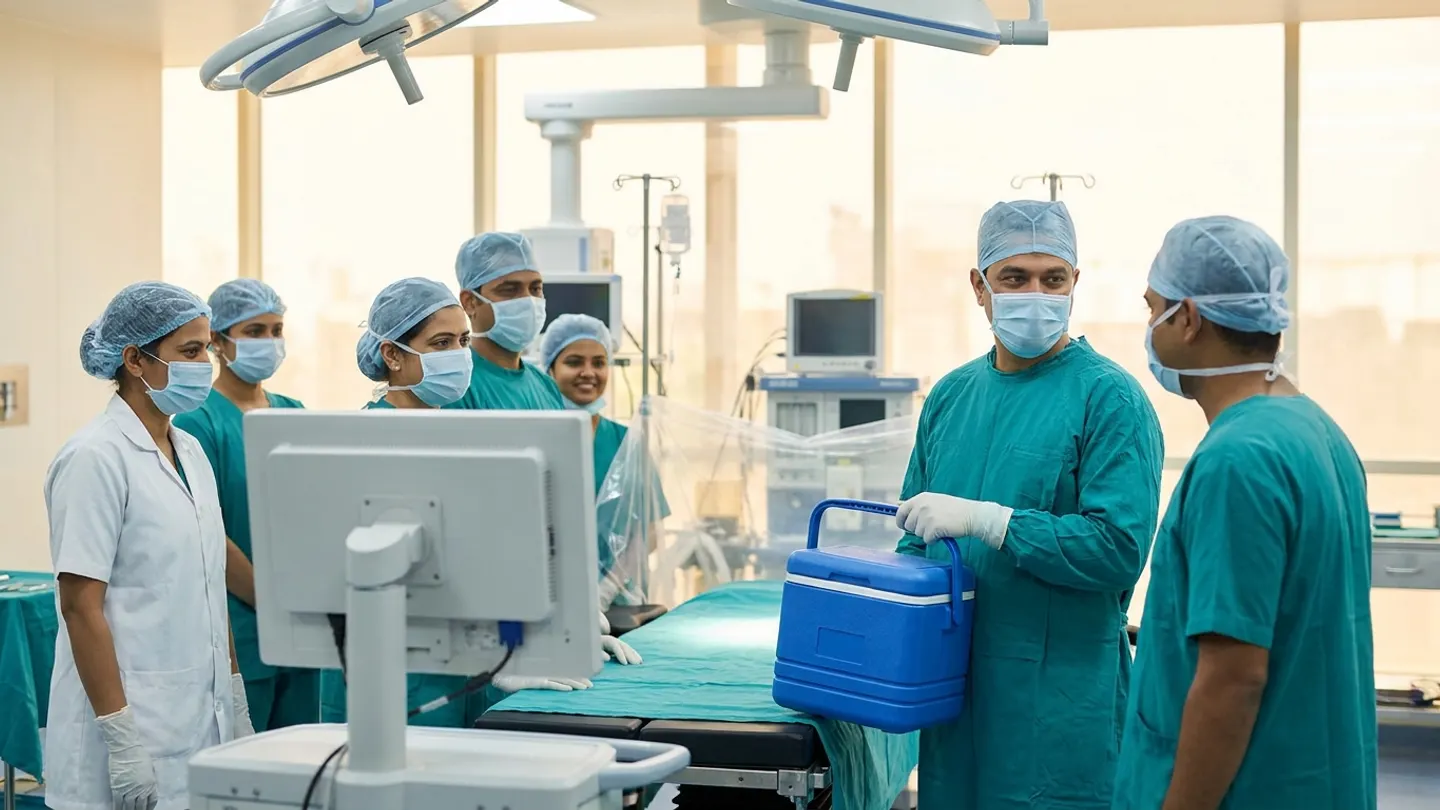
You have just been told your kidneys are failing. The waiting list at home is measured in years, not months, and the cost estimate the hospital handed you looks like a mortgage. You deserve a straight answer — not a brochure — so here it is.
Is Kidney Transplant Safe in India? The Direct Answer
Kidney transplant in India is safe when performed at a JCI- or NABH-accredited hospital. Leading Indian transplant programmes report one-year graft survival rates of 90–95%, placing them firmly alongside the best centres in the United States and United Kingdom. India now ranks among the top three countries globally for organ transplant volume, which means its surgeons and transplant teams bring a level of accumulated experience that is genuinely hard to match elsewhere.
This is not marketing. It is the consistent picture that emerges from peer-reviewed studies on Indian transplant outcomes, from international accreditation assessments, and from thousands of patients who have made this journey and gone home with functioning kidneys.
What Makes India’s Transplant Centres World-Class
Accreditation You Can Verify Yourself
The single most important question to ask about any hospital — in any country — is whether it holds an internationally recognised quality credential. Joint Commission International (JCI) accreditation is the global gold standard; it is the same certification that hospitals in the United States seek. Dozens of Indian hospitals hold JCI status. The National Accreditation Board for Hospitals (NABH) is India’s own rigorous equivalent. Every hospital IndoMedTour partners with holds one or both credentials, and you can verify this yourself on the JCI website before you book a single flight.
Accreditation is not a rubber stamp. It requires audits of infection-control protocols, surgical safety checklists, nursing ratios, pharmacy standards, and patient-rights policies. It is renewed only when the hospital continues to meet those standards.
Surgeons Who Operate at Very High Volume
Transplant outcomes correlate closely with surgical volume. A kidney transplant specialist at a top-tier Indian hospital may perform 150–250 procedures per year. Compare that with a mid-size Western hospital where the same surgeon might do 40–60. Many of India’s leading transplant physicians trained at institutions in the US, UK, or Germany and returned home with those skills. The combination of Western training and exceptional Indian caseload produces surgeons who are, in many respects, among the most experienced in the world.
Kidney Transplant Success Rates in India
“Graft survival rates at NABH-accredited Indian transplant centres are consistently reported at 90–95% at one year and 85–90% at five years — figures that place them firmly in the international top tier.”
These figures apply primarily to living-donor transplants, which make up the majority of procedures in India. Living-donor kidneys outperform deceased-donor kidneys everywhere in the world, and India’s legal framework actively encourages living related donation (see below).
Patient survival — meaning the patient, not just the kidney, is alive — is typically above 97% at one year in accredited centres. Your individual picture will depend on age, comorbidities, pre-existing infections, and how closely the donor kidney is matched. The transplant team will walk you through a personalised risk discussion during the evaluation phase.
How Much Does a Kidney Transplant Cost in India?
Cost is often the single biggest reason patients begin looking at India. The table below uses indicative 2026 price ranges. India figures cover surgery, the inpatient hospital stay, immunosuppressant medication for approximately three months, and standard follow-up consultations.
| Country | Approximate Total Cost (USD) |
|---|---|
| United States | $150,000 – $300,000+ |
| United Kingdom (private) | $60,000 – $110,000 |
| Australia (private) | $55,000 – $90,000 |
| UAE / Gulf (private) | $40,000 – $70,000 |
| India (accredited hospital) | $13,000 – $22,000 |
These are indicative figures. Your personalised written quote from IndoMedTour will reflect your specific diagnosis, preferred hospital tier, and expected length of stay. Even at the upper end of the Indian range, patients routinely save more than 80% compared with US private-pay costs.
For a broader overview of organ transplant pricing, visit our dedicated organ transplant page or explore the full treatments and costs guide.
What the Kidney Transplant Process Looks Like for International Patients
Before You Arrive: Pre-Transplant Evaluation
Once you share your recent medical records with IndoMedTour, a transplant coordinator reviews them and connects you with shortlisted hospitals. The transplant team will then:
- Review dialysis history, blood group, and tissue-typing results
- Request any additional investigations (many can be completed in your home country)
- Conduct a thorough independent evaluation of your living donor, if one is accompanying you
- Issue a formal written cost estimate and treatment plan
Most patients arrive in India for a pre-transplant workup lasting 5–10 days before the surgery date is confirmed.
Surgery and Hospital Stay
The kidney transplant itself takes approximately 3–4 hours under general anaesthesia. The donor kidney is placed in the lower abdomen; in most cases, your original kidneys are left in place unless they are causing active complications such as recurrent infections or uncontrolled blood pressure.
Plan on an inpatient stay of 10–14 days. During this time the team monitors kidney function closely, adjusts immunosuppressant doses, and manages any early complications before they become serious. You will typically remain in India for 4–6 weeks in total to complete the critical early follow-up window before it is safe to fly home.
Recovery and Ongoing Follow-Up
Before discharge, the hospital provides a detailed medication plan. Your IndoMedTour coordinator arranges scheduled telemedicine check-ins with the transplant team after your return home, coordinates a formal handover letter to your local nephrologist, and advises on importing immunosuppressant medications where needed.
Who Can Be a Kidney Donor in India?
India’s Transplantation of Human Organs and Tissues Act (THOTA) is both strict and clear. A living donor must be:
- A near blood relative (parents, siblings, children, grandparents) or a spouse
- Independently evaluated and found to be in good health, with no coercion
- Voluntarily consenting, with no financial transaction of any kind involved
An Authorisation Committee — which includes members independent of the treating hospital — reviews every living-donor case specifically to prevent organ trafficking. There is no legal pathway in India for an unrelated paid donor. Patients arriving without a donor can be placed on the deceased-donor registry, though waiting times on that list are long and difficult to predict.
Honest Risks You Should Understand
A genuinely useful review has to name the real risks, not bury them:
- Rejection: The immune system may attack the transplanted kidney. Lifelong immunosuppressant medication dramatically reduces this risk but must never be stopped without medical advice.
- Infection: Immunosuppressants lower resistance to bacterial and viral infections. The first six months post-transplant are the most vulnerable period.
- Travel after surgery: Returning home by air adds logistical complexity. IndoMedTour builds adequate India recovery time into every itinerary specifically to address this.
- Long-distance follow-up: Your home nephrologist must be willing to co-manage your care. Preparing that handover before you leave India is essential, and your coordinator helps you do it.
- Hospital quality variation: Not all hospitals in India operate at the same standard. Working with a facilitator that vets facilities against JCI and NABH criteria is the single most effective protective step you can take.
None of these risks are unique to India. Every transplant programme in the world carries them. The difference is knowing your hospital has the infrastructure to manage complications if they arise — 24-hour nephrology cover, on-site biopsy capability, and an intensive care unit staffed by transplant-experienced clinicians. That is the standard IndoMedTour requires of every partner hospital.
Read verified success stories from patients who have been through the process, and see our hospitals for accreditation details on every centre we work with.
How IndoMedTour Helps
Start with a free counselling call where a medical coordinator listens to your situation, reviews your records, and explains your realistic options — with no pressure to proceed. We then match you with two or three JCI- or NABH-accredited hospitals suited to your specific case, obtain written itemised quotes, and guide you through visa paperwork, companion accommodation, and airport logistics. One dedicated coordinator stays beside you from the moment you land until you board the flight home, and remains available by video call throughout your recovery. You bring the worry. We bring the plan.