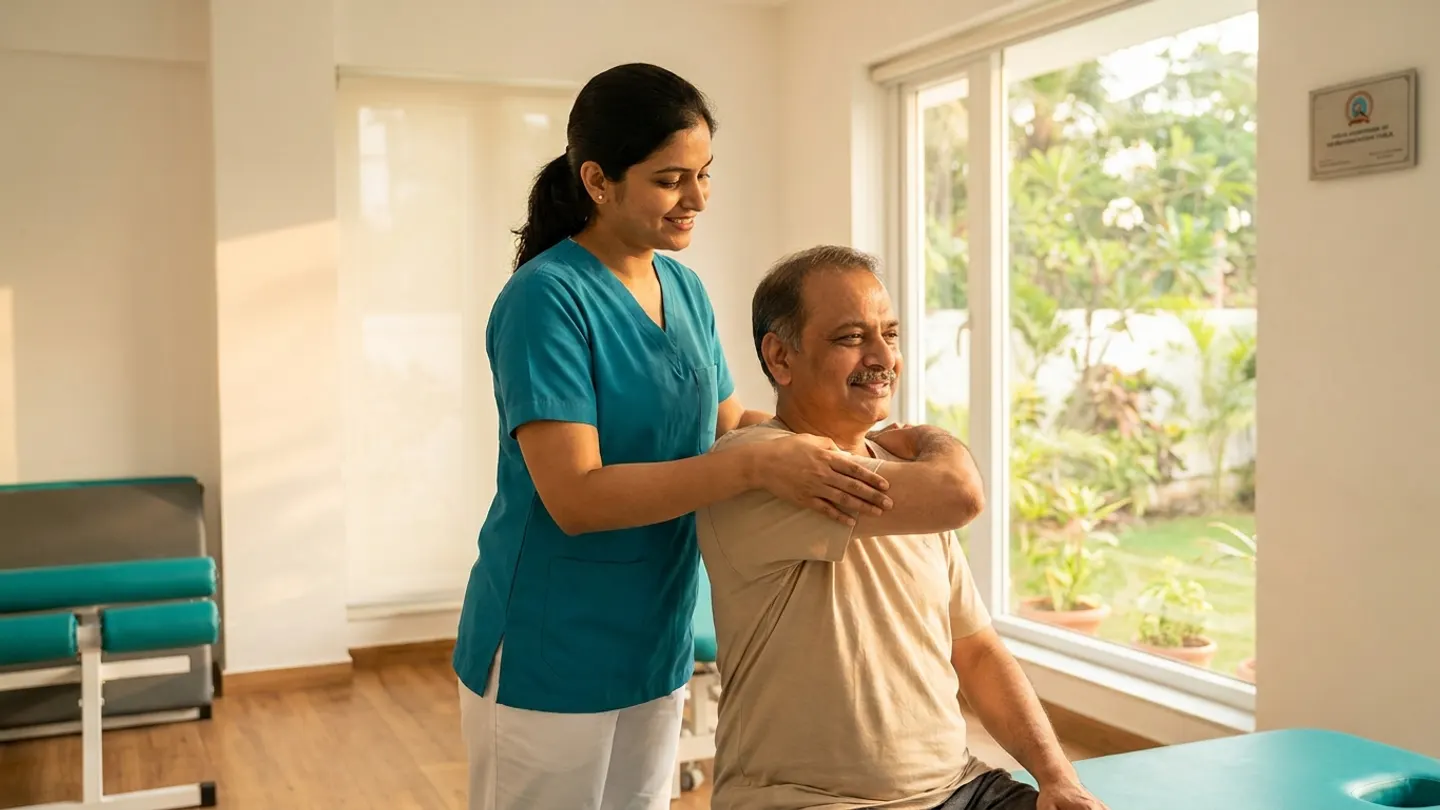
Living with a damaged shoulder is exhausting. The sleepless nights, the simple tasks that suddenly become impossible, the growing fear that the pain will never stop — if that sounds familiar, you are not alone. If you have been quoted a five- or six-figure sum at home, or told to join a waiting list that stretches well into next year, it makes complete sense to ask whether shoulder replacement surgery in India is truly a safe option.
Is Shoulder Replacement Surgery Safe in India? The Direct Answer
Shoulder replacement surgery is safe in India when performed at a JCI or NABH-accredited hospital by a qualified orthopedic specialist. India’s leading joint-replacement centres use the same implant systems, the same anesthesia protocols, and the same infection-control standards as top hospitals in the United States, United Kingdom, or Australia. The country performs tens of thousands of joint replacements every year, and outcomes data from accredited centres compare favourably with published Western benchmarks.
The key word is “accredited.” Not every hospital in India meets international standards, which is exactly why hospital selection matters — and why working with a specialist facilitator like IndoMedTour removes that guesswork entirely.
What Makes a Shoulder Replacement ‘Safe’ Anywhere in the World?
Safety in any joint-replacement programme comes down to a handful of measurable factors. Here is what to look for — and what India’s best centres consistently deliver.
Surgical Volume and Specialist Experience
High-volume surgeons have lower complication rates. This is one of the most consistent findings in orthopedic research worldwide. India’s major orthopedic hubs, particularly in cities like Mumbai, Chennai, Delhi, Hyderabad, and Bengaluru, house surgeons who perform hundreds of shoulder arthroplasties per year. Many have completed additional fellowship training at programmes in the US, UK, or Germany. That experience does not diminish when they return home — it travels with them.
Accreditation: JCI and NABH
- JCI (Joint Commission International) is the gold standard for international hospital accreditation, recognised by insurers and health ministries worldwide.
- NABH (National Accreditation Board for Hospitals) is India’s equivalent national standard, aligned with international frameworks and widely respected by overseas patients and their home physicians.
Hospitals holding either certification are audited rigorously on patient safety, surgical protocols, infection control, staff credentials, and post-operative care. These are not rubber-stamp awards — hospitals work hard to earn and maintain them.
Implant Quality
International-grade shoulder implant systems — the same brands used in US and European operating theatres — are routinely available at accredited Indian hospitals. Your surgeon can discuss implant options (anatomic total shoulder replacement, reverse total shoulder replacement, or humeral head resurfacing) based on your diagnosis, just as they would anywhere else in the world.
Infection Control and ICU Standards
Modern Indian tertiary hospitals operate laminar-flow operating theatres, maintain strict antibiotic prophylaxis protocols, and have dedicated ICU infrastructure. Post-operative infection rates at accredited centres are comparable to those reported in international literature.
Cost Comparison: Shoulder Replacement Surgery in India vs Other Countries (2026)
One of the most common follow-up questions after “is it safe?” is “how much does it cost?” The table below uses indicative 2026 ranges covering surgeon fees, hospital stay, implants, and anaesthesia. It does not include flights or accommodation.
| Country | Estimated Total Cost (USD) | Typical Wait (Public) |
|---|---|---|
| India (accredited hospital) | $5,000 – $10,000 | 1–3 weeks |
| United States | $30,000 – $60,000+ | 2–6 weeks (insurance-dependent) |
| United Kingdom (NHS) | Covered but waitlisted | 12–18 months |
| Australia | $15,000 – $30,000 (private) | 4–12 months (public) |
| UAE | $18,000 – $35,000 | 2–4 weeks |
| Germany | $18,000 – $28,000 | 3–8 weeks |
All figures are indicative ranges. Individual quotes vary based on hospital tier, implant choice, and patient complexity. Request a written itemised quote before making any decision.
Even accounting for return flights and two to three weeks of accommodation, most international patients save between 65 and 80 percent compared with private-pay costs in their home country.
“The cost was less than my insurance deductible back home, and I had a dedicated coordinator holding my hand through every step — from airport pickup to my first physiotherapy session.” — Representative patient experience from IndoMedTour records
What Types of Shoulder Replacement Are Performed in India?
India’s top orthopedic centres offer the full spectrum of shoulder arthroplasty procedures:
- Anatomic Total Shoulder Replacement (TSR) — replaces both the ball and socket with prosthetic components; ideal for arthritis with an intact rotator cuff.
- Reverse Total Shoulder Replacement (RSR) — switches the ball-and-socket geometry; the preferred option when the rotator cuff is torn or irreparable.
- Partial (Humeral Head) Replacement / Hemiarthroplasty — replaces only the ball; used in certain fracture patterns or early-stage arthritis.
- Shoulder Resurfacing — a bone-conserving option for younger, active patients with early joint damage.
Your orthopedic consultant in India will assess your imaging (X-rays and MRI), your activity level, and your rotator cuff integrity to recommend the most appropriate procedure. A second opinion is always encouraged, and reputable facilitators can arrange pre-travel virtual consultations.
What to Expect: A Realistic Timeline for International Patients
Before You Travel
- Share your imaging, diagnosis, and medical history for a virtual pre-assessment.
- Receive a written treatment plan and itemised cost estimate.
- Arrange a medical visa (usually straightforward for planned procedures).
In India
- Day 1: Arrival, transfer, pre-operative tests and anaesthesia review.
- Day 2–3: Surgery. Most shoulder replacements take 2 to 3 hours under general anaesthesia.
- Days 3–7: Hospital stay. Physiotherapy begins within 24 hours of surgery.
- Days 7–18: Outpatient physiotherapy, wound review, and gradual shoulder mobilisation.
- Day 14–18: Medical clearance and discharge to fly home.
After You Return
- Your IndoMedTour coordinator shares a full discharge summary and rehabilitation protocol with your home physiotherapist.
- Follow-up imaging or wound reviews can be arranged via telemedicine in most cases.
A Checklist: How to Ensure Your Shoulder Replacement in India Is Safe
Before committing to any hospital or surgeon, verify these points:
- Hospital holds JCI or NABH accreditation
- Surgeon has documented experience in shoulder arthroplasty (not just general orthopedics)
- Written itemised quote provided before travel
- International patient services team available 24/7
- Dedicated patient coordinator assigned to your case
- Physiotherapy included in the plan, starting in hospital
- Discharge summary and rehab protocol provided in English for your home doctor
- Clear protocol for managing complications or concerns after you return home
If any of these are missing, ask. A reputable centre will answer every question without hesitation.
Common Concerns — and Honest Answers
“Will language be a barrier?” No. India’s major medical cities have large pools of English-speaking clinical and nursing staff. International patient departments at accredited hospitals are specifically staffed for non-Indian visitors.
“What if something goes wrong after I fly home?” This is a legitimate question. Your discharge summary should document your surgeon’s direct contact, your coordinator’s number, and a clear escalation pathway. Minor wound queries are routinely handled by video call. For acute concerns at home, your local emergency department will have your full surgical notes. Serious complications requiring revision surgery are rare at accredited centres, but they do exist — and choosing a hospital with a proven international track record reduces that risk substantially.
“Is my implant warranty valid if I have surgery abroad?” Most major implant manufacturers provide global warranties tied to the implant serial number, not the country of surgery. Confirm this with your facilitator before booking.
For more detail on orthopedic procedures available in India, see our orthopedics and joint replacement treatment page. You can also browse our hospitals to understand what accredited care looks like, or read how it works for a step-by-step overview of the IndoMedTour process.
Patients who have already been through the journey often say the decision was the hardest part. You can read their accounts on our success stories page.
How IndoMedTour Helps
When you book a free counselling call with IndoMedTour, we review your diagnosis, match you with two or three JCI or NABH-accredited hospitals that specialise in shoulder replacement, and deliver written cost quotes so you can compare options without pressure. We handle your medical visa letter, airport transfers, accommodation near the hospital, and currency guidance — and we assign you a dedicated patient coordinator who is reachable by WhatsApp throughout your surgery, your recovery, and your journey home. You can also explore treatments and costs at your own pace before you speak to anyone.
You bring the worry. We bring the plan.