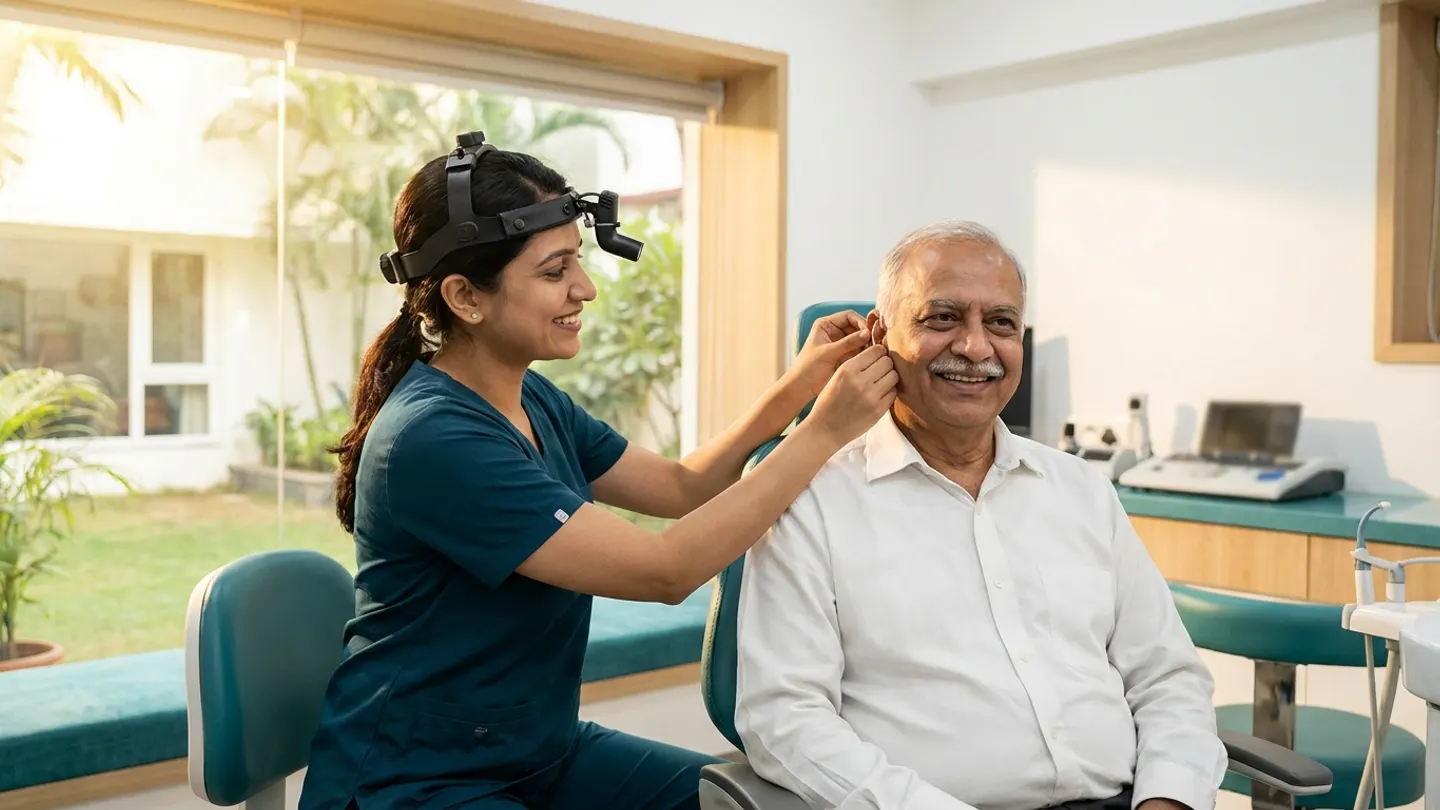
Watching your vision blur and distort a little more each month is frightening — and being told you need specialised eye surgery can feel even more overwhelming when you see the price tag or the waiting list in your home country. You are not alone, and there are real, high-quality options that do not require you to drain your savings.
Keratoconus Treatment Cost in India: The Direct Answer
Keratoconus treatment in India costs approximately $400 to $800 USD per eye for corneal collagen cross-linking (C3R/CXL), and approximately $1,800 to $4,500 USD for a corneal transplant (DALK or PKP) — a saving of 70 to 85 percent compared with equivalent procedures in the United States, United Kingdom, or Australia. The price includes surgeon fees, hospital charges, procedure consumables, and standard post-operative medication, at accredited facilities that meet international quality standards.
India has become one of the world’s leading destinations for corneal care. The country performs more corneal transplants annually than almost any other nation, and its ophthalmology centres are staffed by surgeons who trained in the US, UK, and Europe and returned home to build world-class practices.
Why Is There Such a Large Cost Difference?
The gap is structural, not a difference in quality. Hospital running costs, surgeon salaries calibrated to local living standards, and medical consumables sourced at competitive rates all contribute to dramatically lower procedure costs. The riboflavin drops and UV-A cross-linking equipment used in Indian centres are the same FDA-approved and CE-marked devices used globally. The donor corneas used in transplants go through the same serological screening required internationally.
Cost Comparison: Keratoconus Treatments in India vs Other Countries (2026)
| Procedure | India | United States | United Kingdom | Australia | UAE |
|---|---|---|---|---|---|
| C3R / CXL (per eye) | $400 – $800 | $2,500 – $4,500 | £2,000 – £3,500 | AUD 3,500 – 6,000 | $1,800 – $3,000 |
| Intacs / Ferrara rings (per eye) | $700 – $1,400 | $3,000 – $5,500 | £2,500 – £4,500 | AUD 4,500 – 7,000 | $2,500 – $4,000 |
| DALK (Deep Anterior Lamellar Keratoplasty) | $1,800 – $3,200 | $10,000 – $18,000 | £8,000 – £14,000 | AUD 14,000 – 22,000 | $6,000 – $10,000 |
| PKP (Penetrating Keratoplasty / Full Transplant) | $2,200 – $4,500 | $12,000 – $22,000 | £9,000 – £16,000 | AUD 15,000 – 25,000 | $7,000 – $12,000 |
All figures are indicative 2026 ranges for international patients and exclude flights, accommodation, and insurance. Exact quotes depend on disease stage, whether one or both eyes need treatment, and the hospital tier.
What Treatment Do You Actually Need? Understanding Your Options
Keratoconus progresses in stages, and the right treatment depends on how far the condition has advanced. Here is a plain-language guide:
Stage 1 to 2 — Corneal Collagen Cross-Linking (C3R / CXL)
This is the first-line treatment when keratoconus is still progressing. Riboflavin (vitamin B2) drops are applied to the cornea, which is then activated by a controlled UV-A light source. The reaction strengthens the collagen bonds inside the cornea and halts further bulging. It does not reverse existing distortion, but it is the most important step to protect your remaining vision.
In India, C3R is typically performed as a day procedure. You rest for a few hours, receive an eye patch overnight, and attend a review visit the following day. Most patients need five to seven days in the country.
“C3R changed everything for me. I was terrified the condition would keep getting worse and I would eventually lose my sight. The procedure was straightforward, and three months later my ophthalmologist at home confirmed the progression had stopped completely.” — Representative patient experience, not a specific identifiable individual.
Stage 2 to 3 — Intacs or Ferrara Ring Segments
Small transparent arc-shaped ring segments are implanted inside the cornea to reshape it mechanically and reduce the cone. This approach can improve contact-lens tolerance significantly and, in many cases, improves uncorrected vision as well. It is sometimes combined with C3R in a single session.
Stage 3 to 4 — Corneal Transplant (DALK or PKP)
When the cone is advanced and spectacles or contact lenses can no longer give acceptable vision, a transplant is the most effective option.
- DALK (Deep Anterior Lamellar Keratoplasty): The surgeon replaces only the front layers of the cornea while leaving your own healthy endothelium in place. This dramatically reduces the risk of rejection and is the preferred approach whenever the back layer of the cornea is healthy.
- PKP (Penetrating Keratoplasty): A full-thickness replacement, reserved for cases where the endothelium is also affected. Recovery is longer and follow-up is more intensive, but outcomes in experienced hands are excellent.
Indian ophthalmology centres that hold JCI or NABH accreditation perform both procedures routinely. Corneal banks at these hospitals maintain screened donor tissue to minimise waiting times for international patients.
What Is Included in the India Price?
When you receive a written quote through IndoMedTour, the figure typically covers:
- Pre-operative corneal topography, slit-lamp examination, and pachymetry
- Surgeon’s fee and anaesthesia (topical or general)
- Procedure consumables (riboflavin, UV-A device usage, ring segments or donor cornea as applicable)
- One or two nights’ hospital stay where required
- Standard post-operative eye drops for the hospital stay
- One or two follow-up visits before your departure
International flights, accommodation, city transfers, travel insurance, and longer-term post-operative medications (which you continue at home) are separate. A realistic total trip budget, including ten nights’ comfortable accommodation for a corneal transplant patient, typically adds $800 to $1,500 for the stay itself.
Is the Quality Really Comparable?
This is the most important question, and the honest answer is yes — with the right hospital.
India trains more ophthalmologists per year than almost any country outside the United States and China, and its best centres have subspecialty corneal units with surgeons who publish in peer-reviewed international journals. Several Indian eye hospitals are among the highest-volume corneal transplant centres in the world.
The key quality markers to look for:
- JCI or NABH accreditation — these are the internationally recognised standards that govern infection control, surgical protocols, patient rights, and outcomes tracking
- Dedicated corneal topography suite — Pentacam or Sirius mapping is the standard of care for diagnosis and surgical planning
- In-house corneal bank — reduces waiting time for donor tissue and ensures proper serological screening
- Written outcomes data — reputable centres will share graft survival rates and complication statistics on request
Explore our hospitals to see the accredited ophthalmology centres IndoMedTour works with.
Practical Checklist Before You Travel
Use this before booking anything:
- Obtain your current corneal topography maps and share them with the Indian specialist for a remote review
- Get a written quote itemising every component of the procedure cost
- Confirm the corneal bank has donor tissue available (for transplant patients) before booking flights
- Arrange travel insurance that specifically covers pre-existing eye conditions and surgical complications
- Plan to bring a companion — depth perception is temporarily affected post-surgery and you will need help navigating airports
- Check your home ophthalmologist is willing to carry out follow-up care on your return (most are glad to)
- Download your medical records and imaging files in a portable format before you travel
See how it works for a step-by-step guide to the full patient journey.
What About Contact Lenses Instead of Surgery?
Rigid gas-permeable (RGP) lenses, scleral lenses, and hybrid lenses can give excellent visual acuity in early to moderate keratoconus without any surgery at all. If your condition is stable and your prescription can be corrected to a functional level with specialist lenses, this is a legitimate long-term option.
Many international patients come to India specifically to be fitted with scleral lenses by experienced optometrists, at a fraction of the cost charged in Western clinics. Scleral lens fitting in India typically costs $300 to $700 per pair including the specialist fitting sessions — compared with $1,500 to $3,000 or more in the US.
If your keratoconus is still progressing, however, cross-linking should happen first regardless of which lens solution you use. Lenses correct vision; they do not stop the cornea from steepening further.
For more information on the full range of eye and ophthalmology treatments available through IndoMedTour, including cataract surgery and LASIK for suitable candidates, visit our dedicated treatment page.
Frequently Asked Questions
Will I Need Treatment in Both Eyes?
Keratoconus affects both eyes in roughly 96 percent of patients, though often asymmetrically. If both eyes require C3R, many Indian centres will treat them in separate sessions one week apart during the same visit — giving you the benefit of both procedures in a single trip. This is significantly more cost-effective than two separate international journeys.
How Long Does the Improvement in Vision Last After C3R?
Cross-linking is designed to halt progression, not to restore normal vision. Most patients see no further steepening for many years after the procedure, and published studies show stability rates above 90 percent at five years in properly selected patients. Some patients notice a modest improvement in topography over 12 to 18 months as the cornea stabilises, but you should not expect dramatic vision gains from C3R alone.
Can I Combine Keratoconus Treatment with a Medical Tourism Trip for Other Procedures?
Yes, and India’s hospital networks make this straightforward. If a family member needs cardiac care, a joint replacement, or dental treatment alongside your corneal procedure, our coordinators can arrange separate consultations and stagger the scheduling appropriately. Read about treatments and costs across specialties or book a free counselling call to discuss logistics.
How IndoMedTour Helps
We start with a free call where one of our medical coordinators — not a salesperson — reviews your corneal topography and connects you with the right specialist for a remote opinion before you book a single flight. Once you decide to proceed, we obtain written, itemised quotes from two or three accredited ophthalmology centres so you can compare transparently. We handle your medical visa letter, airport transfers, and accommodation recommendations near the hospital, and your dedicated coordinator is reachable by WhatsApp from the day you land until the day you fly home. Visit our success stories to read what past patients say about the experience.
You bring the worry. We bring the plan.