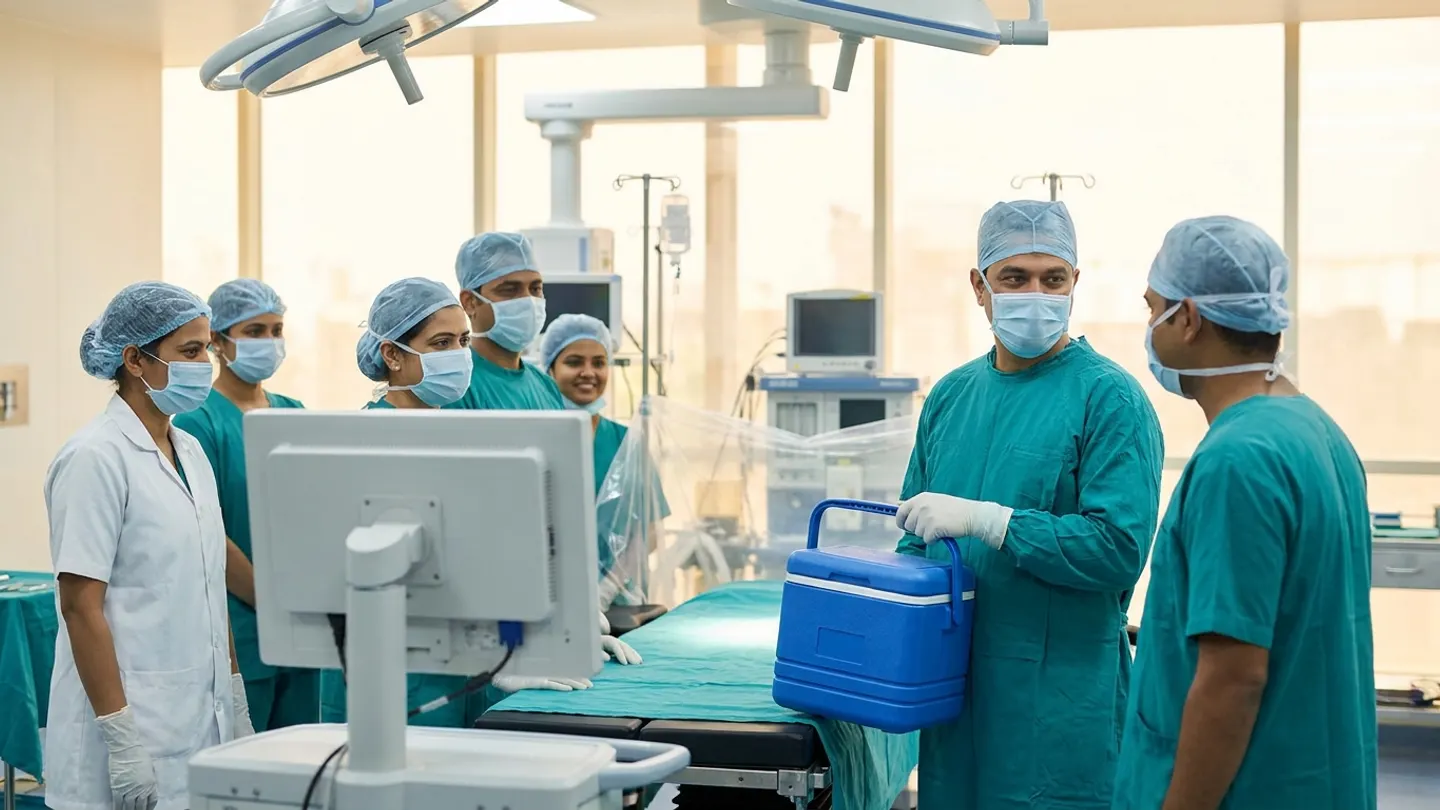
Facing kidney failure is one of the most frightening moments a family can go through. If you are in Kenya weighing a transplant, you are likely also carrying the weight of long local waiting lists, limited specialist availability, and costs that feel impossibly high.
You are not alone — and there is a practical path forward.
Kidney Transplant in India for Kenyan Patients: What You Need to Know First
Kidney transplant in India for Kenyan patients is one of the most well-established medical-tourism pathways in East Africa. India performs more than 8,000 kidney transplants annually, has decades of experience treating patients from across Africa, and offers total programme costs that are a fraction of what the same procedure would cost in Europe, North America, or Australia.
“The surgery saved my brother’s life. We were told in Nairobi the wait could be two to three years. In India, from the day we contacted a facilitator to the day of surgery was eleven weeks.” — Representative account from an East African family; name withheld for privacy.
This guide walks you through every stage: medical eligibility, choosing the right hospital, the legal framework for donors, the visa process, indicative costs, and what daily life looks like during your stay.
Why Kenyan Patients Choose India for Kidney Transplants
Quality that competes with the best in the world
India’s top transplant hospitals hold JCI (Joint Commission International) or NABH (National Accreditation Board for Hospitals) accreditation — the same international quality benchmarks you would look for in a hospital in London or Houston. Many senior transplant nephrologists and surgeons have completed fellowships at institutions in the United States or United Kingdom, and the nursing staff in major centres have significant experience caring for international patients.
A proven East African connection
Hospitals in cities such as Chennai, Bangalore, Hyderabad, Mumbai, and Delhi have dedicated international patient departments that are familiar with Kenyan documentation, the Swahili-speaking patient population, and the specific health conditions common in the region. Interpreters and patient-support coordinators who understand the cultural context are often available.
Cost: the honest comparison
| Procedure component | Kenya (private) | India (top-tier hospital) | US / UK |
|---|---|---|---|
| Kidney transplant surgery | USD 25,000–40,000 | USD 12,000–18,000 | USD 100,000–200,000+ |
| Hospital stay (10–14 days) | Included above | Included above | Billed separately |
| Post-op immunosuppressants (first month) | USD 400–700/month | USD 200–400/month | USD 800–2,000/month |
| Donor evaluation and workup | USD 1,500–3,000 | USD 800–1,500 | USD 5,000–10,000 |
All figures are indicative 2026 ranges and will vary by hospital tier, city, and individual clinical complexity. Request a written itemised quote before committing.
For an in-depth breakdown, see our treatments and costs page or the dedicated organ transplant page.
Am I Eligible? Medical Requirements
Before anything else, you will need a clinical assessment. In general, transplant teams look for:
- End-stage renal disease (ESRD) confirmed by your Kenyan nephrologist
- Creatinine and GFR reports, dialysis history, and recent blood work
- Absence of active infection, untreated malignancy, or severe cardiovascular disease that would make surgery too risky
- A compatible living donor (if pursuing living-related transplant), or willingness to join a deceased-donor waiting list
Most Indian hospitals accept records in English, which simplifies the process for Kenyan patients considerably. You can send your reports digitally for an initial remote opinion before booking flights.
Understanding the Donor Options
Living-related donation
This is by far the most common route for international patients. Indian law under the Transplantation of Human Organs and Tissues Act (THOTA) permits a blood relative — parent, sibling, child, or spouse — to donate a kidney. Both donor and recipient must pass:
- Full medical evaluation (blood group, tissue typing, cross-match)
- Psychological assessment
- Review and approval by a government-authorised hospital committee
The committee process typically takes one to two weeks and is designed to prevent coercion or commercial transactions. Your facilitator will guide you through the documentation required.
Deceased-donor transplant
Deceased-donor kidneys are allocated through state-level registries. International patients can be listed, but waiting times are unpredictable and priority typically goes to Indian nationals. Most Kenyan patients pursue the living-donor route.
Step-by-Step: From Nairobi to Discharge
Step 1 — Send your medical records
Share your nephrologist’s reports, dialysis summaries, blood work, and any imaging with IndoMedTour. We forward these to two or three shortlisted hospitals for a remote clinical opinion — at no charge.
Step 2 — Receive written cost estimates
Within five to seven working days you will have itemised written quotes from each hospital. These typically cover:
- All surgical fees
- 10–14 days inpatient stay for recipient
- Donor hospitalisation and evaluation
- Standard post-operative medications during admission
- Interpreter support
Step 3 — Apply for an Indian Medical Visa
Kenya is eligible for India’s e-Medical Visa (e-MV), which can be applied for online through the Indian Visa Online portal. You will need:
- A letter from the treating hospital in India confirming admission
- Your Kenyan passport (valid at least six months beyond intended stay)
- Proof of funds
- Recent passport photographs
The visa is typically granted within three to five business days and allows multiple entries. Your accompanying donor or family member applies for an e-Medical Attendant Visa (e-MAV). IndoMedTour prepares the hospital invitation letter and guides you through the application checklist.
Step 4 — Travel and arrival
IndoMedTour arranges airport pick-up, accommodation close to the hospital (many hospitals have attached guest houses for international families), and SIM cards with local contacts pre-loaded. Nairobi to Chennai, Bangalore, or Hyderabad typically involves one connection; total journey time is usually twelve to fifteen hours.
Step 5 — Pre-surgery workup (3–5 days)
On arrival, both donor and recipient complete:
- Repeat bloodwork and tissue typing at the hospital laboratory
- Imaging (ultrasound, CT angiography for donor kidney anatomy)
- Cardiology and anaesthesia clearance
- Donor committee meeting and approval
This phase is essential and cannot be skipped or shortened.
Step 6 — Surgery day
Recipient and donor surgeries are performed simultaneously in adjacent theatres. The transplant operation for the recipient typically takes three to five hours. The donor laparoscopic nephrectomy usually takes two to three hours. Both patients recover in separate high-dependency units.
Step 7 — Hospital recovery (10–14 days)
The transplant team monitors kidney function closely — creatinine levels are checked daily. If the new kidney responds well (which it does in the majority of living-donor cases), the recipient is mobilised and begins oral medications before discharge.
Step 8 — Post-discharge observation in India (2–4 weeks)
Most hospitals require international patients to remain in the city for two to four weeks post-discharge for:
- Weekly outpatient clinic visits
- Immunosuppressant dose adjustments
- Emergency review if required
This period is important. Do not book your return flight for the day of discharge.
Step 9 — Return to Kenya and follow-up
Before flying home you receive:
- A full discharge summary translated into a format your Kenyan nephrologist can act on
- A three-to-six month supply of immunosuppressants (availability and cost in Kenya should be confirmed in advance)
- Contact details for a telemedicine follow-up with the Indian transplant team
Your Kenyan nephrologist will continue monitoring creatinine, tacrolimus levels, and blood pressure. IndoMedTour coordinates between your two care teams for the first year.
What to Budget for Beyond the Hospital Bill
Plan for these additional costs when building your total budget:
- Return flights (Nairobi to India): approximately USD 600–1,000 per person
- Accommodation (6–8 weeks total, donor + one attendant): USD 1,500–3,000 depending on city and standard
- Food and daily expenses: USD 20–40 per day per person in most Indian cities
- Long-term immunosuppressants in Kenya: vary significantly; budget USD 200–500/month for the first year
A realistic all-in total for a living-donor kidney transplant journey from Kenya, covering treatment, travel, and six-week in-country stay, is typically in the range of USD 16,000–24,000. Compare that with ongoing dialysis costs and lost income over years on a waiting list.
Explore how it works for a fuller picture of what IndoMedTour covers.
Common Concerns from Kenyan Families
“Will I be treated well as an African patient in India?” India’s medical-tourism sector depends on its international reputation. Major hospitals in Chennai, Hyderabad, and Bangalore routinely host patients from Nigeria, Kenya, Tanzania, Uganda, and Ethiopia. Discrimination complaints are extremely rare; cultural sensitivity in these environments has improved significantly over the past decade.
“What if something goes wrong after I return to Kenya?” Your discharge summary gives your Kenyan nephrologist everything needed to manage complications. IndoMedTour stays connected — you have a dedicated coordinator’s number and access to a telemedicine link with your Indian surgeon for at least twelve months.
“Can my family stay near me?” Yes. Hospital guest houses and nearby service apartments are designed for this. Many Kenyan families report that having a relative nearby during recovery was the single most important comfort factor.
Read success stories from other African patients who have been through this journey.
How IndoMedTour Helps
From the moment you reach us on a free counselling call, IndoMedTour takes the coordination burden off your family entirely. We match you with two or three accredited hospitals suited to your clinical case, arrange written quotes you can compare side by side, and handle the visa invitation letter and travel logistics. A dedicated patient coordinator — reachable by WhatsApp and phone — accompanies you through every consultation, the donor committee process, surgery day, and the weeks of recovery until you board your flight home. We also stay in touch for the first year to bridge communication between your Indian transplant team and your Kenyan nephrologist.
You bring the worry. We bring the plan.