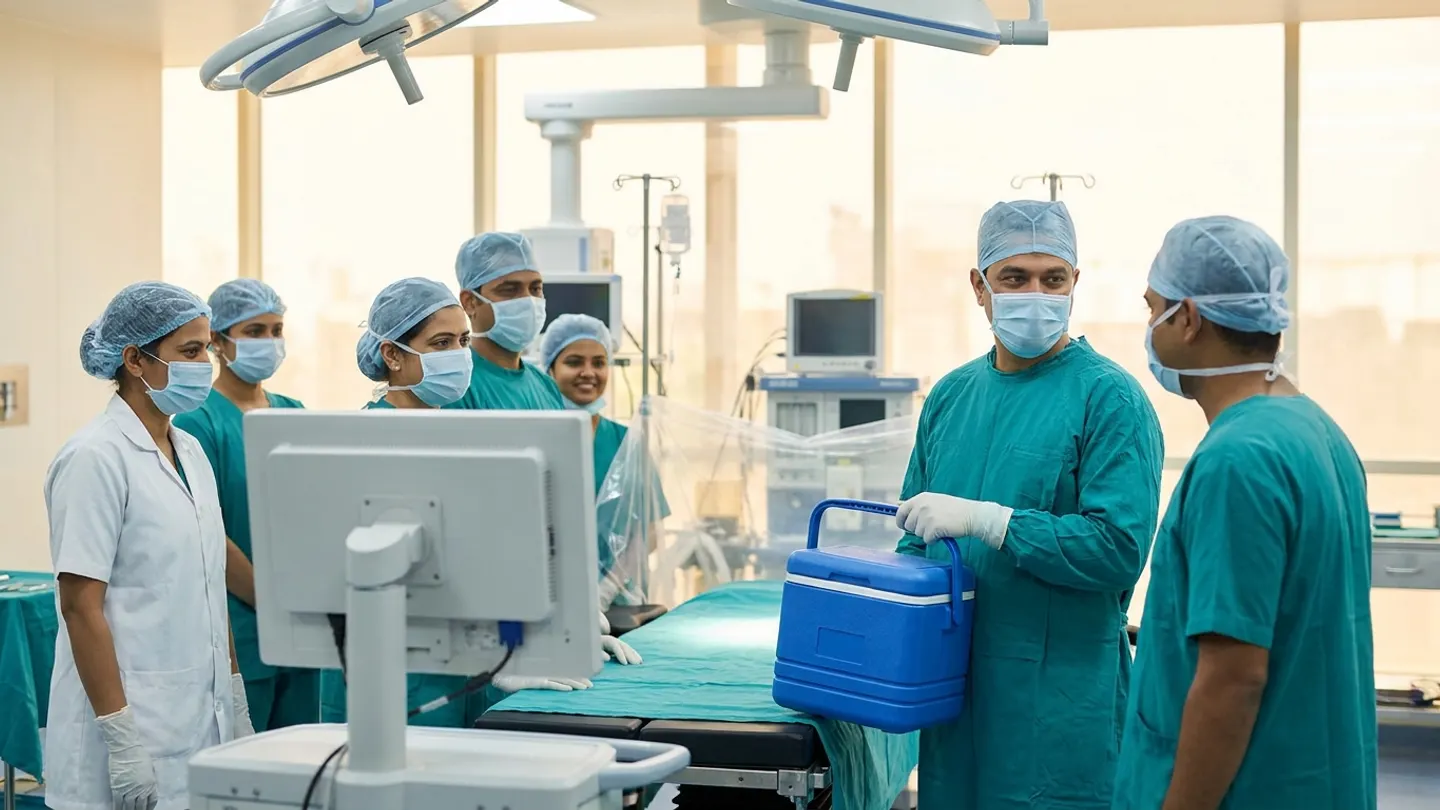
Waiting for a kidney transplant on the NHS can feel like your life is on hold. With wait lists routinely stretching beyond three years and private surgery in the UK priced between £40,000 and £100,000, it is entirely understandable that you are searching for a safer, more affordable path forward.
India has quietly become one of the world’s leading destinations for kidney transplantation, with internationally accredited hospitals, surgical teams trained in the UK and US, and costs that make the journey worthwhile for thousands of patients every year.
What Does a Kidney Transplant in India Cost for UK Patients?
Kidney transplant in India for UK patients costs between approximately £8,000 and £18,000 all-inclusive, covering surgery, hospital stay, immunosuppressant medications, and post-operative follow-up care. That is a saving of up to 85% compared with private treatment back home, without any compromise on surgical expertise or facility standards.
India vs the UK and Other Destinations: Cost Comparison
| Country / Option | Typical Cost Range (2026, Indicative) |
|---|---|
| NHS (UK) | Free, but typically 3-5+ year wait |
| Private clinic (UK) | £40,000 – £100,000+ |
| India (mid-tier accredited hospital) | £8,000 – £12,000 |
| India (premium JCI hospital) | £12,000 – £18,000 |
| UAE (Dubai) | £25,000 – £45,000 |
| USA | £100,000 – £200,000+ |
| Thailand | £15,000 – £28,000 |
All India figures are indicative 2026 ranges and typically include surgery, anaesthesia, standard ICU stay of 5-7 days, ward stay of 7-14 days, basic immunosuppressants during admission, and one post-discharge review. Individual costs vary by donor type, medical complexity, and hospital chosen.
Why UK Patients Choose India for a Kidney Transplant
Beyond cost, there are compelling clinical and practical reasons that make India a genuine option rather than a compromise:
- Internationally trained surgeons: Many transplant specialists at India’s leading hospitals completed fellowships in the UK, US, or Europe and hold postgraduate qualifications that are directly comparable to UK consultants.
- Short timelines with a living donor: With a compatible living donor, surgery can often be scheduled within 4-8 weeks of your initial consultation and medical review.
- JCI and NABH accreditation: India’s top transplant centres hold Joint Commission International (JCI) or National Accreditation Board for Hospitals (NABH) certification, the globally recognised benchmarks for patient safety, infection control, and clinical governance.
- English as a working language: Medical teams at accredited hospitals communicate fluently in English, which significantly reduces the anxiety of navigating an unfamiliar healthcare system.
- High transplant volumes: Centres that carry out large numbers of transplants consistently achieve better outcomes. India’s leading hospitals perform hundreds of kidney transplants each year, giving their teams deep, current expertise.
“When my nephrologist told me I was looking at a four-year wait, I felt completely lost. Finding out that I could have surgery in India at a hospital with international accreditation within two months was genuinely life-changing.” — Representative sentiment shared by UK patients on their IndoMedTour journey.
The Step-by-Step Process for UK Patients
Understanding the full journey from your first enquiry to returning home lets you plan with confidence, rather than stepping into the unknown.
Step 1: Free Consultation and Medical Review
You share your most recent medical records — dialysis history, blood tests, imaging, and GP or specialist referral letters. A clinical advisor reviews your case and matches you with suitable accredited transplant centres. You receive written, itemised cost estimates within 48-72 hours, with no obligation to proceed.
Step 2: Donor Compatibility Assessment
India’s Transplantation of Human Organs Act (THOA) permits living-donor transplants from close blood relatives and, in certain circumstances, emotionally related donors. The donor must pass rigorous compatibility screening: blood-group matching, cross-matching, tissue typing, and a full medical evaluation. A hospital authorisation committee, which is a legal requirement in India, reviews and approves every living-donor case.
For the smoothest process, UK patients are encouraged to arrive in India with a potential living donor who has already undergone preliminary blood-group and HLA typing at a UK laboratory. This can shave one to two weeks off your pre-operative work-up. Cadaveric (deceased donor) transplants are also performed at leading centres, though wait times and availability vary.
Step 3: Pre-Operative Work-Up in India (1-2 Weeks)
Once in India, both donor and recipient undergo a comprehensive pre-operative evaluation: full cardiac and pulmonary assessment, updated cross-matching, psychological screening, and specialist review by the transplant team. This phase typically takes 7-14 days and is an important safety step that cannot be rushed.
Step 4: Surgery and ICU Monitoring
The transplant surgery itself is performed under general anaesthesia and lasts approximately 3-4 hours for the recipient. The donor’s laparoscopic nephrectomy (keyhole kidney removal) typically takes 2-3 hours. Recipients usually spend 5-7 days in a transplant ICU, followed by 7-10 days on a specialist ward before moving to a hotel or serviced apartment nearby.
Step 5: Post-Operative Recovery and Clearance to Fly
The medical team closely monitors graft function, adjusts immunosuppressant doses, and watches for any early signs of rejection before you are discharged from the hospital’s care. Most UK patients receive clearance to fly home approximately 6-10 weeks after surgery, once kidney function is stable, infection risk is well managed, and you are confident managing your medication regimen independently.
Step 6: Continuing Care in the UK
Your Indian hospital provides a comprehensive discharge summary, immunosuppressant schedule, and follow-up protocol in English. Your UK nephrologist coordinates ongoing monitoring. Immunosuppressant medications that are standard post-transplant therapy are typically available through the NHS once you return home.
What Is Typically Included in a Package Cost?
Most accredited hospital packages for international patients cover the following:
- Pre-operative investigations for both donor and recipient
- Surgeon, anaesthesiologist, and nephrology specialist fees
- Operating theatre and transplant ICU charges
- Standard ward accommodation, usually a single room with a carer bed
- Immunosuppressant medications during the hospital admission
- Routine post-operative nursing, wound care, and physiotherapy
- One to two post-discharge outpatient review consultations
- Detailed medical reports and discharge summary in English
Items typically not included: international flights, accommodation outside the hospital, comprehensive travel and medical insurance, visa fees, and ongoing medications required after discharge.
Hospital Quality and Accreditation: What UK Patients Should Verify
When evaluating hospitals for a kidney transplant in India, look specifically for these markers:
- JCI or NABH accreditation: Certification that the hospital meets internationally recognised standards for infection control, surgical safety, and patient rights.
- A dedicated transplant unit: With a separate ICU managed by transplant-trained intensivists and nephrology nurses, not a general surgical ward.
- Authorisation committee compliance: Every Indian hospital is legally required to have an independent committee that approves living-donor transplants. Ask for written confirmation that this process is followed.
- On-site graft monitoring and biopsy capability: Real-time monitoring, biopsy facilities, and dialysis back-up in case of delayed graft function.
Explore our hospitals to see the accredited transplant centres IndoMedTour works with across India. For a full treatment overview, visit our dedicated organ transplant page.
Pre-Travel Checklist for UK Patients
Before you travel to India for a kidney transplant, confirm that you have the following in place:
- Written referral letter and complete medical history from your UK nephrologist or renal consultant
- At least 6 months of recent dialysis records, if applicable
- Blood-group and HLA typing results for both patient and potential living donor
- Valid UK passport with at least 6 months of validity beyond your planned travel dates
- Indian Medical Visa (e-MV), applied for through the Indian High Commission in London
- Comprehensive international travel and health insurance with full repatriation cover
- A trusted family member or carer who can accompany you and stay throughout
- A minimum of 8-10 weeks blocked out in your calendar for the complete process
For a full breakdown of what to expect financially, see our treatments and costs page or read how it works to understand the end-to-end journey.
How IndoMedTour Helps
IndoMedTour offers a free counselling call with an experienced care coordinator who listens carefully to your situation, reviews your case summary, and explains your realistic options honestly — without pressure. We match you with JCI- and NABH-accredited transplant centres that suit your clinical profile and budget, and we provide written, itemised cost quotes from each hospital so you can compare them clearly. From your Indian Medical Visa application and airport transfers to finding accommodation close to the hospital and coordinating between your UK nephrologist and the Indian team, your dedicated coordinator is beside you through surgery, recovery, and the day you fly home. You can also read success stories from patients who have already made this journey. You bring the worry. We bring the plan.