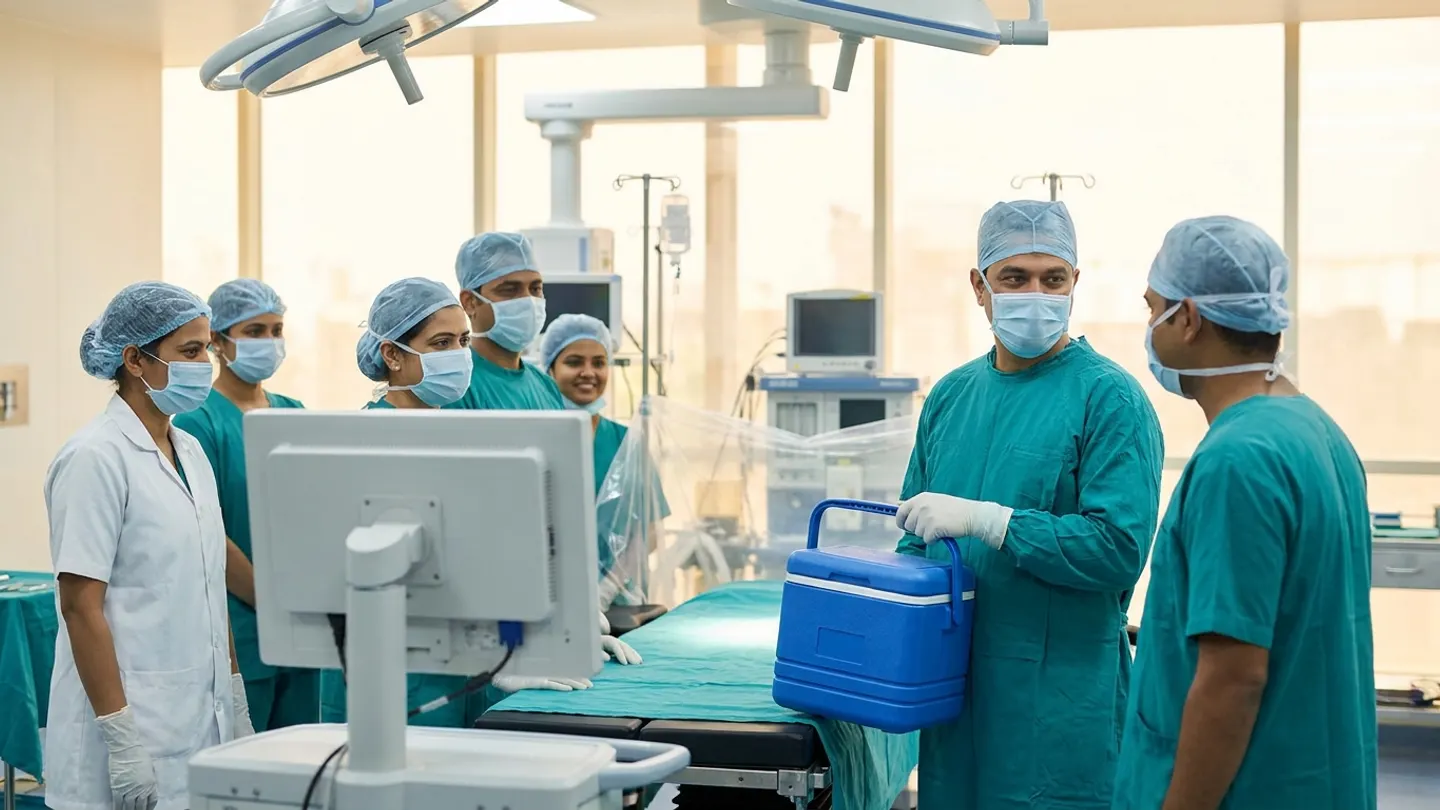
Getting a kidney transplant diagnosis changes everything overnight. Whether you are facing a bill of $300,000 or more in the United States, or watching months turn into years on a transplant waiting list, the idea of travelling to India for surgery can feel both promising and frightening at the same time. This guide is written to answer every question you are carrying right now, honestly and in plain English.
What Does a Kidney Transplant in India Cost for US Patients?
Kidney transplant in India for US patients typically costs between $13,000 and $20,000 all-inclusive — roughly 85 to 90 percent less than comparable surgery in the United States, where costs routinely reach $150,000 to $400,000 or more. That price difference is not driven by lower standards; it reflects lower operating costs, government-subsidised medical infrastructure, and a significant purchasing-power gap between the two economies.
Cost Comparison: India vs USA
| Treatment Component | USA (approx.) | India (approx.) |
|---|---|---|
| Surgeon and anaesthesia fees | $50,000–$100,000 | $3,000–$5,000 |
| Hospital stay (14–21 days) | $80,000–$150,000 | $6,000–$10,000 |
| Pre-operative workup and labs | $10,000–$30,000 | $800–$1,500 |
| Post-operative medications (first month) | $5,000–$15,000 | $300–$600 |
| Total estimated cost | $150,000–$400,000+ | $13,000–$20,000 |
Figures are indicative ranges for 2026. Actual costs depend on hospital tier, donor type, and your individual medical profile. See our treatments and costs page for a personalised estimate.
Even after adding international flights, accommodation for you and a companion, and local transport across four to six weeks, most US patients save well over $100,000. That money can go toward years of immunosuppressant medications after you return home, or simply toward rebuilding life after a serious illness.
Is a Kidney Transplant in India Safe for US Patients?
Safety is the right question to ask first, and the answer is reassuring. India’s leading transplant hospitals hold JCI (Joint Commission International) or NABH accreditation — the same quality benchmarks used to evaluate top hospitals around the world. Transplant success rates at high-volume Indian centres are comparable to major academic medical centres in the United States, and India is one of the largest living-donor kidney transplant programmes globally by volume.
What makes India particularly capable for transplant surgery:
- Experienced transplant teams. Senior nephrologists and urological surgeons at accredited Indian hospitals have performed thousands of kidney transplants and publish regularly in international peer-reviewed journals.
- Modern infrastructure. High-volume transplant centres feature dedicated laminar-flow theatres, transplant ICUs, and in-house crossmatch and immunology labs.
- Rigorous legal framework. India’s Transplantation of Human Organs and Tissues Act tightly regulates who can donate and how organs are allocated. Living donor eligibility requires verification by a hospital authorisation committee, and organ trafficking is a criminal offence with severe penalties.
- Seamless handover to your US team. Hospitals provide comprehensive discharge summaries, drug protocols, and direct email access for your nephrologist at home, so continuity of care is never a gap.
Explore our hospitals to read detailed profiles of JCI- and NABH-accredited transplant centres.
How a Kidney Transplant Works in India: Step by Step
Before You Travel
- Share your medical records. Send your nephrologist’s reports, dialysis history, blood group, tissue typing (HLA results), and any previous crossmatch data to the IndoMedTour team.
- Receive a written quote. Once we match you to an appropriate hospital, you receive an itemised cost estimate — surgery, hospital stay, labs, medications, and coordinator support — with no hidden fees.
- Donor evaluation is confirmed. If you are travelling with a living donor, the hospital schedules their full workup (blood tests, imaging, cardiac and psychological clearance) for the first days after arrival.
- Arrange your medical visa. IndoMedTour provides a hospital invitation letter and walks you through the Indian MV (medical) visa application, which is typically processed in 3 to 7 business days.
On Arrival in India
A dedicated IndoMedTour coordinator meets you and your companion at the airport and accompanies you to the hospital. Pre-operative evaluation — repeat crossmatch, final labs, CT angiography for the donor, and cardiac clearance — takes 5 to 7 days. Surgery itself typically lasts 3 to 5 hours under general anaesthesia. ICU monitoring follows for 24 to 48 hours, after which most patients move to a private room with a family attendant bed.
Recovery Before Flying Home
Most patients are discharged from hospital 10 to 14 days after surgery. You then stay in nearby serviced accommodation — usually arranged by the hospital or by IndoMedTour — for a further 2 to 3 weeks of outpatient visits. These appointments cover suture removal, immunosuppressant dose adjustments, kidney function monitoring, and a final fitness-to-fly clearance. Flying home before this clearance significantly raises the risk of clotting events and makes managing any early rejection episode very difficult.
“Travelling across the world for a transplant felt impossible at first. But our coordinator met us at the gate, the surgeon called us by name on day one, and the hospital felt more attentive than anything we had experienced back home. We flew home with a working kidney and savings that meant we could keep up medications without rationing.”
Representative of patient feedback shared with IndoMedTour. Not a specific identifiable individual.
Donor Options: What US Patients Need to Know
India permits living-donor kidney transplants from close relatives — parents, siblings, children, grandparents, grandchildren, and spouses. In some cases, unrelated donors with an affectionate bond may donate following approval by a government-constituted authorisation committee, and paired exchange (swap) programmes exist for incompatible pairs.
Deceased-donor (cadaveric) transplants are allocated through India’s national organ network (NOTTO), but waiting times for international patients are long and unpredictable. The vast majority of US patients who travel to India do so with a compatible living donor already identified and committed.
If you do not currently have a donor, book a free counselling call — our team will walk you through what legal options exist and whether India is a realistic path for your situation.
Visit our dedicated organ transplant treatment page for clinical detail on surgical techniques and rejection management protocols.
How Long Will You Stay? Planning Your India Trip
Plan for four to six weeks in India. A realistic breakdown:
| Phase | Typical Duration |
|---|---|
| Pre-operative evaluation (patient and donor) | 5–7 days |
| Surgery and ICU monitoring | 1–3 days |
| In-patient hospital recovery | 10–14 days |
| Outpatient reviews before fitness-to-fly clearance | 14–21 days |
Most transplant hospitals partner with serviced apartments or guest houses within a short drive of the facility. Meals, laundry, and transport to outpatient clinics are typically bundled at modest cost, so you are never navigating an unfamiliar city alone.
Checklist: Is a Kidney Transplant in India Right for You?
Use this list to assess your readiness before taking the next step:
- You have a compatible living donor willing and able to travel to India with you
- Your nephrologist has confirmed you are medically fit for transplant surgery
- You have recent HLA tissue-typing reports and crossmatch results available
- You can take five to six weeks away from home and work
- You have a travel companion who can assist during your recovery stay
- You understand that immunosuppressant medications must be continued for life and are available through your US pharmacy or insurer
- You have travel insurance that covers medical complications abroad (including emergency repatriation)
Read how other patients made this decision on our success stories page, and review how it works for a full picture of the IndoMedTour process from enquiry to discharge.
How IndoMedTour Helps
IndoMedTour offers every US patient a free counselling call to review your medical records, answer your questions honestly, and confirm whether a kidney transplant in India is a realistic option for your specific situation. From there, we match you to JCI- or NABH-accredited transplant hospitals based on your blood group, donor profile, and budget, and we send you written, itemised quotes so you can compare with complete clarity. Our team handles your medical visa paperwork, airport transfers, hospital accommodation, and in-hospital translation, and a dedicated coordinator stays beside you and your family from the moment you land until you board your flight home. We remain reachable after you return, helping you communicate with your Indian transplant team throughout your follow-up period. You bring the worry. We bring the plan.