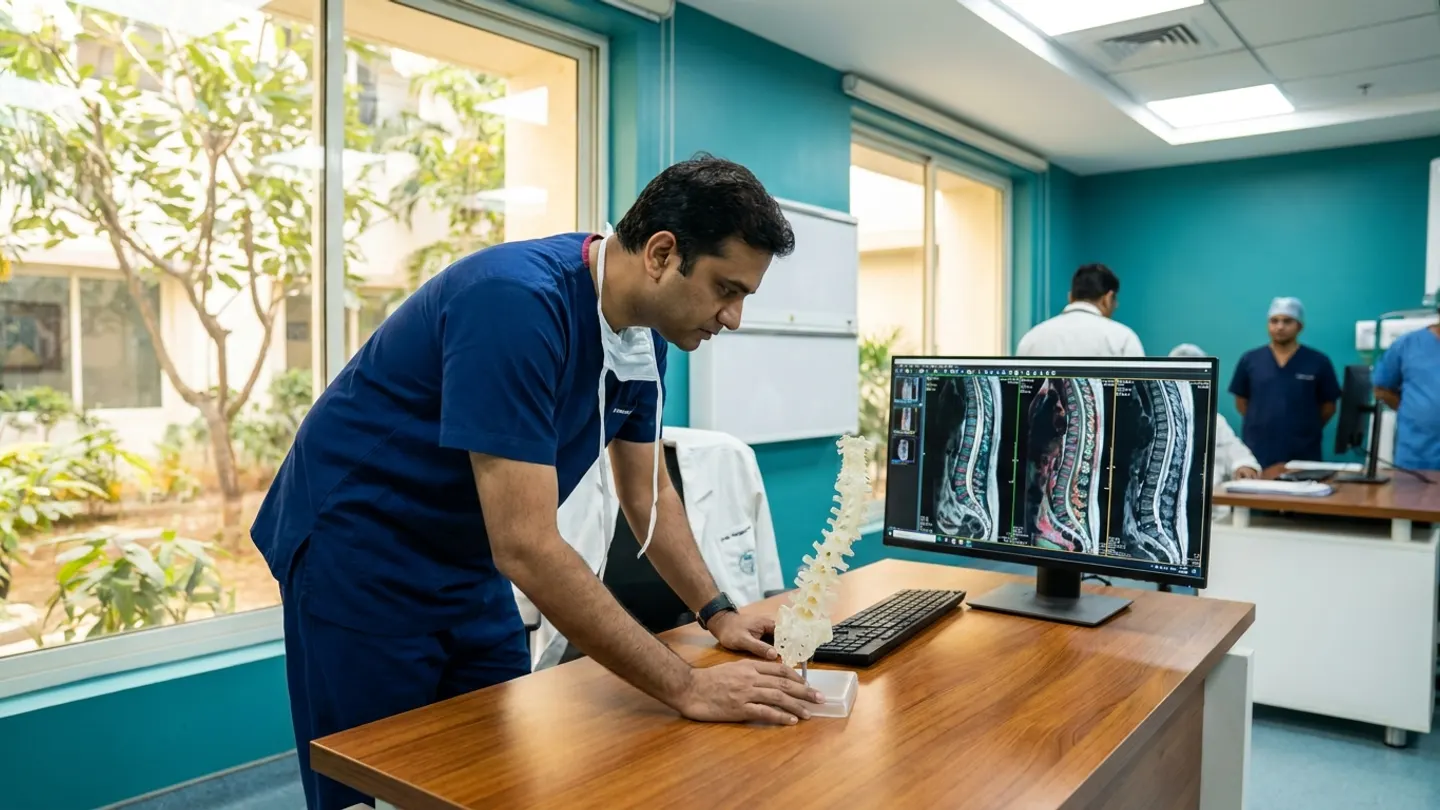
A vertebral fracture can change everything — the way you sleep, the way you sit, even the way you breathe. If a specialist at home has recommended kyphoplasty and the quoted price has left you feeling that relief is out of reach, or if a long waiting list is forcing you to live with daily pain, know that there is a well-travelled alternative.
Kyphoplasty Surgery Cost in India: The Direct Answer
Kyphoplasty surgery cost in India typically ranges from $3,500 to $6,000 USD for a single-level procedure at a quality-accredited private hospital — a saving of 70 to 80 percent compared with the United States, and roughly 65 percent less than the United Kingdom. That difference is not explained by lower standards; it is explained by lower hospital overheads, government incentives for medical tourism, and healthy competition among India’s large private hospital groups.
Why Is the Price Gap So Large?
India’s major cities host hospitals that look and operate much like those in North America or Europe. The equipment, implants, and surgical consumables are frequently identical — the same manufacturers supply globally. The differences are in real-estate costs, staff salaries relative to local purchasing power, and the absence of the administrative complexity that inflates Western healthcare bills. The result is that a procedure costing $25,000 in the United States can be delivered to the same clinical standard for a fraction of that in Delhi or Chennai.
Kyphoplasty vs Vertebroplasty: What Is the Difference?
Both procedures treat painful vertebral compression fractures — most often caused by osteoporosis, minor trauma, or spinal metastases. In vertebroplasty, bone cement is injected directly into the fractured vertebra. In kyphoplasty, a small balloon is inflated inside the collapsed bone first to partially restore vertebral height and create a cavity, and the cement is then injected into that cavity under lower pressure.
Kyphoplasty is generally preferred when height loss or a developing kyphotic curve (the forward stoop often called a ‘dowager’s hump’) is significant. The procedure takes 45 to 90 minutes under sedation or light general anaesthesia and typically requires only one to two nights in hospital.
“I was told I faced a four-month wait for my NHS appointment and then an uncertain timeline for surgery. In India I had my pre-operative MRI review, the kyphoplasty, and my first physiotherapy session all within eight days of landing.” — Representative patient experience; identifying details changed to protect privacy.
Cost Comparison: Kyphoplasty Surgery in India vs Other Countries
| Country | Typical Cost — Single Level | Public Wait Time |
|---|---|---|
| India | $3,500 – $6,000 | 3–7 days (private) |
| United States | $15,000 – $35,000 | 2–6 weeks (insured) |
| United Kingdom | £12,000 – £22,000 | 12–26 weeks (NHS) |
| Australia | AUD 18,000 – 30,000 | 6–16 weeks (public) |
| UAE | $10,000 – $18,000 | 1–3 weeks (private) |
| Germany | €14,000 – €22,000 | 3–8 weeks |
All figures are indicative 2026 ranges. Final costs depend on hospital tier, city, surgeon experience, and the number of vertebral levels treated. Always request a written itemised quote before committing.
What the India Price Typically Includes — and What to Clarify
When IndoMedTour requests a quote on your behalf, we ask hospitals to itemise every charge. Here is what a standard kyphoplasty package in India usually covers, and where additional costs can arise.
Typically included:
- Surgeon and anaesthesiologist fees
- Operating-theatre time and fluoroscopy (X-ray guidance) during the procedure
- Balloon catheter and bone-cement consumables
- One to two nights in a private room with nursing care
- Standard in-patient pharmacy
- Pre-discharge physiotherapy briefing
Often billed separately:
- Pre-operative investigations: MRI, bone-density scan, blood work
- International patient services or co-ordination fee (some hospitals charge this)
- Post-discharge outpatient physiotherapy sessions
- Airport transfers and hotel accommodation during recovery
Getting a written, all-inclusive quote — which IndoMedTour provides free of charge — removes the risk of unexpected charges on discharge day.
Choosing the Right Hospital: JCI, NABH, and What Matters Most
Quality accreditation is the clearest safety indicator when choosing a spine centre abroad. Prioritise hospitals that hold:
- JCI accreditation (Joint Commission International) — the internationally recognised gold standard, assessed against the same criteria applied in the United States
- NABH accreditation (National Accreditation Board for Hospitals) — India’s rigorous national standard, which many JCI hospitals also hold
Beyond accreditation, ask specifically about:
- A dedicated spine surgery unit with intraoperative C-arm or CT guidance
- Surgeon caseload — teams performing kyphoplasty regularly, not occasionally
- A multi-disciplinary team that includes pain management, oncology (if the fracture is metastatic), and physiotherapy
- An international patient cell with co-ordinators who speak English and handle visa invitation letters
India’s tier-one cities — Delhi, Mumbai, Chennai, Hyderabad, and Bangalore — all have multiple hospitals meeting these criteria. Tier-two cities such as Pune, Ahmedabad, and Kochi can offer costs five to ten percent lower, with hospitals that are also fully accredited.
Visit our hospitals directory for a curated list of accredited spine centres, or read the full neurosurgery and spine treatments page for clinical detail on what to expect during the procedure and recovery.
Who Is a Good Candidate for Kyphoplasty?
Kyphoplasty works best for:
- Vertebral compression fractures that are acute or subacute (generally less than six weeks old)
- Fractures causing moderate to severe pain that has not responded adequately to rest and analgesics
- Osteoporotic fractures with measurable height loss or progressing kyphosis
- Metastatic spinal fractures where the posterior vertebral wall remains intact
It is generally not recommended for fractures with significant spinal canal compromise, active spinal infection, or severe uncorrectable coagulopathy. Your Indian spine team will review your MRI and bone-density results before confirming candidacy. You can share imaging files in advance — our co-ordinators facilitate the review at no cost and with no obligation to book.
Your Trip to India: A Realistic Timeline
Most international patients complete the kyphoplasty journey in 10 to 14 days:
- Days 1–2 — Arrive, check into hotel, meet your IndoMedTour co-ordinator
- Day 3 — Hospital consultation, MRI review, blood work, and pre-operative clearance
- Day 4 or 5 — Kyphoplasty procedure (day admission or one overnight stay)
- Day 5–6 — Discharge, physiotherapy briefing, medication review
- Days 6–10 — Hotel recovery, short physiotherapy sessions, follow-up X-ray
- Day 10–14 — Surgeon clears you to fly home with full medical records and a written rehabilitation plan
Most patients report meaningful pain relief within 24 to 48 hours of the procedure. Long-haul flights are typically approved once your surgeon confirms spinal stability — usually around day seven to ten. See how it works for a complete step-by-step walkthrough, or browse success stories from patients who have already made this journey.
A Note on Osteoporosis and Future Fracture Risk
A vertebral compression fracture is frequently the first visible sign of serious osteoporosis. A thorough spine centre in India will not simply perform kyphoplasty and send you home — they will also assess bone density and, where indicated, initiate treatment to reduce the risk of further fractures. Ask whether the package includes an endocrinology or bone-health consultation. Many hospitals include this as standard.
If your fractures are related to a cancer diagnosis, our cancer and oncology treatments page explains how spinal metastases are managed alongside systemic therapy at Indian oncology centres. For a side-by-side cost comparison across procedures, treatments and costs is a good starting point.
How IndoMedTour Helps
Start with a free counselling call — no pressure, just an honest conversation about your imaging, your home-country quote, and whether the trip genuinely makes sense for your situation. Within 48 hours we send you written quotes from two or three JCI or NABH-accredited hospitals that specialise in your fracture type, so you can compare before deciding anything. Once you choose, a dedicated co-ordinator arranges your visa invitation letter, airport transfer, hotel near the hospital, and every appointment — and stays beside you through surgery and your recovery days in India. You bring the worry. We bring the plan.