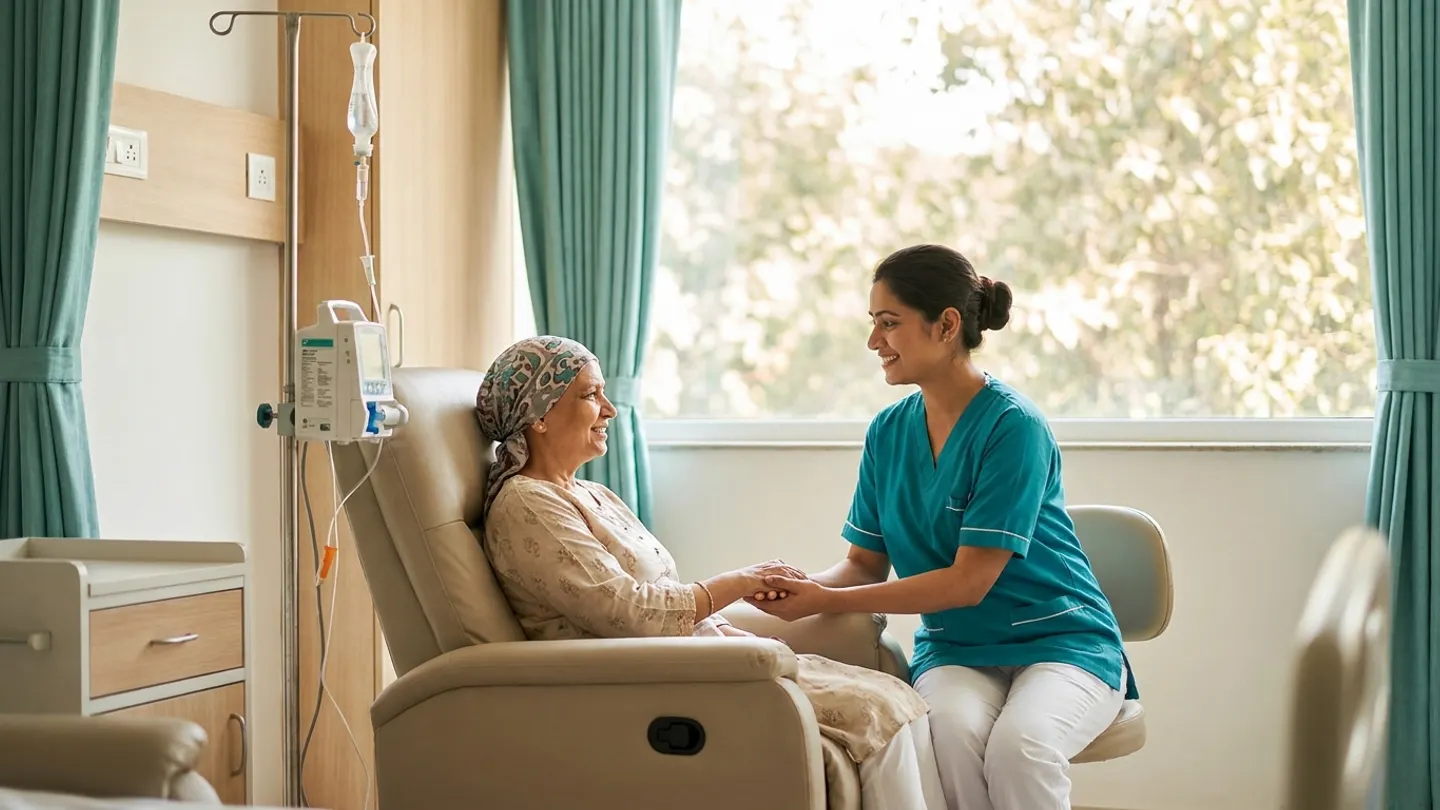
A liver cancer diagnosis carries a weight that is hard to put into words. Then the cost estimate arrives — and for many families, that second shock can feel just as overwhelming as the first. You deserve clear, honest numbers and a path forward.
Liver Cancer Treatment Cost in India: The Direct Answer
Liver cancer treatment cost in India ranges from approximately $6,000 to $40,000 for most procedures, compared to $80,000 to $300,000 or more in the United States, United Kingdom, or Australia. That gap — typically 70-85% — exists because hospital operating costs, surgeon fees, and medication prices in India are structurally lower, not because quality is compromised. India’s top liver cancer centres hold JCI (Joint Commission International) or NABH (National Accreditation Board for Hospitals) accreditation, the same international quality benchmarks used in Western countries.
“For many of our patients from the UK, US, and East Africa, the decision to travel to India is not just about money — it is about access. They could not get surgery for months at home. In India, they were in the operating theatre within two weeks.” — IndoMedTour Care Team
Why India for Liver Cancer Treatment
Liver cancer — whether hepatocellular carcinoma (HCC), cholangiocarcinoma (bile duct cancer), or secondary liver metastases — is one of the more complex oncology disciplines. It requires a coordinated team: hepatologists, liver surgeons, interventional radiologists, medical oncologists, and radiation oncologists working together. India’s leading academic hospitals have built exactly these multidisciplinary liver tumour boards over the past two decades.
Thousands of international patients from Kenya, Nigeria, Bangladesh, the UAE, the UK, and the United States travel to India each year for liver cancer care. The combination of short waiting times (days to weeks, not months), internationally trained specialists, and significantly lower costs makes India one of the most compelling destinations for this diagnosis.
Full Cost Breakdown: Liver Cancer Treatment in India vs Other Countries
Prices below are indicative 2026 ranges. Your actual cost depends on your cancer type (primary vs secondary), stage, chosen procedure, hospital tier, and length of stay. All figures exclude international airfare and accommodation.
| Treatment | India (approx.) | USA (approx.) | UK (approx.) | UAE (approx.) |
|---|---|---|---|---|
| Surgical liver resection | $8,000 – $18,000 | $60,000 – $150,000 | £40,000 – £90,000 | AED 100,000 – 200,000 |
| Liver transplant (living donor) | $25,000 – $45,000 | $200,000 – $400,000 | £100,000 – £250,000 | AED 400,000+ |
| TACE (per session) | $1,500 – $4,000 | $15,000 – $35,000 | £8,000 – £20,000 | AED 25,000 – 50,000 |
| SIRT / radioembolisation | $10,000 – $20,000 | $50,000 – $120,000 | £30,000 – £80,000 | AED 80,000+ |
| RFA / microwave ablation | $3,000 – $7,000 | $20,000 – $50,000 | £15,000 – £35,000 | AED 40,000 – 70,000 |
| Stereotactic body radiotherapy (SBRT) | $4,000 – $10,000 | $30,000 – $80,000 | £20,000 – £50,000 | AED 50,000 – 80,000 |
| Targeted therapy (sorafenib, per month) | $500 – $1,200 | $5,000 – $10,000 | £3,000 – £6,000 | AED 8,000 – 15,000 |
| Immunotherapy (per cycle) | $1,500 – $4,000 | $12,000 – $25,000 | £8,000 – £18,000 | AED 15,000 – 30,000 |
All figures are indicative. IndoMedTour provides written, itemised quotes from two to three hospitals before you commit to anything.
Liver Cancer Treatment Options Available in India
India’s top liver cancer hospitals offer the complete range of curative, life-extending, and palliative treatments. Understanding which applies to your situation is the first conversation to have.
Surgical Options
Liver resection (partial hepatectomy) removes the tumour along with a margin of healthy tissue. It remains the most effective curative option for patients with early-stage HCC and adequate liver function. India’s best hepatobiliary surgeons routinely perform laparoscopic and robotic-assisted resections that reduce recovery time compared to open surgery.
Liver transplant replaces the diseased liver entirely and is considered for patients with HCC meeting the Milan Criteria (tumour size and number within defined limits) and those with liver cirrhosis. India has well-established living-donor liver transplant programmes — meaning a compatible family member can donate a portion of their liver — which dramatically shortens waiting time compared to deceased-donor systems in many Western countries.
Minimally Invasive and Interventional Procedures
- TACE (Transarterial Chemoembolisation): Delivers chemotherapy directly to the tumour via the hepatic artery while cutting off its blood supply. Used for intermediate-stage HCC or as a bridge to transplant.
- SIRT / Radioembolisation (Y-90): Delivers millions of radioactive microspheres to the liver tumour through the artery. Effective for patients not suitable for surgery.
- Radiofrequency Ablation (RFA) and Microwave Ablation (MWA): Heat energy destroys small tumours under imaging guidance, usually as a day procedure or with a one-night stay.
- Percutaneous Ethanol Injection: A simpler ablation technique for very small, early-stage HCC.
Systemic Treatments
Targeted therapy with sorafenib (Nexavar) or lenvatinib (Lenvima) is the standard first-line systemic treatment for advanced HCC. Generic versions of these drugs are legally available in India, which dramatically reduces the monthly medication cost compared to the UK, US, or UAE.
Immunotherapy using checkpoint inhibitors (atezolizumab combined with bevacizumab is the current preferred first-line for advanced HCC) is available at major Indian oncology centres, including in combination protocols.
Stereotactic Body Radiotherapy (SBRT) delivers precisely targeted high-dose radiation in a small number of sessions — typically three to five — and is an option for patients whose tumours cannot be resected or ablated.
What Affects Your Total Cost
The final bill depends on several factors that your IndoMedTour coordinator will clarify before you travel:
- Cancer type and stage: Early-stage resectable HCC involves very different costs from advanced, multifocal disease requiring multiple TACE sessions plus systemic therapy.
- Need for a transplant: A liver transplant is the highest-cost option but may also be the most durable solution for eligible patients.
- Number of treatment cycles: TACE, chemotherapy, and immunotherapy are often repeated. Make sure your quote covers the full planned course, not just one session.
- Diagnostic workup on arrival: Most hospitals request a fresh CT scan, MRI with liver protocol, and blood panel on arrival to finalise the treatment plan. Budget approximately $500 to $1,500 for these.
- Hospital tier: Premium private hospitals in Mumbai or Delhi charge more than equally accredited hospitals in Chennai or Hyderabad. IndoMedTour helps you match the right hospital to your clinical needs and budget.
- Length of stay: A liver resection typically requires seven to ten days in hospital followed by one to two weeks of local recovery before flying home. A transplant requires a longer stay of four to six weeks.
Is Quality Comparable to Western Countries
This is the question that matters most, and it deserves a direct answer.
India’s top liver cancer centres are equipped with the same imaging, the same surgical robots, and the same treatment protocols used in London, New York, or Sydney. Multidisciplinary tumour boards review each case exactly as they do at major Western cancer centres. The key differences are cost, wait time, and the patient-to-specialist ratio — in India, surgeons in these specialised units typically operate at very high volume, meaning they have done more of these cases than many Western counterparts.
The quality assurance markers to look for are JCI accreditation and NABH accreditation. IndoMedTour only works with hospitals holding at least one of these certifications.
Checklist: Questions to Ask Before Choosing a Hospital
- Is the hospital JCI or NABH accredited?
- Does the hospital have a dedicated hepatobiliary or liver transplant unit?
- How many liver resections or transplants does the team perform per year?
- Does the hospital have a multidisciplinary liver tumour board that will review your case?
- What is the hospital’s policy on international patient coordinators and interpreter services?
- Can I get a second opinion from the oncologist before committing?
- What does the quoted price include — surgeon fee, anaesthesia, ICU, nursing, medications?
Travelling to India for Liver Cancer Treatment: Practical Notes
Most international patients fly into Mumbai, Delhi, or Chennai, the three cities with the highest concentration of liver cancer expertise. Medical visas for India are straightforward to obtain; IndoMedTour provides the hospital invitation letter required for the application. Average processing time is five to seven working days.
For a liver resection, plan for approximately two to three weeks in India in total: three to five days of pre-operative assessment, seven to ten days in hospital, and seven to ten days of local recovery before the treating team clears you to fly. For a liver transplant, the minimum in-country stay is typically four to six weeks.
You are allowed to bring one or two attendants (family members) on a medical attendant visa, and most hospitals have arrangements with nearby serviced apartments at reasonable rates. Learn more about the full process on our how it works page.
How IndoMedTour Helps
Liver cancer treatment is one of the most complex oncology journeys a patient and family can face, and we understand that navigating it from abroad adds a layer of anxiety no one needs. Start with a free counselling call — our team reviews your medical reports, explains your options in plain language, and sends written, itemised quotes from two or three JCI or NABH-accredited hospitals so you can compare. We handle your medical visa invitation letter, airport transfers, and hospital appointments, and a dedicated coordinator stays with you through every stage of surgery and recovery. Browse our hospitals and treatments and costs to see what is possible, or read success stories from patients who made this journey before you. You bring the worry. We bring the plan.