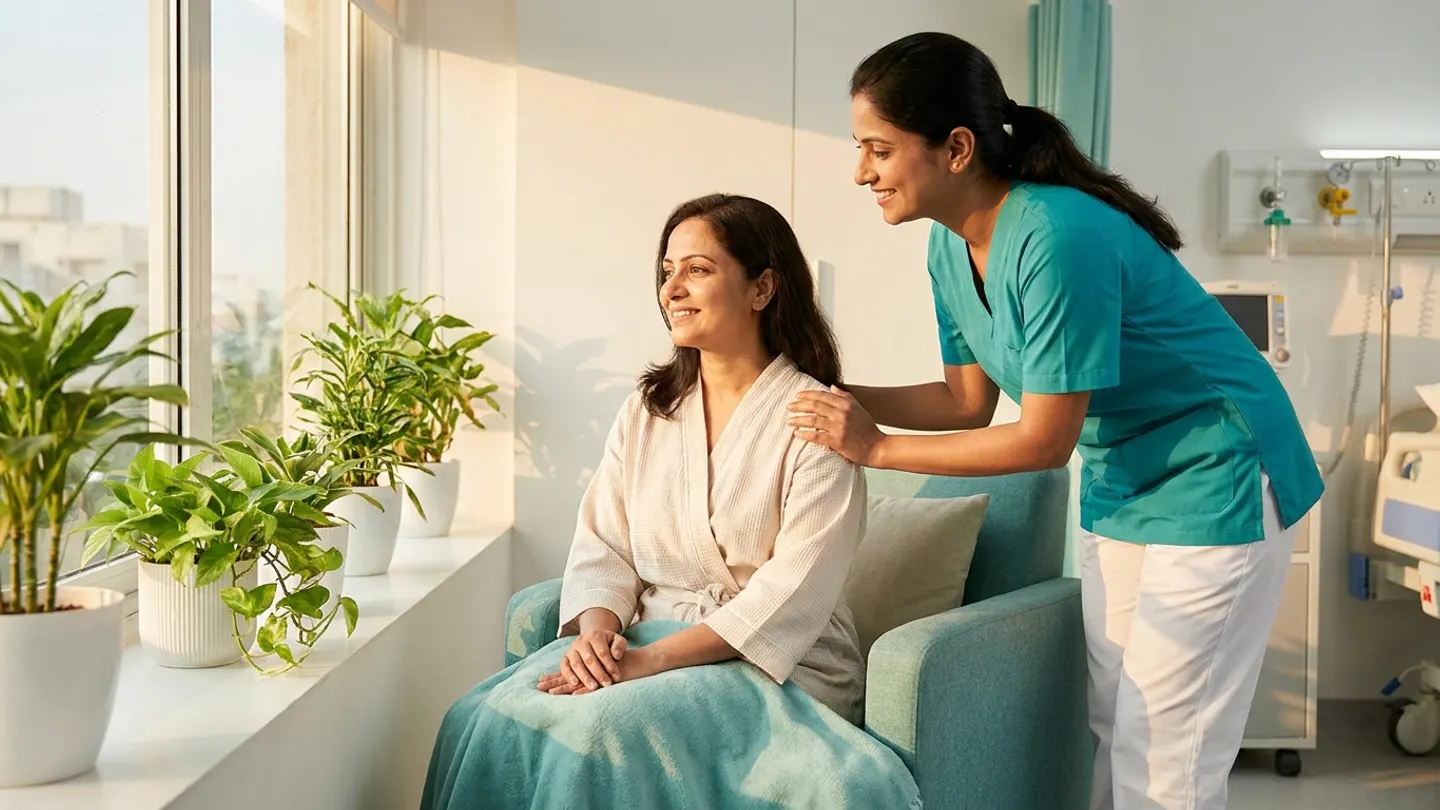
A chronic kidney disease diagnosis is frightening enough. When you add a monthly treatment bill that rivals a mortgage payment — or a six-month wait before a nephrologist can even see you — the fear multiplies fast. You are not alone in looking beyond your home country for a better path forward.
Peritoneal Dialysis in India for Foreigners: The Essential Overview
Peritoneal dialysis in India for foreigners is genuinely accessible, affordable, and medically well-supported. India’s nephrology centres offer the full spectrum of kidney replacement therapy — continuous ambulatory peritoneal dialysis (CAPD), automated peritoneal dialysis (APD), and hybrid approaches — at costs that are typically 70 to 85 percent lower than equivalent care in Western markets, with no meaningful wait for an appointment.
For many international patients, India is not just a cost option. It is often the fastest route to starting a treatment that their home health system has delayed for months.
What Is Peritoneal Dialysis and Why Does It Matter?
Peritoneal dialysis uses the natural lining of your abdomen (the peritoneal membrane) as a filter. A small silicone catheter is inserted into the abdomen during a minor surgical procedure. From that point, dialysis fluid (dialysate) is introduced, left to dwell, then drained — a cycle called an exchange. Most patients perform four exchanges per day with CAPD, or set up an automated cycler machine to run overnight exchanges while they sleep (APD).
The appeal of PD compared to haemodialysis is real:
- Performed at home, preserving independence and quality of life
- No travel to a dialysis centre three times a week
- Gentler, continuous clearance rather than intermittent sessions
- Better preservation of residual kidney function in early-stage patients
- Preferred for patients in remote locations, those who travel, and children
Not every kidney patient is a PD candidate — your nephrologist will assess your peritoneal membrane function, abdominal history, and lifestyle. But for those who qualify, starting PD in India can be life-changing.
Cost of Peritoneal Dialysis in India vs Other Countries (2026)
The table below uses indicative 2026 ranges based on typical nephrologist fees, hospital facility charges, catheter insertion costs, and monthly supply costs. Individual quotes will vary based on the city, hospital tier, dialysate brand, and whether automated (APD) or manual (CAPD) therapy is chosen.
| Cost Component | India | United States | United Kingdom | Australia | UAE (Dubai) |
|---|---|---|---|---|---|
| PD catheter insertion (one-time) | $1,500 – $3,500 | $8,000 – $15,000 | £5,000 – £10,000 (private) | AUD 6,000 – 12,000 | $5,000 – $10,000 |
| Monthly dialysate supplies | $200 – $450 | $1,500 – $3,000 | £800 – £1,500 (private) | AUD 1,500 – 3,000 | $1,200 – $2,500 |
| Monthly clinical follow-up | $80 – $200 | $400 – $1,200 | £300 – £800 (private) | AUD 400 – 1,000 | $300 – $800 |
| Patient training programme | $300 – $700 | $2,000 – $5,000 | Often NHS (long wait) | AUD 1,500 – 3,000 | $1,500 – $3,000 |
| Approximate first-year total | $5,000 – $9,000 | $25,000 – $55,000 | £15,000 – £30,000 | AUD 25,000 – 50,000 | $20,000 – $40,000 |
All figures are indicative. Actual costs depend on your specific clinical situation, the hospital you choose, and current exchange rates.
“I was quoted $4,200 per month just for PD supplies at home in Canada — that was with provincial coverage applied. My IndoMedTour coordinator found me a JCI-accredited centre in Chennai where the entire training, catheter placement, and three months of supplies worked out to less than what I was paying in a single month at home.” — Representative patient experience; details changed for privacy.
What the India PD Journey Looks Like: Step by Step
Step 1: Pre-Travel Assessment (2–4 weeks before departure)
Before you book a flight, your IndoMedTour coordinator works with the receiving nephrology team to review your existing reports: creatinine trends, GFR, urine output, comorbidities, and any previous abdominal surgery (which can affect PD candidacy). This happens remotely, and it costs nothing.
You will receive a written pre-travel checklist covering which medications to bring, what scans to carry, and how to manage fluid balance during the journey.
Step 2: Arrival and Nephrology Consultation (Day 1–2)
Your first appointment is a thorough face-to-face consultation with a senior nephrologist. Expect a peritoneal equilibration test (PET) to assess how well your membrane filters — this guides whether CAPD or APD is more suitable and what dialysate concentration you need.
Most patients are surprised by how smoothly this goes. India’s top nephrology departments see a high volume of international patients and are well-prepared for the language, cultural, and logistical questions that come with it.
Step 3: Catheter Insertion (Day 3–5)
PD catheter insertion is performed laparoscopically (keyhole surgery) under general or spinal anaesthesia. The procedure itself takes around 45 to 60 minutes. Most patients stay one to two nights in hospital for post-operative monitoring and initial healing.
JCI and NABH-accredited centres follow international infection-control protocols for catheter insertion — this is critical, as catheter-related peritonitis is the primary risk in long-term PD, and preventing it starts in the operating room.
Step 4: Hands-On Patient Training (Day 5–10)
This is where India’s PD programmes genuinely shine. A dedicated PD nurse educator works with you (and your family member or carer if they accompany you) through every exchange technique:
- Proper hand hygiene and aseptic technique
- Connecting and disconnecting the transfer set
- Recognising signs of infection early
- Fluid balance monitoring and when to call for help
- Setting up and programming the APD cycler (if applicable)
Training is adapted for patients who will return to a country with limited local nephrology support. You leave with written protocols in English, a troubleshooting guide, and direct contact details for the PD nurse team for remote follow-up.
Step 5: Supply Planning and Discharge (Day 10–14)
Your nephrologist writes a detailed discharge summary and a 90-day supply prescription. Your IndoMedTour coordinator helps you identify dialysate suppliers in your home country (Baxter and Fresenius supply most markets) and ensures the Indian team provides the exact product specifications your local supplier needs to match.
Telemedicine follow-up appointments are booked before you leave, so continuity of care is not an afterthought.
Quality Standards: How to Know You Are in Safe Hands
The two benchmarks that matter most for international patients are:
- JCI Accreditation (Joint Commission International): The global gold standard, audited against the same criteria used to evaluate hospitals in the US and Europe.
- NABH Accreditation (National Accreditation Board for Hospitals): India’s national equivalent, increasingly recognised internationally as a marker of rigorous clinical standards.
When choosing a PD centre in India, ask specifically whether their nephrology unit carries these accreditations, not just the broader hospital. Leading nephrology departments in cities such as Chennai, Mumbai, Delhi, Hyderabad, and Bangalore have established PD programmes managing hundreds of patients, with documented infection rates and outcomes.
See our hospitals for guidance on how we evaluate and select partner centres.
What About Ongoing Supplies After I Return Home?
This is the question most patients ask most urgently — and rightly so. The answer depends on your home country:
- Dialysate supplies (Baxter Dianeal, Fresenius Stay-Safe, Gambro) are available in most countries. Your India team will specify the exact product.
- Transfer sets and connectors are standardised globally and can typically be sourced through the same local supplier.
- APD cycler machines may be loaned or rented through local Baxter or Fresenius programmes in many markets.
Your IndoMedTour coordinator maps out the supply chain for your specific home country before discharge. This is not a detail we leave to chance.
Who Is a Good Candidate for Starting PD in India?
Patients who typically benefit most from this pathway include:
- Those on haemodialysis who want to transition to home-based PD but face long waits for training in their home country
- Newly diagnosed CKD Stage 5 patients who want to start PD before committing to haemodialysis
- Patients in countries where PD is not widely available or is prohibitively expensive
- Family caregivers who want comprehensive training alongside the patient
- Patients considering a kidney transplant in India who want to bridge with PD while on the waiting list (see [/treatments/organ-transplant] for transplant pathways)
How IndoMedTour Helps
From the moment you reach out, your dedicated IndoMedTour coordinator takes the complexity off your shoulders. We start with a free counselling call to understand your clinical situation and what you need most — whether that is a second opinion, a cost comparison, or a full treatment plan. We match you with a JCI or NABH-accredited nephrology centre suited to your profile, obtain written cost quotes so there are no surprises, and handle the medical visa paperwork, airport transfers, and accommodation near the hospital. Once you arrive, your coordinator stays beside you through catheter insertion, training, and discharge — and remains a point of contact for telemedicine follow-up after you return home. Learn more about how it works or explore treatments and costs.
You bring the worry. We bring the plan.
All patient experiences referenced in this article are representative and illustrative. No specific patient is identified or described.