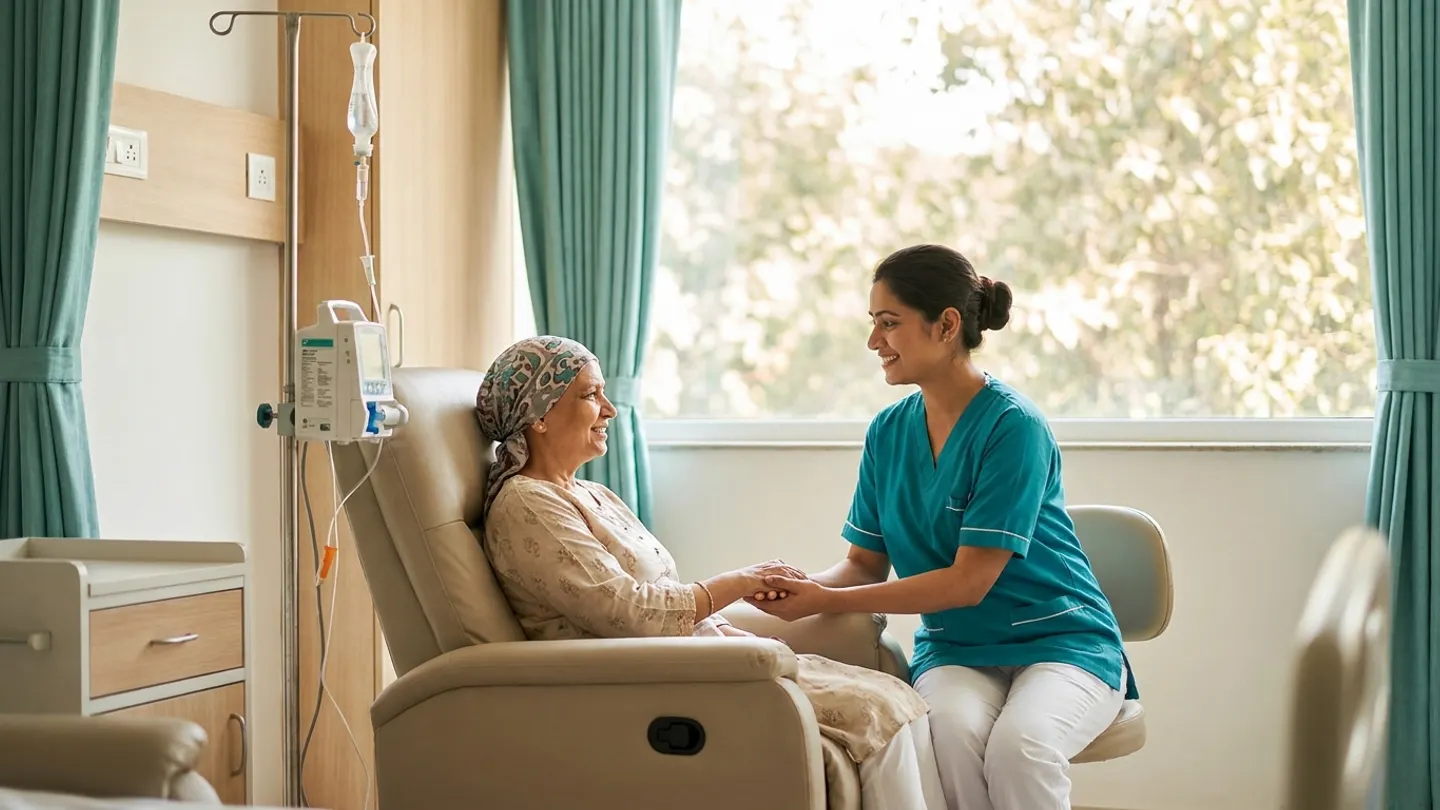
A prostate cancer diagnosis turns life upside down in an instant. Then comes the treatment estimate, and for many men, the cost is almost as frightening as the diagnosis itself.
Whether you are waiting months for a specialist referral, staring at a six-figure bill in the United States, or simply looking for a credible second opinion, India has become a genuine option for prostate cancer care — not a compromise, but a considered, well-researched choice made by thousands of men every year.
Prostate Cancer Treatment Cost in India: What to Expect in 2026
Prostate cancer treatment cost in India typically ranges from $2,500 to $8,000 all-in, depending on the stage of cancer and the procedure required. Robotic radical prostatectomy — the gold-standard surgical option — is available at India’s leading cancer centres for approximately $5,000 to $7,000, compared with $30,000 to $60,000 for the same procedure in the United States.
These are not budget clinics. The hospitals that treat international patients are large, multi-speciality facilities with dedicated oncology departments, robotic surgery suites, PSMA PET-CT scanners, and English-speaking clinical teams who routinely manage cases referred from the US, UK, Europe, and the Gulf.
Why So Many Men Are Choosing India for Prostate Cancer Care
The primary reason is straightforward: cost savings of 60 to 80 percent without sacrificing technology or clinical outcomes. But cost alone rarely makes the decision. Men who travel to India for prostate cancer treatment often mention three converging factors:
- They could not get a surgery or radiation appointment within a clinically acceptable timeframe at home.
- Their insurer denied coverage, or the co-pay remained unaffordable even with insurance.
- They wanted access to robotic surgery or advanced radiation platforms and found them available in India at a fraction of the domestic price.
“I was quoted $48,000 for my robotic prostatectomy in Florida. My IndoMedTour coordinator sent me three accredited hospital packages within a week. I paid $6,200 all-in, including flights and a hotel for my wife. My PSA has been undetectable for eighteen months.” — Representative patient experience; not a specific identifiable individual.
Treatment Options Available at Leading Indian Hospitals
India’s top oncology centres offer the full spectrum of prostate cancer treatment, including options that are not always accessible in smaller Western cities.
Radical Prostatectomy (Robotic and Open)
Robotic-assisted radical prostatectomy using the Da Vinci system is available at major hospitals in Chennai, Delhi, Mumbai, Hyderabad, and Bengaluru. Robotic surgery offers reduced blood loss, faster recovery, and better precision for nerve-sparing technique — a critical factor in preserving urinary and sexual function. Estimated cost: $5,000–$7,000.
Radiation Therapy
- IMRT (Intensity-Modulated Radiation Therapy): A full external-beam course of 37–39 fractions costs approximately $3,500–$6,000.
- SBRT / Stereotactic Body Radiation: A hypofractionated 5-session course is available for approximately $4,000–$6,500.
- Brachytherapy (seed implants): For low-risk localised disease, approximately $3,000–$5,000.
Hormone Therapy (Androgen Deprivation Therapy)
Ongoing hormone injections (LHRH agonists or antagonists) cost approximately $80–$200 per injection in India, compared with $600–$1,500 in Western markets. Many patients initiate treatment in India and continue maintenance at home.
Chemotherapy and Advanced Systemic Therapies
For castration-resistant or metastatic prostate cancer, chemotherapy with docetaxel or cabazitaxel is available, as are newer agents such as enzalutamide and abiraterone. Costs vary significantly by drug and cycle count; a written quote from IndoMedTour will break this down cycle by cycle before you commit to travel.
India vs. Global Prostate Cancer Treatment Cost (2026)
| Procedure | India | United States | United Kingdom | Australia | UAE |
|---|---|---|---|---|---|
| Robotic radical prostatectomy | $5,000–$7,000 | $30,000–$60,000 | £12,000–£25,000 | A$18,000–A$35,000 | $18,000–$30,000 |
| IMRT (full course) | $3,500–$6,000 | $25,000–$50,000 | £8,000–£18,000 | A$15,000–A$30,000 | $12,000–$22,000 |
| SBRT / CyberKnife (5 fractions) | $4,000–$6,500 | $20,000–$40,000 | £10,000–£20,000 | A$14,000–A$28,000 | $15,000–$28,000 |
| Brachytherapy (seed implant) | $3,000–$5,000 | $15,000–$35,000 | £8,000–£15,000 | A$12,000–A$25,000 | $10,000–$18,000 |
| PSMA PET-CT staging scan | $400–$700 | $3,000–$6,000 | £1,500–£3,000 | A$2,000–A$4,000 | $1,500–$3,000 |
All figures are indicative 2026 ranges. Actual costs depend on hospital tier, room category, cancer stage, and individual clinical complexity. IndoMedTour provides written, itemised quotes before you commit to anything.
What a Typical India Treatment Package Includes
When you arrange care through IndoMedTour, a detailed written cost estimate typically covers:
- Initial oncology consultation and full medical records review
- All diagnostic tests ordered in India (MRI pelvis, bone scan, PSMA PET-CT if required)
- Surgeon and anaesthesiologist fees
- Hospital stay (private room, nursing care, and meals)
- Operating theatre and robotic surgery platform charges
- Medications during admission and a standard discharge pack
- One post-operative follow-up consultation before departure
- Airport pickup and drop-off
Flights, accommodation outside the hospital, and visa fees are separate. Your dedicated coordinator will recommend serviced apartments or partner hotels within easy reach of the hospital for the recovery period.
Quality and Accreditation: What JCI and NABH Standards Mean for You
Choosing care abroad is only as reassuring as the quality standards behind it. The hospitals in IndoMedTour’s network hold either JCI (Joint Commission International) or NABH accreditation. JCI applies the same evaluation framework used to accredit hospitals in the United States and Europe, covering everything from surgical safety checklists to medication management and infection control.
Practically, for a prostate cancer patient travelling from abroad, this means:
- Mandatory pre-operative verification protocols and sterile technique standards identical to home-country expectations
- Patient safety reporting, adverse-event tracking, and clear escalation pathways
- Complete English-language medical records provided at discharge — ready to hand to your oncologist at home
- Structured processes for post-discharge telemedicine follow-up
See our hospitals for accreditation details and oncology speciality rankings across our network.
Factors That Affect Your Final Prostate Cancer Treatment Bill
Several variables move the final cost up or down from the ranges shown above:
- Cancer stage: Localised disease (T1–T2) is less expensive to treat than locally advanced (T3–T4) or metastatic disease, which may require multimodal therapy across several weeks.
- Hospital tier and city: Facilities in Delhi, Mumbai, and Chennai attract a modest premium; those in Hyderabad, Ahmedabad, and Kochi tend to run 10–20 percent lower for equivalent clinical capability.
- Room category: Standard private, deluxe, and suite options are available; most international patients choose the standard private room, which is fully comparable to a Western private hospital room.
- Nerve-sparing complexity: Bilateral nerve-sparing robotic prostatectomy adds surgical time relative to a standard procedure.
- Additional therapies: If staging reveals lymph node involvement or bone metastasis, adjuvant hormone therapy or radiation to the pelvis may be added to the plan.
Detailed procedure cost breakdowns are available on our treatments and costs page, and you can read specifically about cancer and oncology treatment options in India.
Planning Your Stay: What the Timeline Looks Like
Most men travelling for robotic prostatectomy plan a 3 to 4 week trip. The first two to three days involve arriving, settling in, and completing pre-operative consultations and blood work. Surgery follows, with a hospital stay of three to five days. Approximately two weeks of nearby recovery then precede the flight home.
For complete IMRT courses — daily fractions over seven to eight weeks — some patients split treatment: they start in India, then continue under the Indian team’s plan at a radiation centre closer to home. Indian hospitals routinely provide the full dosimetry plan and DICOM data needed for seamless handover.
Learn more about the end-to-end process on our how it works page, or read about the journeys of men who have been through this on our success stories page.
How IndoMedTour Helps
Getting a cancer diagnosis is hard enough without also becoming an expert in international healthcare logistics. When you book a free counselling call with IndoMedTour, our oncology case managers review your pathology reports and imaging, match you to two or three accredited hospitals with genuine expertise in your specific diagnosis, and send you written, itemised cost quotes — no pressure, no obligation, no booking fees.
We manage your medical visa application, arrange airport transfers, book recovery accommodation, and assign a dedicated patient coordinator who stays beside you through every stage: pre-operative, during surgery, through recovery, and into the follow-up period. When you fly home, we remain available for telemedicine queries and liaise directly with your home oncologist so your care continues without gaps.
You bring the worry. We bring the plan.