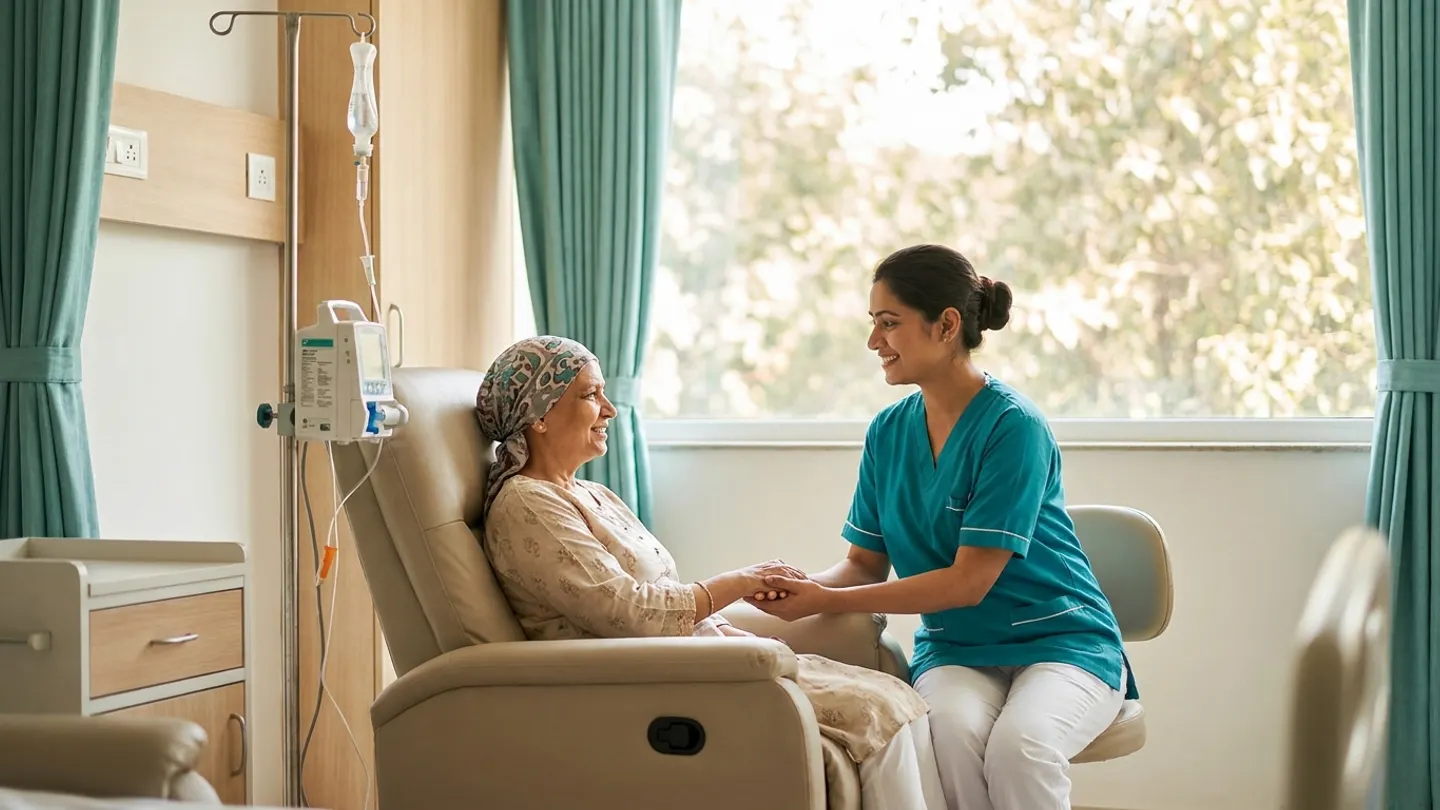
A cancer diagnosis upends everything, and then the financial reality lands on top of it. Whether you are facing a six-figure bill in the United States or a waiting list that stretches past the window your oncologist says matters, the idea of travelling abroad for surgery deserves a straight, calm answer.
What Does Robotic Cancer Surgery Cost in India?
Robotic cancer surgery cost in India typically ranges from USD 4,000 to USD 18,000 for the complete surgical episode, depending on cancer type, the robotic platform, and the hospital tier you choose. That is between 60 and 80 percent less than comparable procedures in the United States, United Kingdom, or Australia — and the technology on the operating table is identical.
India’s leading cancer surgery centres use the same equipment you would find in a major American or British hospital: the Da Vinci Surgical System from Intuitive Surgical and the newer robotic platforms for thoracic work. What differs is the hospital overhead and operating cost structure, not the quality of care or the instruments in the surgeon’s hands.
“I was quoted USD 62,000 for robotic prostatectomy back home. The same procedure at a JCI-accredited hospital in India cost USD 6,800 all-in. My margins were clear, and I flew home twelve days later.” Representative patient experience shared with IndoMedTour care team.
Robotic Cancer Surgery Cost in India vs Other Countries (2026)
The table below shows indicative 2026 price ranges for the surgical episode including the hospital stay. Figures do not include travel, accommodation, or post-operative follow-up in your home country. Actual costs vary by cancer stage, individual clinical complexity, and the specific hospital chosen.
| Procedure | India | USA | UK | Australia | UAE |
|---|---|---|---|---|---|
| Robotic prostatectomy | USD 5,000 – 8,500 | USD 30,000 – 65,000 | USD 25,000 – 45,000 | USD 20,000 – 40,000 | USD 18,000 – 30,000 |
| Robotic colorectal resection | USD 5,500 – 9,500 | USD 35,000 – 70,000 | USD 28,000 – 52,000 | USD 22,000 – 46,000 | USD 20,000 – 36,000 |
| Robotic hysterectomy (gynaecological cancer) | USD 4,000 – 7,500 | USD 25,000 – 55,000 | USD 20,000 – 40,000 | USD 18,000 – 35,000 | USD 15,000 – 28,000 |
| Robotic nephrectomy (kidney cancer) | USD 5,000 – 9,000 | USD 30,000 – 60,000 | USD 25,000 – 46,000 | USD 20,000 – 42,000 | USD 18,000 – 32,000 |
| Robotic lung lobectomy (RATS) | USD 7,000 – 12,000 | USD 40,000 – 80,000 | USD 32,000 – 62,000 | USD 28,000 – 55,000 | USD 22,000 – 40,000 |
| Robotic gastrectomy (stomach cancer) | USD 6,000 – 11,000 | USD 35,000 – 72,000 | USD 28,000 – 56,000 | USD 24,000 – 50,000 | USD 20,000 – 38,000 |
| Robotic cystectomy (bladder cancer) | USD 6,500 – 11,500 | USD 38,000 – 75,000 | USD 30,000 – 58,000 | USD 26,000 – 52,000 | USD 22,000 – 40,000 |
Visit our treatments and costs page for a broader overview across all specialities.
Da Vinci vs RATS: Robotic Platforms Used in Indian Cancer Hospitals
The Da Vinci Surgical System
The Da Vinci platform is the most widely installed robotic system across India’s top-tier hospitals. It offers surgeons three-dimensional high-definition vision and multi-jointed instruments that rotate far beyond the range of the human wrist. Oncologists use it most commonly for prostate, kidney, bladder, colorectal, and gynaecological cancers. Hospitals in Mumbai, Delhi, Chennai, Bangalore, and Hyderabad have been using Da Vinci systems for well over a decade, accumulating significant case volume and institutional expertise.
RATS: Robotic-Assisted Thoracic Surgery
For lung cancer, leading Indian centres use robotic-assisted thoracic surgery platforms, sometimes called RATS. Compared with conventional video-assisted thoracoscopic surgery, RATS gives the surgeon greater dexterity within the chest cavity, which matters enormously for complex lobectomies, sleeve resections, and cases requiring careful lymph node clearance. Indian thoracic oncology teams at high-volume centres have adopted RATS rapidly over the past few years, and outcomes data from these centres compares well with published international benchmarks.
How the Platform Choice Affects Your Cost
The robotic system itself does not dramatically change the price band for most procedures. What matters more is hospital tier, case complexity, and length of stay. IndoMedTour matches patients to the right centre based on their specific cancer type and stage, not just geographic convenience.
What Factors Affect the Final Robotic Cancer Surgery Cost in India?
Several variables will move your quoted price within or outside the ranges above:
- Cancer type and stage: Early-stage, technically straightforward resections cost less than multi-quadrant operations or procedures requiring extensive lymph node dissection or reconstruction.
- Hospital tier: JCI-accredited tertiary hospitals in major metros sit at the higher end of the range. Strong NABH-accredited regional centres can be 15 to 25 percent less expensive without any meaningful compromise in surgical safety or robotic technology.
- Duration of hospital stay: Most robotic cancer procedures result in 2 to 4 days of inpatient stay versus 5 to 7 days for open surgery, but complex cases or post-operative complications can extend this.
- Pre-operative workup in India: If you need PET-CT, MRI, pathology review, or a tumour board consultation on arrival, these typically add USD 500 to USD 2,500 to the overall package.
- Ancillary services: Anaesthesia, intensive-care monitoring, physiotherapy, and initial oncology follow-up visits are included in most hospital packages, but always request an itemised written quote before confirming.
- Post-operative recovery accommodation: Many patients stay in serviced apartments near the hospital for 7 to 14 days before flying home. This is an out-of-pocket cost separate from the hospital package.
Always ask for a written, itemised quote. Any reputable hospital or facilitator provides them without hesitation.
Is Robotic Cancer Surgery in India Safe?
Safety is the right first question, and the answer is reassuring. India’s leading cancer surgery centres hold JCI (Joint Commission International) or NABH (National Accreditation Board for Hospitals) accreditation, the same internationally recognised standards that patients in the United States and Europe use to evaluate hospitals in their own countries.
Robotic surgery does not change the fundamental safety equation: what matters is the accreditation of the facility, the annual volume of robotic procedures the surgical team performs, the quality of the anaesthesia team, and the robustness of intensive-care support. High-volume Indian centres performing hundreds of robotic cancer surgeries per year have published outcomes, including conversion rates to open surgery, complication rates, and pathological margin clearance, that are comparable to leading Western programmes.
You are not accepting lower standards. You are accessing equivalent standards at a fraction of the price. Explore our hospitals to review accreditation status and oncology specialities at IndoMedTour partner centres.
Which Cancers Are Treated with Robotic Surgery in India?
Robotic surgery is now a standard-of-care option for a wide range of malignancies at India’s leading cancer hospitals:
- Prostate cancer — robotic radical prostatectomy is the single most commonly performed robotic cancer operation in India
- Colorectal cancer — robotic anterior resection, right hemicolectomy, and total mesorectal excision
- Cervical and uterine cancer — robotic radical hysterectomy with pelvic lymph node dissection
- Kidney cancer — robotic partial or radical nephrectomy
- Bladder cancer — robotic radical cystectomy with urinary diversion
- Lung cancer — RATS lobectomy and segmentectomy
- Stomach cancer — robotic total or subtotal gastrectomy
- Head and neck cancer — transoral robotic surgery (TORS) for selected oropharyngeal tumours
Eligibility for robotic surgery depends on your cancer stage, general health status, and the treating oncology team’s assessment. Tumour board review, which India’s top cancer hospitals conduct routinely, ensures every case receives multi-specialist input before surgery proceeds. See our dedicated oncology treatment page for more detail.
What the Journey Typically Looks Like
For most international patients, the timeline from first contact to discharge runs approximately three to four weeks in India:
- Days 1 to 3: Arrival, pre-operative assessment, imaging review, tumour board consultation if needed
- Days 4 to 6: Surgery (robotic procedures typically take 2 to 5 hours in theatre)
- Days 7 to 10: Inpatient recovery, drain management, initial pathology results
- Days 11 to 20: Outpatient recovery at nearby accommodation; follow-up scans and oncology review
- Day 21 onwards: Fly home with a comprehensive discharge summary and treatment plan for your home oncologist
Read how it works for a full walkthrough of the process, from sending your reports to boarding your return flight.
Patients who have made this journey share their experiences on our success stories page.
How IndoMedTour Helps
When you book a free counselling call with IndoMedTour, a specialist coordinator reviews your diagnosis and sends your reports to shortlisted robotic oncology teams at JCI or NABH-accredited hospitals. You receive written, itemised quotes from two or three centres within 48 to 72 hours, with no obligation to proceed. We manage your medical visa, airport transfers, hospital accommodation bookings, and interpreter support throughout your stay. Your dedicated coordinator is with you through pre-operative tests, surgery day, recovery, and discharge, so you are never navigating an unfamiliar system alone. We also prepare the full clinical summary your home oncologist needs to continue your care after you return.
You bring the worry. We bring the plan.