You were told you need a new hip. Then came the estimate: $45,000 or more, or perhaps an 18-month wait on a public list while the pain keeps building. That fear is real, and you deserve a clear-eyed answer about what your options actually are.
Robotic Hip Replacement Cost in India: The Direct Answer
Robotic hip replacement cost in India typically falls between $6,000 and $10,000 USD for a complete, all-inclusive package at an accredited private hospital. That single number is 70–80% lower than the same procedure in the United States, and 50–65% lower than comparable private-hospital pricing in the United Kingdom or Australia. India achieves these savings not through shortcuts, but through lower operating costs, government healthcare infrastructure investment, and a deep pool of internationally trained orthopaedic surgeons who perform high volumes of joint replacements every year.
Cost Comparison: Robotic Hip Replacement India vs Other Countries (2026)
| Country | Approximate Total Cost (USD) | Notes |
|---|---|---|
| India | $6,000 – $10,000 | Full package: implant, surgeon, anaesthesia, hospital stay |
| United States | $40,000 – $60,000 | Hospital billing; insurance may cover part |
| United Kingdom (private) | $20,000 – $30,000 | NHS public wait often 12–18+ months |
| Australia | $18,000 – $28,000 | Private health fund gap payments apply |
| UAE / Dubai | $15,000 – $22,000 | High quality, but premium pricing for infrastructure |
| Thailand | $10,000 – $15,000 | Fewer dedicated robotic centres than India |
All figures are indicative 2026 ranges. Final quotes depend on implant brand, hospital tier, city, length of stay, and individual clinical needs.
The cost difference is not a signal of lower quality. India’s top-tier hospitals invest in the same Mako robotic-arm assisted platforms, Smith+Nephew CORI systems, and Stryker navigation suites used in leading American and European centres. The difference is labour and infrastructure costs, not clinical standards.
What Is Mako Robotic Hip Replacement?
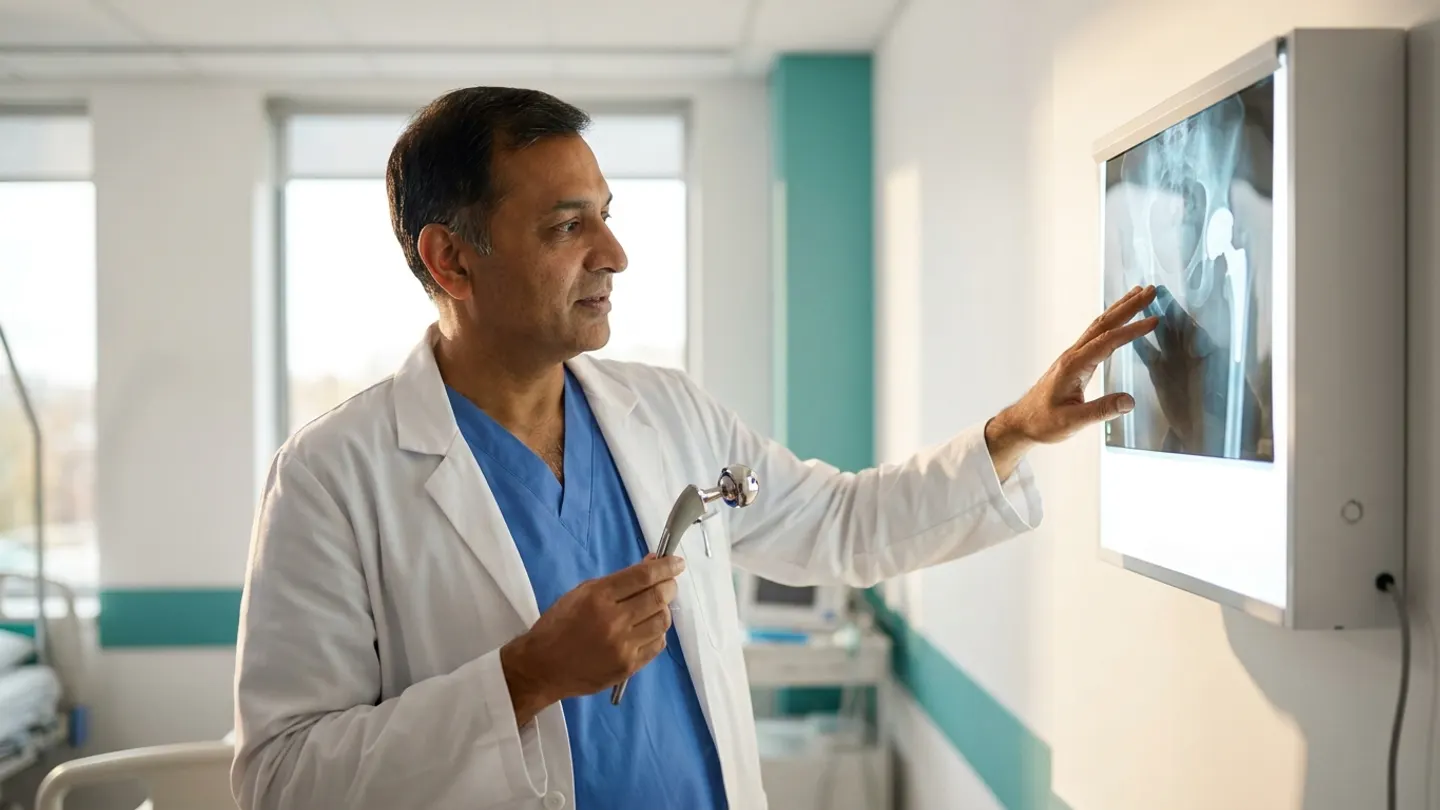
Mako is Stryker’s robotic-arm assisted surgical system, widely regarded as a gold standard for precision joint replacement. Before surgery, a CT scan creates a personalised three-dimensional model of your hip anatomy. On the day of the procedure, the robotic arm guides the surgeon’s movements in real time, keeping every cut and implant placement within a pre-planned boundary measured in millimetres.
For patients, this precision translates to measurable benefits:
- Smaller incisions and less damage to surrounding soft tissue
- More accurate cup and stem positioning, reducing the risk of dislocation
- Faster return to walking, often within 24 hours of surgery
- Potentially longer implant longevity due to optimal alignment
- Lower rates of leg-length discrepancy compared to conventional manual surgery
Mako is not the only robotic platform available in India. Other systems in clinical use include the Zimmer Biomet ROSA Hip, Smith+Nephew CORI, and computer-navigation-assisted surgery, each supported by peer-reviewed evidence of improved outcomes over traditional techniques. When requesting a quote, ask specifically which system is in use at that hospital.
Why India Has Become a Global Hub for Robotic Hip Surgery
India performs more total hip and knee replacements than almost any country outside the United States. That volume matters. High-volume surgeons and high-volume hospitals consistently produce better outcomes in joint replacement: lower complication rates, shorter theatre times, and faster patient recovery.
Several factors reinforce that advantage for international patients:
- Global accreditation as a quality floor. Many of India’s leading hospitals hold JCI (Joint Commission International) accreditation, the same standard applied to top hospitals in the US and Europe. The domestic NABH framework is India’s equivalent, overseen by the Quality Council of India. Both frameworks require rigorous infection control, surgical protocols, and patient safety systems. Explore our hospitals to see which centres meet this bar.
- English-speaking care teams. Consultations, consent forms, discharge summaries, and aftercare instructions are routinely provided in English, removing a significant source of anxiety for international patients.
- Choice of international implant brands. Patients can request premium implants from Stryker, Zimmer Biomet, DePuy Synthes, or Smith+Nephew — the same brands used at home. The implant cost is usually built into the package quote, so you know the full number upfront.
- Short waiting times. Most international patients are scheduled for surgery within one to three weeks of arrival, compared to months or years on public lists elsewhere.
“I had been waiting fourteen months on the NHS list. My pain was an eight out of ten every morning. My coordinator in India answered every question before I flew, and I walked the hotel corridor the day after surgery.” — Representative patient experience; not a specific identifiable individual.
What a Typical Robotic Hip Replacement Package Includes
When you receive a written quote from an IndoMedTour partner hospital, it should clearly itemise what is covered. A standard all-inclusive package at an accredited Indian hospital typically contains:
- Pre-operative blood work, X-rays, and CT scan (used to build the 3-D robotic model)
- Surgeon and anaesthesiologist fees
- Robotic system usage fee
- Implant (specify brand and type when requesting your quote)
- Private hospital room with a companion bed for a family member or carer
- Nursing care and daily physiotherapy sessions during the inpatient stay
- Meals for the patient throughout the hospital stay
- Post-operative medications covering the hospital period
- Discharge summary and imaging data to take home for your local follow-up
What is generally not included in the medical package: international flights, airport transfers, hotel accommodation after discharge, travel insurance, and outpatient physiotherapy once you return home. Ask your coordinator to prepare a full trip cost estimate alongside the medical quote so you can plan without surprises. See treatments and costs and how it works for a complete breakdown from first enquiry to discharge.
How Long Do You Need to Stay in India?
Most robotic hip replacement patients plan a total trip of 12 to 16 days in India. A representative timeline looks like this:
- Days 1–2: Arrival, rest, pre-operative consultations and imaging at the hospital
- Day 3: Surgery (admission the morning before, or the evening prior)
- Days 4–6: Inpatient recovery, daily physiotherapy, wound monitoring
- Day 7: Discharge to hotel or serviced apartment
- Days 8–14: Outpatient physiotherapy sessions, follow-up consultation, suture removal
- Days 15–16: Fitness-to-fly assessment and clearance from the surgeon
Most airlines require a medical fitness-to-fly certificate after major joint surgery. Your coordinator will arrange this as part of the discharge process. For more detail on recovery planning and what to expect during rehabilitation, visit our orthopedics and joint replacement page.
Choosing the Right Hospital: Questions to Ask Before You Commit
Not every hospital that markets “robotic surgery” has a full Mako or equivalent platform. Some use computer-navigation assistance, which is valuable but technically different. Ask specific questions before paying any deposit:
- Which robotic system is in use, and how many procedures has this surgical team performed on it?
- Is the hospital JCI or NABH accredited? Can you share the certificate?
- What is the surgeon’s robotic hip replacement case volume per year?
- Is the implant brand and model specified in the written quote?
- What is the hospital’s protocol if a complication arises after I return home?
A reputable facilitator will put these questions directly to the hospital and provide written answers before you commit. If a hospital declines to answer, that itself is useful information.
How IndoMedTour Helps
IndoMedTour offers a free counselling call where a medical coordinator reviews your scans and reports, matches you with accredited hospitals that have genuine robotic capability for your specific case, and sends written, itemised quotes from multiple centres so you can compare honestly and without pressure. We arrange visa invitation letters, airport transfers, and accommodation, and a dedicated coordinator stays beside you from the moment you land through surgery, recovery, and your flight home. You bring the worry. We bring the plan.