When you or someone you love receives a diagnosis that requires a stem cell transplant, the cost in many Western countries can feel like a second blow. If you are staring at an estimate running to six figures, or waiting on a public list with no clear timeline, there is a practical alternative worth understanding fully.
What Does Stem Cell Transplant Cost in India?
Stem cell transplant cost in India typically ranges from approximately $12,000 to $40,000 USD, making it 70 to 80 percent less expensive than equivalent procedures in the United States, United Kingdom, or Australia. The exact figure depends on the type of transplant you need, the length of your inpatient stay, and the complexity of your conditioning regimen.
Here is how India compares with other countries on a like-for-like basis:
| Transplant Type | India (approx.) | United States (approx.) | UK Private (approx.) | Australia (approx.) |
|---|---|---|---|---|
| Autologous Stem Cell Transplant | $12,000 – $20,000 | $150,000 – $300,000 | £80,000 – £140,000 | AUD 200,000 – 350,000 |
| Allogeneic (matched sibling donor) | $25,000 – $40,000 | $250,000 – $450,000 | £120,000 – £200,000 | AUD 280,000 – 500,000 |
| Allogeneic (unrelated matched donor) | $30,000 – $48,000 | $300,000 – $500,000+ | £150,000 – £250,000+ | AUD 350,000 – 600,000+ |
All figures are indicative 2026 ranges. Final costs vary by hospital, patient case complexity, and duration of stay. These are not guarantees of outcome or price.
These savings are not the result of lower standards. India’s top transplant programmes hold JCI (Joint Commission International) or NABH accreditation, process stem cells under WHO Good Manufacturing Practice guidelines, and report clinical outcomes that compare favourably with international benchmarks.
Types of Stem Cell Transplant and How They Affect Cost in India
Autologous Transplant
In an autologous procedure, your own stem cells are collected and stored before high-dose chemotherapy is given to eliminate diseased cells. The stored cells are then re-infused to rebuild your bone marrow. Because no donor search is needed and graft-versus-host disease is not a risk, this is typically the simpler and less costly option. It is the standard approach for multiple myeloma, relapsed Hodgkin lymphoma, and certain non-Hodgkin lymphoma cases. In India, an autologous transplant typically starts from around $12,000 for a straightforward case.
Allogeneic Transplant
An allogeneic transplant uses cells from a compatible donor, most often a matched sibling, a matched unrelated donor sourced from an international registry such as DKMS, or an umbilical cord blood unit. The procedure involves a more intensive conditioning phase, a longer inpatient stay, and ongoing management of graft-versus-host disease. These factors raise the cost, but Indian centres experienced in allogeneic transplants manage these protocols to full international standards. Even at the higher end of the allogeneic range, the cost in India remains a fraction of equivalent care elsewhere.
What Is Typically Included in the Quoted Price?
Understanding exactly what a hospital quotation covers helps you compare centres fairly and avoid late surprises. A comprehensive package at a reputable Indian transplant centre generally includes:
- Pre-transplant evaluation: haematology consultations, HLA typing, bone marrow biopsy, cardiac and lung function testing, and infectious disease screening
- Stem cell mobilisation and collection (or matched donor coordination for allogeneic cases)
- High-dose chemotherapy conditioning
- The stem cell infusion itself
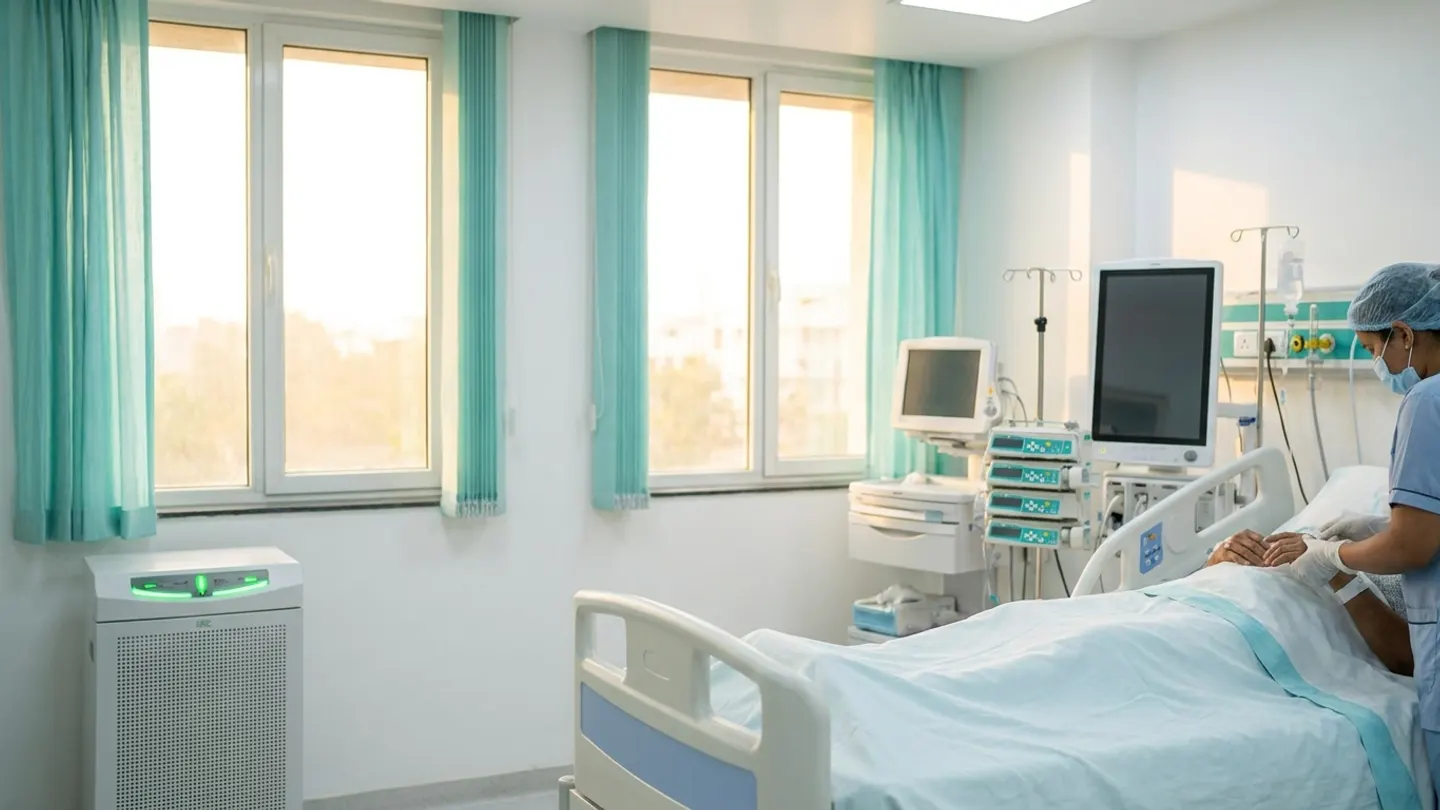
- Inpatient stay in a HEPA-filtered isolation room, typically 25 to 40 days
- Nursing care, blood product transfusions, and infection monitoring throughout
- Standard post-infusion follow-up appointments during the India stay
Items that are usually billed separately include international flights, companion accommodation outside the hospital, international donor registry search fees where applicable, extended inpatient days beyond the quoted allowance, and follow-up care after you return home. Always request a written, itemised quotation before committing to any centre.
Is Stem Cell Transplant in India Safe?
“The quality of a transplant depends on the team, the protocols, and the infrastructure, not the country. India’s best centres have all three.”
This is a question every international patient should ask, and the answer is substantiated by accreditation, not just reassurance. When evaluating Indian centres, look for the following:
- JCI or NABH accreditation, which requires independent external audit of clinical processes and patient safety standards
- A dedicated bone marrow transplant unit with laminar airflow or HEPA filtration, essential for protecting severely immunocompromised patients
- Affiliation with an international stem cell donor registry for allogeneic cases
- A transplant team that conducts a high annual volume of procedures, as procedure volume correlates strongly with outcomes in complex haematology
- Transparent outcome data or willingness to share historical results for your specific diagnosis
Browse our accredited partner hospitals to see the centres we work with and why we selected them.
Which Conditions Are Treated with Stem Cell Transplant in India?
Indian haematology and oncology teams perform transplants across a broad range of diagnoses, including:
- Acute myeloid leukaemia (AML) and acute lymphoblastic leukaemia (ALL)
- Multiple myeloma
- Hodgkin and non-Hodgkin lymphoma
- Chronic myeloid leukaemia (CML)
- Myelodysplastic syndrome (MDS)
- Aplastic anaemia and thalassaemia major
- Selected neuroblastoma and other paediatric malignancies
If your diagnosis appears on this list, a remote second opinion from an Indian transplant centre is a sensible early step, even before you have committed to travelling. Many patients receive a detailed written clinical assessment from an Indian haematologist while still undergoing treatment at home. Learn more about our oncology treatment pathways.
Planning Your Stem Cell Transplant Journey: A Practical Checklist
Organising a stem cell transplant abroad can feel overwhelming, but breaking it into clear steps makes it manageable. Before you travel:
- Gather all medical records, including pathology reports, bone marrow biopsy results, imaging studies, and a summary letter from your current oncologist
- Confirm your diagnosis and the recommended transplant type in writing from your home treatment team
- If an allogeneic transplant is likely, discuss HLA typing timing with your IndoMedTour coordinator, as some centres prefer this done before arrival
- Apply for an Indian medical visa, which covers the patient and one accompanying companion; processing typically takes 3 to 5 working days
- Plan for a companion to remain with you throughout the stay, as the post-transplant recovery period is intensive
- Budget realistically for 45 to 90 days in India depending on transplant type and your recovery progress
- Request itemised written cost estimates from at least two shortlisted centres before making a decision
Read the full patient journey on our how it works page.
Other Costs to Budget for Beyond the Hospital Bill
The transplant package is the largest expense, but international patients should plan for additional costs:
Accommodation: Serviced apartments near major Indian transplant centres typically cost $30 to $80 per night. Many hospital campuses have attached patient lodges at lower rates, which is practical during recovery when the patient cannot travel far.
Daily living expenses: India is genuinely affordable. A patient and companion can budget approximately $25 to $40 per day for meals and incidentals outside the hospital.
Travel: International return flights from the US or UK to major Indian cities typically range from $700 to $1,500 per person. Patients travelling from the Middle East or Southeast Asia often find significantly lower fares.
Post-return follow-up: Your home oncologist or haematologist will continue monitoring you after you return. Before discharge from your Indian centre, confirm exactly which tests, clinical reports, and medications you need to hand over to your home care team.
Even with all of these additional costs accounted for, most international patients achieve total savings of 60 to 75 percent compared with funding the same procedure privately at home. Read how other patients made this journey.
How IndoMedTour Helps
A stem cell transplant is not a procedure you should organise alone, and with IndoMedTour, you do not have to. We begin with a free counselling call where a medical coordinator reviews your diagnosis, listens to your concerns, and matches you with accredited transplant centres best suited to your case and budget. We obtain written cost estimates from multiple hospitals so you can compare transparently, then manage your medical visa paperwork, flights, and ground transfers. A dedicated coordinator stays beside you from your first day in India through the transplant and the post-transplant recovery period, ensuring that language, logistics, and clinical communication never become a barrier. We remain in contact after you return home and your local team takes over care. You bring the worry. We bring the plan.