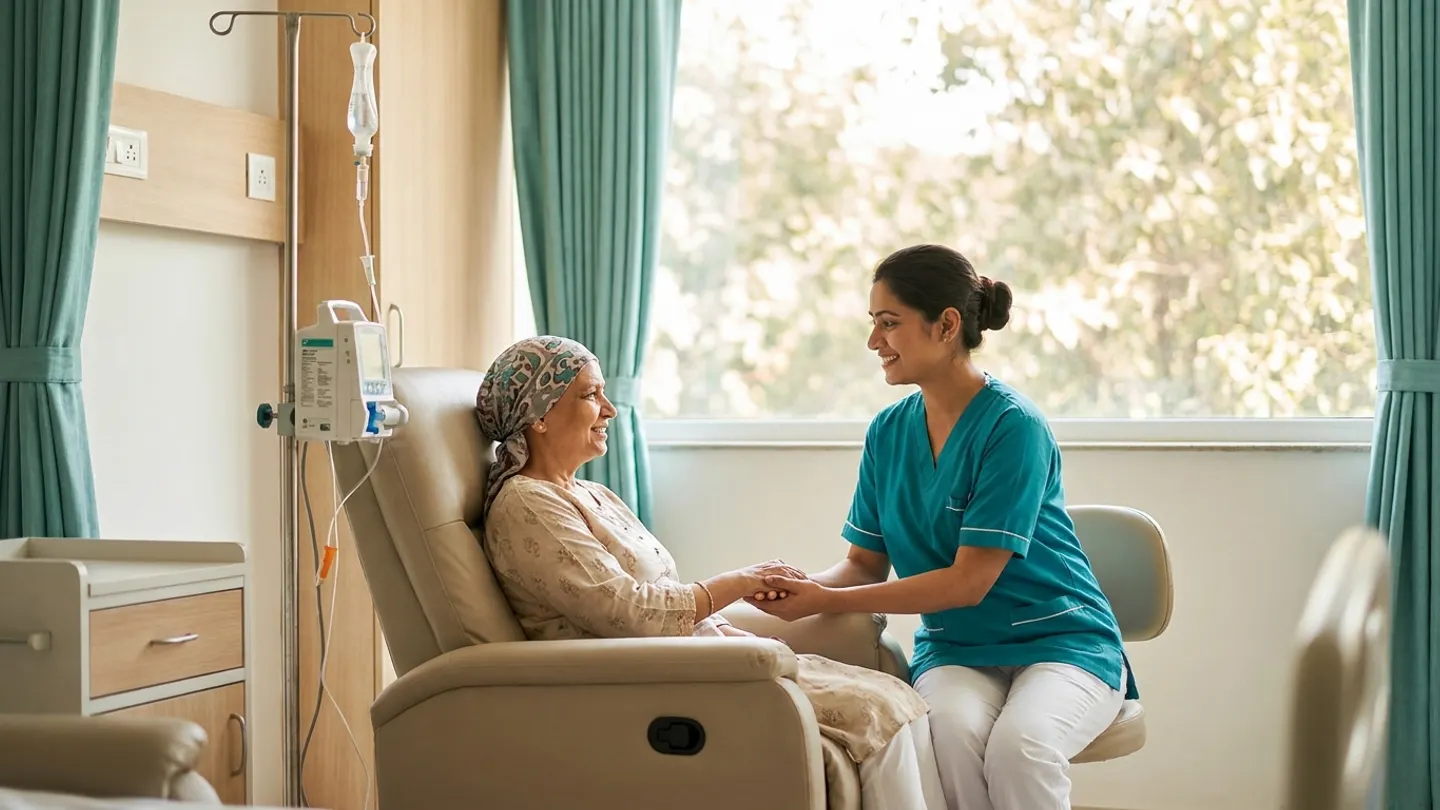
Receiving a targeted therapy prescription is a strange mixture of hope and panic. Hope, because your oncology team has found a precise molecular driver in your tumour that can be blocked. Panic, because a single month of some EGFR or HER2 inhibitors in the United States can cost more than a year’s salary for many families — and in the UK or Australia, public funding approval can take months that you may not feel you have.
There is a real answer here, and it does not require compromising on care.
What Is the Targeted Therapy Cost in India?
Targeted therapy cost in India typically ranges from approximately $800 to $5,000 per month depending on the specific drug, its generation, and whether it is a small-molecule agent or a biologic. This is generally 60 to 80 percent lower than the same treatment in the US, UK, or Australia. The gap is not explained by inferior quality. It is explained by India’s large generic pharmaceutical manufacturing base, significantly lower hospital operating costs, and government pricing regulations on essential cancer medicines.
For context, molecular profiling — the next-generation sequencing (NGS) test that confirms whether your tumour carries an EGFR, HER2, ALK, ROS1, or KRAS mutation — costs approximately $300 to $800 at a leading Indian cancer centre. In the United States, the same comprehensive panel routinely runs $3,000 to $8,000.
Which Cancers Are Treated with EGFR, HER2, and ALK Inhibitors?
Targeted therapy is precision medicine: it only works if your tumour carries the specific mutation a drug is designed to block. Before beginning treatment, a tissue biopsy and molecular profiling test will confirm whether you are a candidate.
EGFR Inhibitors
EGFR (Epidermal Growth Factor Receptor) mutations are most common in non-small-cell lung cancer (NSCLC), particularly in non-smokers and patients of East or South Asian origin. First- and second-generation EGFR inhibitors such as gefitinib, erlotinib, and afatinib are now widely available as generics in India. Third-generation osimertinib — used after T790M resistance develops, or as a preferred first-line option — is also available and significantly cheaper than in Western markets.
HER2 Inhibitors
HER2 amplification or overexpression occurs in roughly 15 to 20 percent of breast cancers and in smaller subsets of gastric, lung, and colorectal cancers. Drugs in this class include trastuzumab (Herceptin and biosimilars), pertuzumab, lapatinib, and the newer antibody-drug conjugate trastuzumab deruxtecan (T-DXd). Trastuzumab biosimilars are manufactured in India at a fraction of the originator cost, which makes a meaningful financial difference over a typical 12-to-18-month treatment course.
ALK Inhibitors
ALK rearrangements appear in approximately 3 to 5 percent of NSCLC cases and in some anaplastic large cell lymphomas. First-generation crizotinib and newer agents such as alectinib, ceritinib, and brigatinib are all available at accredited Indian cancer centres.
Targeted Therapy Cost in India vs US, UK, Australia, and UAE
The table below shows indicative 2026 monthly drug costs in USD. These are approximate ranges for the drug alone and do not include consultations or monitoring tests. Actual costs vary by dosage, hospital, and whether a branded or generic/biosimilar version is dispensed.
| Drug Class and Example Agent | India | USA | UK | Australia | UAE |
|---|---|---|---|---|---|
| EGFR inhibitor, generic (e.g. gefitinib) | $80 — $400/month | $3,000 — $8,000/month | $2,000 — $6,000/month | $2,500 — $7,000/month | $1,500 — $4,000/month |
| EGFR inhibitor, 3rd-gen (e.g. osimertinib) | $1,500 — $3,000/month | $12,000 — $18,000/month | $8,000 — $14,000/month | $9,000 — $15,000/month | $6,000 — $10,000/month |
| HER2 inhibitor, biosimilar trastuzumab | $600 — $1,800/cycle | $8,000 — $18,000/cycle | $6,000 — $12,000/cycle | $7,000 — $14,000/cycle | $5,000 — $10,000/cycle |
| HER2 inhibitor, T-DXd (branded) | $3,000 — $5,000/cycle | $18,000 — $28,000/cycle | $14,000 — $22,000/cycle | $15,000 — $24,000/cycle | $10,000 — $16,000/cycle |
| ALK inhibitor (e.g. alectinib) | $1,200 — $3,500/month | $12,000 — $22,000/month | $8,000 — $16,000/month | $9,000 — $17,000/month | $6,000 — $12,000/month |
All figures are indicative 2026 ranges. Costs vary with dosage, brand versus generic, and individual hospital agreements.
“For my mother’s osimertinib treatment in India we paid approximately one-fifth of what the US price would have been. The oncologist was thorough, the hospital was modern, and we never once felt we were receiving second-class care.” — Representative feedback from a family who travelled to India for lung cancer treatment
Why Is Targeted Therapy So Much Cheaper in India?
Several structural factors create this price difference:
- Generic and biosimilar manufacturing: India is the world’s largest producer of generic pharmaceuticals. Many targeted agents whose patents have expired are manufactured domestically at low cost, and biosimilar versions of biologics such as trastuzumab are produced by multiple Indian manufacturers competing on price.
- Lower hospital operating costs: Nursing, specialist fees, and facility overheads in India are genuinely lower than in Western markets — not because of lower standards, but because of a lower local cost of living and different regulatory overhead.
- Government price controls: India’s National Pharmaceutical Pricing Authority (NPPA) caps prices on essential cancer medicines, keeping costs accessible for domestic and international patients alike.
- Currency differential: Even when a drug must be imported, the effective cost in USD is lower due to exchange-rate dynamics and lower import duties on oncology medicines.
Is It Safe? Quality Standards at Indian Cancer Centres
This is exactly the right question to ask. India has more than 30 hospitals accredited by the Joint Commission International (JCI) — the same body that accredits leading US and European hospitals — and hundreds more with NABH (National Accreditation Board for Hospitals) certification, India’s rigorous national quality standard. Many top cancer centres have also received dedicated oncology accreditations from ESMO and UICC-affiliated bodies.
Leading cancer hospitals in cities such as Mumbai, Delhi, Chennai, Hyderabad, and Bengaluru operate dedicated tumour boards, molecular pathology labs with ISO-certified NGS platforms, and multidisciplinary oncology teams. Many senior oncologists have trained or held positions at institutions in the US, UK, or Europe before returning to India.
Your treatment protocol — drug choice, dosing schedule, monitoring interval — follows the same NCCN or ESMO evidence-based guidelines you would receive anywhere in the world. The difference is the price tag on the pharmacy receipt.
What to Expect During Your First Month in India
- Initial consultation and medical records review: 1 to 3 days
- Confirmatory molecular profiling (if not already done, or if a fresh biopsy is needed): 5 to 10 days for results
- Treatment initiation: Oral targeted agents can often begin within the first week; IV biologics follow the hospital’s scheduled cycle dates
- Baseline imaging: CT or PET-CT scan, blood panel, cardiac function test (mandatory for HER2 agents), liver function tests
- First monitoring review: Typically at 4 to 6 weeks after starting therapy
Many international patients complete their first one or two treatment cycles in India, then return home and receive subsequent cycles locally, coming back to India every three to six months for imaging reviews and specialist consultations. This hybrid approach significantly reduces total travel costs over a long treatment course.
A Realistic Total-Cost Picture
Beyond the drug itself, plan for these additional costs during your India visit:
- Oncology specialist consultation: approximately $50 to $150 per visit
- Molecular profiling / comprehensive NGS panel: approximately $300 to $800 (typically a one-time cost at treatment start)
- Baseline imaging (CT or PET-CT): approximately $250 to $600 per scan
- Regular blood and biomarker monitoring: approximately $30 to $80 per panel
- Accommodation near the hospital: approximately $30 to $120 per night depending on city and comfort level chosen
For a patient initiating a three-month course of a generic EGFR inhibitor, the combined cost of drugs, tests, two consultations, and economy flights from Southeast Asia or the Middle East will typically come to $2,000 to $5,000 in total — less than a single month’s drug cost at US retail prices.
Explore the treatments and costs section of our website for a broader breakdown across procedures, or visit our dedicated cancer and oncology treatment page for a full list of conditions and available therapies at our partner hospitals.
How IndoMedTour Helps
IndoMedTour begins with a free counselling call where one of our oncology-specialist coordinators reviews your diagnosis, confirmed mutation status, and current treatment plan. We match you with two or three accredited hospitals whose oncologists have specific experience with your cancer type and target mutation, and we obtain written cost estimates before you make any commitment. Our team handles your medical visa paperwork, airport transfers, accommodation near the hospital, and in-country language support. A dedicated coordinator stays with you from your first appointment through discharge and your initial follow-up cycle, so you are never navigating an unfamiliar system alone.
Read how it works or look at success stories from patients who have made this journey before you.
You bring the worry. We bring the plan.
All drug costs quoted are indicative ranges based on 2026 market data and are subject to change without notice. Targeted therapy requires a confirmed molecular diagnosis; drug selection is determined entirely by your treating oncologist based on your mutation profile, disease stage, and overall health status. IndoMedTour does not prescribe treatment or guarantee medical outcomes.