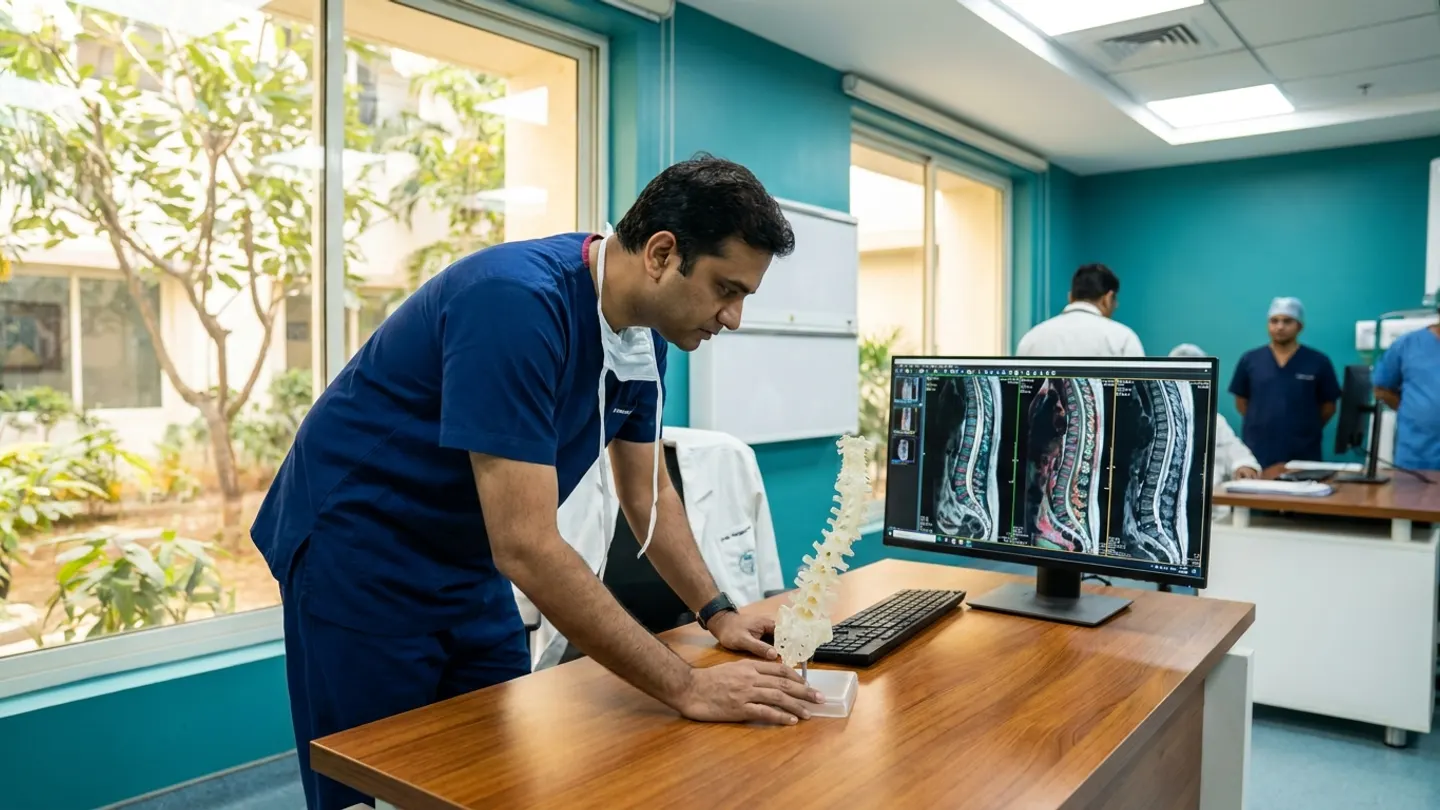
A vertebral compression fracture is one of the most painful spinal injuries a person can experience, and discovering that surgery may cost tens of thousands of dollars at home, or that you are facing a waiting list stretching months into the future, can feel just as crushing. You deserve a clear, honest comparison of your options so you can make the best decision for your spine and your budget.
Vertebroplasty vs Kyphoplasty Cost in India: The Numbers That Matter
Vertebroplasty in India typically costs between $2,000 and $4,500 USD, while kyphoplasty costs approximately $3,500 to $7,000 USD, both representing savings of 70 to 85 percent compared with prices in the United States or United Kingdom. These are all-in estimates that usually cover the procedure itself, hospital admission, anaesthesia, imaging, bone cement, and standard follow-up care, so the figure you see is close to the figure you actually pay.
Both are minimally invasive procedures performed under imaging guidance. The difference lies in technique and, crucially, in the ability to restore vertebral height before cement is placed — a distinction that matters enormously depending on how old your fracture is. Here is how the two procedures compare across key markets.
Cost Comparison: Vertebroplasty vs Kyphoplasty by Country (2026)
| Country | Vertebroplasty (approx.) | Kyphoplasty (approx.) | Typical Wait |
|---|---|---|---|
| India | $2,000 – $4,500 | $3,500 – $7,000 | 1–3 weeks |
| United States | $15,000 – $30,000 | $20,000 – $40,000 | 2–6 weeks |
| United Kingdom (Private) | $10,000 – $18,000 | $14,000 – $24,000 | 2–6 weeks |
| Australia | $9,000 – $18,000 | $12,000 – $22,000 | 4–10 weeks |
| UAE (Dubai) | $7,000 – $14,000 | $10,000 – $18,000 | 1–3 weeks |
Prices are indicative ranges for international private patients in 2026. Your individual quote will depend on the number of vertebrae treated, the implant brand used, the hospital tier, and your chosen city in India.
What Is Vertebroplasty?
Vertebroplasty is a procedure in which a spinal surgeon injects medical-grade bone cement directly into a fractured vertebra through a hollow needle, guided by real-time X-ray or CT imaging. The cement hardens within minutes, stabilising the fracture and typically delivering dramatic pain relief. No balloon is used, and there is no attempt to restore lost vertebral height — the goal is stability and pain control.
The procedure takes approximately 30 to 60 minutes per vertebra and is usually performed under local anaesthesia with sedation, though some centres prefer general anaesthesia. Most patients are mobile the same day, and many are ready to fly home within five to seven days of surgery. For patients whose primary goal is rapid pain control with a shorter overall procedure, vertebroplasty is an excellent option. You can learn more about what the procedure involves on our neurosurgery and spine treatments page.
What Is Kyphoplasty?
Kyphoplasty adds one important step before the cement is injected. A small balloon catheter is inserted into the collapsed vertebra and carefully inflated under imaging control. This creates a cavity inside the fractured bone and, in many cases, partially restores the height that was lost when the vertebra collapsed. The balloon is then removed and the cavity is filled with bone cement at low pressure.
The additional step makes kyphoplasty slightly longer and more costly, but it offers two meaningful advantages: better restoration of vertebral height, which can reduce or prevent the hunched forward posture known as kyphosis, and a lower risk of cement leakage because the cement fills a pre-formed cavity rather than flowing freely into already-fractured bone. For patients who have lost significant height in a recent fracture, kyphoplasty is generally the preferred approach.
Vertebroplasty vs Kyphoplasty: Which Procedure Is Right for You?
The honest answer is that this decision belongs to your spinal specialist after reviewing your MRI, CT, and bone density scans. That said, most spine teams in India and worldwide follow consistent clinical guidelines about which approach suits which scenario.
When Vertebroplasty Is Usually Preferred
- The fracture is older than six to eight weeks and vertebral height has already been permanently lost
- Height loss is minimal, typically less than 30 percent of the original vertebral body height
- The patient’s primary goal is rapid pain relief with the shortest possible procedure time
- Multiple vertebral levels need to be treated in the same session
- Budget is a meaningful factor and the height-restoration benefit of kyphoplasty does not apply clinically
When Kyphoplasty Is Usually Preferred
- The fracture is acute (within four to six weeks) and vertebral height may still be recoverable
- Significant kyphosis has already developed or is at high risk of developing
- The patient has severe osteoporosis, where softer bone increases cement-leakage risk with standard vertebroplasty
- Imaging shows a mobile fracture where the fracture line is still ‘fresh’ on flexion-extension X-ray
- The patient places high importance on posture correction and long-term spinal alignment
“When a patient comes to us within three or four weeks of a crush fracture, the balloon in kyphoplasty can give us back height that would otherwise be lost permanently. After eight weeks, that window has largely closed and vertebroplasty alone works very well.” This reflects the clinical consensus shared by spine specialists at JCI-accredited centres across India.
What the India Price Typically Includes
International patients travelling to India for either procedure can usually expect the following to be bundled into their hospital quote:
- Pre-operative consultation, imaging review, and pre-surgery blood tests
- Procedure room fees, surgeon fee, and anaesthesia charges
- Hospital stay, typically one to two nights for observation
- Bone cement, balloon catheter (for kyphoplasty), and all consumables
- Nursing care and a physiotherapy assessment before discharge
- Post-operative X-rays and a detailed discharge summary in English
- Airport transfers and accommodation coordination through IndoMedTour
What is generally billed separately: international flights, accommodation before and after the hospital stay, travel insurance, and any investigations your home doctor requests before travel. Our treatments and costs page provides a full breakdown so there are no surprises when your quote arrives.
Is Spine Surgery in India Safe for International Patients?
India’s leading spine hospitals have collectively performed hundreds of thousands of minimally invasive spinal procedures on patients from around the world. The best centres hold JCI (Joint Commission International) or NABH accreditation, the same rigorous quality standards used to assess hospitals in the United States, the United Kingdom, and across the Gulf.
These accredited hospitals use real-time fluoroscopic or CT guidance for cement injection, stock internationally recognised cement brands, and follow standardised protocols for patient selection, cement volume, and post-operative monitoring. Complication rates at accredited Indian centres are broadly consistent with published global data. The single most important factor in outcome is not the country — it is the experience of the team and the precision of imaging guidance, both of which are available in abundance at India’s top-tier spine centres.
You can browse our verified partner facilities on our hospitals page. Our how it works page walks you through the entire process, from your first contact with us to the day you fly home safely.
Questions to Ask Your Spine Team Before Deciding
Before committing to either procedure, make sure you and your specialist can answer these clearly:
- How old is my fracture, and is height restoration still clinically realistic?
- How many vertebral levels need treatment, and does that significantly affect cost?
- What is my bone density T-score, and does it influence cement-leakage risk?
- Is my fracture caused by osteoporosis, trauma, or metastatic disease? Cancer-related fractures may require additional oncological treatment alongside cement augmentation.
- Does the hospital use CT or fluoroscopic guidance, and what is the team’s annual procedure volume?
- Can I see written cost estimates from two or three accredited centres before I decide?
If you would like a remote second opinion on your imaging before booking, our medical team can arrange a review with an experienced Indian spine specialist at no extra charge. Start the conversation with a free counselling call.
How IndoMedTour Helps
When you reach out to us, you are speaking with a care team who will listen carefully to your diagnosis, match you with two or three accredited hospitals that have documented experience with your specific fracture type and chosen procedure, and send you clear written cost quotes within 48 hours so you can compare them side by side. We handle your medical visa invitation letter, arrange airport pickup and accommodation close to your hospital, and assign a personal patient coordinator who stays beside you from the moment you land in India through your surgery and recovery until you are medically cleared to fly home. You will never navigate a foreign hospital corridor alone. You bring the worry. We bring the plan.