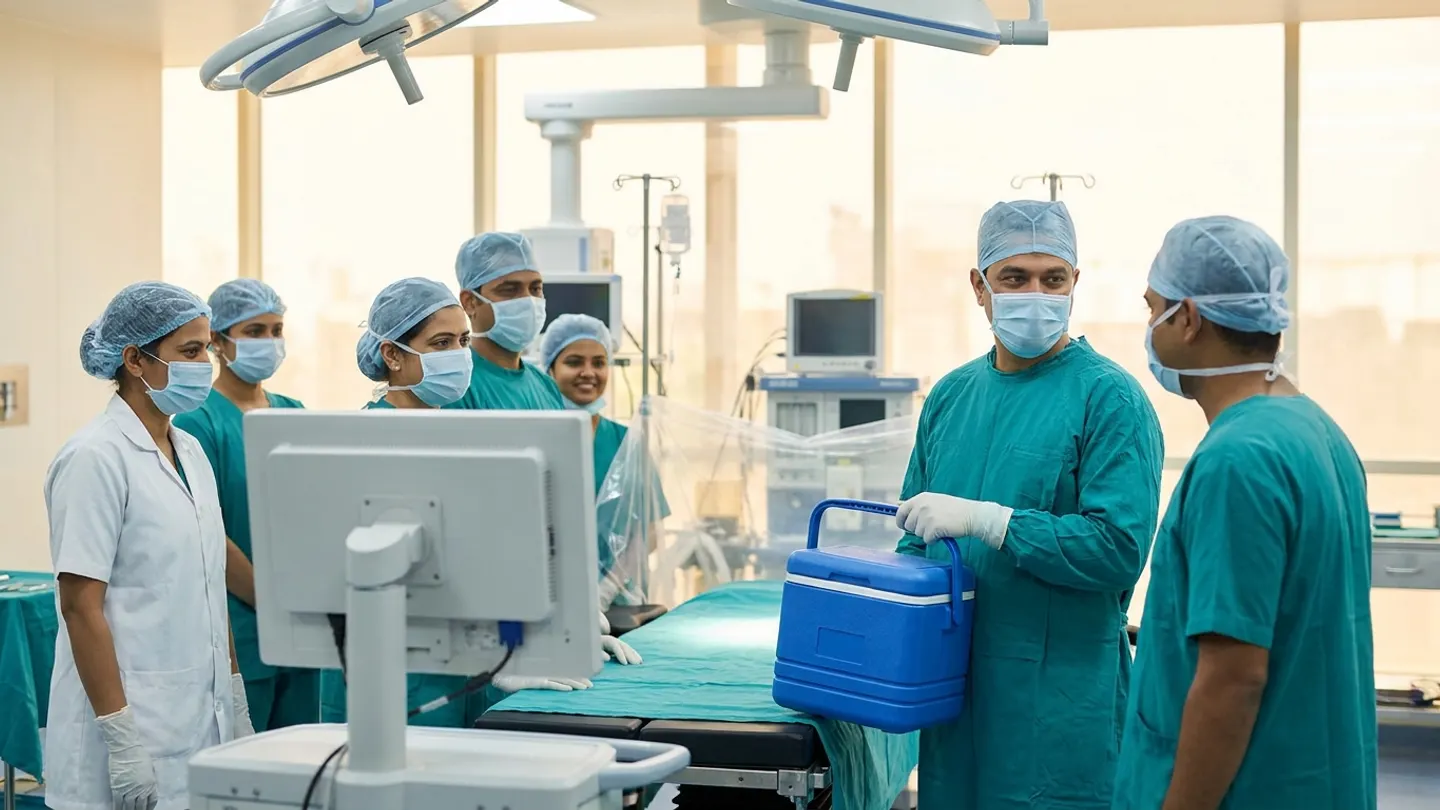
This is a representative patient story based on the real experiences of international patients who have travelled to India for kidney transplantation. Names and identifying details have been changed to protect patient privacy. It is not the record of a single specific individual.
When the nephrologist in Accra told Kwame that his kidneys were failing and that he needed a transplant, his first thought was not about medicine. It was about money.
Kwame, 44, had spent three years on peritoneal dialysis. The routine had swallowed his savings and his energy in equal measure. His younger brother Nii had already offered to be a living donor, so the family had taken care of the hardest part. What Kwame could not work out was how to pay for the surgery. The one centre in Ghana that could perform living-donor transplants had a long wait for surgical slots. A hospital in the United Kingdom quoted him £55,000. A facility in the United States came back with $85,000, not including travel or aftercare. A colleague who had gone to India for a liver procedure handed him a contact number. That call changed everything.
Kidney Transplant in India from Ghana: What Does It Actually Cost?
A kidney transplant in India from Ghana typically costs between $12,000 and $18,000 USD for the complete surgical package — roughly 70 to 80 percent less than equivalent care in the United States or United Kingdom. For patients travelling from West Africa, this price difference is not a minor discount. It is the difference between receiving a transplant and remaining on dialysis indefinitely.
The table below gives an honest picture of indicative costs across common destinations.
| Destination | Approximate Total Cost (Living Donor) | Typical Wait for Surgical Slot |
|---|---|---|
| India (accredited hospital) | $12,000 – $18,000 | Days to a few weeks |
| United Kingdom | £50,000 – £70,000 | Long (NHS) / 6–12 months private |
| United States | $75,000 – $120,000+ | Varies widely |
| UAE | $40,000 – $60,000 | 4–8 weeks |
| Thailand | $25,000 – $35,000 | 4–8 weeks |
All figures are indicative 2026 ranges. Your actual quote will depend on your medical profile, hospital tier, and length of stay. See our full treatments and costs guide for more detail.
How Kwame Prepared for the Journey from Accra to India
Kwame’s first conversation with IndoMedTour lasted about forty minutes. He expected a sales pitch. Instead, the counsellor asked careful questions: how long had he been on dialysis, what was his current creatinine, had Nii been fully tissue-typed, and could he share his nephrologist’s latest summary letter?
Within a week, Kwame had uploaded his medical records, his dialysis logs, and Nii’s crossmatch results. IndoMedTour’s team shared the files with two hospitals, both holding NABH accreditation, and returned with written cost breakdowns and a video consultation slot with the transplant surgeon. No surprises. No fees introduced after arrival.
“They told me exactly what documents to gather before I even thought about booking a flight. I felt like someone had finally handed me a map.”
The Document Checklist Kwame Used
Before boarding his flight, Kwame gathered:
- Latest dialysis reports and nephrologist’s summary letter
- Blood group and HLA tissue-typing reports for both patient and donor
- Crossmatch compatibility test results
- Kidney function tests (urea, creatinine, eGFR) from the past three months
- Cardiac clearance (standard pre-transplant requirement)
- A complete list of current medications
- Valid Ghanaian passport and Indian Medical Visa (e-MedVisa, applied online)
- Travel insurance that covered pre-existing conditions
IndoMedTour identified the correct visa category and sent a template invitation letter that the hospital issued within two business days.
Arriving in India: The First Week
Kwame and Nii landed in Chennai on a Tuesday morning. A driver from the hospital’s international patient desk was waiting at arrivals with a name board.
The hospital admitted both brothers that same afternoon. The first three days were pre-operative: Nii underwent final donor evaluation including a laparoscopic CT angiogram, while Kwame had a full pre-transplant workup covering cardiac function, infection screening, and immunological checks. A dedicated transplant coordinator, not a rotating duty nurse, sat with them daily and explained each step in plain English.
The surgery took place on the fifth day. Nii’s left kidney was removed laparoscopically, which reduced his recovery time significantly. The transplant itself lasted a little over four hours. By the morning after surgery, Kwame’s creatinine reading had already begun to fall.
“Tears, honestly,” Kwame said. “Three years on dialysis and suddenly the numbers were moving in the right direction.”
Recovery and the Weeks That Followed
Kidney transplant patients from abroad typically need to remain in India for four to six weeks after surgery. This period covers:
- Close monitoring for acute rejection episodes
- Daily blood work to track kidney function recovery
- Gradual adjustment of immunosuppressant dosages (tacrolimus, mycophenolate, and steroids)
- Patient and carer education on lifetime medication compliance
- Final medical clearance to fly
Nii was discharged on day five after surgery. He moved to a serviced apartment near the hospital while Kwame remained as an inpatient for a further ten days, then transitioned to outpatient reviews. The hospital’s international team arranged affordable accommodation within ten minutes of the outpatient clinic, and helped both brothers obtain local SIM cards so family in Accra could reach them any time.
What Surprised Kwame Most About Medical Care in India
Kwame had worried about language barriers and isolation — about being unwell, alone, in a country where he knew no one and nothing was familiar.
The reality was different. His transplant coordinator was fluent in English and had experience working with West African patients. The lead nephrologist had completed a fellowship in the United Kingdom. The hospital’s international ward had patients from Nigeria, Kenya, Egypt, and Bangladesh. In Kwame’s words, it felt “like a United Nations ward, but with better food.”
He also had not anticipated the depth of the organ transplant follow-up care. The team ran a structured immunosuppression protocol and prepared a detailed discharge summary formatted specifically for his Ghanaian nephrologist to continue follow-up at home, along with six months of remote check-in support by email and video call.
The Costs Kwame Actually Paid
The final bill for both brothers came to approximately $15,400 USD, which included:
- Pre-operative investigations for both patient and donor
- Surgical fees covering the transplant surgeon, anaesthetist, and nephrologist
- Eight days inpatient for the donor
- Twenty days inpatient for the patient
- All medications during hospitalisation
- Post-discharge outpatient reviews through to medical clearance
Return flights from Accra to Chennai, with one connection, cost around $900 per person. Accommodation during the outpatient phase added approximately $800 for both brothers. Total out-of-pocket, covering everything: roughly $18,000 USD.
Compare that to the dialysis costs Kwame had been carrying: approximately $400 to $600 per month in Ghana, with no end date.
A transplant that replaces a lifetime of dialysis is not only a medical decision. It is a financial one too.
Is a Kidney Transplant in India Safe for Patients from Ghana?
This is the question every family member asked Kwame before he left Accra. The honest answer is yes, provided you choose the right hospital and have proper support in place.
India has some of the world’s most experienced transplant programmes. Hospitals accredited by JCI or NABH operate under internationally audited protocols covering surgical safety, infection control, blood management, and patient rights. India performs tens of thousands of kidney transplants annually, and that volume builds the kind of surgical experience and complication management that matters when things get difficult.
The critical step is not simply choosing India. It is choosing the right hospital within India, and having a coordinator who remains accountable throughout. See how it works for a transparent, step-by-step walkthrough of the process, and visit our accredited hospital network to understand the quality standards we require before recommending any facility.
How IndoMedTour Helps
When you reach us for a free counselling call, a coordinator listens first. We then match your medical profile to accredited hospitals, obtain written cost quotes on your behalf, and guide you through every visa and travel logistics step. On the ground in India, your dedicated coordinator is reachable every single day — before surgery, through your inpatient stay, and all the way to your discharge and safe return home. We do not disappear once the flight is booked.
You bring the worry. We bring the plan.