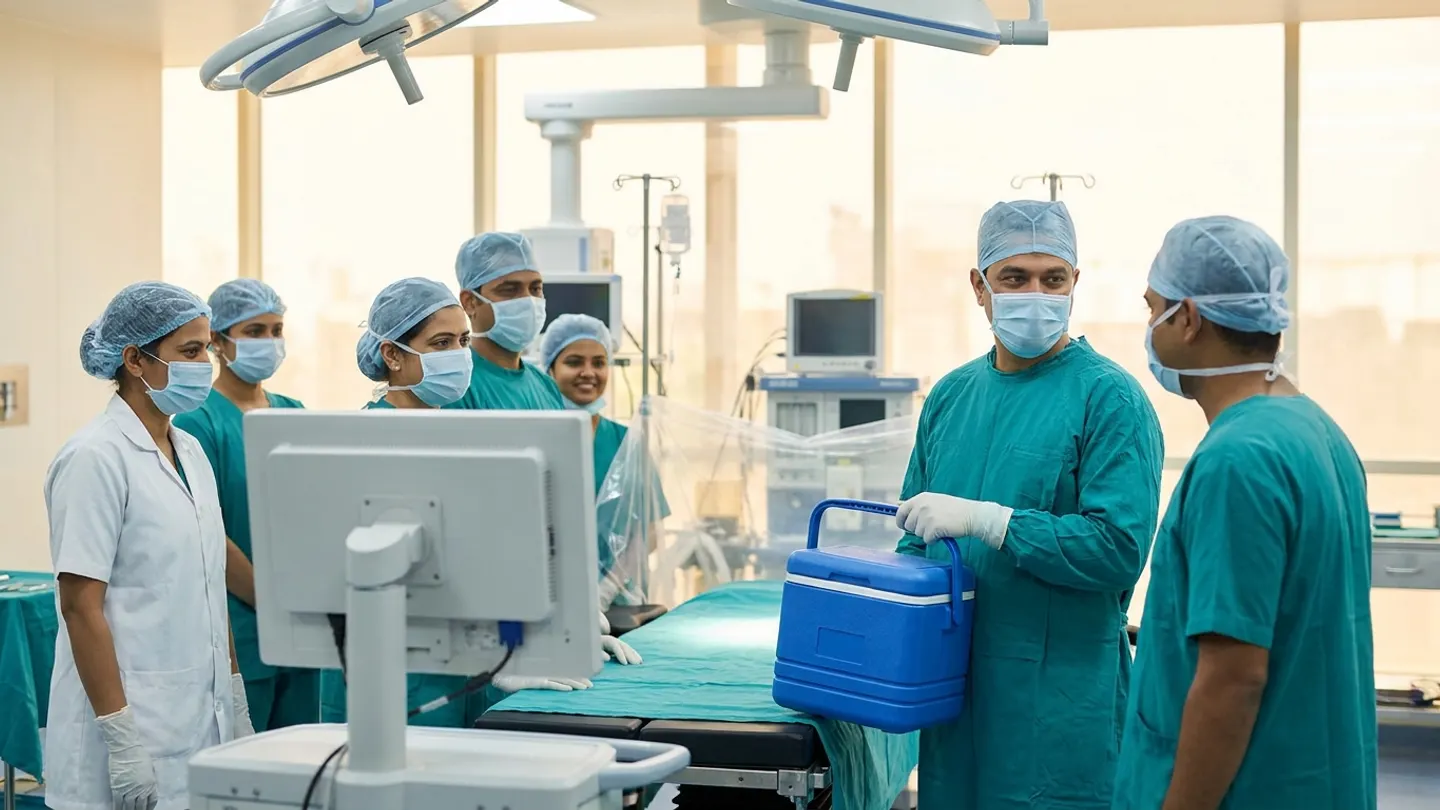
Receiving a diagnosis of end-stage kidney failure changes everything in a single afternoon. If you are reading this from Lagos, Abuja, Accra, or Nairobi, you may already be facing an impossible quote from a local hospital or a waiting list that stretches well beyond what your kidneys can tolerate. Emeka’s story — a composite of real patient journeys we support at IndoMedTour — shows that there is another path.
Note: Emeka is a representative patient narrative drawn from real journeys facilitated by IndoMedTour. It is not the account of a single identifiable individual.
A Kidney Transplant from Nigeria to India: The Essential Answer
A kidney transplant from Nigeria to India patient story almost always begins the same way: with sticker shock at home and a late-night internet search. A kidney transplant in India for an international patient typically costs between $12,000 and $20,000 USD in total, including surgery, a month of hospital care, and starter immunosuppressant medication. That is roughly 85 to 90 percent less than comparable procedures in the United States or United Kingdom. India’s leading transplant centres hold JCI accreditation and NABH certification, and their surgical teams perform hundreds of live-donor kidney transplants every year.
Emeka’s Story Starts in Lagos
Emeka was 41 years old when his GP told him both kidneys were failing. A decade of poorly controlled diabetes had done silent damage, and he was now at Stage 5 chronic kidney disease. His options were stark: lifelong dialysis three times a week — already costing him the equivalent of $250 per month in Lagos — or a kidney transplant.
His younger brother Chidi immediately offered to donate one of his kidneys. The generosity was overwhelming. But when Emeka sought quotes at a leading private hospital in Lagos, the estimate came back at the equivalent of $45,000, with a six-month waiting period for surgical slots and a transplant team that performed fewer than twenty procedures a year. The waiting list alone could cost him years of dialysis and a serious decline in quality of life.
He found IndoMedTour at two in the morning on a Tuesday.
Why Emeka Chose India for His Kidney Transplant
The first thing that struck Emeka was the volume. Chennai’s leading transplant hospitals complete hundreds of live-donor kidney transplants annually. These are not experimental or rare procedures — they are high-volume, protocol-driven surgeries led by nephrologists and transplant surgeons who trained at institutions in the US, UK, and Germany. The word he kept returning to when describing his research was reassurance.
“I was worried about going somewhere unfamiliar and being far from family. But when I saw the hospital’s JCI accreditation, the transplant team’s credentials, and that they had a dedicated international patient team for African patients, I felt something I had not felt in months — genuine relief.” — Emeka, Lagos (representative account)
He also learned that Indian transplant law permits living related-donor transplants for international patients, provided the donor can demonstrate a qualifying biological relationship and passes the hospital’s full medical and ethics committee evaluation. Chidi, his younger brother, was eligible to undergo that process.
The Cost Comparison That Clarified the Decision
| Procedure Component | India (Approx.) | UK (Approx.) | US (Approx.) | Nigeria (Approx.) |
|---|---|---|---|---|
| Kidney transplant surgery | $10,000 – $14,000 | $45,000 – $80,000 | $100,000 – $150,000 | $30,000 – $50,000 |
| One-month hospital stay (patient and donor) | $2,000 – $4,000 | Not available to self-pay foreign nationals | $20,000 – $40,000 | $5,000 – $10,000 |
| Immunosuppressants (3 months) | $800 – $1,500 | $3,000 – $5,000 | $5,000 – $8,000 | $2,500 – $4,000 |
| Donor evaluation and pre-op workup | $500 – $1,000 | $2,000 – $4,000 | $5,000 – $10,000 | $1,500 – $3,000 |
| Indicative total | $13,300 – $20,500 | $50,000 – $89,000 | $130,000 – $208,000 | $39,000 – $67,000 |
All figures are indicative 2026 estimates. Final costs depend on the hospital, surgical complexity, and length of stay. Visit our treatments and costs page for a personalised breakdown.
The Journey, Step by Step
After Emeka’s free call with an IndoMedTour coordinator, he received written quotes from two shortlisted JCI-accredited hospitals in Chennai within 72 hours. The coordinator walked him through the Indian Medical Visa process for both brothers and explained what the six-to-eight week stay would look like.
Here is how the journey unfolded:
- Medical records reviewed electronically — dialysis logs, blood results, imaging, and discharge summaries were sent ahead so the transplant team could assess suitability before any booking was made.
- Medical visas arranged for both brothers — the hospital issued an official invitation letter within five days, which is typically required by the Indian High Commission for medical visa applications.
- Donor evaluation on arrival — over the first ten days, Chidi underwent blood typing, HLA matching, cross-match testing, cardiac clearance, and review by the hospital’s transplant ethics committee.
- Surgery scheduled — both brothers were cleared, and the transplant was booked within three weeks of landing in Chennai.
- Post-operative hospital stay — Emeka remained in hospital for 18 days. Chidi was discharged after six days with a straightforward recovery.
- Convalescence near the hospital — IndoMedTour arranged a serviced apartment close to the hospital for a further two weeks before Emeka was cleared to fly.
- Remote follow-up — the Chennai nephrologist conducted video consultations for six months after both brothers returned to Lagos.
For a full picture of what the experience involves, visit our how it works page.
What Emeka Found When He Arrived in Chennai
The hospital’s international patient desk was staffed in English around the clock. A coordinator met both brothers at Chennai airport and arranged transport to the apartment and the hospital for the following morning. The ward staff were accustomed to patients from West Africa, East Africa, and the Gulf states, and the dietary team accommodated Nigerian food preferences during Emeka’s recovery.
The transplant itself took approximately four hours. Chidi recovered quickly. Emeka’s new kidney began producing urine within hours of the procedure — what nephrologists call immediate graft function, an encouraging early indicator.
It is important to say clearly: kidney transplants are major surgeries, and outcomes vary between patients. Nothing in this account guarantees a specific result. But the infrastructure, surgical volume, and post-operative protocols Emeka encountered in Chennai met the standards he would have found at leading private centres in Europe — at a fraction of the cost.
What to Look for in a Transplant Hospital in India
If you are evaluating your options, use this checklist as a baseline:
- JCI accreditation or NABH certification covering the transplant unit
- A dedicated, high-volume kidney transplant programme
- On-site HLA typing and immunology laboratory
- 24/7 nephrology coverage after surgery
- A functioning ethics committee that reviews all live-donor cases
- An English-speaking international patient services team
- Written itemised cost estimates provided before any commitment
- Documented experience treating patients from Africa and the Middle East
Our hospitals page lists partner hospitals that meet all eight of these criteria.
Emeka’s Life Eighteen Months Later
Emeka is back at work in Lagos. His creatinine levels sit in the normal range. He no longer attends a dialysis centre three times a week. He hiked in the Idanre Hills last November and coaches his son’s football team on Saturday mornings.
He takes immunosuppressants every morning and attends quarterly check-ups with a Lagos nephrologist who liaises directly with the Chennai team. Before leaving India, he purchased a three-month supply of his medications at the hospital pharmacy — the cost was approximately 60 percent lower than equivalent branded drugs available in Lagos.
If you are in a similar situation, read more about organ transplant options in India or browse success stories from patients who made the same journey.
How IndoMedTour Helps
From your first free counselling call, we take the time to understand your diagnosis, your donor situation, your timeline, and your budget, then match you with two or three hospitals that have genuine track records treating Nigerian and other African patients. You receive written, itemised cost estimates before you commit to anything at all. Our team handles Indian Medical Visa documentation, airport transfers, accommodation near the hospital, and a dedicated coordinator who is beside you — not just at admission, but through surgery, recovery, and the long flight home. You bring the worry. We bring the plan.